Have you looked at the Japanese skyline lately? If you’re in the solar industry, you’ve probably noticed something shifting. The days of sprawling, mountain-side utility-scale plants are facing a “land crunch,” and the focus has moved decisively upward. Rooftop Solar in Japan is no longer just a “nice-to-have” for eco-conscious homeowners; it’s becoming the backbone of the country’s energy strategy. At SR Solar, we’ve watched this evolution closely, and let me tell you—if you’re an EPC or a developer, the next decade is going to be a wild ride.
The Japanese market is unique, almost like a high-stakes puzzle. You’ve got some of the world’s strictest building codes, a workforce that is incredibly skilled but also very expensive, and a climate that throws everything from 100-mph typhoons to salty sea mists at your hardware. When we talk to our partners in Osaka or Tokyo, the conversation always circles back to one thing: how do we build faster and stronger without breaking the bank?
The New Era of Japanese Photovoltaics: Why Rooftops?
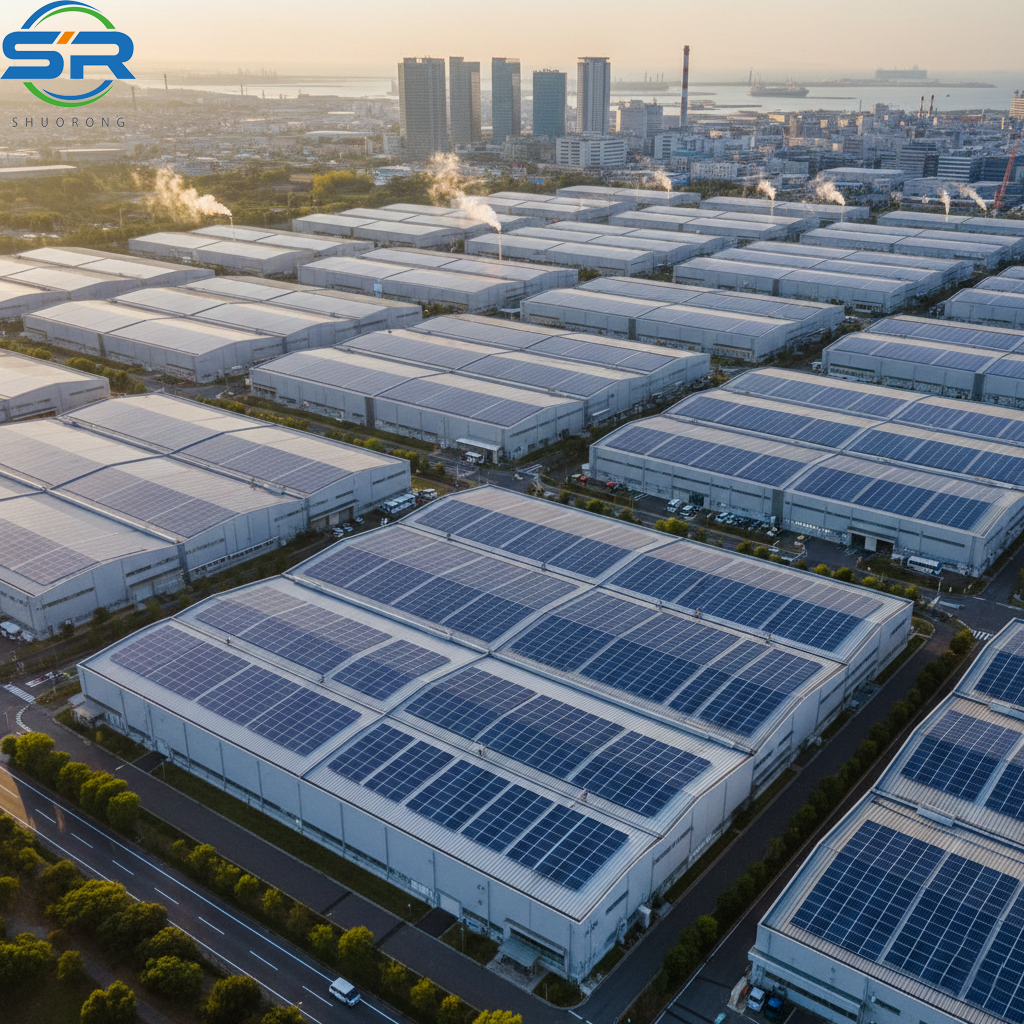
So, why the sudden rush to the roof? It’s a mix of “carrot” and “stick.” For years, Japan relied on heavy Feed-in Tariffs (FiT) to move the needle. But today, the real driver is the skyrocketing cost of electricity and a government that is getting very serious about carbon neutrality. For businesses, putting Rooftop Solar in Japan onto their factories isn’t just about saving the planet; it’s a defensive move against volatile energy markets.
Decoding the 2025 Mandate: Tokyo’s Bold Leap
If you haven’t marked April 2025 on your calendar, you should. The Tokyo Metropolitan Government is making history by mandating solar panels on almost all new buildings with roof areas over 20 square meters. Think about that for a second. Whether it’s a new office block or a residential development, solar is now a “standard feature,” like plumbing or electricity. This mandate is a massive signal to the market. It’s creating a floor for demand that simply didn’t exist before, and it’s forcing developers to think about mounting systems early in the design phase, rather than as an afterthought.
From Subsidies to Self-Consumption: The B2B Opportunity
We’re seeing a huge shift toward the “PPA” (Power Purchase Agreement) and self-consumption models. Japanese companies are tired of high utility bills. By generating power right where they use it—on the roof—they bypass grid fees and taxes. For an EPC, this means your clients are looking for a return on investment (ROI) that lasts 25 years. They don’t want a system that needs maintenance every time a storm rolls through. They want “set it and forget it” reliability, which puts the spotlight squarely on the quality of your solar mounting hardware.
The “Japan Standard”: Technical Hurdles for Mounting Systems
I’ll be honest with you: Japan is a brutal environment for outdoor hardware. If you try to use a generic, one-size-fits-all bracket here, you’re asking for trouble. At SR Solar, we often joke that if a bracket can survive a Japanese winter in Hokkaido and a typhoon season in Okinawa, it can survive anything on Earth.
Wind, Earthquakes, and the Building Standard Act
The Building Standard Act in Japan isn’t a suggestion—it’s the law. Every structure, including your solar array, must be able to withstand significant seismic activity. We’ve spent countless hours engineering our rails and clamps to ensure they don’t just “hold” the panels, but actually distribute the load during an earthquake. High wind loads are another beast. Our mounting systems are tested against extreme wind speeds to ensure that even in the middle of a Category 4 typhoon, those modules aren’t going anywhere.
The Coastal Challenge: Defeating Salt Spray Corrosion
Japan is an island nation. A huge percentage of industrial rooftops are within a few kilometers of the ocean. Salt spray is a silent killer for metal. It eats through cheap galvanized steel in a matter of years. That’s why we lean so heavily into high-grade aluminum alloys (like AL6005-T6) and specialized coatings like ZAM (Zinc-Aluminum-Magnesium). When we provide solutions for Rooftop Solar in Japan, we aren’t just thinking about today; we’re thinking about the salt-heavy air hitting those brackets in year fifteen.
Solving the Labor Puzzle: Reducing Soft Costs in Japan
Here is a reality check: Japan has one of the highest labor costs in the world. Every hour your crew spends fumbling with a bag of tiny bolts on a hot roof is profit bleeding out of your project. We’ve realized that the “racking” only accounts for a small portion of the total cost, but it dictates a huge portion of the soft costs—the installation time.
The High Cost of “Human Minutes” on Site
In Japan, the “workmanship” is legendary, but the workforce is aging and shrinking. EPCs are struggling to find enough qualified installers. This means the speed of installation is your biggest competitive advantage. If Project A takes five days to install and Project B (using SR Solar) takes three days, the labor savings alone can pay for the entire mounting system. It’s about being smart with “human minutes.”
Pre-Assembled Logic: How SR Solar Cuts Installation Time
This is where SR Solar really shines. We’ve obsessed over installation efficiency. Our goal is to have as many components pre-assembled in the factory as possible. Why should a worker be putting together a leg assembly on a sloped roof when we can do it with precision robotics in our facility? Our “click-in” technology and universal clamps mean fewer tools, fewer mistakes, and much faster completion times. It’s a win for the EPC and a win for the building owner who wants the scaffolding down as soon as possible.
Tailored Solutions for Japan’s Unique Roof Landscape
Japan doesn’t just have one type of roof. You’ve got everything from the classic “Kawara” tiles on older buildings to the massive “folding plate” (Haze) metal roofs on modern factories. You need a partner who has a “key” for every “lock.”
C&I Flat Roofs: Non-Penetrative Ballast Excellence
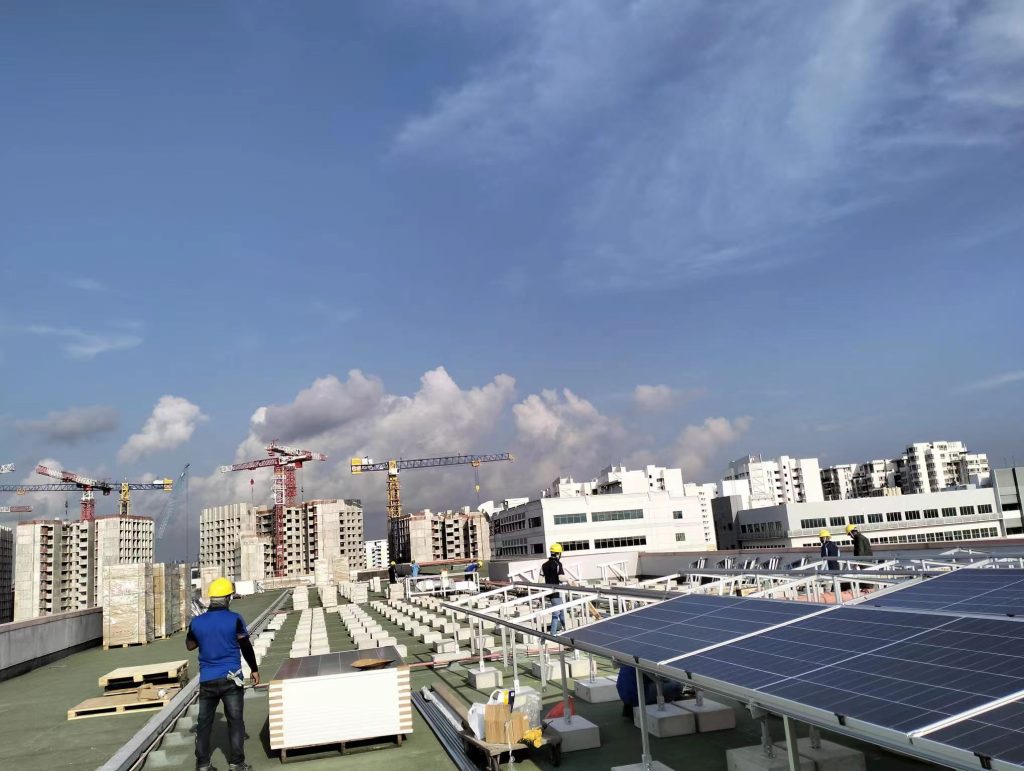
On many commercial and industrial (C&I) buildings, the last thing an owner wants is for you to drill holes in their expensive waterproofing membrane. Our ballast system is the perfect answer. By using calculated weights and aerodynamic designs, we keep the system secure without a single penetration. It’s fast, it’s safe, and it keeps the roof’s warranty intact.
Folding Plate (Folded Metal) Roofs: Precision Clamping
If you go to an industrial park in Chiba or Saitama, you’ll see “folded metal” roofs everywhere. For these, we offer specialized clamps that grip the standing seams with incredible force without piercing the metal. These are designed specifically for the common Japanese profiles (like the 500-type or 600-type seams). We’ve made sure our clamps are low-profile to reduce wind uplift—a small detail that makes a massive difference in a storm.
Lightweight Innovations for Aging Infrastructure
We often get calls about older warehouses that have plenty of space but limited “load-bearing” capacity. You can’t just slap a heavy steel rack on those. For these projects, we deploy our high-strength, lightweight aluminum solutions. By reducing the dead weight of the mounting systems, we make “impossible” solar projects possible again. It’s about giving new life to old buildings.
Future-Proofing Your Portfolio with SR Solar
Navigating the world of Rooftop Solar in Japan can feel like a daunting task, but you don’t have to do it alone. The market is moving fast, and the technical requirements are only getting stricter. At SR Solar, we don’t just see ourselves as a manufacturer; we see ourselves as your technical partner in the field.
Whether you’re dealing with the new Tokyo mandates or trying to optimize a factory retrofit in Osaka, we’re here to ensure your mounting solution is the strongest link in your solar chain. The sun is rising on a new era of Japanese energy—let’s make sure we’ve got the right foundation to catch it.
FAQ: Everything You Need to Know About Solar in Japan
1. Is the Tokyo solar mandate applicable to existing buildings?
Currently, the April 2025 mandate primarily targets new residential and commercial constructions. However, there are separate incentives and local ordinances in various prefectures that encourage (and sometimes require) solar during major renovations or roof replacements for larger buildings.
2. How do SR Solar systems handle Japan’s high earthquake risk?
Our systems are engineered to comply with the Building Standard Act of Japan. We use flexible but high-tensile aluminum alloys and specialized structural designs that allow for energy dissipation during seismic events, ensuring the array remains attached to the building structure.
3. Why is aluminum preferred over galvanized steel for Japanese rooftops?
While steel is strong, high-grade aluminum (like our AL6005-T6) offers a superior strength-to-weight ratio and natural corrosion resistance. Given Japan’s island geography and high labor costs, the lightweight nature of aluminum speeds up installation, and its resistance to salt spray ensures a 25-year lifespan without rusting.
4. Can I install solar on a Japanese “folding plate” roof without voiding the warranty?
Yes! We provide non-penetrative clamping solutions specifically designed for Japanese metal roof profiles. These clamps “pinch” the standing seam, providing immense grip strength without ever puncturing the roof sheet, thus preserving the waterproofing and the manufacturer’s warranty.
5. How does SR Solar help with the high cost of labor in Japan?
We focus on “Pre-assembled Logic.” By delivering components like tilted tripod legs or rail supports partially assembled from the factory, we reduce the number of steps your team needs to take on-site. This significantly lowers the “man-hours” per kilowatt installed.