Hey there! It’s great to connect with you. If you’re keeping an eye on the Turkish solar market, you already know it’s moving at breakneck speed. We’re not just talking about incremental growth anymore; we’re looking at a complete structural transformation as the country pushes toward that massive 120 GW wind and solar target by 2035.
At SR Solar, we’ve been deep in the trenches with EPCs and developers navigating this landscape. It’s a market that rewards the bold but punishes the unprepared—especially when it comes to the “bones” of the project: the mounting systems. The conversation has moved beyond just “how many panels can we fit?” to “how will this structure survive an Aegean windstorm?” and “does this meet the latest local content requirements?” Whether you are an IPP looking at a 100MW site in Konya or a PV distributor in Istanbul, the mounting system is no longer just “the metal bits.” It is the primary determinant of your project’s bankability and long-term ROI.
The Anatolian Energy Surge: Why 2026 is the Tipping Point
Why are we talking about the industry dynamics of solar mounting systems in Turkey so urgently right now? Because the regulatory floodgates have truly opened. With the YEKA (Renewable Energy Resource Areas) auction model evolving and the new HIT-30 High Technology Investment Program providing massive tailwinds, the demand for solar mounting systems has reached a fever pitch. In 2025, Turkey surpassed its initial 19.6 GW target ahead of schedule, and as of early 2026, the installed capacity is already pushing past 20 GW.
What’s interesting is the type of growth we’re seeing. It’s no longer just giant government-backed plants. The “unlicensed” segment—projects under 5 MW usually meant for industrial self-consumption—is exploding. Factories in the Gebze Organized Industrial Zone or near Izmir are racing to decouple their electricity costs from volatile global gas prices. For these players, the solar mounting system needs to be fast to install and light enough for existing rooftops, all while meeting the stringent safety audits of Turkish insurance providers and grid operators like TEİAŞ.
Engineering for the Extremes: Surviving Turkish Topography
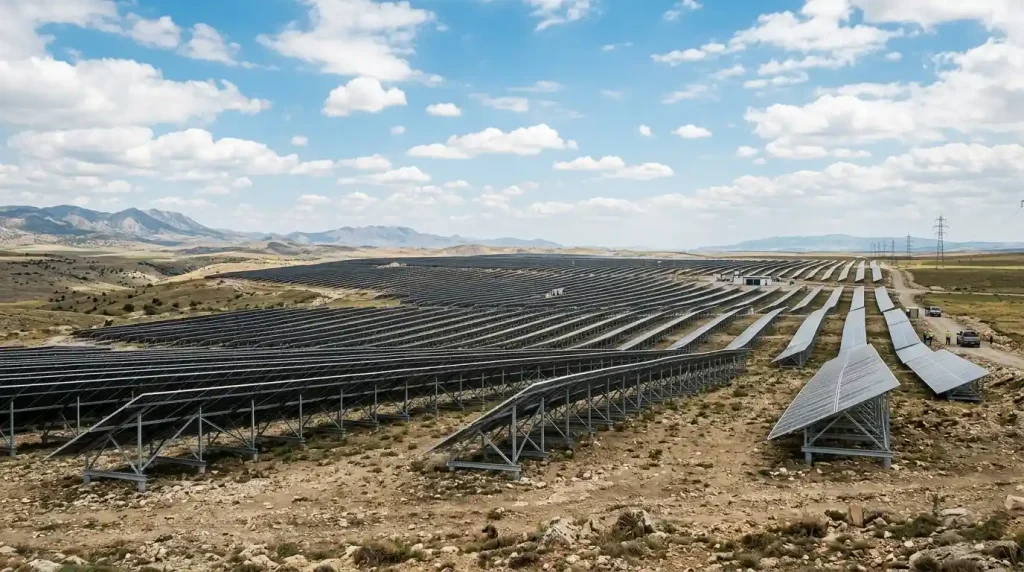
Let’s get real about the geography. Turkey is beautiful, but for a structural engineer, it’s a bit of a nightmare. You have the high-altitude snow loads of Eastern Anatolia that can crush a flimsy rail in one winter, and then you have the Aegean and Marmara coasts where wind speeds can easily gust up to 45 m/s (that’s about 160 km/h). When we design a mounting solution for the Turkish market, we aren’t using a “one-size-fits-all” template.
The industry dynamics of solar mounting systems in Turkey require site-specific simulations. Are we dealing with the corrosive salt air of a coastal site near Mersin? Or the rocky, uneven terrain of Central Anatolia? At SR Solar, we’ve seen too many “cheap” systems buckle because they were designed for the mild plains of Central Europe, not the rugged reality of the Anatolian plateau.
High-Velocity Winds and the Aegean Challenge
In the Aegean region, wind isn’t just a breeze; it’s a mechanical load that wants to turn your PV array into a giant kite. We utilize high-strength AL6005-T5 Aluminum and specialized aerodynamic profiles to ensure the “lift” forces don’t compromise the attachment points. Our engineers run wind tunnel simulations that align with Eurocode 1 standards, which is increasingly what Turkish bank lenders are asking to see before they sign off on a loan. If the mounting system isn’t aerodynamically sound, your insurance premium in Izmir is going to skyrocket—if you can get coverage at all.
Heavy Snow Loads: Lessons from Eastern Anatolia
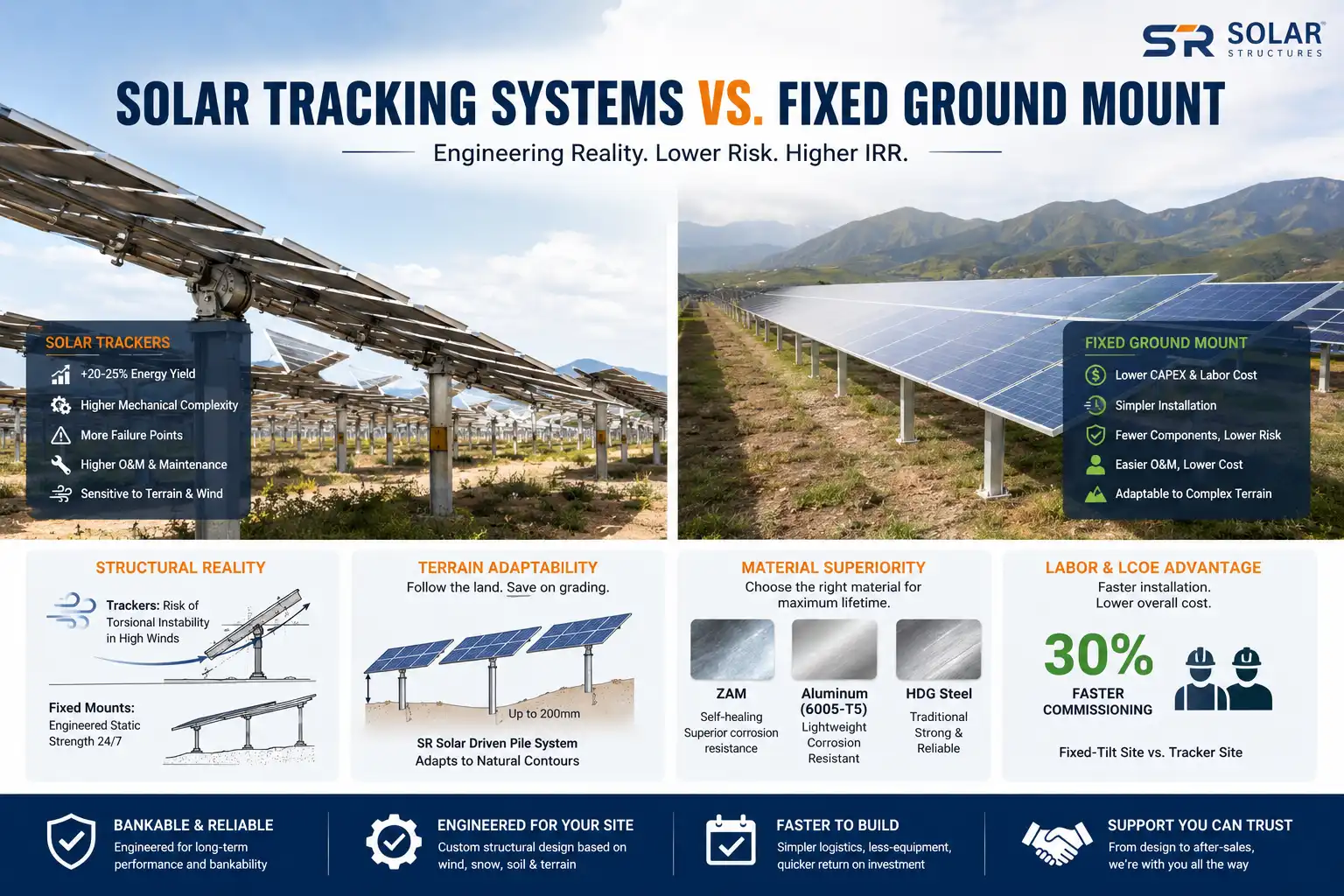
On the flip side, look at Eastern Turkey. We’re talking about regions where snow can sit on panels for weeks, creating immense static pressure. A standard mounting rail might sag or snap under that weight. We counter this by increasing the thickness of our ZMA-coated steel profiles and optimizing the span between support legs. It’s about finding that “sweet spot” where the system is over-engineered for safety but not so heavy that it blows your budget.
The Local Content Game: Navigating YEKA and HIT-30 Regulations
Now, let’s talk about the “Elephant in the room”—localization. The Turkish government is very protective of its domestic manufacturing base. If you want the best feed-in tariffs or tax incentives, you need to prove a certain percentage of your “Balance of System” (BOS) is made in Turkey. This has completely reshaped the industry dynamics of solar mounting systems in Turkey.
International developers often find themselves in a squeeze: they want the high-end engineering and quality of a global brand like SR Solar, but they need to satisfy the “Local Content” checkmark. We’ve solved this by offering “Ready-for-Localization” schemes. We provide the precision-engineered components and the complex sub-assemblies, then work with local partners for the high-volume steel or assembly work. It’s a hybrid model that gives you the best of both worlds—international bankability and local regulatory compliance.
Material Science in the Coastal Zone: Fighting Corrosion
If your project is within 5km of the Mediterranean or the Black Sea, corrosion is your silent ROI killer. A standard galvanized steel mount might look great on day one, but by year five, the “rust rot” starts. In the current Turkish solar market, we are seeing a massive shift toward Zinc-Magnesium-Aluminum (ZMA) coated steel and anodized aluminum.
At SR Solar, we’re big advocates for ZMA in Turkey. It has a “self-healing” property—if a technician accidentally scratches the rail during installation, the coating actually “migrates” to cover the exposed steel. In a market where on-site labor can sometimes be less than delicate, that’s a lifesaver. It’s these small material choices that define the industry dynamics of solar mounting systems in Turkey in 2026. If you want your project to last the full 25-year PPA (Power Purchase Agreement), you can’t cut corners on coating.
Unlicensed Solar Growth: The Rise of Industrial Rooftops
The industrial landscape of Turkey—from Bursa to Gaziantep—is turning blue and black. With the EU’s Carbon Border Adjustment Mechanism (CBAM) kicking in, Turkish exporters must lower their carbon footprint or face massive fees at the border. Solar isn’t a “nice-to-have” anymore; it’s a survival strategy for the Turkish textile, steel, and cement industries.
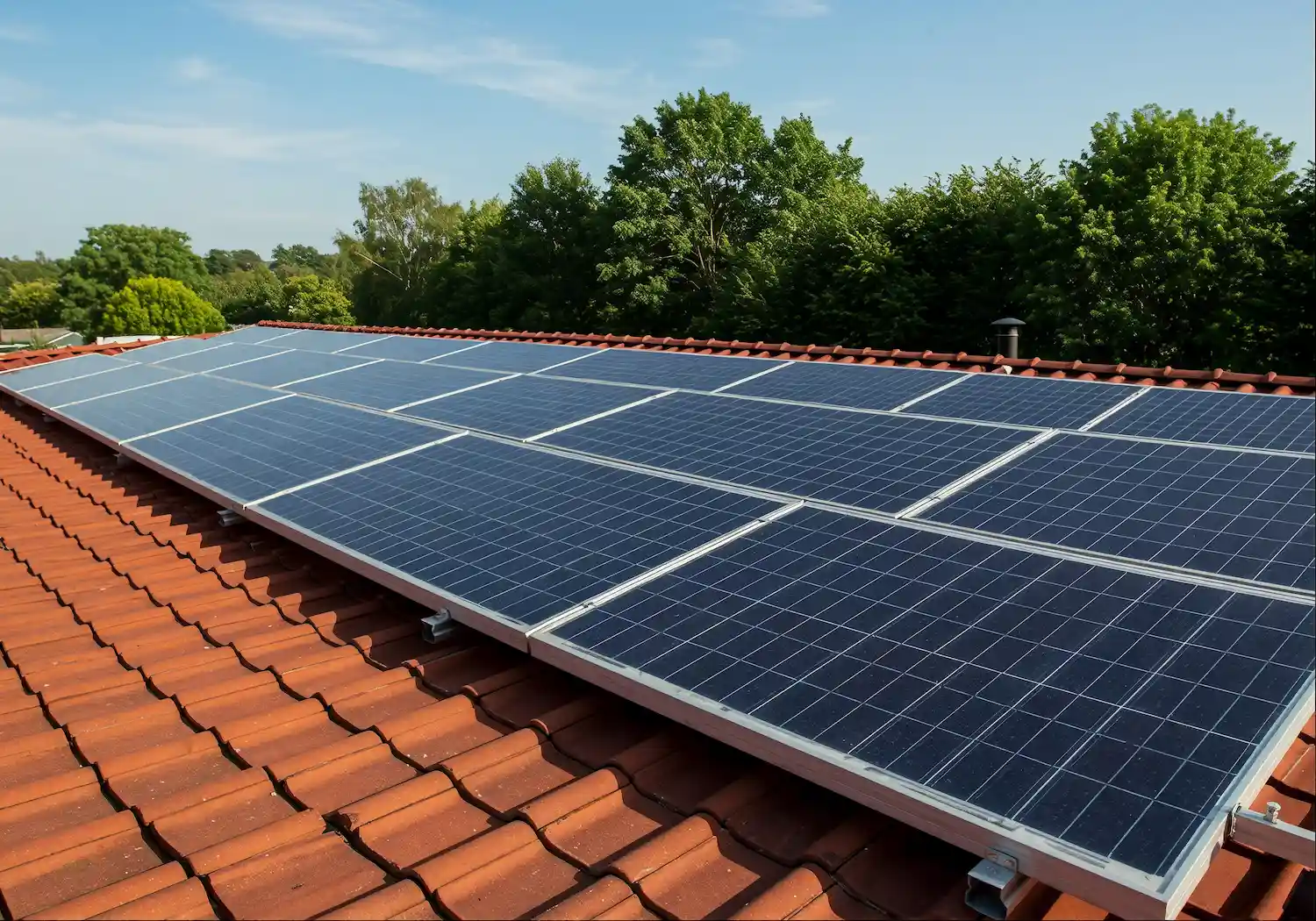
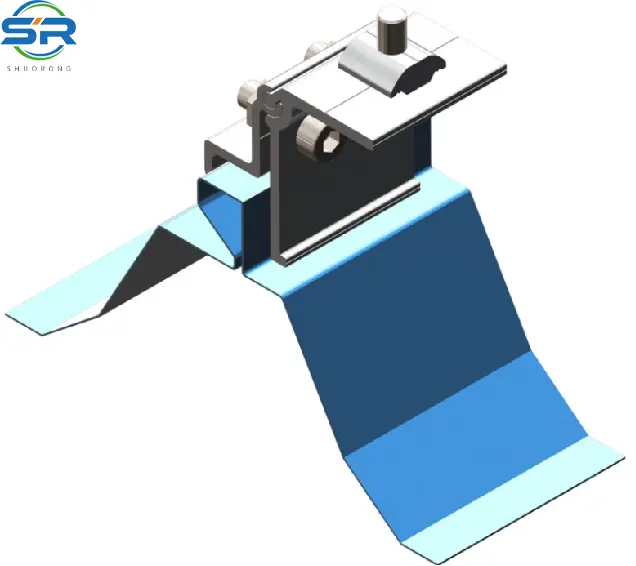
The mounting systems for these roofs are highly specialized. You can’t just drill holes in a 20,000-square-meter factory roof and hope it doesn’t leak during a Bursa thunderstorm. We focus on non-penetrative, ballasted systems or specialized clamps for trapezoidal metal sheets that preserve the roof warranty.
Trapezoidal and Non-Penetrative Solutions for Factories
Our “Click-In” rail technology has been a game-changer for Turkish EPCs. Why? Because on-site labor is getting more expensive, and the “time to grid” is shorter than ever. If my system can be installed 30% faster because there’s no on-site drilling or welding, the project’s Internal Rate of Return (IRR) looks a lot healthier. We also prioritize waterproof gaskets and EPDM backing to ensure that the roof stays as dry as it was before the solar arrived.
The New Frontier: Floating PV Regulations and Structural Needs
Here is something fresh: In December 2025, Turkey officially published the “Safety and Design Regulations for Floating PV.” This is a huge deal. Turkey has massive reservoirs and dams, but until recently, the legal framework was fuzzy. Now, the rules are clear: you can cover up to 10% of a reservoir’s surface area.
The industry dynamics of solar mounting systems in Turkey are now expanding into water-based structures. Designing for water is a whole different beast—you have wave action, water level fluctuations, and intense UV reflection. SR Solar is already working with IPPs on pilot designs for these reservoirs, ensuring the mooring and floating structures can handle the unique hydromorphic conditions of the region while maintaining strict environmental safety.
Speed to Grid: How Mounting Efficiency Impacts Project IRR
In the B2B world, we talk about “soft costs.” These are the costs that don’t show up on a hardware invoice—labor, delays, re-work, and heavy machinery rentals. In the Turkish solar market, where the Turkish Lira can be volatile, finishing a project three weeks early can save a developer millions.
We’ve designed our mounting systems to be incredibly intuitive. Pre-assembled clamps and universal components mean fewer parts to lose on-site and less time spent training crews. When you look at the industry dynamics of solar mounting systems in Turkey, the winners are the ones who can get the system “hooked up” while the sun is still shining, avoiding the rainy season delays that plague many Turkish projects.
Bankability and Compliance: Meeting Eurocode and Local Standards
If you’re an IPP, you’re likely looking for international financing. Banks don’t care about “good enough”; they care about certifications. Our systems are designed to meet AS/NZS 1170 and Eurocode safety factors. When we provide a quote for a Turkish project, it comes with a full structural calculation report and 1:1 CAD layouts for your specific site coordinates.
We don’t just sell you the metal; we act as your External Engineering Department. In a market like Turkey, where grid operators and insurance companies are becoming increasingly technical in their audits, having that level of documentation is the difference between getting your project commissioned or getting it stuck in “permitting hell.”
Why Global Developers are Choosing SR Solar for Turkey
So, why work with us? Honestly, it’s because we “get” the Turkish hustle. We know that timelines shift, that the ground in Central Anatolia can be harder than concrete, and that you need your technical support in real-time.
SR Solar provides:
- Customized Design Schemes: Every quote includes a detailed structural calculation report and a 1:1 tailored CAD layout.
- Compliance Assurance: We ensure all mounting structures meet the latest safety factors demanded by Turkish insurance providers.
- EPC-Centric Support: From the initial tender phase to final commissioning, our technical team provides the documentation needed to secure project financing.
The Roadmap to 2035: Final Thoughts on Turkish Solar Infrastructure
As we look toward the 77 GW solar goal for 2035, the industry dynamics of solar mounting systems in Turkey will continue to favor quality over “cheapness.” The market is maturing. Developers are realizing that a mounting system that saves them 5% on the CAPEX but fails during a winter storm in year three is a disastrous investment. At SR Solar, we’re excited to be part of this journey, providing the literal foundation for Turkey’s green future. We’re here to make sure your investment stays grounded, no matter how hard the wind blows in the Aegean.
Summary
The Turkish solar market is currently one of the most dynamic in the world, driven by ambitious government targets, a push for industrial decarbonization, and new regulations for emerging sectors like Floating PV. Navigating this market requires more than just high-quality hardware; it requires a deep understanding of regional topography, local content laws (YEKA), and the engineering rigor necessary to ensure 25-year structural reliability in a challenging climate.
FAQs
1.Do SR Solar mounting systems meet the ‘Local Content’ requirements for YEKA projects?
Yes, we offer specialized “localization support” where we provide the core engineering and precision components, while facilitating partnerships for local steel and assembly to help you maximize your tariff incentives.
2.How does the system handle high wind loads in the Aegean region?
Our Aegean-specific designs use high-tensile AL6005-T5 Aluminum and are simulated for wind gusts up to 45 m/s, ensuring the structure and the roof attachments remain intact during extreme weather events.
3.Are your systems compatible with the new 2026 Floating PV regulations?
Absolutely. We have developed mooring and floating structures that comply with the December 2025 Turkish Official Gazette mandates, including the 10% surface coverage and safety distance requirements.
4.How much can the ‘Click-In’ technology actually save on labor?
On average, Turkish EPCs report a 25-30% reduction in on-site installation time compared to traditional nut-and-bolt systems. This significantly lowers the “soft costs” and improves the overall project IRR.
5.Can SR Solar provide the structural calculation reports required by Turkish banks?
Yes, every project we design comes with a comprehensive structural calculation report and 1:1 CAD layouts tailored to the specific site coordinates and local building codes.