Let’s be honest—when you’re walking a massive utility-scale site or finalizing a commercial rooftop design, the last thing you want to worry about is a tiny piece of stainless steel. But here’s the reality: grounding clips in PV systems are the unsung heroes that keep your multi-million dollar asset from becoming a giant electrical hazard. We’ve seen it happen too many times where a project looks perfect on paper, but a lack of attention to “minor” bonding details leads to commissioning delays or, worse, safety failures down the road. At SR Solar, we believe that if you aren’t thinking about your grounding strategy from day one, you’re leaving your system’s long-term health to chance.
Why Your Solar Array Needs More Than Just a Solid Frame
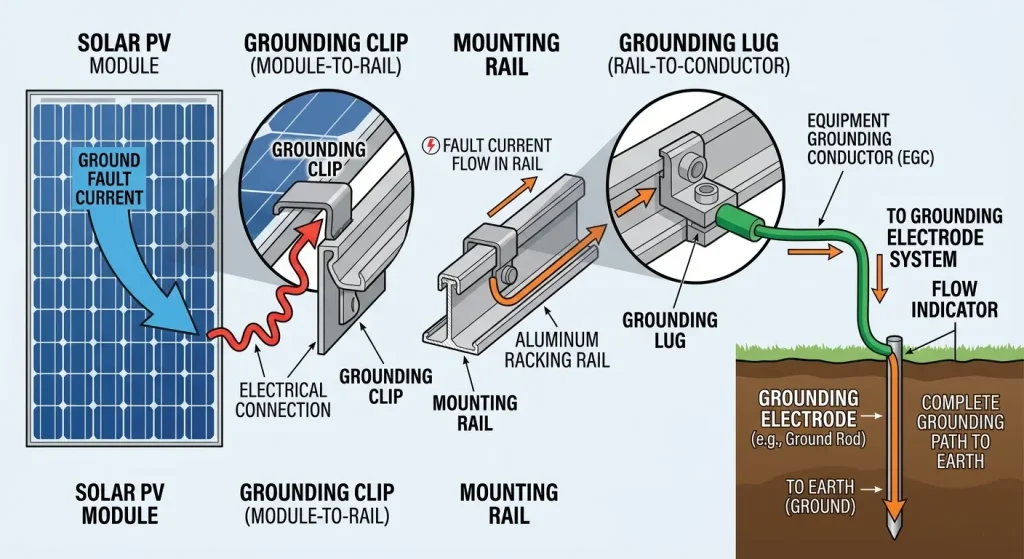
It’s easy to focus on the big stuff—the high-efficiency modules, the smart inverters, and the robust racking. However, a PV system is a complex electrical network exposed to the harshest environments imaginable. Without proper grounding clips in PV systems, you’re essentially building a massive lightning rod without a safe exit strategy for the current. It isn’t just about preventing a shock if someone touches the frame; it’s about ensuring that every single metal component is at the same electrical potential. This “equipotential bonding” is what prevents dangerous arcs and protects your sensitive electronics from surging during a fault.
Understanding the Basics of PV Grounding
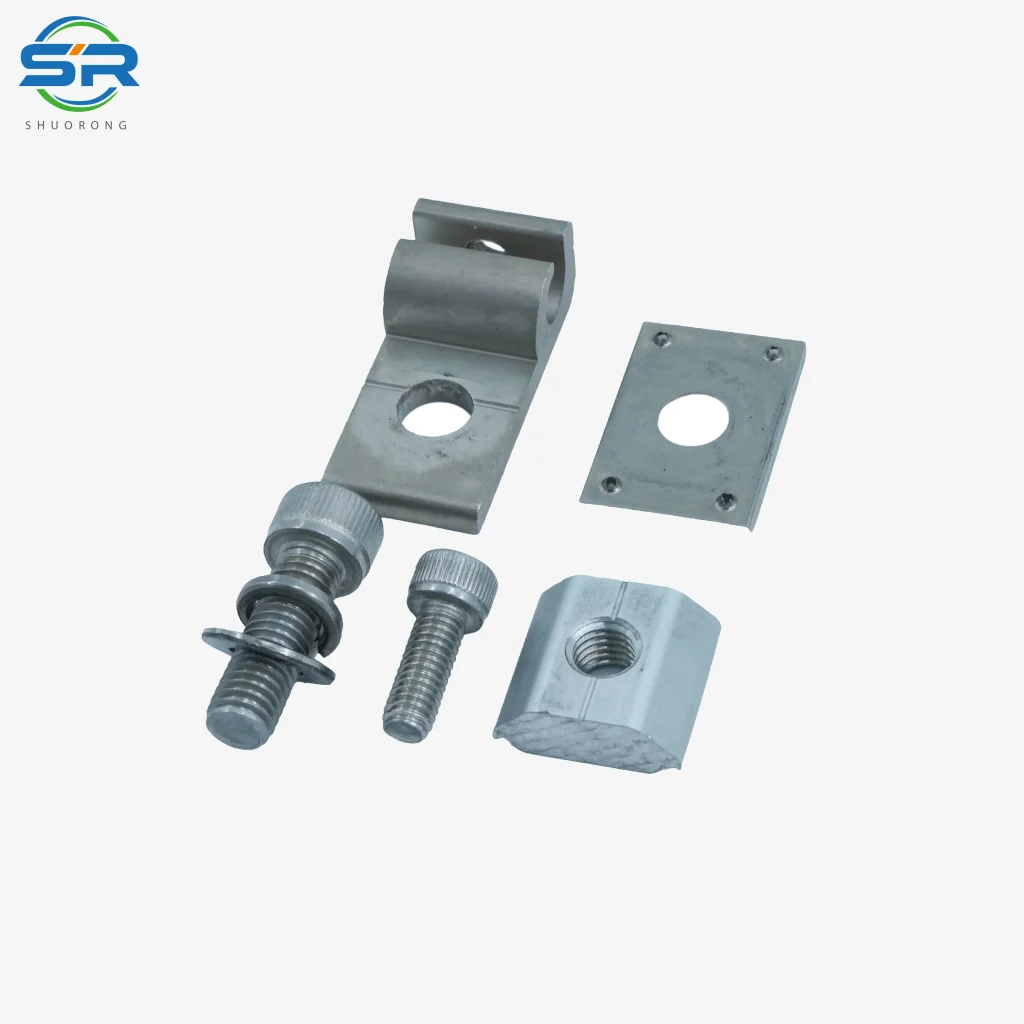
So, what are we actually talking about when we say “grounding clips”? These are small, specialized fasteners usually made of high-strength stainless steel. Their job is simple but critical: to create a permanent electrical path between the solar module frame and the mounting rail. Without grounding clips in PV systems, the anodized coating on your aluminum rails—which is great for preventing rust—actually acts as an insulator, blocking the flow of electricity. Think of the clip as the bridge that ensures any stray current has a fast, low-resistance path straight to the earth.
The Science Behind the Bite: How Grounding Clips Work
You might wonder why we don’t just use a standard washer or a bolt to ground things. The problem is that aluminum develops a very tough, non-conductive oxide layer. If you just rest a frame on a rail, you might have zero electrical continuity despite the mechanical connection. This is where the engineering of grounding clips in PV systems gets clever. These clips aren’t flat; they are designed with sharp, pointed “teeth” or dimples that are harder than the aluminum they’re pressing against.
Piercing the Anodized Armor of Aluminum Rails
When an installer tightens the mid-clamp, the grounding clips in PV systems are compressed. Those stainless steel teeth literally bite through the anodization, digging into the raw AL6005-T5 aluminum underneath. It’s a bit like how a mosquito pierces skin—it’s a tiny intrusion that makes a direct connection to the “circulatory system” of the ground path. At SR Solar, we’ve refined the geometry of these teeth to ensure they penetrate deeply enough for a solid bond without compromising the structural integrity of the module frame.
Creating a Gas-Tight Electrical Connection
It isn’t enough to just touch the metal; the connection needs to be “gas-tight.” This means the contact point is so tight that oxygen and moisture can’t get in to cause oxidation. A high-quality grounding clip in PV systems ensures that even after twenty years of rain, salt spray, and humidity, that electrical path remains as clear as the day it was installed. If that connection fails, you risk “arcing,” which can lead to fires—something no EPC or project owner ever wants to deal with.
Why EPCs are Swapping Traditional Lugs for Integrated Clips
If you’ve been in the industry for a decade, you probably remember the days of “lugs and 6 AWG copper.” Installers had to run a copper wire to every single module, stripping ends and screwing down lugs. It was a nightmare. Moving to integrated grounding clips in PV systems has been one of the biggest “soft cost” killers in solar history. It turns a multi-step electrical process into a single mechanical step during the module mounting phase.
Slashing Labor Costs and Installation Time
Time is money, especially when you’re managing a 50MW site. By using grounding clips in PV systems that are pre-assembled into the clamps, we’ve seen installation times drop by nearly 20%. You don’t need a separate electrical crew following the mechanical team to “finish the grounding.” As the panels go down, the grounding is done. It’s elegant, it’s fast, and it keeps your project on schedule. Wouldn’t you rather have your team focused on the next row instead of fiddling with tiny copper wires?
Reducing Human Error in Large-Scale Deployments
Let’s be real: on a hot afternoon, it’s easy for a tired installer to miss a single lug or forget to torque a ground screw. With grounding clips in PV systems, the risk of human error is significantly lowered. Since the clip is part of the clamp assembly, if the module is secured, it’s grounded. This provides massive peace of mind during the final walkthrough and commissioning phase. You aren’t hunting for a single missing bond in a sea of ten thousand panels.
Navigating the 2026 Regulatory Landscape: NEC and UL Standards
Regulatory compliance isn’t just about passing inspection; it’s about bankability. In 2026, the standards for grounding clips in PV systems are tighter than ever. If your components aren’t listed and tested for their specific application, your insurance might not cover you in the event of a fire. We stay ahead of these curves so you don’t have to worry about a red tag from the AHJ (Authority Having Jurisdiction).
UL 2703 vs. UL 467: What Developers Need to Know
There is often confusion between these two. UL 467 is the general standard for grounding and bonding equipment, but UL 2703 is the specialized standard for PV mounting systems. When selecting grounding clips in PV systems, you want to ensure they are part of a UL 2703 listed system. This means the clip, the rail, and the clamp have been tested together as a single system. SR Solar products are rigorously tested to ensure they meet these combined mechanical and electrical benchmarks.
Staying Compliant with NEC 2026 Updates
The National Electrical Code (NEC) is constantly evolving. The latest 2026 revisions continue to emphasize the need for “listed” bonding paths. Using generic, non-certified grounding clips in PV systems is a recipe for a project shutdown. Our engineering team at SR Solar keeps a pulse on these changes to ensure our hardware isn’t just “good enough” for today, but ready for the inspections of tomorrow. Are you sure your current supplier is doing the same?
Fighting the Elements: Corrosion, Vibration, and Thermal Expansion
Solar arrays are basically living, breathing things. They expand in the noon sun and contract in the midnight cold. They vibrate in high winds. If your grounding clips in PV systems aren’t designed to handle this movement, they will fail. A loose grounding connection is essentially an open circuit waiting to happen.
The SUS304 Advantage in Harsh Environments
At SR Solar, we use SUS304 stainless steel for our grounding clips in PV systems. Why? Because it’s the gold standard for resisting atmospheric corrosion. Whether you’re building in a coastal “C5” environment with salty air or a desert with abrasive sand, SUS304 keeps its “bite.” You don’t want a clip that rusts out in five years, leaving your array ungrounded and vulnerable.
Maintaining Continuity Through Decades of Thermal Cycling
Every time the temperature shifts, the aluminum rail and the stainless clip expand at different rates. High-quality grounding clips in PV systems are designed with a “spring” effect. They maintain constant pressure on the contact points, even as the metals move. This resilience ensures that the electrical resistance remains low for the entire 25-year life of the system. It’s all about building for the long haul, not just for the day of the ribbon-cutting.
The SR Solar Difference: Engineered for Bankability
Why do top-tier PV project developers choose SR Solar? It’s because we don’t treat grounding clips in PV systems as an afterthought. We treat them as a core safety component. Our designs are “de-risked,” meaning we’ve done the testing, the material science, and the field trials to ensure they work perfectly every time. When you use SR hardware, you’re telling your investors and insurers that you haven’t cut corners on safety.
We provide more than just parts; we provide confidence. From the way our clips pierce the rail to the ease with which they snap into place, every detail is engineered to make your job easier and your systems safer. Isn’t it time you stopped worrying about grounding faults and started focusing on your next big project?
Conclusion
In the world of solar, it’s the small things that often make the biggest difference. Grounding clips in PV systems might be tiny, but their role in fire prevention, lightning protection, and system longevity is massive. By choosing high-quality, UL-listed components from SR Solar, you’re not just buying hardware—you’re securing your investment and protecting the people who work around these systems every day. Don’t let a sub-par grounding strategy be the weak link in your solar array.
Frequently Asked Questions (FAQs)
1. Can I reuse grounding clips if I have to move a module?
Generally, no. Grounding clips in PV systems are designed to deform and “bite” into the metal during the initial torque. Once they’ve been compressed, the teeth may no longer provide the necessary penetration for a safe second connection. It’s always best to use a fresh clip to ensure a code-compliant bond.
2. Are all grounding clips compatible with every racking system?
Definitely not! Grounding clips in PV systems are often specifically engineered to fit a particular rail profile or clamp design. Using a “universal” clip that isn’t tested with your specific racking can lead to poor electrical contact or mechanical failure. Always stick with the manufacturer’s recommended components.
3. Do I need a grounding clip on every single module?
Yes, in most modern “integrated grounding” designs, every module must be bonded to the rail. The grounding clips in PV systems create a network of parallel paths. If one connection were to somehow fail, the rest of the system remains grounded, providing a redundant safety net.
4. How do I know if the grounding clip is installed correctly?
The best way is to follow the manufacturer’s torque specifications. When the mid-clamp is tightened to the correct value, it provides enough force for the grounding clips in PV systems to pierce the anodized layer. You can also perform a “continuity test” using a multimeter during commissioning to verify a low-resistance path.
5. Why are most grounding clips made of stainless steel instead of copper?
While copper is a great conductor, it reacts poorly with aluminum (galvanic corrosion). Stainless steel grounding clips in PV systems offer the best balance of strength, corrosion resistance, and electrical conductivity without causing the aluminum rails to degrade over time.