When we sit down with EPCs or IPPs to discuss a new project, the conversation usually starts with a map and a data sheet. You see, a ground mount solar design isn’t a one-size-fits-all product you can just pull off a shelf and hope for the best. If you’re building in the gusty plains of the American Midwest, your requirements are worlds apart from a project in the humid, salt-misted coasts of Southeast Asia or the rocky terrains of Southern Europe. At SR Solar, we treat every project like a unique structural puzzle.
Why Site-Specific Data is the Backbone of Your PV Project
We often tell our clients: “Give us your data, and we’ll give you peace of mind.” The design process at SR starts long before a single piece of steel is cut. We lean heavily on your geotechnical report and local meteorological data. Why? Because the difference between a 2.0mm and a 2.5mm rail thickness might seem negligible on paper, but over a 50MW site, it’s the difference between a profitable venture and a structural nightmare.
The Role of the Geotechnical Report in Foundation Selection
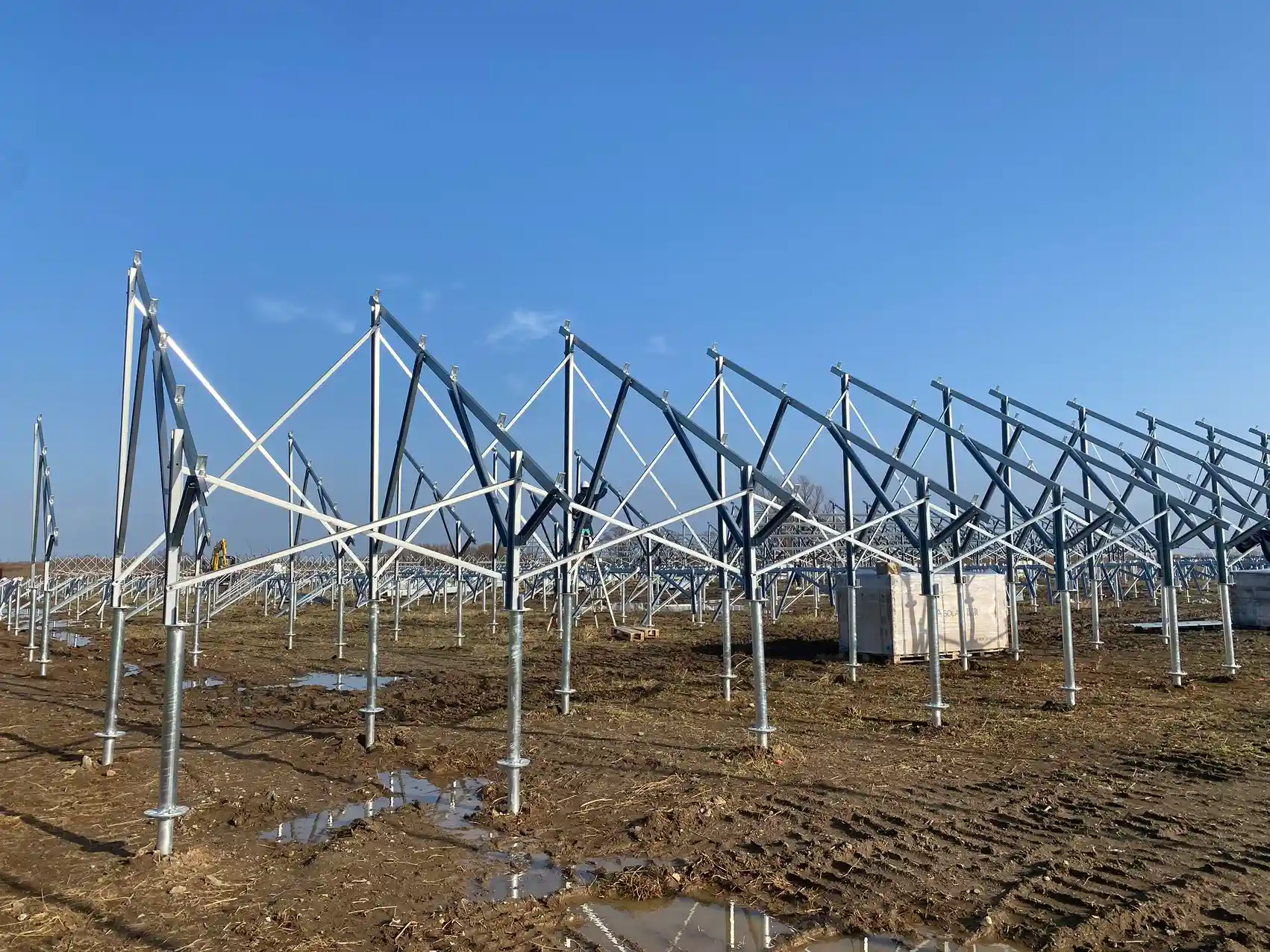
If you don’t know what’s happening three meters under the surface, you’re flying blind. Does the soil have high acidity that will eat through galvanization? Is there a hidden layer of basalt that will break your pile drivers? When you provide SR Solar with a geotechnical report, our engineers analyze the soil’s skin friction, pH levels, and load-bearing capacity. This allows us to determine if you need a driven pile, a ground screw, or perhaps a ballasted concrete foundation for those tricky “no-dig” sites.
Navigating Local Codes: ASCE 7, Eurocode, and Beyond
We don’t just guess at safety margins. Our team references international heavyweights like ASCE 7-22 for wind and snow loads, Eurocode 3 for steel design, and IEC 62817 for solar trackers. Have you ever looked at a wind map and realized your site is in a “special wind region”? We have. By using tools like the ASCE Hazard Tool and PVcase, we ensure that your ground mount solar design complies with the specific legal and safety requirements of your jurisdiction.
The Topography Challenge: Managing Slope and Shading
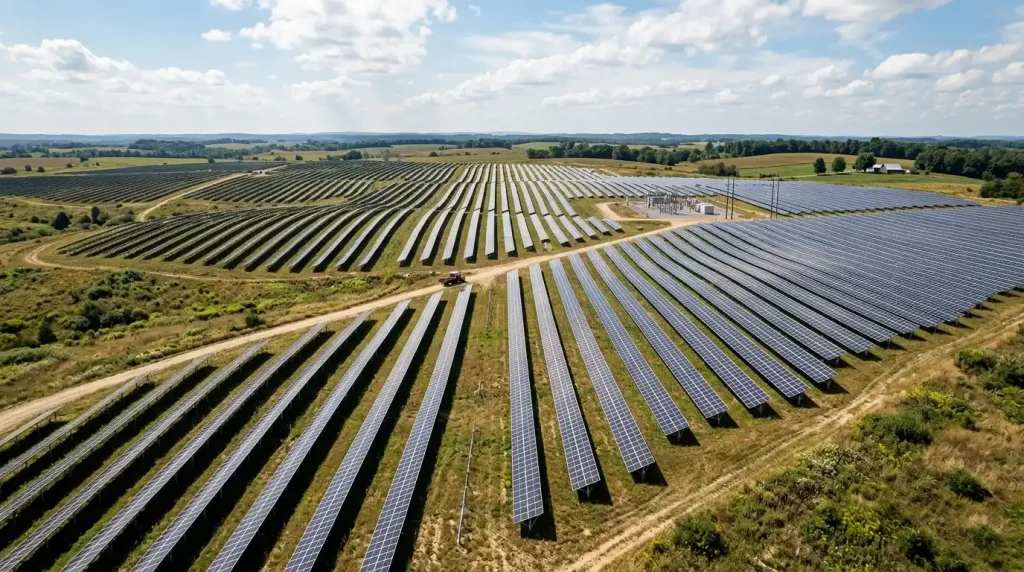
Flat land is a luxury most developers don’t have anymore. We are increasingly seeing projects pushed onto “marginal” lands with slopes exceeding 10 or 15 degrees. This introduces a massive variable in ground mount solar design. On a slope, the wind doesn’t just hit the array; it can create a “parachute effect” or localized turbulence.
At SR Solar, we calculate the inter-row spacing with surgical precision. We want to maximize your Ground Coverage Ratio (GCR) without having the front row cast a shadow on the back row during those critical winter months. If your site is particularly steep, we might suggest a terraced layout or adjustable rear legs to keep the panels at the optimal tilt without requiring massive amounts of expensive earthmoving.
Ground Conditions: From Shifting Sands to Solid Rock
I remember a project in the Middle East where the sand was so fine it felt like fluid. Traditional piles would have just slipped right out. On the flip side, we’ve handled projects in the Alps where you’d need a diamond drill just to make a dent.
Matching Foundation Types to Soil Chemistry
- Driven Piles: Our “bread and butter” for large-scale sites with cohesive soil. Fast, cheap, and reliable.
- Ground Screws: The go-to for rocky or uneven ground where you need a “corkscrew” effect to gain tension.
- Concrete Ballast: Essential for landfills or brownfields where you cannot penetrate the ground cap.
But here’s the kicker: we also look at the “frost line.” In colder climates, if your foundation doesn’t go deep enough, “frost heave” can literally push your posts out of the ground over the winter. We design our pile depths to stay well below that line, ensuring your array stays level for 25 years.
Calculating the Invisible Forces: Wind and Snow Loads
Wind is the “silent killer” of solar arrays. It’s responsible for about 70% of structural failures in the field. When we look at ground mount solar design, we aren’t just looking at the average breeze; we are designing for the 3-second gust that happens once every 50 years.
The Impact of High Velocity Wind on Structural Integrity
In high-wind zones (above 130 mph), the uplift forces can be staggering. It’s not just about the weight of the panels; it’s about the suction created on the leeward side. SR Solar uses wind tunnel testing data to refine our profiles. We might recommend cross-bracing or thicker C-channels to ensure that the “vortex shedding” doesn’t lead to structural fatigue.
Snow Accumulation and Tilt Angle Optimization
If you’re in a high-latitude region, snow is your heavy, wet enemy. A heavy snowfall can put thousands of pounds of pressure on your modules. We often suggest a steeper tilt—perhaps 30° or more—to encourage “snow shedding.” It’s a delicate balance: you want to maximize yield but you must protect the structure from bending under the weight.
Material Science: Aluminum vs. Steel in Utility-Scale Projects
We get asked this a lot: “Should I go with Aluminum or Steel?”
In the world of ground mount solar design, Steel is usually the king of the jungle for large-scale projects. It’s stronger, stiffer, and generally more cost-effective when you’re buying by the ton. However, if you’re building a smaller commercial array near a salt-sprayed coastline, Aluminum’s natural corrosion resistance and lighter weight might save you money on labor and maintenance in the long run. At SR, we provide both, but we’ll always give you the “no-nonsense” recommendation based on your project.
Battle Against Corrosion: Hot-Dip Galvanized vs. ZAM vs. Anodizing
The “finish” on your metal is what determines if your site looks like a rust bucket in ten years.
Why ZAM is Revolutionizing Ground Mount Longevity
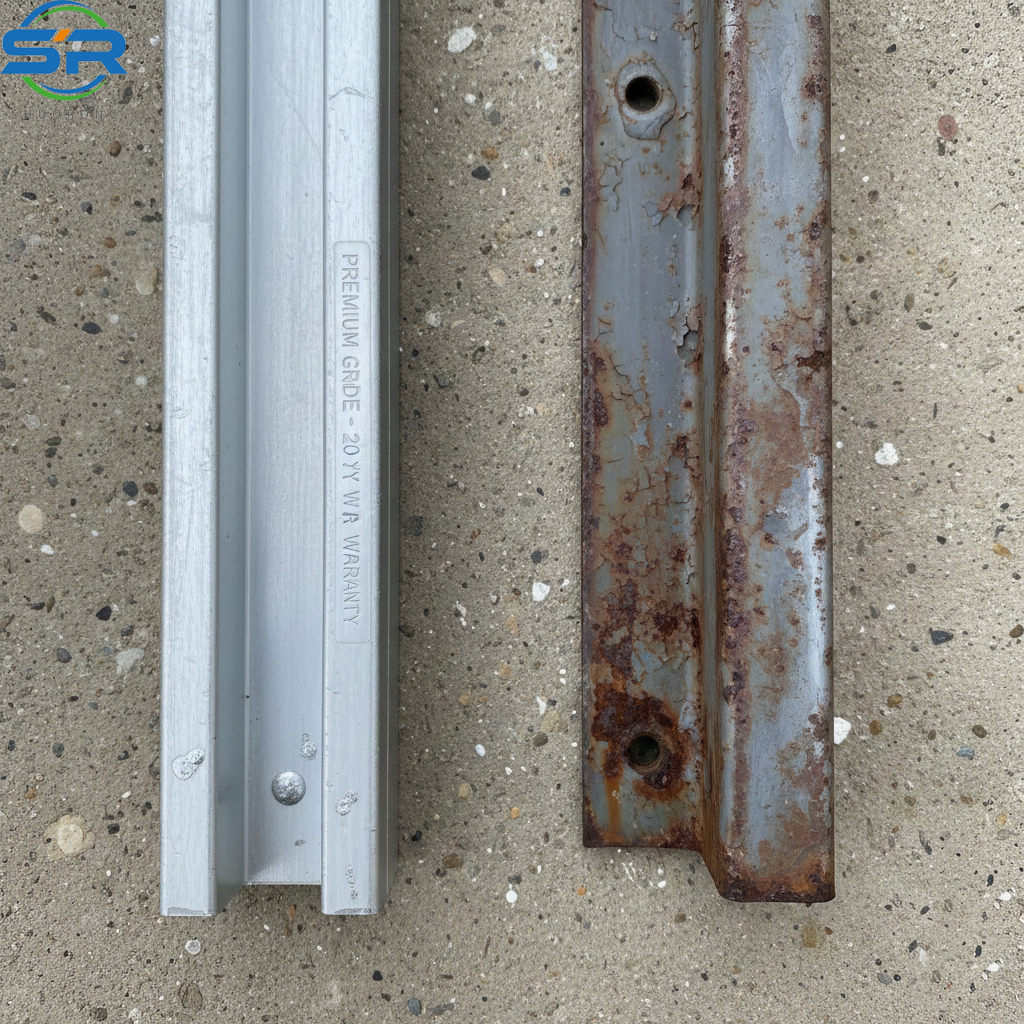
For a long time, Hot-Dip Galvanizing (HDG) was the gold standard. You dip the steel in molten zinc, and it gets a thick protective layer. It’s great, but it’s heavy and can be brittle. Enter ZAM (Zinc-Aluminum-Magnesium).
ZAM is a “miracle” coating for solar. It’s thinner but 2 to 10 times more corrosion-resistant than HDG. The coolest part? It’s “self-healing.” If a worker scratches the rail during installation or drills a new hole, the magnesium in the coating actually migrates to the exposed edge to seal it off from oxygen. It’s the kind of tech that makes an engineer’s heart beat a little faster.
How SR Solar Customizes Your Ground Mounting System
So, how do we actually work together? It’s a simple, transparent flow:
- You provide the coordinates: We find the latitude/longitude to determine solar angles and climate data.
- You send the Geotech & Wind/Snow specs: We ingest your site-specific reports.
- The Engineering Phase: Our team uses software like PVcase to simulate the terrain and load-bearing requirements.
- Material Selection: We propose the best combo—maybe ZAM-coated steel with driven piles.
- The Result: A fully stamped, site-compliant ground mount solar design that is optimized for both safety and your budget.
Conclusion: Building for the Next Three Decades
At the end of the day, a solar project is a marathon, not a sprint. A cheap design today is a massive liability tomorrow. By focusing on site-specific data, high-end materials like ZAM, and rigorous adherence to international codes, SR Solar ensures that your ground mount system is a rock-solid asset. We take the complexity of geotech, wind dynamics, and material science and turn it into a streamlined, easy-to-install reality. Let’s build something that lasts.
FAQ
1. Does SR Solar provide structural stamps for local permits?
Yes! We design according to local standards like ASCE or Eurocode, and we can provide the necessary engineering documentation to support your permitting process.
2. Can I use a ground mount system on a site with a 20-degree slope?
It is possible, but it requires a specialized design. We usually implement adjustable mounting components or terraced rows to handle steep inclines while minimizing shading.
3. Why is ZAM better than Hot-Dip Galvanizing for solar?
ZAM offers superior corrosion resistance (especially in high-salt or humid areas) and has self-healing properties on cut edges, which significantly extends the lifespan of the structure.
4. What is the most cost-effective foundation for a large-scale project?
In most cases, driven piles are the most cost-effective due to the speed of installation. However, this depends entirely on your soil report—hard rock or very loose sand may require ground screws or concrete.
5. How long does the design process take with SR Solar?
Once we have your geotechnical report and site layout, our engineering team can typically produce a preliminary design and quote within a few business days.