As a solar structural engineer, I often sit in meetings where the choice of mounting material is treated as an afterthought or a rigid binary rule. Someone will invariably say, “It’s a rooftop project, so we must use aluminum.” But if you are an EPC contractor, a project developer, or an investor tracking the Levelized Cost of Energy (LCOE), you know that rigid assumptions are the enemy of project profitability. Steel vs Aluminum Solar Roof Mounting is a important for solar project
In the modern commercial and industrial (C&I) solar sector, the pressure on EPC margins is higher than ever. Every dollar spent per watt on structural components must justify itself in terms of load capacity, installation speed, corrosion resistance, and asset longevity.
The choice between steel and aluminum solar mounting systems isn’t a matter of which material is “better” in a vacuum. It is a question of matching structural physics with project economics. In this deep dive, we will break down how these two materials perform across different rooftop scenarios, why the common myths around weight can lead to flawed engineering decisions, and how to select the right system to optimize both CAPEX and structural reliability.
The Core Material Dilemma: Mechanical Properties vs. Project Economics
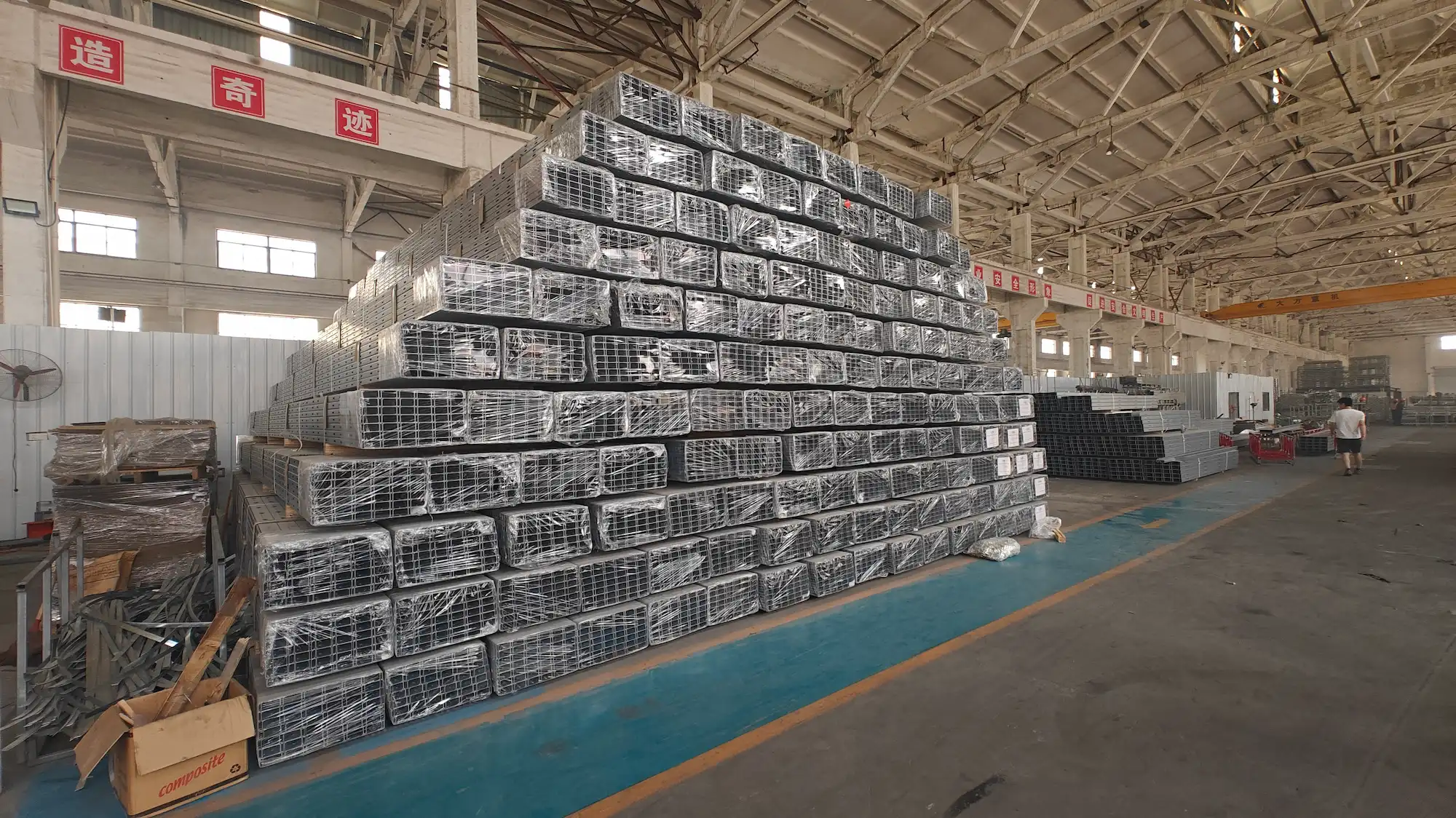
Before we look at specific rooftop configurations, let’s look at the raw materials. When we talk about steel in modern solar racking, we are rarely talking about heavy, old-fashioned hot-dip galvanized (HDG) structural steel channels unless we are dealing with extreme snow loads. Instead, the industry has shifted significantly toward high-tensile, self-healing alloys like Zinc-Magnesium-Aluminum (ZAM or MAC) coated steel. On the other side, aluminum systems almost universally utilize extruded anodized aluminum alloys, primarily AL6005-T5.
Here is how they stack up on the engineering ledger:
- Density and Weight: Aluminum is roughly one-third the weight of steel for the same volume. This lightweight nature is its primary selling point in traditional rooftop applications.
- Structural Strength: Steel has a significantly higher modulus of elasticity compared to aluminum. This means steel can withstand much higher bending moments and mechanical stresses with thinner profiles or longer spans between support points.
- Corrosion Resistance: Anodized aluminum forms a natural oxide layer that offers exceptional resistance to atmospheric corrosion, making it excellent for high-humidity or marine environments. Modern ZAM steel responds with a sacrificial protection mechanism where magnesium and aluminum form a stable protective film over cut edges and scratches, closing the gap in lifespan expectations.
- Baseline Cost: On a per-ton basis, raw aluminum is substantially more expensive than steel. When converted into manufactured solar racking components, an aluminum system can carry a material cost premium of 30% to 50% over an equivalent steel system.
So, the fundamental engineering trade-off is clear: Aluminum offers lightweight corrosion resistance at a premium price, while steel offers high structural strength and superior economics at the cost of higher material weight.
Ground Mount vs Rooftop Solar: Why Weight Dynamics Change on the Roof
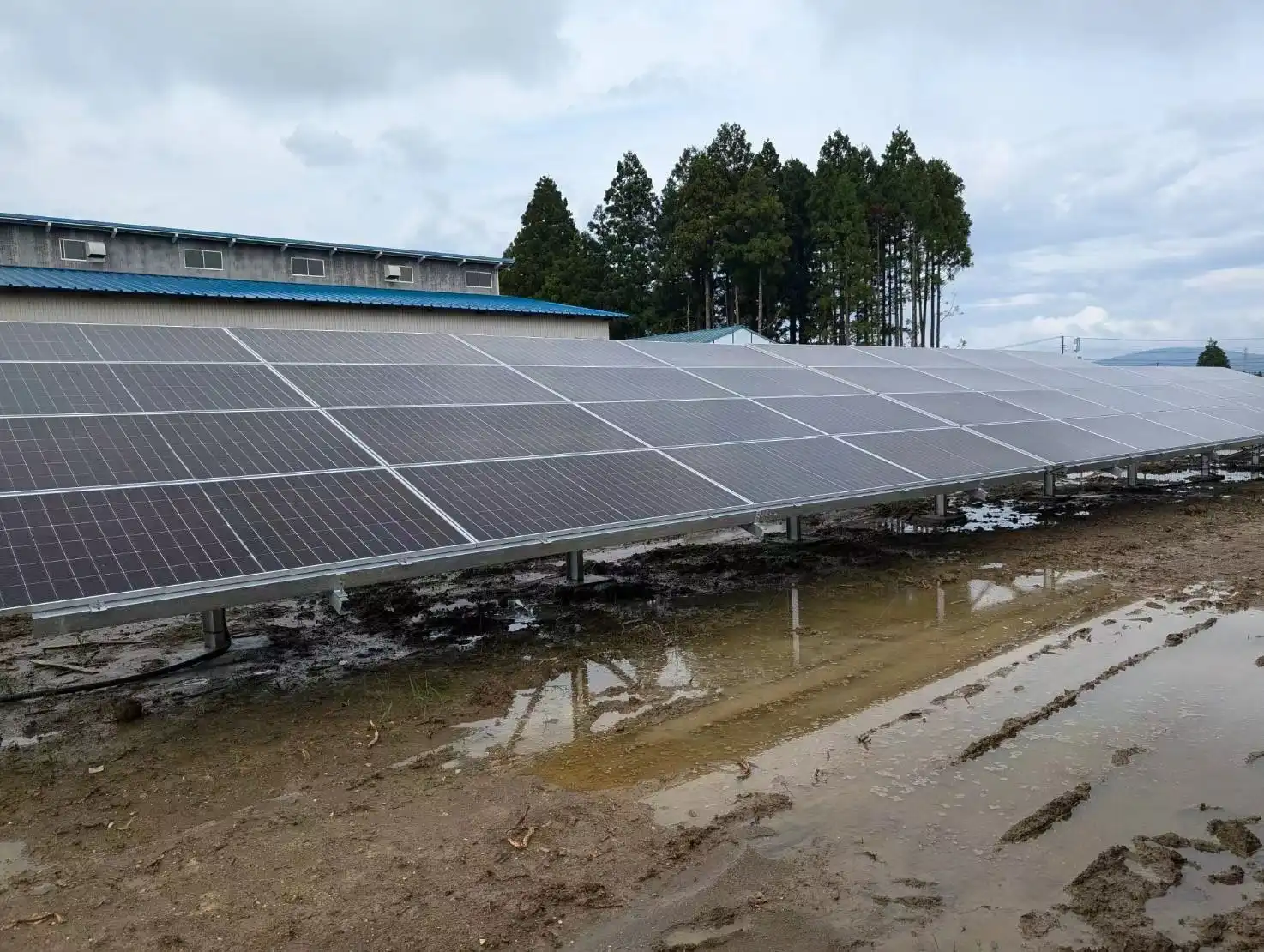
In ground-mounted utility projects, system weight is rarely a constraint. In fact, heavier steel structures are often preferred because they easily handle high wind loads and can be driven directly into the soil via rammed posts.
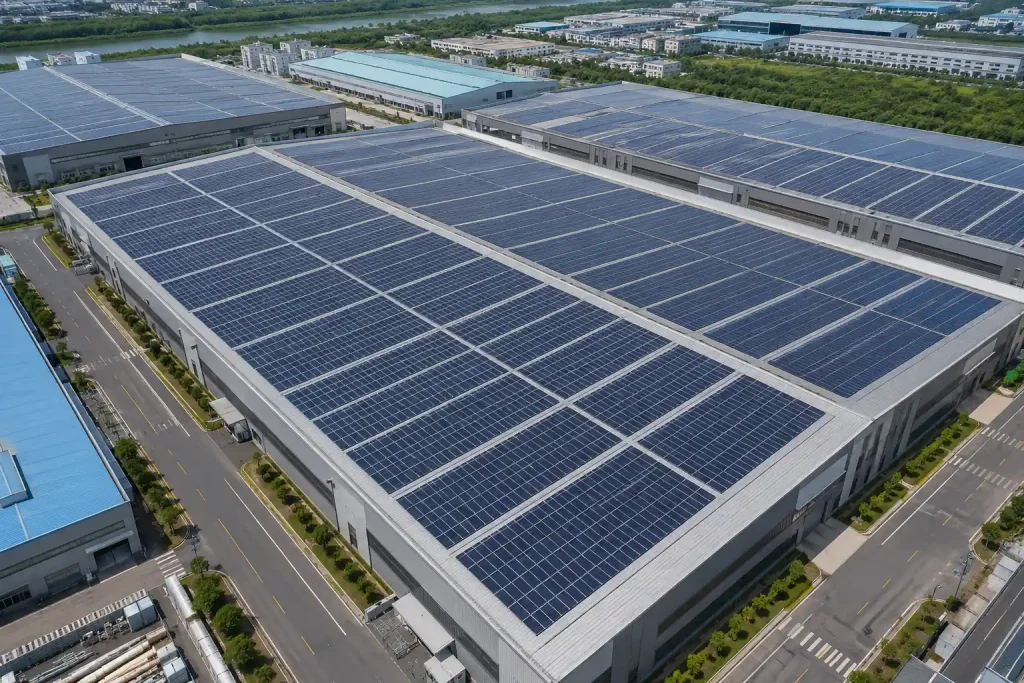
On a rooftop, however, every kilogram matters—but perhaps not in the way you might think. When calculating the structural impact of a solar array on a building, engineers must look at the Total Dead Load (the combined weight of modules, racking, walkways, inverters, and fasteners) and compare it against the roof’s Reserve Structural Capacity.
A common mistake in EPC projects is looking solely at the shipping weight of the racking components and assuming that aluminum is always the safest choice for the building’s integrity. To understand why this logic fails in real-world scenarios, we have to look at the specific mounting topology being deployed.
Scenario A: Ballasted Flat Roof Systems – The Weight Paradox
Let’s look at flat concrete roofs, which are common in commercial logistics centers and manufacturing plants. Because drilling into a concrete roof waterproof layer is highly risky and often voids the building’s warranty, most engineers opt for a ballasted flat roof system.
In a ballasted configuration, the solar array is held down against wind uplift forces purely by dead weight—typically in the form of concrete ballast blocks placed on metal trays or integrated into the racking feet.
Why Aluminum Isn’t Always the Default for Ballasted Roofs
Here is where the math gets interesting, and where many project managers overpay for aluminum. Let’s look at a typical wind load calculation for a 1 megawatt flat roof project. Based on local wind tunnel data, suppose the engineering team determines that each solar module location requires a total downward force of 60 kilograms at the corners of the array to prevent sliding and overturning during a 50-year storm event.
If you use an aluminum racking system, the racking components themselves might weigh about 3 kilograms per module. To hit your required 60 kilograms of total weight, you must add 57 kilograms of concrete ballast.
Now, let’s swap that out for a high-strength ZAM steel racking system. The steel racking components will be heavier—say, 9 kilograms per module. Because the steel itself adds to the structural dead weight, you now only need 51 kilograms of concrete ballast to reach the exact same safety threshold.
Notice what happened here? The total load exerted on the building’s structural columns and roof slab is exactly the same (60 kilograms). The weight difference between the steel and the aluminum is completely neutralized by the requirement for concrete ballast. In this specific scenario, choosing an aluminum system does not reduce the load on the building; it simply shifts the weight allocation from the metal racking to the concrete block, while forcing you to pay a substantial premium for the raw aluminum material.
Cost-Benefit Analysis: CAPEX vs. Structural Load
In ballasted flat roof systems, where the building has sufficient structural capacity to support the required wind-uplift ballast, steel is often the clear winner for project ROI.
At SR Solar, we typically run comparative load-allocation models for flat-roof clients. Unless the project is located in an ultra-corrosive chemical processing plant zone, a ZAM steel ballasted system offers identical structural safety margins as aluminum but slashes structural procurement costs significantly. Why pay for expensive extruded aluminum when its primary benefit—weight reduction—is being canceled out by the addition of cheap concrete?
Scenario B: Penetrative & Non-Penetrative Regular Rooftop Mounts
The engineering logic changes completely when we move away from flat concrete slabs to sloped industrial roofs, such as trapezoidal metal sheets, corrugated fiber-cement, or standing seam roofs. In these applications, the mounting system does not rely on ballast. Instead, it anchors directly into the building’s structural purlins using self-drilling screws, hanger bolts, or non-penetrative roof clamps that grip the standing seams.
When Aluminum is the Only and Best Choice for Low-Load Roofs
On many aging industrial warehouses or light-gauge steel buildings, the roof structure was designed with very thin safety margins. It was built to support the sheet metal, a minimal snow load, and nothing else. We frequently encounter roofs that have a residual load capacity of less than 10 to 15 kilograms per square meter.
In these highly load-sensitive environments, aluminum is the only and best choice.
Because these systems are anchored directly to the purlins, we do not need to add ballast to fight wind uplift; the building’s own frame resists the force. Therefore, every single kilogram you can shave off the racking system directly protects the roof from structural deflection or catastrophic failure.
An aluminum short-rail system or a lightweight railless clamp system designed by SR Solar adds negligible weight to the metal sheet (often less than 1.5 kilograms per square meter excluding the module). If you attempted to use heavy steel rails here, the dead load of the racking alone could push the building past its structural elastic limit, leading to roof sagging, compromised waterproofing, and long-term liability.
The Steel Alternative for High-Load Capacity Roofs
What if the industrial roof is brand new, engineered to modern standards, and features heavy-duty steel purlins with plenty of structural headroom?
In that case, forcing an aluminum mounting system onto the project is an expensive mistake. If the roof can easily handle the minor weight difference of a steel racking system, using ZAM steel rails connected via optimized roof brackets provides an incredibly rigid, durable, and cost-effective installation.
The higher yield strength of steel allows for longer spans between the roof attachments. This means you need fewer roof clamps, fewer penetrations (if using a penetrative system), and fewer points of potential water leakage—all while saving on your bill of materials (BOM).
Engineering Deep Dive: Corrosion Resistance, Lifespan, and Wind/Snow Loads
Beyond the weight and cost debate, we must evaluate how these materials perform over a 25-year asset lifecycle under environmental stresses.
| Engineering Factor | Anodized Aluminum (AL6005-T5) | Zinc-Magnesium-Aluminum (ZAM) Steel |
| Yield Strength | Moderate strength; requires thicker profiles under high stress. | Extremely high strength; allows for thinner walls and high load resistance. |
| Corrosion Performance | Excellent in high salinity/marine; susceptible to high alkaline environments. | High self-healing properties; excellent in acidic and industrial environments. |
| Galvanic Isolation | Requires EPDM/plastic washers when in contact with steel fasteners to prevent galvanic corrosion. | Highly compatible with standard structural steel fasteners; requires care at module frame interface. |
| Thermal Expansion | High thermal expansion rate. Requires frequent thermal expansion joints in long rows. | Moderate thermal expansion rate. Allows for longer continuous racking runs. |
Designing for Extreme Wind and Snow Loads
In regions subject to heavy snow accumulation (such as northern latitudes or mountainous terrain), the downward pressure on the solar array is massive. Under these conditions, aluminum rails must be extruded with thick profiles and internal reinforcement webs to prevent bending or buckling under load. This increases their weight and drives up their cost, erasing much of aluminum’s inherent pricing advantage.
品 Steel’s inherent mechanical properties make it naturally suited for high snow loads. A relatively thin-gauge steel profile can carry the same snow load that would cause an aluminum rail to deflect beyond acceptable tolerances.
When designing the best solar mounting system for high wind or high snow zones, the engineering process at SR Solar always evaluates the cross-sectional properties required. If the mechanical load requirements force an aluminum rail to become heavy and thick, we pivot the design toward high-tensile steel to maintain structural safety while protecting the client’s budget.
How to Choose the Right Solar Mounting System
To streamline your engineering and procurement process, we have synthesized these real-world constraints into a clear, actionable decision-making matrix. When evaluating your next C&I rooftop project, follow this step-by-step logic path:
1. Structural Load Limits (The Hard Stop)
Before choosing a supplier or a material, hire a licensed structural engineer to perform a roof load audit. If the building cannot support the dead weight of steel plus the dynamic wind/snow loads, aluminum is your mandatory choice. If the building has structural headroom, unlock the cost-saving potential of steel.
2. Foundation and Fixing Types
- For ballasted projects: Default to steel unless site-specific conditions prohibit it.
- For trapezoidal metal roofs: Aluminum profiles offer fast installation and low weight.
- For standing seam roofs: Aluminum clamps are lightweight and eliminate the risk of rusting on the seam interface.
3. Environmental Conditions vs. Budget (CAPEX vs. LCOE)
Do not look only at the upfront cost (CAPEX). A cheap, poorly galvanized steel system will rust within 7 years in a coastal environment, destroying your LCOE through high maintenance costs and early replacement cycles. Conversely, over-specifying anodized aluminum in a dry, low-corrosivity inland zone inflates your CAPEX without extending the system’s useful life.
The ROI Perspective: Installation Efficiency, Labor Costs, and LCOE
When analyzing the financial return of a solar project, we must look beyond material costs to examine installation efficiency and labor dynamics.
Labor Implications of Material Weight
It is undeniably true that aluminum is easier to handle on-site. A single installer can carry multiple 6-meter aluminum rails across a roof without fatigue. This lightweight characteristic can speed up mechanical installation times, reducing local labor costs.
Steel racking is heavier and requires more physical effort to move and align on a roof. However, in modern pre-assembled systems, this gap is closing. Many modern steel tracking and mounting systems feature integrated drop-in clicks and pre-punched holes that minimize the time installers spend fastening components.
Logistics and Shipping Costs
Because steel is denser, shipping a 1 megawatt steel mounting system requires more freight capacity (and higher shipping costs) than shipping an equivalent aluminum system. For remote project sites or international shipping, high freight costs can eat into the initial material savings of steel.
In the SR Solar engineering process, we calculate the Landed Structural Cost. This metric combines material procurement, ocean/land freight, on-site staging labor, and long-term maintenance costs. We only recommend steel when the total landed cost delivers a clear financial advantage over aluminum.
Real-World Lessons from the Field: Common Pitfalls in Rooftop EPC Projects
Over years of overseeing installations and troubleshooting site failures, we have seen where theoretical designs clash with field reality. Here are three critical mistakes to avoid:
1. Ignoring Galvanic Corrosion
A common mistake in C&I projects is mixing metals without proper isolation. If you place an aluminum solar module frame directly onto a bare carbon steel bracket, or use standard zinc-plated steel bolts to fasten aluminum rails, you create a galvanic cell. In the presence of moisture, the aluminum will corrode rapidly, compromising the structural connection.
Engineering Rule: When using steel racking with aluminum module frames, ensure the system includes certified stainless-steel clips or specialized composite isolation washers. At SR Solar, our integrated mounting solutions come with pre-designed galvanic barriers to prevent material degradation.
2. Underestimating Wind Uplift on Roof Edges
In flat-roof ballasted systems, wind forces are not uniform. Wind tunnel testing shows that the corners and edges of a roof experience significantly higher localized wind uplift forces (vortices) than the center of the roof.
A frequent error is applying a uniform ballast calculation across the entire roof. This leads to either over-ballasting the center (putting unnecessary stress on the building) or under-ballasting the edges (risking wind damage). The correct approach requires a zoned ballasting layout where heavier ballast—often optimized by utilizing denser steel racking at the perimeters—is deployed exactly where the aerodynamic forces require it.
3. Overlooking Thermal Expansion
Aluminum expands and contracts at roughly twice the rate of steel under temperature fluctuations. On a large industrial rooftop that swings from sub-zero temperatures on winter nights to very high temperatures under direct summer sun, a continuous run of aluminum rail will experience significant thermal movement.
If your installation team fails to include thermal expansion breaks every 20 to 30 meters, the expanding rails will buckle, pull out roof fasteners, crack module glass, or shear off mounting clamps. Because steel has a lower coefficient of thermal expansion, it allows for longer uninterrupted runs, simplifying the layout design on massive roofs.
Conclusion & Next Steps
There is no one-size-fits-all answer to the steel versus aluminum debate in rooftop solar mounting. Aluminum remains the premium option for weight-sensitive roofs, complex architectural layouts, and highly corrosive marine environments where every kilogram counts. On the other hand, steel (specifically modern ZAM alloys) is a highly cost-effective choice for ballasted flat roofs and robust industrial structures where you can trade material weight for a significant reduction in CAPEX without compromising structural integrity. As an EPC or developer, your goal is to minimize risk while maximizing asset value. Don’t rely on generic material assumptions. Evaluate your building’s residual load capacity, analyze your environmental risks, and calculate the total landed cost of your structural options.
Frequently Asked Questions
1. Is ZAM steel as corrosion-resistant as anodized aluminum for rooftop solar?
In most standard C&I environments, high-quality Zinc-Magnesium-Aluminum (ZAM) coated steel matches the required 25-year lifespan of solar projects. Its self-healing properties protect cut edges from rusting. However, in extreme coastal environments within 1 kilometer of high-salinity seawater, anodized aluminum remains the preferred option due to its superior resistance to salt spray.
2. Why does a ballasted steel system not overload a flat roof compared to an aluminum one?
In ballasted systems, the total downward force required to resist wind uplift is determined by aerodynamics, not the racking material. If a roof zone requires 60 kilograms of total weight, an aluminum system requires more concrete blocks, while a steel system uses less concrete because the steel itself provides part of the weight. The total dead load on the roof remains virtually identical.
3. Do steel mounting systems take longer to install on a roof than aluminum?
Yes, steel is heavier, which can slightly slow down initial material staging and handling on the roof. However, modern engineered steel systems feature pre-assembled components and snap-lock connections that significantly minimize tool time, narrowing the installation speed gap with aluminum.
4. Can I mix steel racking with aluminum solar modules?
Yes, but you must prevent direct contact between the dissimilar metals to avoid galvanic corrosion. Always use certified mounting clamps that feature stainless steel hardware or integrated isolation materials to ensure the aluminum module frame is electrically insulated from the steel structure.
5. How do wind loads affect the choice between steel and aluminum rails?
Under high wind or snow loads, aluminum rails require larger cross-sections and thicker profiles to limit deflection, which drives up material costs. Steel has a much higher structural rigidity, allowing it to withstand high structural stresses with more compact, cost-effective profiles.