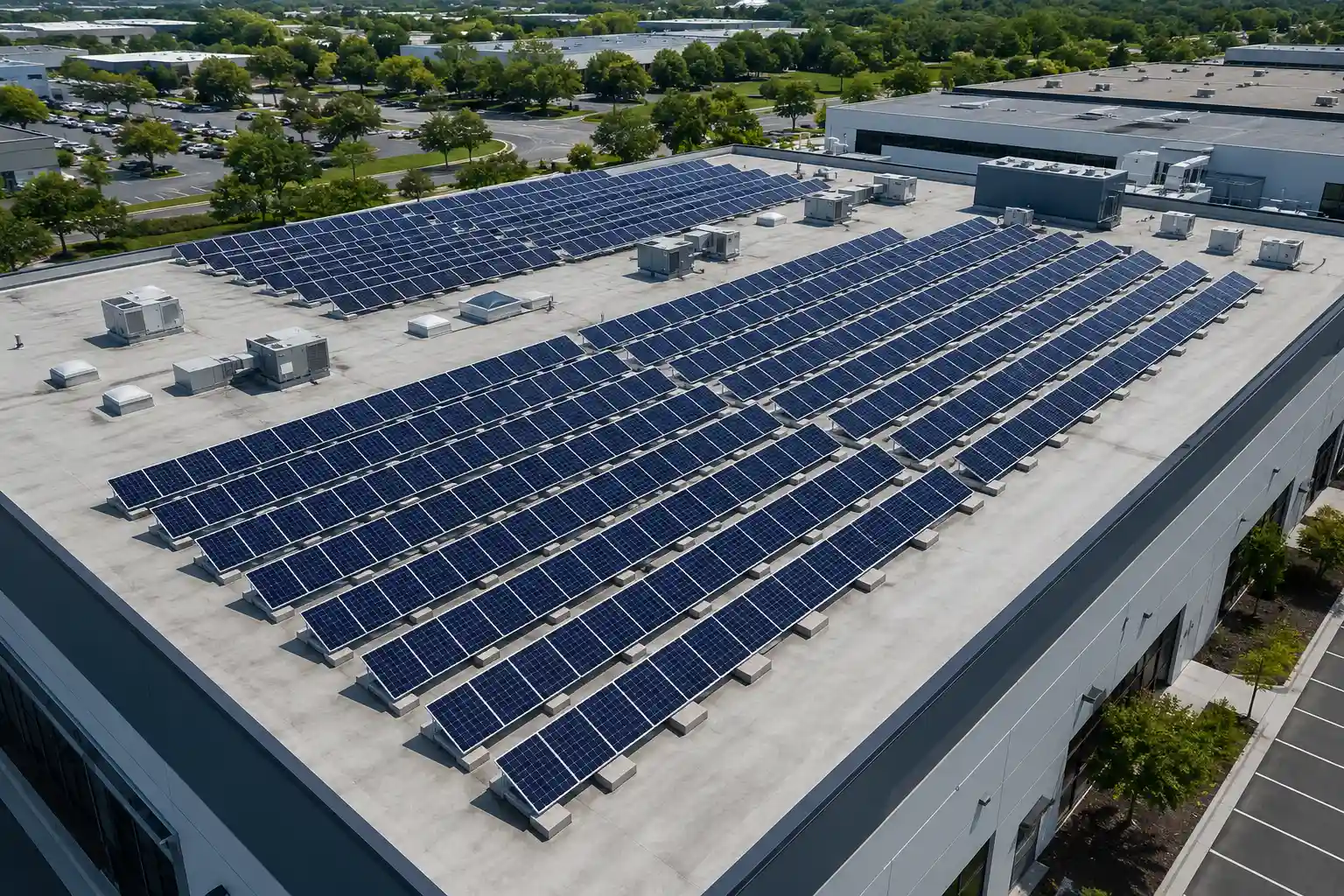
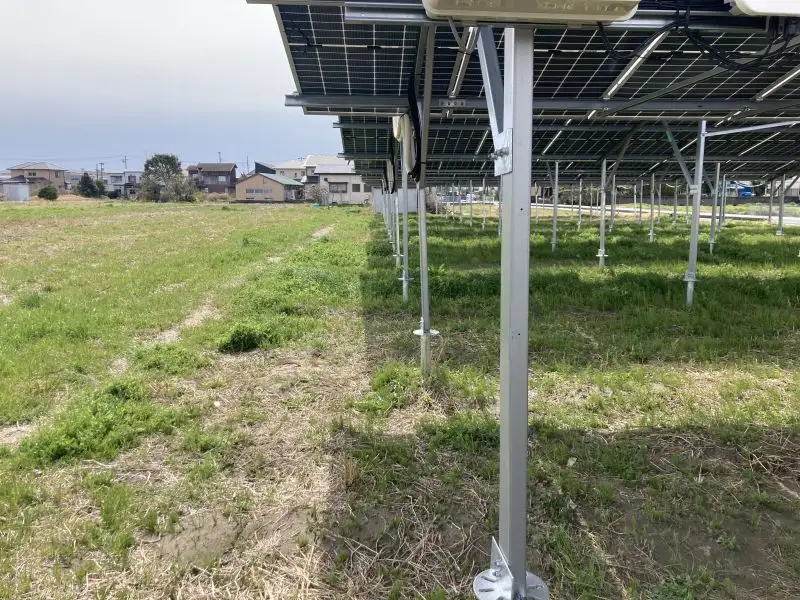
Let’s be honest: in the solar industry, everyone talks about the efficiency of the cells or the smart features of the inverter. But have you ever stood in the middle of a 10MW field during a tropical storm? In those moments, the most important part of the entire site isn’t the silicon—it’s the mounting system. At SR Solar, we’ve built our reputation on being the ideal provider of solar ground mounting systems because we know that if the rack fails, the project fails. We aren’t just a factory; we are a dedicated B2B partner for EPCs, distributors, and developers who need structural reliability that lasts 25 years or more.
Why the Foundation Matters: More Than Just Metal Under the Sun
When you’re planning a utility-scale project, the “soft costs”—mostly labor and installation time—can eat your margins alive if you aren’t careful. Choosing the ideal provider of solar ground mounting systems means finding a balance between raw strength and ease of installation. I’ve seen projects delayed for weeks because the mounting kits arrived with missing parts or required on-site welding. SR Solar was born out of a desire to fix those headaches. We view the mounting system as the “skeletal system” of a solar farm; it has to be flexible enough to handle uneven ground but rigid enough to withstand nature’s worst moods.
The Hidden Costs of Poor Ground Mounting
If you go with a “bargain-bin” supplier, you might save a few pennies per watt upfront. But what happens in year five when the galvanization starts to flake and rust sets in? Or worse, what if the wind load calculations were “optimistic,” and a storm causes a structural collapse? The cost of replacing a mounting system mid-lifecycle is astronomical compared to doing it right the first time. At SR, we focus on high-performance engineering to mitigate these risks, ensuring that your ground mounting system is a “set it and forget it” part of your infrastructure.
Advanced Material Science: Choosing Between AL6005-T5 and Steel
One of the reasons we are considered the ideal provider of solar ground mounting systems is our dual-material strategy. We don’t believe in a “one size fits all” approach because a desert in Arizona has very different needs than a coastal site in the Philippines. We work with two primary high-grade materials to ensure your project has the right defense against the elements.
AL6005-T5 Aluminum: The Lightweight Heavyweight
Our AL6005-T5 anodized aluminum is a fan favorite for commercial projects and coastal regions. Why? Because it’s naturally corrosion-resistant and incredibly easy to handle on-site. When your crew is lifting rails all day, weight matters. This material offers a high strength-to-weight ratio, meaning you get the durability of a much heavier structure without the logistical nightmare of heavy machinery for every move. It looks sleek, stays clean, and handles high humidity like a champ.
Carbon Steel & ZAM: When Brute Strength is Non-Negotiable
For massive utility-scale tenders where the sheer scale of the project demands maximum structural rigidity at a competitive price point, we turn to steel. Our ZAM (Zinc-Aluminum-Magnesium) coated steel and Hot-Dip Galvanized options are engineered for the long haul. These systems offer superior load-bearing capacity, making them the perfect choice for areas with heavy snow loads or high-vibration environments. The anti-rust performance of our ZAM steel is particularly impressive, self-healing at the cut edges to prevent the creep of corrosion over decades in harsh soil.
Engineering for the Extremes: Wind, Snow, and Global Standards
How do you define the ideal provider of solar ground mounting systems? For us, it’s all in the math. We don’t guess; we calculate. Our engineering team designs structures that are validated for wind speeds up to 60m/s and snow loads up to 1.4KN/m². Have you ever wondered if your current supplier is actually meeting the local codes? With SR Solar, you don’t have to wonder.
Meeting International Compliance (JIS, AS/NZS, EN, ASCE)
Global compliance isn’t just a badge for us; it’s a requirement for Tier-1 project financing. Whether you are building in Japan (JIS C8955), Australia (AS/NZS 1170), Europe (EN), or the US (ASCE), our systems are designed to pass the most rigorous safety benchmarks. This makes the permitting process much smoother for our B2B partners. When the inspectors show up, you can hand them our static analysis reports with total confidence.
Versatility in the Dirt: Adapting to Any Terrain
The earth is rarely flat and never perfect. Some sites are rocky, some are sandy, and others are essentially a swamp. As the ideal provider of solar ground mounting systems, we’ve developed foundation options that adapt to your specific geotechnical report. We aren’t going to force a concrete solution on a site where ground screws would be faster and cheaper.
Concrete Foundations vs. Ground Screw Piles
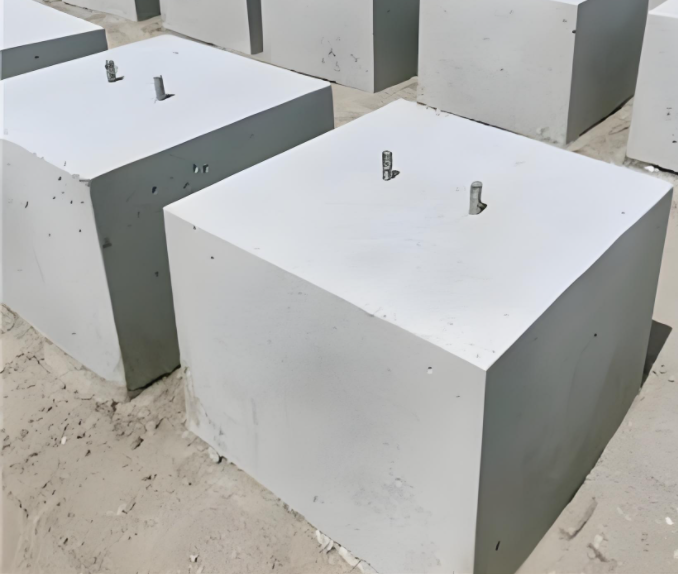
If you’re working with rocky soil that laughs at a drill bit, our concrete base designs provide the heavy ballast you need. On the flip side, if you’re looking for rapid, concrete-free installation, our ground screw piles are a game changer. They allow for instant loading—no waiting for concrete to cure—which can shave days off your construction schedule. It’s all about choosing the right tool for the job, and we provide both.
The SR Solar Secret: Slashing “Soft Costs” via Pre-Assembly
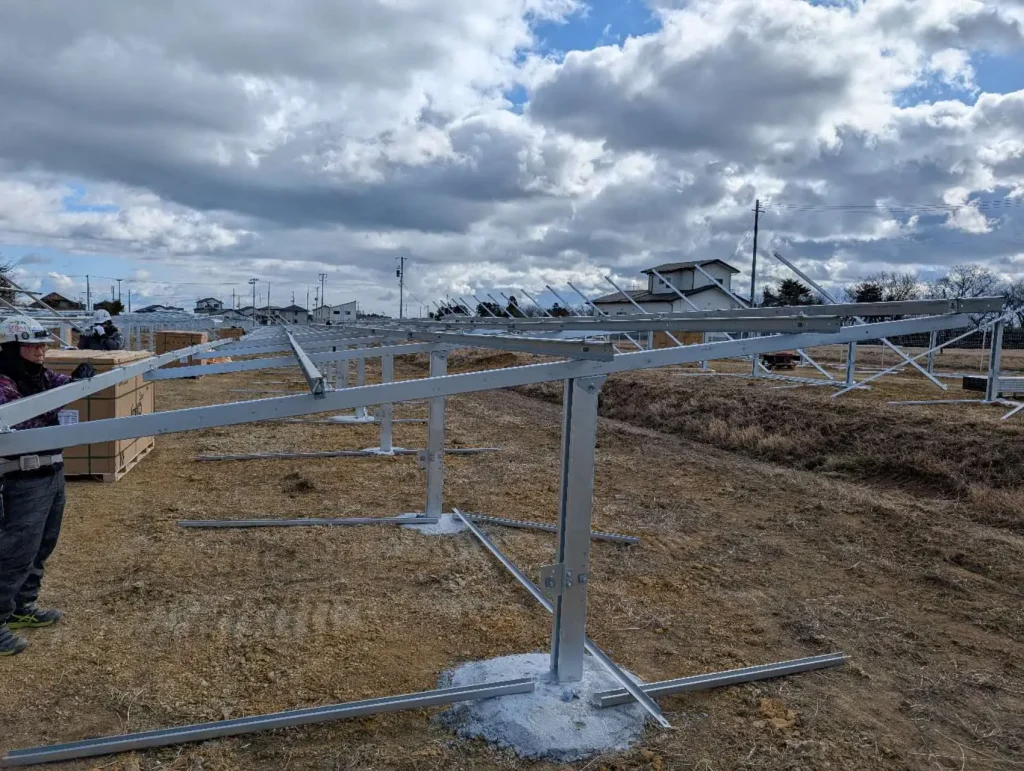
Labor is the wild card in any solar project. If your mounting system arrives as a “bag of bolts” and a thousand loose pieces, your labor costs are going to skyrocket. We decided to do things differently. Our ground mounting systems are designed for “Plug-and-Play” efficiency. We do the heavy lifting in our factory so your team doesn’t have to do it in the field.
Why “Plug-and-Play” is the Future of EPC Efficiency
By pre-assembling major components like supports and tilt-in modules at our facility, we significantly reduce the component count on-site. Imagine a world with no field welding and no on-site cutting. Our precision-machined parts utilize specialized clamps and fasteners that snap together with satisfying clicks. This doesn’t just make the workers happy; it makes the project owners happy because it reduces the risk of human error and onsite accidents.
Technical Support: We Are Your Outsourced Engineering Team
We know that many of our B2B partners are moving fast. You have tenders to win and deadlines to hit. That’s why we act as an extension of your own engineering department. When you work with SR Solar, you aren’t just getting a pallet of rails; you’re getting a full Bill of Materials (BOM) and site-specific structural calculations. We provide the technical documentation you need to secure insurance and financing for your projects. Need a custom tilt angle or a specific row spacing to avoid shading? We’ve got you covered.
The B2B Value Proposition: Why Partnering with SR Solar Wins Tenders
At the end of the day, our goal is to help you win more business. By focusing on customized engineering and installation-ready structures, we’ve seen our partners reduce project timelines by up to 30%. In the utility world, 30% faster means 30% less interest on construction loans and a faster path to COD (Commercial Operation Date). Our B2B-only model means we don’t compete with our clients; we dedicate our wholesale pricing and technical muscle solely to your success.
Conclusion: Building a Sustainable Future Together
In a nutshell, the ideal provider of solar ground mounting systems is the one that takes the stress off your shoulders. At SR Solar, we combine advanced materials, rigorous engineering, and a “ready-to-install” philosophy to make sure your ground-mount projects are profitable and permanent. Whether you’re dealing with high winds, heavy snow, or just a really tight deadline, we’re here to help you nail it.
Frequently Asked Questions
1. Can SR Solar provide customized tilt angles for specific latitudes?
Absolutely! We don’t believe in “standard” angles. Our engineering team calculates the optimal tilt based on your project’s specific GPS coordinates to maximize energy yield and satisfy structural requirements.
2. How does SR Solar ensure the durability of its steel systems in acidic soil?
We use high-grade Hot-Dip Galvanized steel or ZAM (Zinc-Aluminum-Magnesium) coatings. ZAM, in particular, offers a “self-healing” property where the coating migrates to cover cut edges, providing exceptional protection even in corrosive soil conditions.
3. Do you provide site-specific structural calculation reports for permits?
Yes, this is a core part of our B2B service. We provide a full static analysis and Bill of Materials (BOM) tailored to your site’s wind and snow load data to ensure you pass local inspections without a hitch.
4. What is the typical lead time for a large-scale ground mounting project?
Lead times vary by material and project scale, but because we control our manufacturing and pre-assembly process, we are generally able to deliver faster than industry averages. Contact us with your project specs for a precise timeline!
5. Is the aluminum system suitable for areas with very high wind speeds?
Yes, our AL6005-T5 systems are engineered to withstand wind speeds up to 60m/s. We adjust the rail spans and support structures to ensure that even our lightweight aluminum systems meet the strictest safety standards.