Let’s be honest for a second. In the solar world, there’s always a shiny new “disruptive” technology trying to steal the spotlight. Lately, everyone is talking about rail-less systems or “shared rail” setups to shave a few cents off the BOM (Bill of Materials). But if you’ve been in the EPC or PV development game as long as we have at SR Solar, you know that “cheaper” upfront often translates to “expensive” five years down the line. We’ve seen it all, and frankly, the rail-base solar roof mounting system is still the undisputed heavyweight champion for a reason. It’s the backbone of a reliable array, and today, I want to walk you through why this “traditional” approach is actually the most forward-thinking choice for your commercial and industrial projects.
Beyond the Basics: What Exactly is a Rail-Based Mounting System?
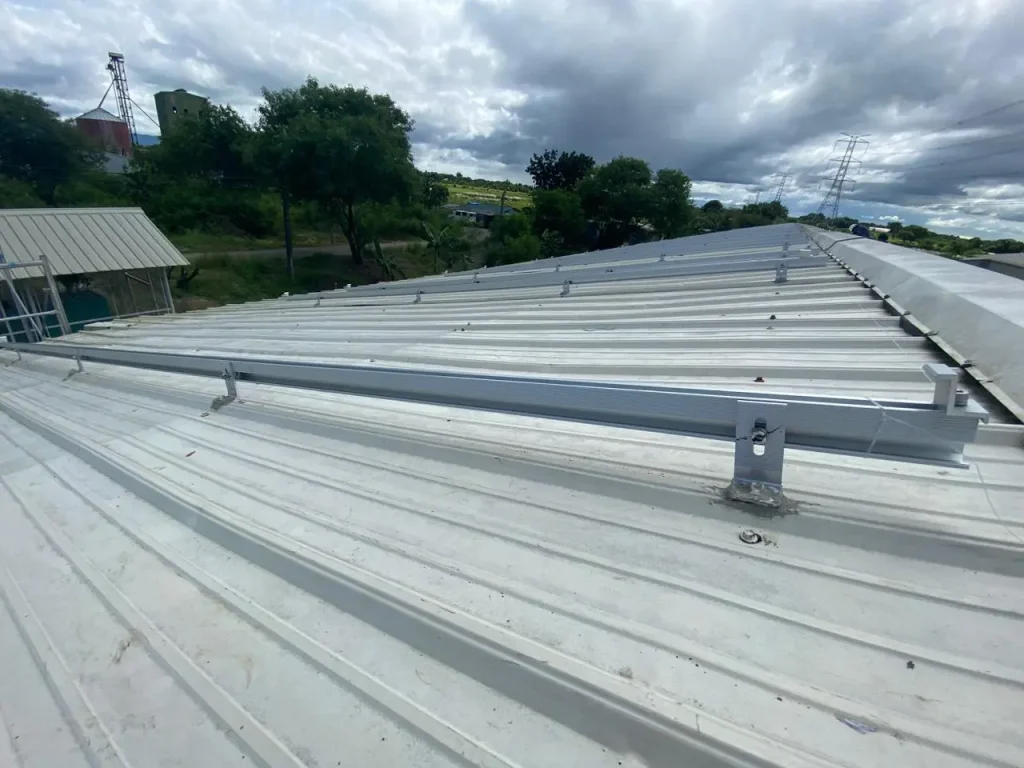
If you’re a PV designer or a system integrator, you probably see rails in your sleep. But let’s break it down to the essentials. A rail-base solar roof mounting system consists of long tracks—usually high-grade extruded aluminum—that are anchored to the roof structure via L-feet, standoffs, or flashing. The solar panels then sit on these rails, secured by mid-clamps and end-clamps.
Understanding the “Skeleton” of Your PV Array
Think of the rails as the skeleton of your solar installation. Without a strong skeleton, the “skin” (your expensive PV modules) is prone to sagging, shifting, or worse, catching flight during a storm. At SR Solar, we design our rails to act as a bridge. They don’t just hold the panels; they provide a perfectly level plane on roofs that are—let’s face it—almost never perfectly flat. Have you ever tried to install a rail-less system on a warped commercial roof? It’s a nightmare. Rails give you that margin of error that makes a project look professional instead of like a DIY disaster.
Why EPCs and Developers Keep Coming Back to Rails
We talk to IPPs and project developers every day, and their biggest fear isn’t a 2% drop in efficiency—it’s a structural failure. A rail-based mounting system offers a level of “sleep-at-night” insurance that other systems just can’t match. When you’re signing off on a 25-year PPA, you want to know that the mounting hardware isn’t the weak link.
Superior Structural Integrity: Spreading the Load
One of the coolest things about a rail-base solar roof mounting system is how it handles weight. Instead of putting all the pressure on individual attachment points, the rail acts as a load-distribution beam. It spreads the dead weight of the panels and the dynamic force of wind across multiple rafters or purlins. This is a game-changer for older commercial buildings where the roof’s structural capacity might be a bit tight. By using SR Solar rails, you’re essentially reinforcing the array’s footprint, making the whole setup feel like a single, monolithic unit rather than a bunch of independent parts.
Dealing with Mother Nature: High Winds and Heavy Snow
Ever been on a rooftop in the Midwest during a blizzard? Or in Florida during hurricane season? That’s where the rail-based mounting system really flexes its muscles. The continuous rail design is incredibly rigid. While rail-less systems can sometimes suffer from “panel flutter” (where the modules vibrate or flex under high wind), a well-engineered rail system keeps everything rock solid. Our team at SR Solar often points out that in high-load zones, the cost of the extra aluminum is nothing compared to the cost of a single panel flying off and causing a liability suit.
The “Hidden” Efficiency: Why Rail-Based Systems Speed Up the Job
There’s a persistent myth that rails take longer to install because you’re “hauling more metal.” But let’s look at the actual labor hours. For a seasoned installation crew, a rail-base solar roof mounting system is predictable. And in the B2B world, predictability is the key to profit.
Wire Management That Doesn’t Give You a Headache
This is my personal favorite point. If you’ve ever had to go back to a site because a squirrel chewed through a loose DC cable or because a wire was rubbing against a sharp roof edge, you know the pain. Rail-based systems usually come with integrated channels or at least provide a clear, elevated path for wire clips. You can tuck everything neatly inside the rail profile. It looks cleaner, it’s safer, and it makes the O&M (Operations and Maintenance) team’s life a whole lot easier. When the wiring is organized, troubleshooting takes minutes instead of hours.
Predictable Installation Cycles for Better Scaling
When you’re scaling a business, you need a process that any crew can master quickly. The “drop and lock” nature of many SR Solar rail components means your team doesn’t need to be a group of master engineers to get the alignment right. Once the rails are square, the panels go down fast. We’ve found that for large-scale distributors and wholesalers, stocking rail-based components is easier because the parts are standardized. You aren’t hunting for specific “specialty” mounts that only work with one type of module.
Versatility Across the Roof: From Metal to Tile and Everything Between
One of the biggest headaches for a PV distributor is carrying inventory that only works for 50% of projects. That’s why we love the rail-base solar roof mounting system. It’s the “universal remote” of solar mounting. Whether you’re dealing with trapezoidal metal sheets, standing seam, asphalt shingles, or Spanish tile, the rail stays the same—you just change the attachment hardware.
Accommodating Non-Standard Panel Sizes and High-Wattage Modules
The industry is moving toward larger, heavier modules. We’re seeing 600W+ panels becoming the norm for commercial jobs. These big boys need more support. A rail-based mounting system allows you to adjust the span and the cantilever to perfectly match the manufacturer’s clamping specs. If the module manufacturer changes their frame size next year (which they will!), you don’t need a new mounting system; you just slide your clamps along the rail. It’s future-proofing at its finest.
Cost-Effectiveness vs. Upfront Material Price: The Long Game
“But SR, the shipping costs for 14-foot rails are killing me!” We hear you. Yes, logistics for rails can be more involved than shipping a box of small mounts. But you have to look at the Total Cost of Ownership (TCO). When you factor in the reduced chance of roof leaks, the faster module mounting speed, and the fact that you won’t need a “re-roof” or major repairs 10 years in, the rail-base solar roof mounting system often wins on ROI.
Maintenance Reductions and System Longevity
A solar array is a 25-year investment. Over that time, roofs expand and contract. Buildings settle. Because a rail-based mounting system provides a rigid framework, it protects the modules from the micro-stresses of the building’s movement. This means fewer micro-cracks in the silicon cells. At SR Solar, we’re in the business of making systems that last until they’ve paid for themselves five times over. Rails are a huge part of that longevity.
Common Pitfalls in Selecting a Rail-Base Solar Roof Mounting System
Before you go out and buy the first rail system you see, a word of caution. Not all aluminum is created equal. We’ve seen some “budget” rails that are so thin they twist like pretzels during installation. Make sure you’re looking at the alloy grade and the anodization thickness—especially if you’re near the coast. Also, pay attention to the “click” or “pop” in features of the clamps. If your installers have to fiddle with loose nuts and bolts while wearing gloves on a 45-degree roof, you’re losing money. SR Solar focuses on “installer-centric” design because we know that happy installers mean fewer mistakes.
Final Verdict: Is a Rail-Based System Right for Your Next Project?
So, is the rail-base solar roof mounting system the right choice for you? If you value structural certainty, ease of wire management, and a system that can adapt to the “surprises” every construction site holds, then the answer is a resounding yes. It might not be the newest “trend,” but it is the gold standard for a reason. At SR Solar, we’ve built our reputation on providing hardware that EPCs can trust. We don’t just sell rails; we sell the confidence that your project will still be standing—and performing—long after the “shiny new things” have faded away.
Ready to talk specs for your next big project? Let’s get those modules mounted the right way.
Summary
The rail-base solar roof mounting system remains the industry favorite due to its unmatched structural reliability, ease of wire management, and versatility across various roof types. While newer, rail-less options exist, the traditional rail system offers a predictable installation workflow and superior protection against environmental stressors like wind and snow, ensuring a lower total cost of ownership over the 25-year lifespan of a PV project.
FAQ
1. Is a rail-based system much heavier than a rail-less one?
While it does add more physical material (aluminum) to the roof, the weight is distributed so effectively across the structural members that it often places less “stress” on the roof than point-loaded rail-less systems.
2. Can I use any solar panel with an SR Solar rail system?
Yes! One of the biggest advantages is universality. As long as you have the correct mid and end-clamps for the module’s frame thickness, our rails can accommodate almost any panel size on the market.
3. Does a rail-base solar roof mounting system help with cooling?
Actually, yes. By creating a consistent gap between the roof surface and the panels, rails promote better airflow. This “chimney effect” helps keep the modules cooler, which can slightly improve energy harvest on hot days.
4. How does wire management work with rails?
Most modern rails, including those from SR Solar, feature integrated channels or are compatible with specialized clips that allow you to run all your DC cabling inside or along the rail, keeping it off the roof and protected from UV and debris.
5. Are rails more expensive to ship?
Generally, yes, because of their length. However, most commercial projects find that the savings in labor efficiency and the reduction in long-term maintenance costs far outweigh the initial shipping premium.