Every EPC engineer faces the same recurring headache on commercial and industrial (C&I) projects: how do you balance structural integrity against relentless pressure on installation speed and roof load limits? Standard racking options often force a compromise. If it’s sturdy, it’s too heavy; if it’s modular, it lacks high-load resilience. To solve this dilemma, we invite you to discover Flat Roof Triangular Solar Mounting System engineering at its finest—a solution designed specifically to bridge the gap between high aerodynamic stability and rapid field deployment.
At SR Solar, we approach racking not just as steel and aluminum, but as a critical element of the site’s structural longevity. Below, we break down the mechanics, compliance, and real-world installation strategies of the triangular system so you can make an informed procurement decision for your next utility-scale or C&I asset.
1. Decision-Oriented Outline for EPCs & Installers
Before diving into the mechanical specifications, let’s look at how the triangular mounting architecture directly addresses your core project KPIs compared to traditional flat roof methods.
| Project Challenge | Traditional Approach | SR Solar Solution | EPC Business Value |
|---|---|---|---|
| Roof Weight Limits | Heavy steel structures increase roof dead load. | Lightweight aluminum triangular system with optimized structural design. | Enables installation on more rooftop types and reduces structural reinforcement requirements. |
| Structural Design Complexity | Extensive project-specific engineering increases design time. | Pre-engineered system verified to ASCE, Eurocode, BS and JIS standards. | Accelerates engineering approval and reduces project risk. |
| Installation Efficiency | Numerous loose components require lengthy on-site assembly. | Modular pre-assembled A-frame with rapid-click connections. | Shortens installation schedules and lowers labor costs. |
| Roof Waterproof Integrity | Poorly planned penetrations increase leakage risk. | Engineered ballast and waterproof anchoring solutions for different roof conditions. | Protects roof integrity, reduces maintenance risk, and supports long-term asset reliability. |
2.Engineered for Strength: Materials, Engineering & Structural Performance
A flat roof mounting system is only as reliable as the engineering behind it. Material selection, structural design and load calculations all determine how the system performs over the next 25 years—not just on the day it’s installed.
At SR Solar, every triangular mounting system is engineered around real project conditions. Wind loads, snow loads, roof capacity and local design codes are considered from the beginning, so each solution fits the project instead of forcing the project to fit the product.
Why AL6005-T6?
Not all aluminum alloys perform the same.
SR Solar uses AL6005-T6 for the primary structural members because it provides higher strength than the AL6063 alloy commonly used in architectural applications. The additional strength allows the structure to remain lightweight without compromising rigidity or load-bearing capacity.
For installers, that means easier handling on site. For building owners, it means less permanent load on the roof structure. It’s a simple material choice that improves both installation efficiency and long-term structural performance.
Designed to Stay Outdoors
A rooftop mounting system spends its entire life exposed to the weather. Rain, UV radiation, humidity, temperature changes and, in many locations, salt carried by coastal air all contribute to material degradation.
To improve corrosion resistance, all aluminum components are anodized with a protective oxide layer, typically 10–20 μm thick. Stainless steel fasteners are used throughout the system to maintain reliable connections in outdoor environments.
The result is a structure that requires very little maintenance while remaining stable throughout its service life.
Engineering That Fits the Project
There is no universal mounting configuration.
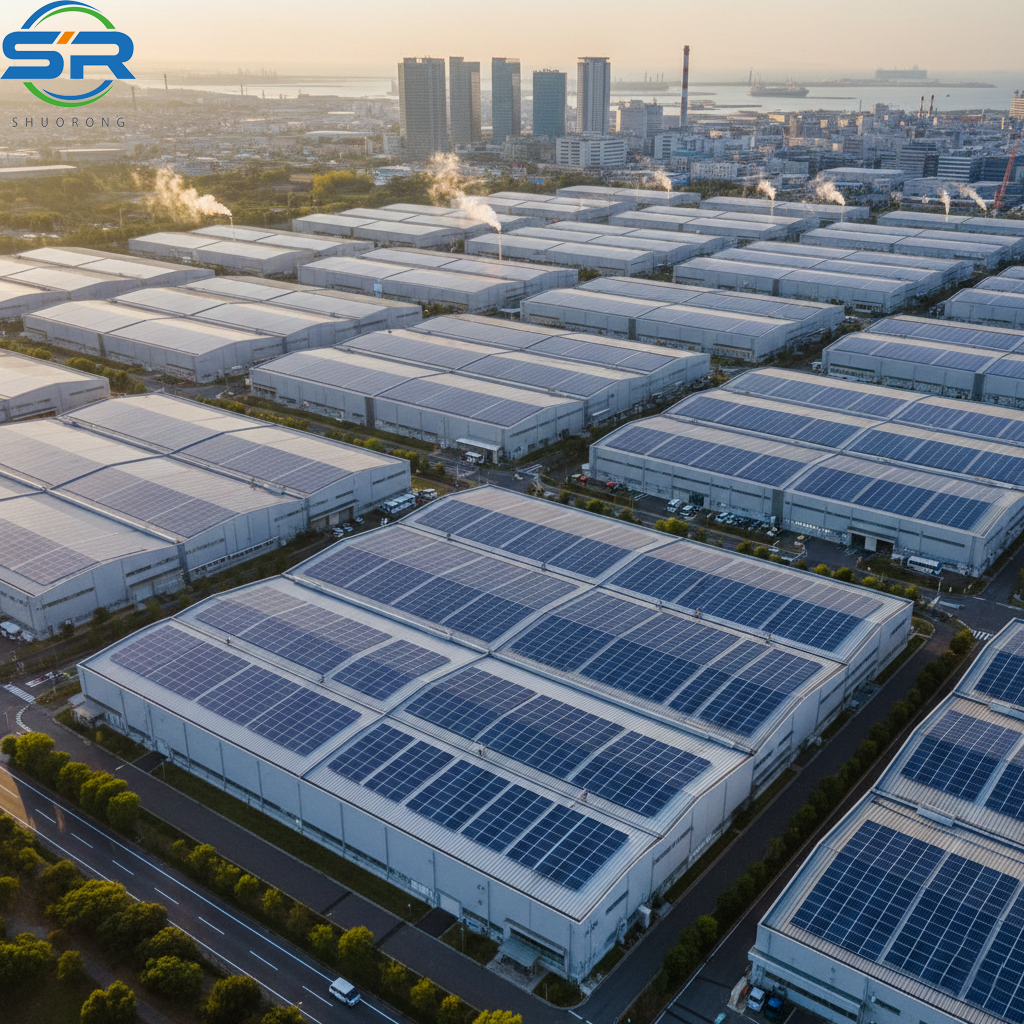
A warehouse in Japan faces different design requirements from a logistics center in Germany or a factory in Texas. Wind speed, snow load, seismic conditions and roof construction all affect the structural design.
Instead of adapting a standard product, SR Solar engineers each project according to the applicable regional standard, including:
- ASCE 7 – United States
- Eurocode (EN 1991) – Europe
- AS/NZS 1170 – Australia & New Zealand
- JIS C 8955 – Japan
This project-specific approach gives engineers and EPC contractors greater confidence during design review, permitting and construction.
Verified Before It Reaches the Roof
Every design is checked using Finite Element Analysis (FEA) before production.
Rather than relying on theoretical calculations alone, FEA allows engineers to evaluate how the structure behaves under wind, snow and dead loads, helping identify stress concentrations before manufacturing begins.
Depending on project requirements, the system can be engineered for wind speeds of up to 60 m/s and snow loads of up to 1.6 kN/m².
The tilt angle is also configurable—typically between 10° and 30°—so the mounting system can be optimized for the site’s energy target, roof layout and environmental conditions.
A Structure Built for Installation
Structural performance is only part of the equation. Installation efficiency matters just as much.
The triangular support geometry uses a modular design with standardized components and pre-engineered connections. Fewer parts on the roof mean simpler logistics, quicker assembly and less time spent making adjustments during installation.
For EPC contractors, the advantages are straightforward:
- Lower roof dead load
- Fewer installation steps
- Easier transportation and handling
- High structural rigidity
- Reliable performance in demanding environments
The objective isn’t simply to build a stronger mounting system—it’s to make every rooftop project easier to design, easier to install and easier to deliver.
3.Why Choose a Triangular Mounting Structure?
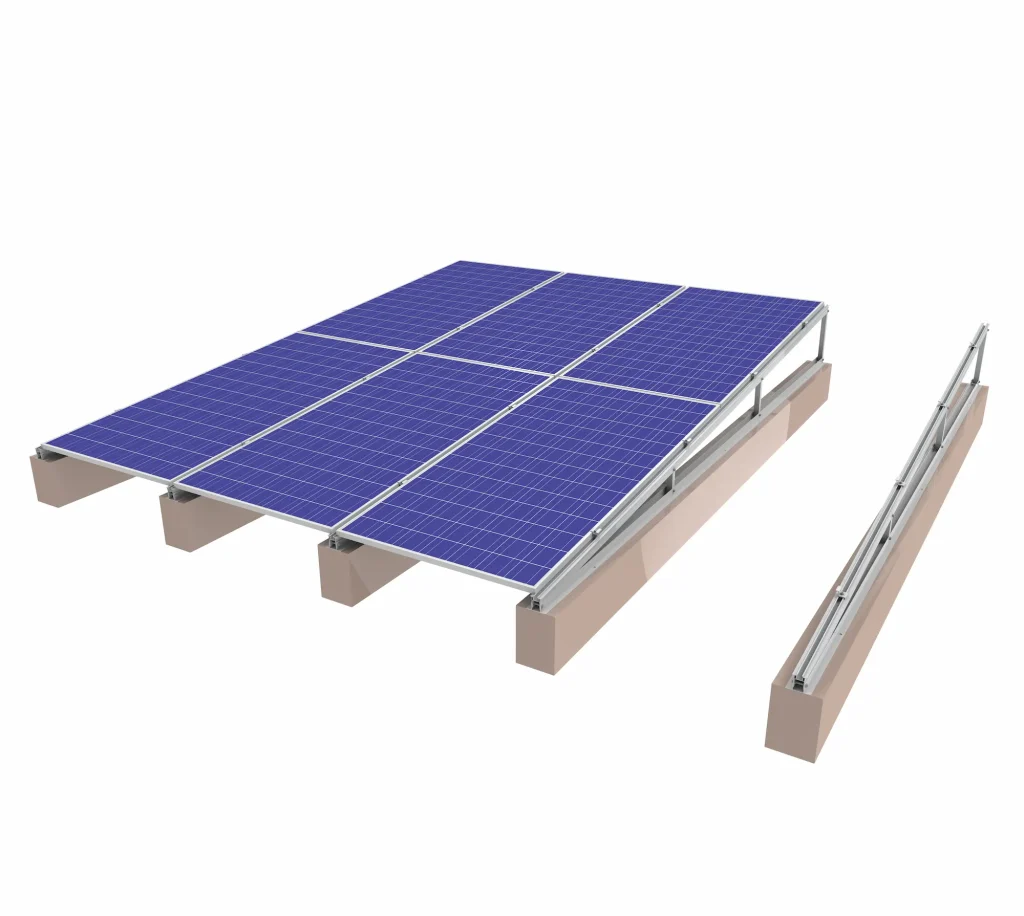
A triangular mounting system isn’t simply a different way to support solar panels. It changes how loads are transferred through the structure, resulting in better stability and greater flexibility for a wide range of flat roof projects.
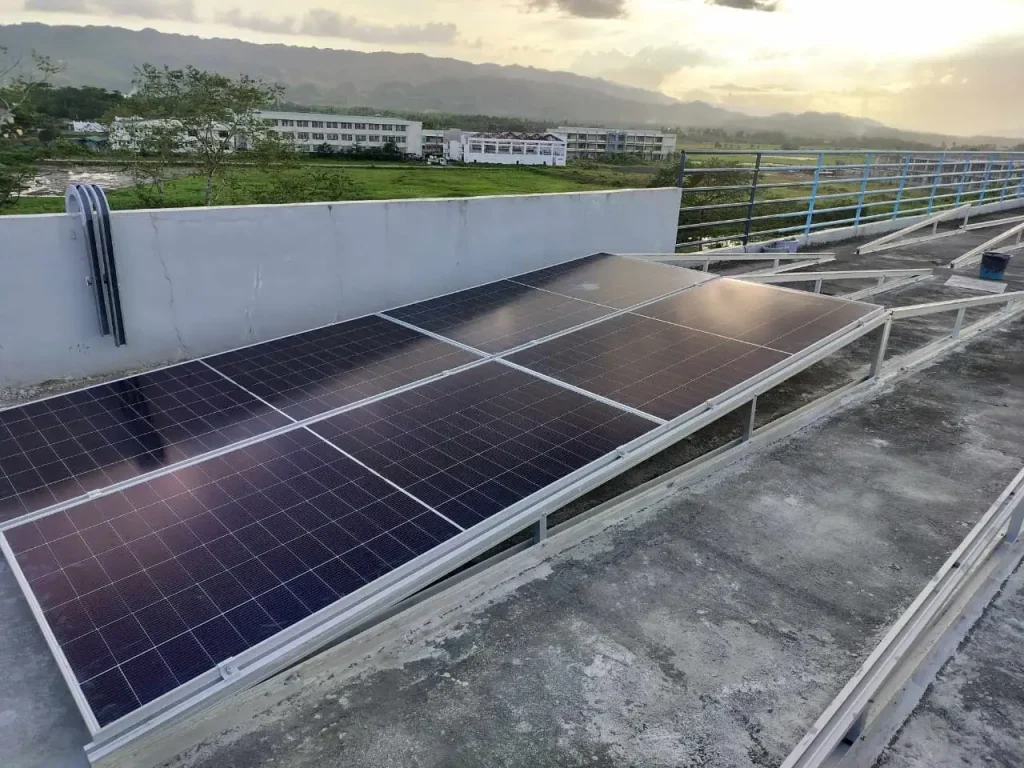
SR Solar’s triangular mounting system supports both single- and double-row layouts in landscape or portrait orientation. The modular design allows the system to adapt easily to different roof sizes, module dimensions and project requirements without introducing unnecessary complexity during installation.
More Efficient Load Distribution
Traditional tilt-leg structures rely mainly on front and rear supports to resist wind uplift. As wind loads increase, additional ballast or stronger roof anchors are often required to maintain stability.
A triangular support structure distributes these loads more efficiently throughout the frame, reducing localized stress while improving overall structural rigidity. The result is a stable mounting system with lower material demand and better performance under challenging environmental conditions.
Flexible Layout Options
Every rooftop is different. Some have skylights, HVAC equipment or access walkways, while others provide large uninterrupted installation areas.
The system supports both landscape and portrait module orientations, giving designers greater flexibility when optimizing energy production, maintenance access and roof utilization.
Single-row layouts work well on roofs with frequent obstructions, while double-row configurations improve installation efficiency on larger commercial and industrial buildings by reducing the overall number of structural components.
Designed Around Real Projects
Rather than forcing the roof to fit a standard mounting solution, the modular triangular structure can be configured to suit different module sizes, roof dimensions and project objectives.
Whether the priority is maximizing installed capacity, simplifying installation or working around rooftop obstacles, the system provides the flexibility needed for practical engineering without compromising structural performance.
4.Roof Attachment Starts with the Roof
Selecting the right attachment method starts with understanding the roof itself. Structural capacity, waterproofing requirements, local wind conditions and building regulations all influence how the mounting system should be installed.
Rather than recommending a single solution for every project, SR Solar provides attachment options based on the specific roof structure and project requirements.
Mechanical Attachment
Mechanical attachment using chemical anchors or expansion bolts is commonly selected where higher wind uplift resistance is required or where the roof structure can accommodate penetrations.
By transferring loads directly into the concrete slab, this approach provides a secure structural connection while minimizing system movement under extreme weather conditions.
Ballasted Systems
Ballasted systems avoid roof penetrations entirely by using concrete ballast to resist wind uplift.
They are often preferred on buildings where maintaining the waterproofing membrane is the primary concern. Before selecting a ballasted solution, the roof structure should always be checked to confirm it can safely support the additional dead load.
Working with TPO, PVC and EPDM Roofs
Single-ply membrane roofs require additional attention during system design.
Instead of placing ballast directly on the membrane, protective separation layers are used to reduce long-term abrasion. Where mechanical attachment is required, compatible waterproof flashing and membrane-specific attachment details should be incorporated to maintain the integrity of the roofing system.
The attachment method should always follow the membrane manufacturer’s installation requirements.
Engineering Support Before Installation
Attachment design is never based on a single factor such as cost.
Before production, SR Solar evaluates the roof type, structural loading, local wind and snow conditions, and applicable design standards to recommend the most suitable attachment solution for each project.
The objective is straightforward: deliver a mounting system that is structurally sound, compatible with the roof, and practical to install.
5. Economic Impact: Driving Down On-Site Labor Costs
For EPC contractors, the physical racking hardware typically accounts for only a fraction of total project cost; the dominant variable is field labor. The key question becomes how pre-engineered Flat Roof Triangular Solar Mounting Systems can reduce installation time and labor intensity.
Pre-Assembled A-Frames:
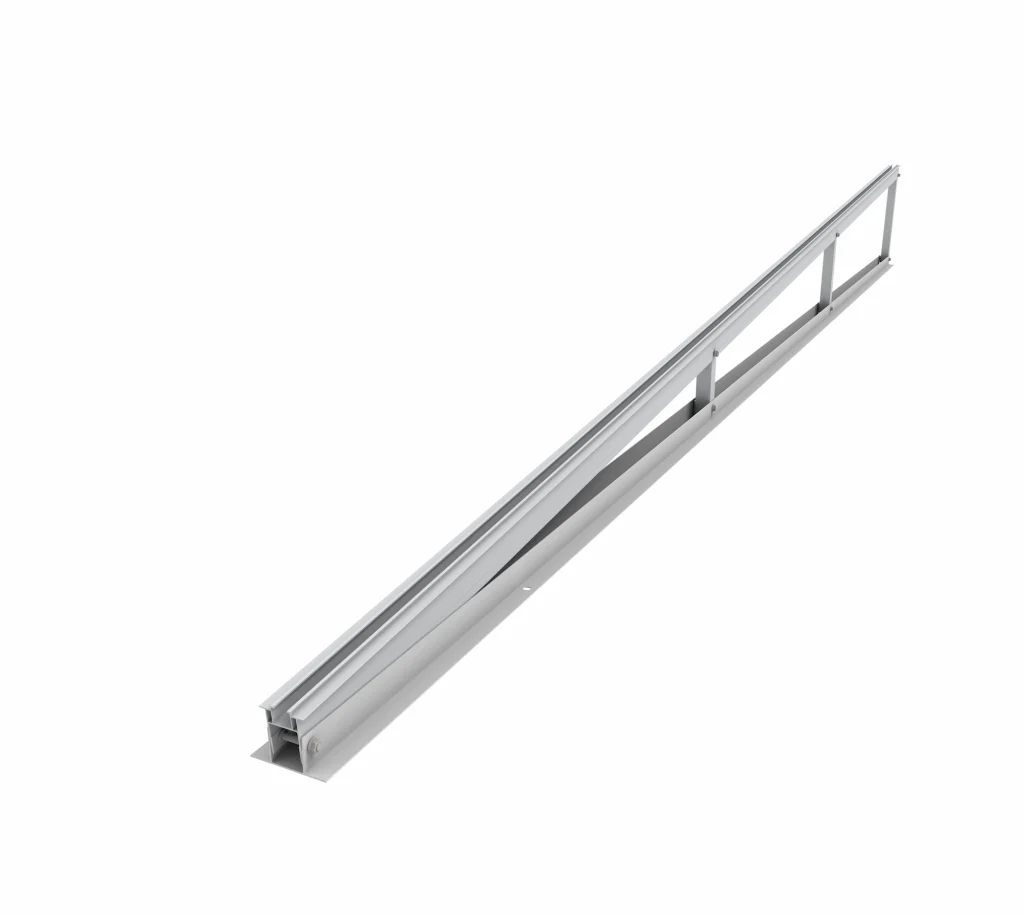
SR Solar supplies the core triangular frames in a partially pre-assembled, foldable configuration. On-site, installers simply unfold the structure, secure the bracing arm with a single bolt, and align it with the rail system. This eliminates on-site measurement, squaring, and repetitive alignment work.
Reduced SKU Complexity:
By standardizing mid clamps and end clamps across the system, inventory management is simplified and part variation is reduced. This minimizes material handling time and reduces interruptions caused by missing or mismatched components during installation.
Tool Efficiency:
The system is designed for installation using only standard hex keys and torque wrenches, enabling a consistent and simplified workflow and reducing training requirements for temporary or local labor crews.
By reducing installation time per module, a typical 1MW C&I project can save dozens of man-hours, accelerating project completion schedules and improving overall EPC profit margins.
6. Engineering Excellence with SR Solar
When partnering with SR Solar, you are not simply sourcing aluminum structural components—you are integrating a fully engineered support system into your EPC supply chain. Every component is manufactured under strict quality control procedures, with extrusion profiles and coatings verified against internationally recognized standards such as EN and ASTM requirements, ensuring consistency with structural design expectations.
Our flat roof triangular mounting system is supported by in-house engineering validation, including structural load checks, corrosion resistance assessment, and installation feasibility review prior to mass production. This ensures that each project is aligned with real-world site conditions rather than theoretical assumptions.
For project developers and institutional investors, we provide bankability-level assurance through consistent manufacturing traceability, controlled material sourcing, and standardized production processes, helping reduce technical risk across large-scale deployments.
If you are preparing a bid for an upcoming flat-roof solar project, our structural engineering team can support your design review process. We can provide optimized layout proposals, wind load calculation reports, and a project-specific bill of materials tailored to your site’s environmental and structural conditions.
Ready to streamline your next C&I deployment? Contact SR Solar’s Structural Engineering Team Today for a complimentary wind-load analysis and customized CAD layout for your upcoming project. Let’s optimize your asset’s structural integrity together.
FAQS
Yes. Although designed for flat roof applications, the system can accommodate minor roof inclinations up to 5–7 degrees. The leg geometry can be adjusted during engineering to ensure a consistent module tilt and uniform array alignment across the installation area, without affecting structural integrity.
All fastening components in the SR Solar system are made of SUS304 stainless steel and are compatible with anodized AL6005-T6 aluminum structures. This material pairing significantly reduces the risk of galvanic corrosion, ensuring long-term durability even in coastal or high-humidity environments when installed according to standard grounding practices.
Standard configurations are designed in accordance with ASCE 7 or equivalent regional design codes and can withstand wind speeds up to 60 m/s depending on project-specific parameters. For high-risk regions such as typhoon or hurricane zones, the system can be reinforced by increasing section thickness, optimizing frame spacing, and adjusting anchoring or ballast design to meet local uplift load requirements.
Yes. A non-penetrating ballasted configuration is available. In this design, system stability is achieved through calculated ballast weight distribution, based on wind load analysis and roof zoning (corner, edge, and field zones). This ensures structural safety while maintaining full roof waterproof integrity.
The system incorporates adjustable base interfaces and rail connection tolerances that allow vertical leveling adjustments of several centimeters. This enables installers to compensate for typical surface irregularities in concrete rooftops while maintaining a consistent structural plane for the PV array.