Selecting the right racking architecture is the foundational decision that dictates a project’s decades-long financial and structural viability. When engineering asset deployment, developers and procurement teams often weigh the merits of utility-scale layouts against alternative spatial strategies like solar carports, rooftop installations, or agrivoltaics. While each has its niche, solar power ground mounted systems remain the industry’s structural bedrock, offering unparalleled soil-to-module optimization, predictable risk mitigation, and superior Levelized Cost of Energy (LCOE).
To maximize return on investment, engineering teams and supply chain managers must look past initial land acquisition costs. They need to focus on how structural choices impact mechanical loading, field installation speed, and inventory versatility.
Technical & Economic Matrix: Ground Mounts vs. Alternatives
Before diving into the mechanical specificities, let’s look at a clear engineering and logistical comparison of how these configurations perform across key operational vectors:
| Evaluation Metric | Solar Power Ground Mounted | Rooftop Mounting Systems | Solar Carports | Agrivoltaics (APV) |
| Foundation Engineering | High flexibility (Driven pile, screw, concrete ballast) | Constrained by existing structural capacity & penetrations | Complex, deep foundations; high steel mass | High clearance requirements; dynamic wind loads |
| Installation Velocity | High; repeatable, scalable industrialized workflows | Medium; constrained by roof access, safety rigging | Low; requires heavy lifting and traffic coordination | Low to Medium; specialized farm equipment clearance |
| Material / SKU Efficiency | Highly standardized components; low inventory risk | High SKU fragmentation due to varying roof types | Custom heavy structural steel; high freight costs | Bespoke high-clearance tracking/fixed structures |
| O&M Access & LCOE | Optimal; ground-level access reduces cleaning/repair costs | Suboptimal; restricted access, higher safety liability | High O&M complexity; elevated working heights | High O&M complexity; requires coordination with farming |
The Mechanical & Structural Reality: Ground-Mounted Engineering Advantages
Why does the industry continuously default to solar power ground mounted systems for high-yield portfolios? The answer lies in structural freedom.
Unlike rooftop systems—where engineers are perpetually constrained by the host building’s dead load capacity, wind uplift limitations, and structural fatigue—ground-mounted arrays are engineered from the soil up.
Geotechnical Adaptability and Foundation Mechanics
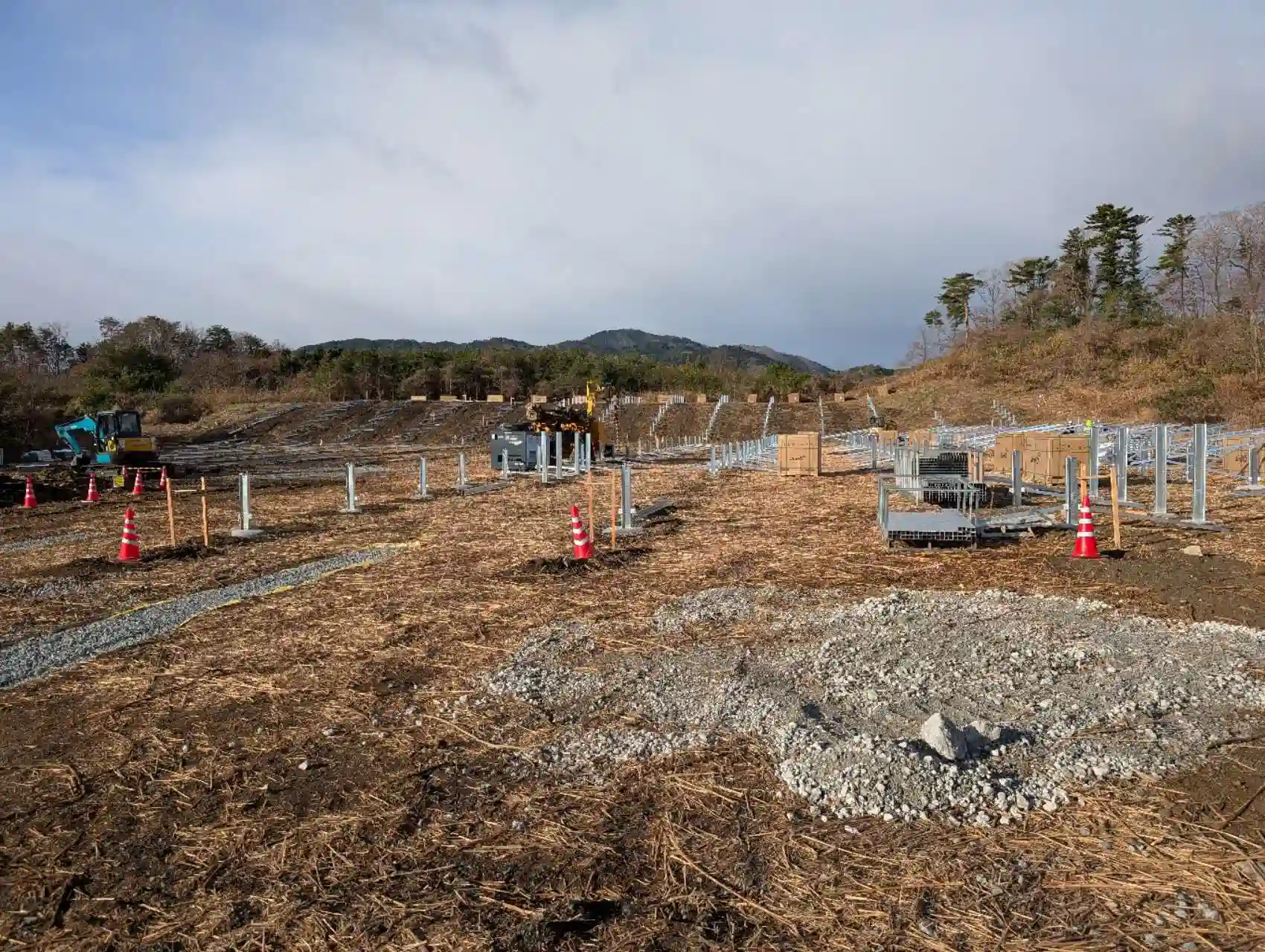
Ground-mounted engineering allows for precise matching between the soil profile and the foundation type. Whether dealing with cohesive clays, loose sands, or rocky strata, engineers can select from:
- Driven C/U Piles: Ideal for cohesive soils, offering rapid installation via hydraulic pile drivers.
- Ground Screws: Perfect for hard, rocky ground where driving is unfeasible.
- Concrete Ballasts: Used for brownfields or sites where ground penetration is strictly prohibited.
This adaptability eliminates the catastrophic risk of structural failure associated with aging roofs or compromised waterproofing membranes. Furthermore, managing wind load dynamics becomes significantly more predictable. By optimizing the tilt angle, structural engineers can perfectly balance aerodynamic lift forces with steel mass efficiency, compliant with rigorous international standards such as AS/NZS 1170 and JIS C 8955.
Direct Comparison: Ground Mounted vs. Alternative Layouts
To understand why a solar power ground mounted configuration consistently wins the LCOE race, we must evaluate it directly against alternative mounting methodologies through a peer-to-peer engineering lens.
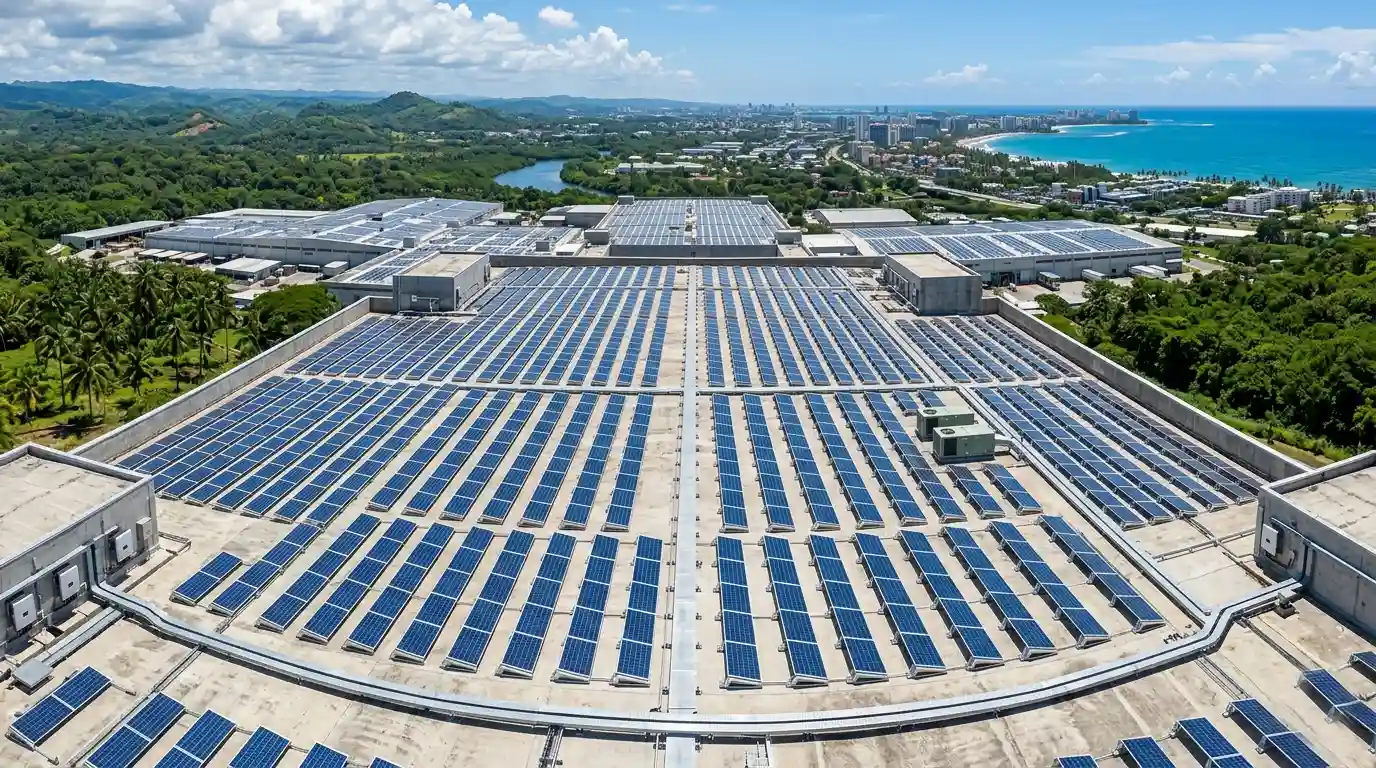
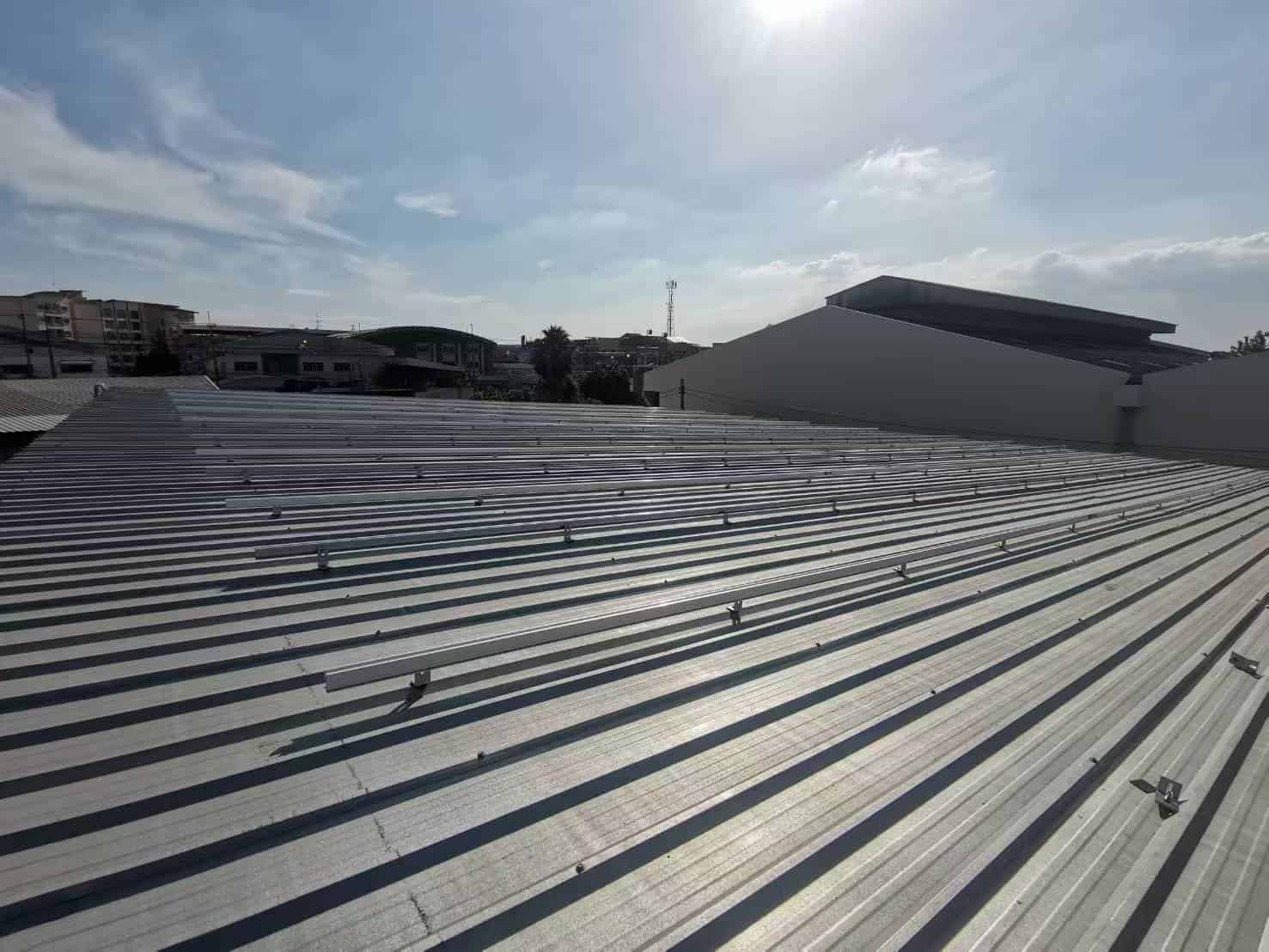
Rooftop solar is often praised for utilizing “free” space. However, when executing at scale, the hidden engineering costs escalate rapidly.
A common field error we see is underestimating the cost of roof remediation. If a rooftop structural layout requires reinforcing existing purlins or repairing compromised membranes, the project’s timeline stalls. Rooftop arrays face strict layout fragmentation due to HVAC units, skylights, and fire pathways, which limits string inverter optimization.
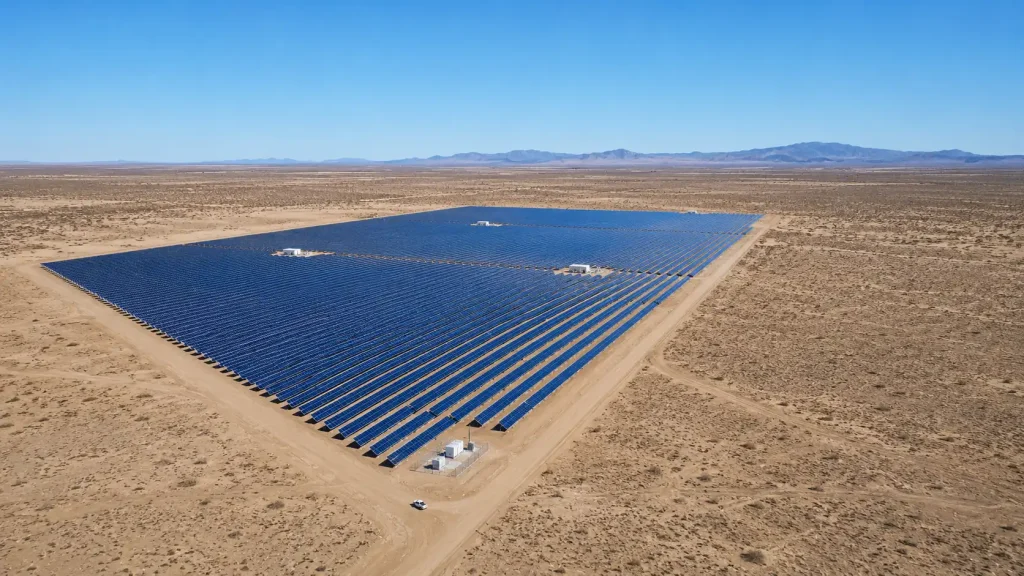
Conversely, solar power ground mounted arrays offer a blank canvas. This allows for continuous, uninterrupted string layouts that maximize DC-to-AC ratios and streamline the installation of high-power bifacial modules.
Solar carports are visually impressive and serve a dual purpose, but their structural mass-to-watt ratio is highly inefficient.
Carports require massive structural steel sections to clear vehicular traffic heights (typically >2.5 meters) and must withstand significant moment loads at the foundation base. This demands deep concrete piers and extensive excavation, dramatically increasing civil engineering costs.
A solar power ground mounted system uses a fraction of the steel per watt. It requires no heavy clear-height clearance, keeping material and freight costs highly predictable.
Agrivoltaics (APV) attempts to balance food production with energy generation. While environmentally noble, APV introduces severe engineering and logistical friction.
To allow farming machinery to pass underneath, arrays must be elevated to heights exceeding 3 to 4 meters. This elevated profile creates a massive lever arm, exponentially increasing wind load forces on the foundations. Consequently, the steel structure must be heavily over-engineered.
Standard solar power ground mounted systems maintain a low profile, keeping structural stress low and allowing for rapid, repeatable installation without specialized, ultra-high-clearance construction equipment.
Field Efficiency and Supply Chain Logistics: The Practical Bottom Line
Engineering integrity is only half the battle; field velocity and supply chain optimization are what protect project margins.
Site Efficiency and Civil Work Optimization
How much time is wasted on site due to over-complicated racking designs? In the field, complexity equals cost.
A well-engineered solar power ground mounted system utilizes pre-assembled support brackets and a minimal bill of materials (BOM). Because the installation process occurs at ground level, heavy crane rentals, specialized scaffolding, and high-altitude safety rigging are completely eliminated. Teams can execute a highly repetitive, industrialized assembly-line workflow—driving piles, mounting brackets, clicking rails, and dropping modules in a rapid, continuous cycle.
Supply Chain Versatility and SKU Rationalization
For inventory management, handling bespoke, highly customized racking parts for unique roof pitches or complex carport spans is a logistical nightmare. It ties up working capital in dead stock.
Standardized solar power ground mounted components feature high cross-compatibility. A single, versatile ground rail or mid-clamp design can be deployed across a 500kW commercial site or a 50MW utility-scale project. This high component interchangeability accelerates inventory turnover, minimizes warehousing overhead, and ensures that procurement teams can respond dynamically to fluctuating market demands without waiting for custom fabrication.
The SR Solar Engineering Standard: Redefining Ground Stability
At SR Solar, we don’t believe in over-engineering for the sake of material inflation; we believe in precision structural optimization. Our solar power ground mounted systems are developed through rigorous finite element analysis (FEA) and physical wind tunnel testing.
By optimizing the geometric profile of our ZAM steel posts and utilizing highly secure, pre-assembled aluminum components, we ensure our systems meet and exceed international benchmarks like AS/NZS 1170.2 for wind actions.
We address field pain points directly. Our ground-mount racking features integrated structural tolerances, allowing field installation teams to easily adjust for minor pile misalignment on-site without drilling or welding. This practical engineering focus ensures your projects remain structurally sound, fully compliant, and highly profitable over their 25+ year lifespans.
Summary & Structural Takeaways
When choosing a racking system, solar power ground mounted structures deliver the most reliable, scalable, and cost-effective solution for commercial and utility portfolios. They bypass the structural limitations of rooftops, avoid the heavy material costs of carports, and eliminate the engineering complexities of high-clearance agrivoltaics. By focusing on standardized layouts, robust materials like ZAM and anodized aluminum, and high field installation efficiency, your projects will achieve lower LCOE and faster time-to-market.
Technical FAQs
Q1: How do ground-mounted systems handle high-wind regions or cyclonic zones?
Ground-mounted structures are engineered to withstand site-specific wind loads by adjusting pile embedment depth, increasing steel gauge thickness, and optimizing tilt angles. Compliance with standards like AS/NZS 1170.2 ensures the system can resist extreme uplift and downward forces via data-backed structural calculations.
Q2: What is the typical lifespan of ZAM compared to Hot-Dip Galvanized (HDG) steel in ground mounts?
Zinc-Aluminum-Magnesium (ZAM) coatings provide up to three times the corrosion resistance of traditional HDG in high-salinity or high-ammonia environments. ZAM also features “self-healing” properties, where scratched surfaces or cut edges chemically react to form a protective layer, significantly extending the system’s operational life.
Q3: Can ground-mounted racking accommodate significant terrain slopes without extensive grading?
Yes. High-quality ground-mounted systems feature built-in structural adjustments within the post-to-rail connections. This allows the system to absorb East-West and North-South slope variations, minimizing the need for costly and environmentally disruptive civil land grading.
Q4: How does a ground-mounted system optimize the performance of bifacial solar modules?
Ground-mounted arrays are ideal for bifacial modules because they offer adjustable clear heights and eliminate rear shading from structural purlins. By elevating the modules above highly reflective ground surfaces (such as light gravel or sand), the rear-side energy yield can be maximized by up to 15-25%.
Q5: How do ground-mounted systems reduce on-site labor costs compared to tracking systems?
While tracking systems offer higher energy yields, fixed-tilt ground-mounted arrays have significantly lower mechanical complexity. With no moving parts, motors, or drive shafts, fixed ground mounts install much faster, require lower-skilled field labor, and incur virtually zero long-term mechanical maintenance costs.
Need an Engineering Evaluation for Your Next Project?
Don’t let site topology or strict wind load compliance delay your pipeline. [Contact the SR Solar Structural Engineering Team today] for a comprehensive layout optimization, wind-load analysis, and a customized bill of materials tailored to your specific site conditions.