Solar Panel Racking Systems for Metal Roofs: Types and How to Choose
Metal roofs are widely used in industrial buildings, warehouses, agricultural facilities, and commercial properties. Their structural characteristics make them suitable for solar installations, but choosing the right solar panel racking systems for metal roofs requires more than simply selecting a mounting bracket.
Different metal roof profiles require different fixing methods. Some systems use traditional aluminum rails, while others use rail-less clamps or mini rails. The mounting structure can also vary depending on whether the project requires a standard installation angle, a fixed tilt, or an adjustable tilt.
So, which system should you choose?
This guide introduces the main types of metal roof solar mounting systems, explains their structural differences, and provides practical guidance for selecting a suitable solution based on your roof conditions and project location.
1. Types of Solar Panel Racking Systems for Metal Roofs
The first step in selecting a solar mounting system is understanding how it connects to the metal roof. Different roof profiles require different mounting components to provide secure and reliable support.
1.1 L-Foot Solar Mounting System
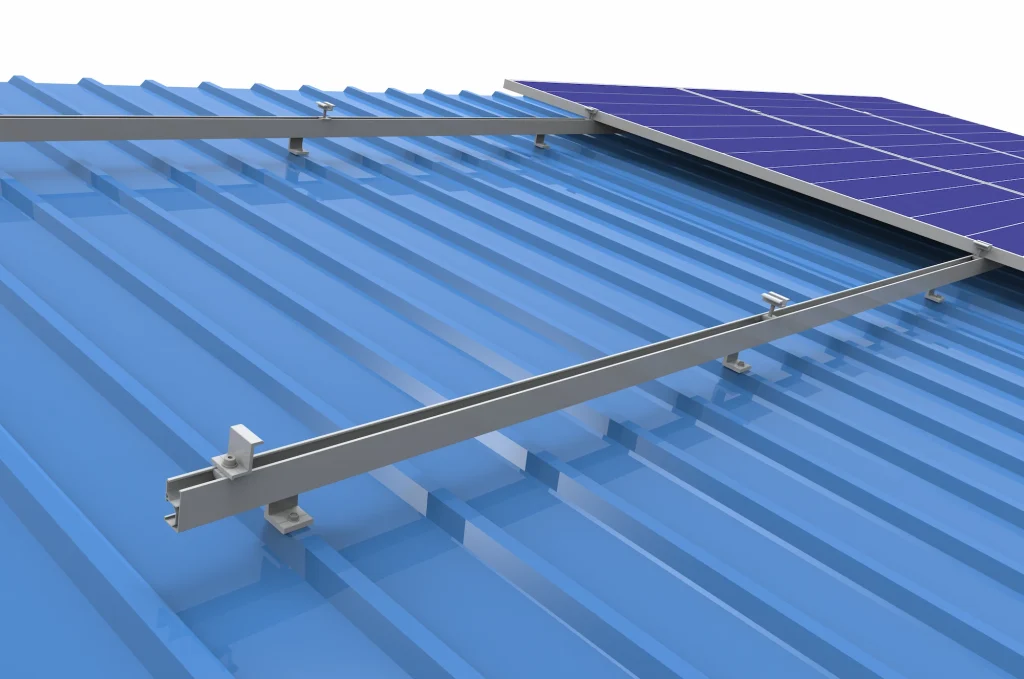
The L-foot solar mounting system is a common solution for metal roofs, particularly trapezoidal and corrugated metal roofing.
L-feet are typically fixed to the roof at designated structural support points using appropriate fasteners. Aluminum rails are then installed on top of the L-feet, creating a supporting structure for solar panels.
Key characteristics:
- Uses L-shaped brackets to connect the mounting rails to the roof.
- Compatible with different rail configurations.
- Provides flexibility in panel positioning and rail layout.
- Requires appropriate waterproofing measures around roof penetrations.
The exact fixing method depends on the roof profile, sheet thickness, and underlying purlin structure. The fasteners must be selected to ensure adequate pull-out resistance and prevent water leakage.
1.2 Clamp-Based Solar Mounting Systems
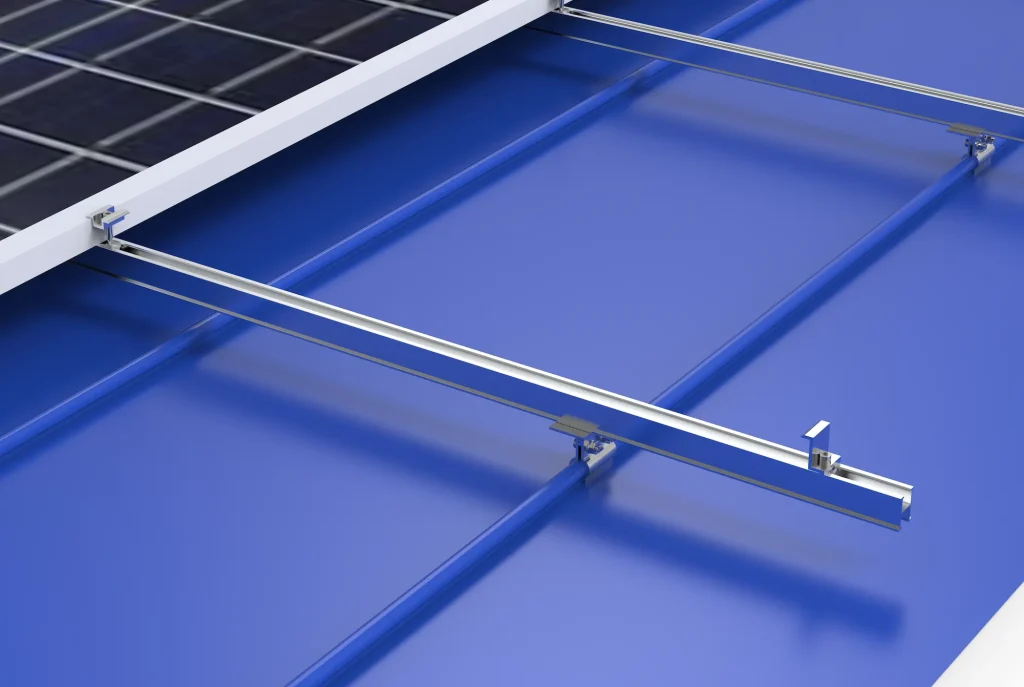
Clamp-based mounting systems are designed to attach solar mounting components to specific metal roof profiles. Unlike conventional L-foot systems, some clamps can secure the mounting structure without penetrating the roof sheets.
The clamp must match the roof seam or profile to provide reliable mechanical engagement.
Standing Seam Roof Clamps
Standing seam metal roofs feature raised seams that connect adjacent roof panels. Specially designed clamps grip these seams to secure the solar mounting structure.
Key characteristics:
- Can provide a non-penetrating mounting solution.
- Avoids drilling through the roof sheet when the roof and clamp design allow it.
- Available in different configurations to match different seam profiles.
- Requires compatibility checks for seam dimensions and mechanical strength.
Standing seam clamps are particularly useful when maintaining the roof’s original waterproofing system is a priority.
However, not all standing seams have the same shape or dimensions. Clamp selection should always be based on the actual roof profile.
Klip-Lok Roof Clamps
Klip-Lok is another common metal roofing profile used in commercial and industrial buildings. Dedicated Klip-Lok clamps are designed to fit the specific geometry of these roof panels.
These clamps attach to the raised sections of the roof without necessarily penetrating the roof sheet, depending on the selected design.
When selecting Klip-Lok clamps, consider:
- The exact roof profile and dimensions.
- The compatibility between the clamp and roof sheet.
- The required fixing strength under wind uplift.
- The connection between the clamp, rail, and solar module.
A clamp designed for one Klip-Lok profile may not fit another profile with different dimensions. Always confirm the roof model before selecting the mounting components.
1.3 Rail-Based and Rail-Less Clamp Systems
Clamp-based mounting systems can be further divided into rail-based and rail-less configurations. Both use roof-specific clamps, but their methods of supporting solar modules are different.
Rail-Based Clamp System
In a rail-based configuration, roof clamps are installed first, followed by aluminum mounting rails. Solar panels are then secured to the rails using mid clamps and end clamps.
This configuration provides a continuous mounting support structure and allows some flexibility in adjusting panel positions.
Main advantages:
- Flexible module positioning.
- Continuous rail support.
- Suitable for different array layouts.
- Convenient integration with conventional solar module clamps.
Rail-based systems are a practical choice when the project requires greater flexibility in panel arrangement or a conventional rail mounting structure.
Rail-Less Clamp System
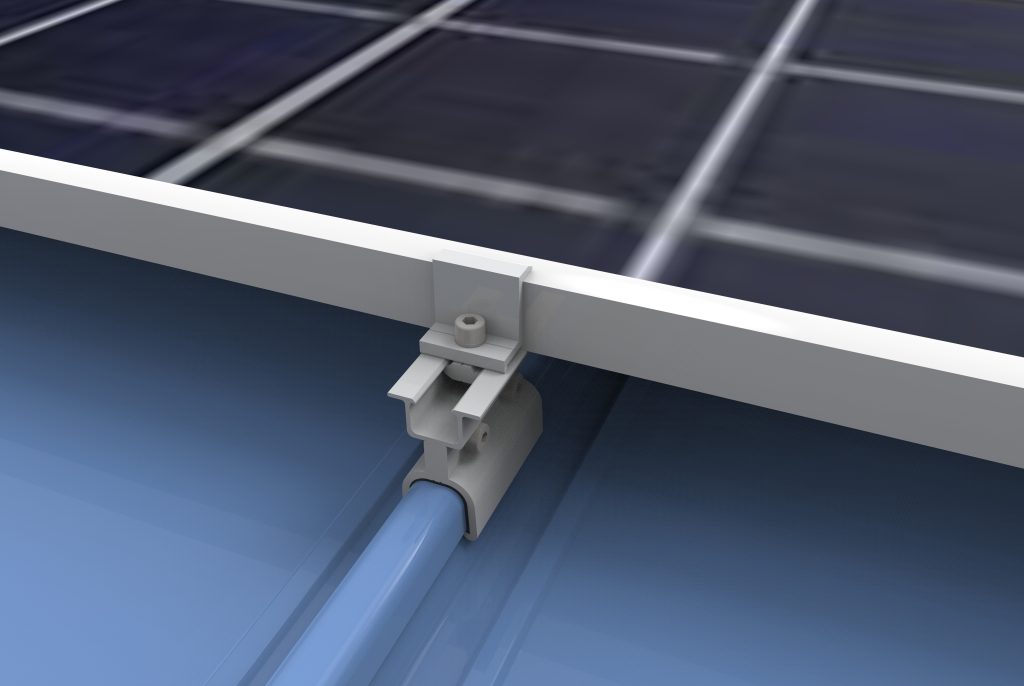
A rail-less mounting system eliminates traditional long mounting rails. Instead, specially designed clamps or mounting components directly support and secure the solar modules at designated positions.
Main advantages:
- Fewer long structural components.
- Potentially lower material usage.
- Reduced handling and installation steps.
- A more compact mounting configuration.
However, rail-less systems require careful consideration of module dimensions, clamping zones, support spacing, and structural loads.
They are not automatically suitable for every roof or solar module. The mounting configuration must be verified against the module manufacturer’s requirements and the project’s structural design.
1.4 Mini Rail Solar Mounting System
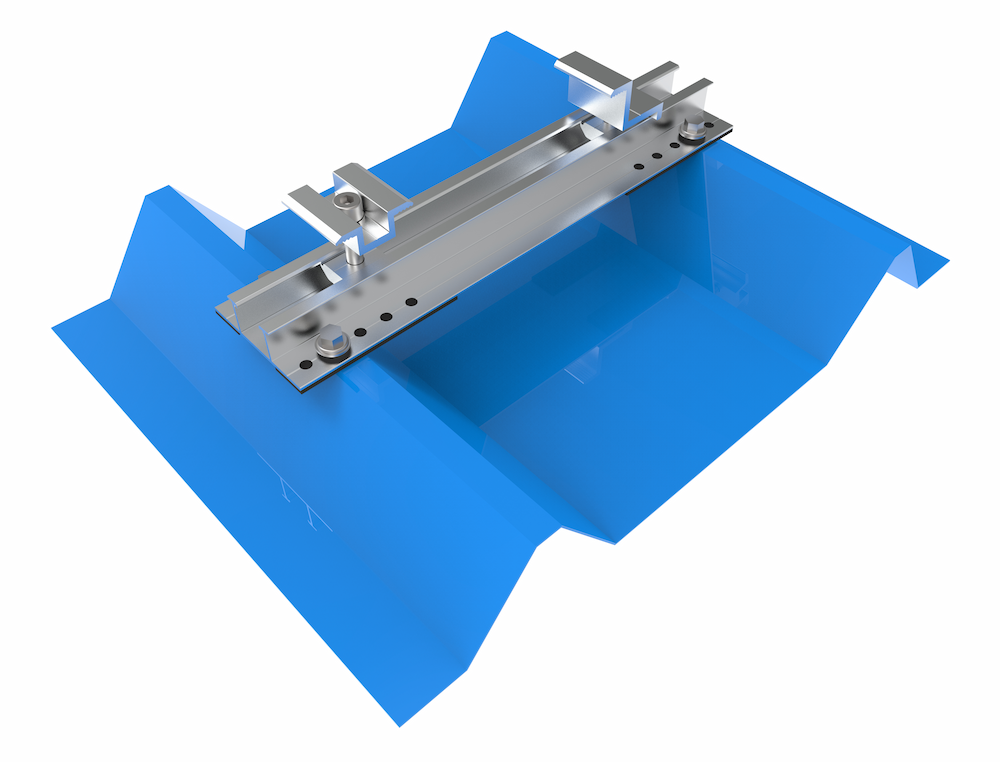
Mini rail systems provide an alternative between conventional long-rail and rail-less configurations.
Instead of using continuous aluminum rails across the array, mini rails are installed at specific mounting points. Solar modules are then secured to these short rail sections using compatible module clamps.
Main characteristics:
- Uses shorter aluminum rail sections.
- Reduces the amount of rail material compared with some conventional configurations.
- Provides a defined mounting surface for module clamps.
- Can simplify transportation and on-site handling.
Mini rail systems are commonly considered for suitable trapezoidal metal roof profiles.
The actual rail length, fixing points, and spacing must be determined according to the roof structure, module dimensions, and design loads.
2. Standard, Fixed-Tilt, and Adjustable-Tilt Mounting Structures
Besides the roof fixing method, another important decision is the mounting structure itself.
Depending on the roof slope and project requirements, metal roof solar mounting systems can use standard structures, fixed-angle triangular structures, or adjustable-tilt structures.
These configurations can be considered separately from the roof fixing method. For example, a suitable clamp-based system may be combined with a particular structural configuration depending on the engineering design.
2.1 Standard Solar Mounting Structure
A standard mounting structure generally follows the existing roof slope, with solar modules installed close to the roof surface.
It is one of the more straightforward configurations for pitched metal roofs.
Key characteristics:
- Follows the existing roof inclination.
- Relatively simple structural arrangement.
- Requires fewer additional support components.
- Maintains a relatively low installation profile.
This option is suitable when the existing roof orientation and inclination already meet the project’s solar design requirements.
For many pitched metal roofs, adding a separate tilt structure is unnecessary. A standard mounting configuration can provide a practical balance between structural simplicity and installation efficiency.
2.2 Fixed Triangle Solar Mounting Structure
A fixed triangle mounting structure uses triangular support brackets to create a specific module inclination.
The front and rear support points have different heights, allowing the solar modules to be installed at an angle that differs from the original roof slope.
Key characteristics:
- Creates a predetermined installation angle.
- Uses triangular support components for structural stability.
- Suitable for projects requiring a specific module inclination.
- The angle remains fixed after installation.
A fixed triangle structure may be considered when the existing roof slope is not ideal for the intended module orientation.
However, increasing the module angle also changes the wind load acting on the mounting structure. The additional height and exposed surface area must be considered during structural design.
2.3 Adjustable-Tilt Solar Mounting Structures
Some projects require more flexibility in setting the solar module inclination. In these situations, adjustable-tilt structures can provide different installation angle options.
SR Solar offers two main structural configurations.
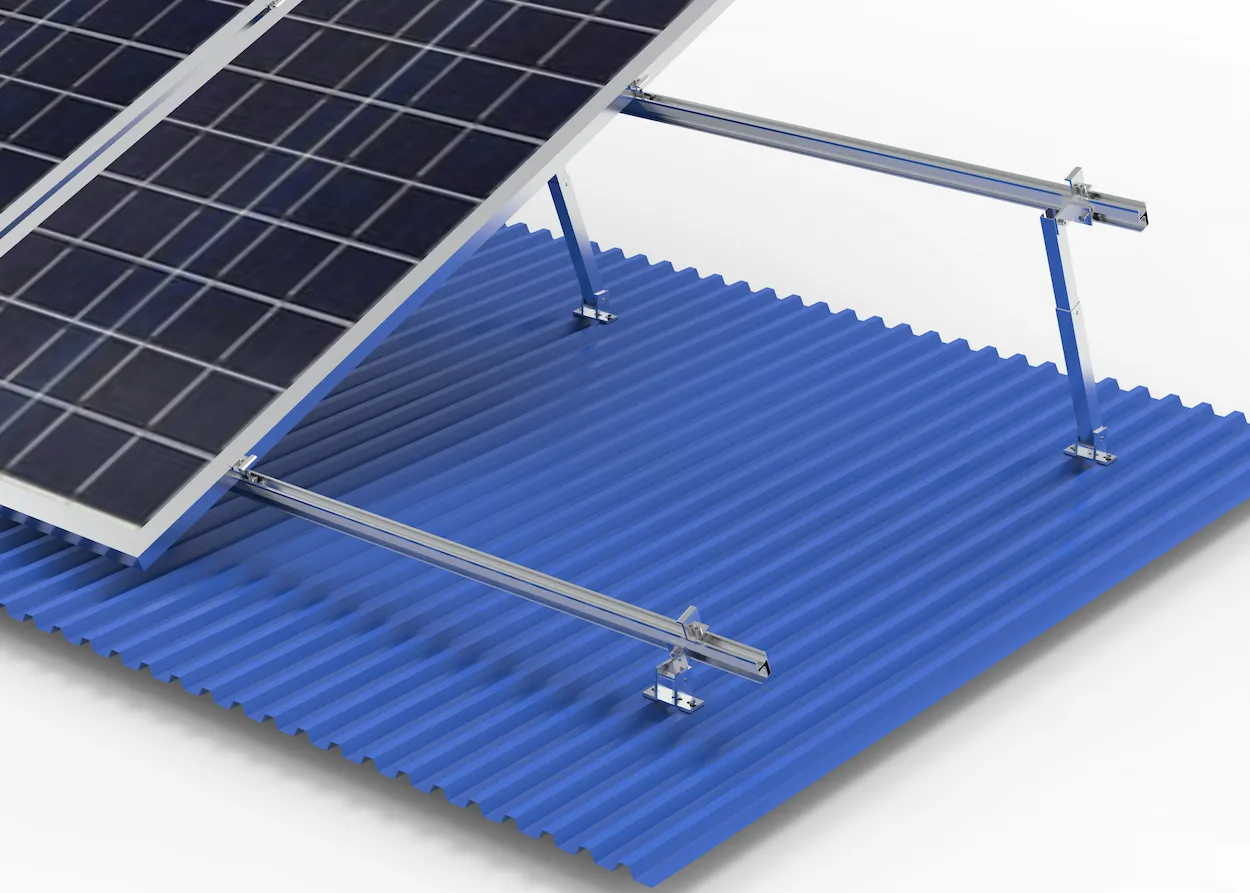
Adjustable Rear-Leg Mounting Structure
This design uses a fixed front support and an adjustable rear leg. Changing the rear leg height changes the inclination of the solar module.
Key characteristics:
- Adjusts the module angle by changing the rear support height.
- Provides different tilt configurations within the designed adjustment range.
- Offers flexibility for projects requiring alternative installation angles.
The adjustment range depends on the bracket dimensions, structural configuration, and project requirements.
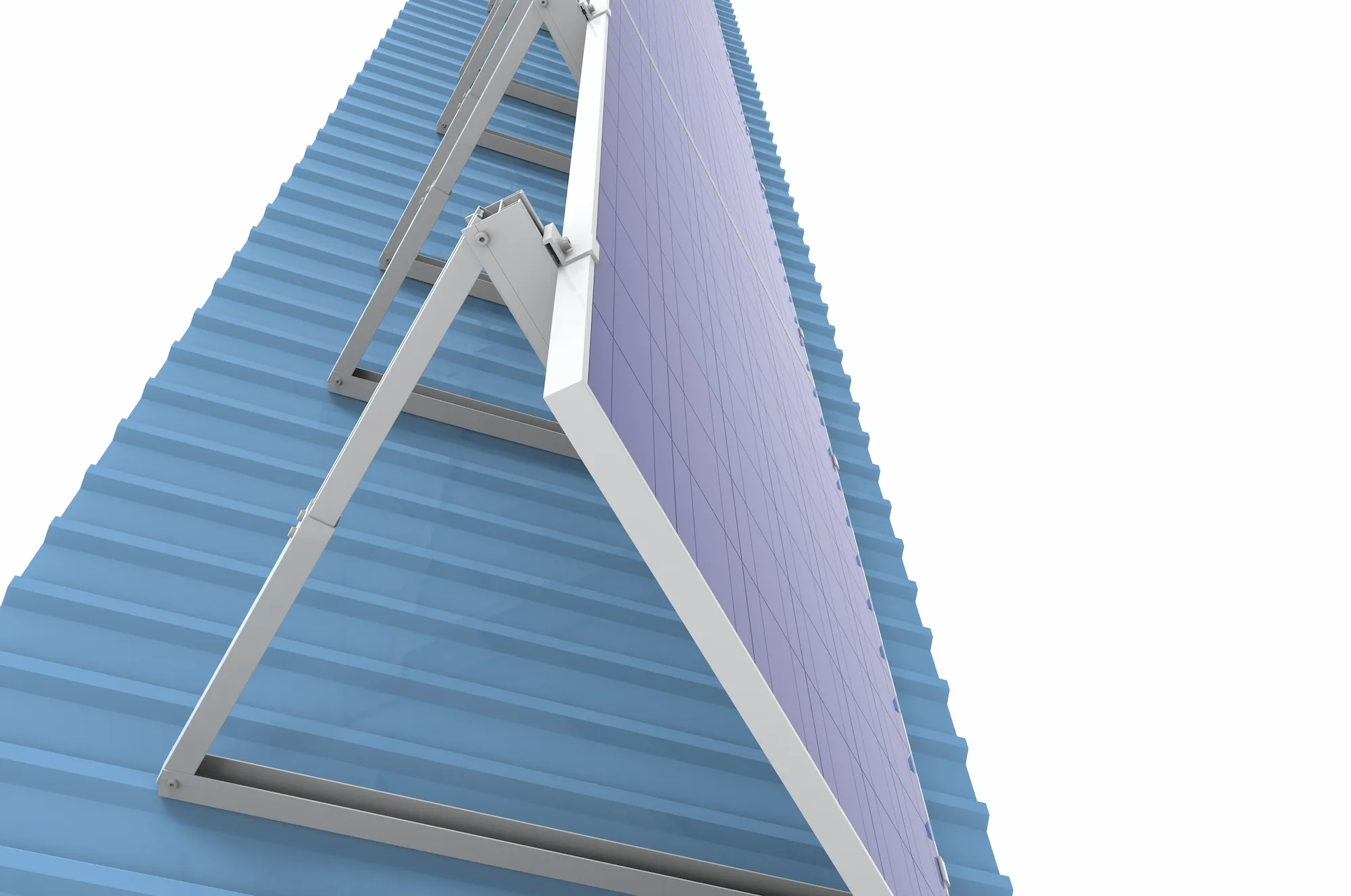
Adjustable Triangle Solar Mounting Structure
The adjustable triangle structure uses a triangular support arrangement, with the rear leg designed to allow height adjustment.
By changing the rear leg height, the module inclination can be modified while maintaining the triangular support configuration.
Key characteristics:
- Uses an adjustable triangular support structure.
- Changes the module angle through rear-leg height adjustment.
- Provides alternative tilt positions according to the structural design.
- Requires proper locking and fixing after adjustment.
Compared with a fixed triangle structure, this configuration provides more flexibility in selecting the installation angle.
It is important to understand that adjustable-tilt mounting systems are not necessarily automatic solar tracking systems. They generally allow manual adjustment during installation or under specified maintenance conditions.
3. How to Choose the Right Solar Panel Racking System for a Metal Roof
With several mounting configurations available, how do you determine which one is suitable for your project?
The right choice depends on the roof profile, mounting requirements, desired module angle, and local environmental conditions.
3.1 Identify Your Metal Roof Profile
Different metal roofs require different fixing components. Identifying the exact roof profile is the starting point for selecting a suitable mounting system.
| Metal Roof Type | Possible Mounting Solutions |
|---|---|
| Standing Seam Roof | Standing Seam Clamps |
| Klip-Lok Roof | Klip-Lok Clamps |
| Trapezoidal Metal Roof | L-Foot, Mini Rail, Profile-Specific Clamps |
| Corrugated Metal Roof | L-Foot or Compatible Profile-Specific Mounting Components |
The roof profile alone is not enough to determine the final solution. Roof sheet thickness, purlin spacing, fixing locations, and structural capacity must also be checked.
3.2 Decide Whether You Need Rails
The choice between rail-based, rail-less, and mini rail systems depends on the required mounting configuration.
- Rail-Based: Suitable when continuous rail support and flexible module positioning are preferred.
- Rail-Less: Can reduce the number of long structural components and simplify certain mounting configurations.
- Mini Rail: Provides short supporting rail sections while reducing the use of conventional long rails.
There is no universally best option. The selected system should meet the module manufacturer’s clamping requirements and the structural requirements of the project.
3.3 Choose Between Standard and Tilted Structures
The existing roof slope plays an important role in determining the mounting structure.
A standard structure is often sufficient when the roof inclination is already suitable.
A fixed triangle structure can be considered when a specific module angle is required. An adjustable structure provides additional flexibility when different tilt positions need to be accommodated.
However, a larger tilt angle does not always mean better overall system performance.
The final angle should consider:
- Local solar irradiation.
- Roof orientation and existing slope.
- Module row spacing and potential shading.
- Wind loads and structural stability.
- Available roof space.
A suitable tilt angle is the result of balancing energy performance with structural safety and installation conditions.
3.4 Consider Local Wind Speed and Snow Loads
Environmental conditions are essential when designing solar mounting systems for metal roofs.
Wind and snow loads directly affect the forces transferred through the modules, mounting components, roof sheets, and supporting building structure.
For high-wind regions:
- Check wind uplift forces.
- Verify clamp and fastener resistance.
- Evaluate mounting point spacing.
- Consider the effect of module tilt and mounting height.
For regions with heavy snowfall:
- Evaluate the applicable ground and roof snow loads.
- Check the load-bearing capacity of the mounting structure.
- Consider snow accumulation and the effects of module inclination.
- Verify that the roof structure can support the additional loads.
A mounting system should not be selected based on product appearance or roof type alone. Its structural performance must be verified against the actual project conditions.
4. Customized Metal Roof Solar Mounting Solutions from SR Solar
Every metal roof project has its own requirements. Even when two buildings use similar roof profiles, differences in roof thickness, supporting structures, wind conditions, and installation layouts can lead to different mounting solutions.
SR Solar provides a range of metal roof solar mounting systems, including L-foot brackets, standing seam clamps, Klip-Lok clamps, rail-based and rail-less configurations, mini rails, and fixed or adjustable tilt structures.
Our engineering team can recommend suitable configurations based on the actual roof and project conditions.
4.1 Recommendations Based on Roof Conditions
To identify an appropriate mounting solution, SR Solar considers factors such as:
- Metal roof profile and dimensions.
- Roof sheet thickness and material.
- Purlin spacing and supporting structure.
- Roof fixing conditions.
- Solar module dimensions and installation layout.
These details help determine the suitable roof attachment method, mounting components, and structural configuration.
4.2 Engineering Design Based on Project Location
The project location is another important factor.
SR Solar considers relevant environmental and geographical information, including:
- Local design wind speed.
- Snow load requirements.
- Project latitude and longitude.
- Solar module orientation and required tilt angle.
- Applicable structural design standards.
Latitude and longitude help establish the solar positioning context, while local wind and snow conditions determine important structural design requirements.
The final mounting configuration should satisfy both the energy-related requirements and the structural conditions of the project.
4.3 Flexible Mounting Configurations
Whether your project requires a conventional L-foot system, a non-penetrating standing seam clamp solution, a mini rail configuration, or an adjustable triangular structure, SR Solar can evaluate different configurations according to your requirements.
Rather than recommending the same mounting system for every metal roof, we focus on matching the fixing method and structural design to the actual application.
If you are unsure which system is suitable, you can share your roof photos, roof profile information, and project location with our team. We can help evaluate the available options and recommend an appropriate solar mounting solution.
5. Summary: Finding the Right Metal Roof Solar Mounting Solution
Choosing the right solar panel racking systems for metal roofs involves more than selecting a bracket or rail.
You need to consider several connected factors:
- Roof Profile: Determines which clamps or fixing components can be used.
- Mounting Configuration: Determines whether an L-foot, clamp, rail-based, rail-less, or mini rail system is suitable.
- Structural Design: Determines whether a standard, fixed-triangle, or adjustable-tilt structure is required.
- Environmental Conditions: Wind speed and snow loads influence structural requirements.
- Project Location: Latitude, longitude, roof orientation, and solar irradiation help guide tilt and layout decisions.
The most suitable solution is the one that matches the actual roof conditions while meeting the project’s structural and installation requirements.
SR Solar offers multiple metal roof solar mounting configurations and project-based engineering support to help customers find the right solution for their applications.
Have a metal roof solar project in mind? Contact SR Solar and share your roof details and project location. Our team can help recommend a suitable mounting configuration.
Frequently Asked Questions
1. What is the best solar mounting system for a metal roof?
There is no single best system for every metal roof. Standing seam roofs generally use compatible seam clamps, while trapezoidal and corrugated roofs may use L-foot brackets, mini rails, or profile-specific mounting components. The final choice depends on the roof profile, supporting structure, and project requirements.
2. Can solar panels be installed on a standing seam metal roof without drilling?
Yes. Compatible standing seam clamps can attach to the raised seams without penetrating the roof sheets. However, the clamp must match the seam profile, and its mechanical strength must be verified to ensure reliable performance under the expected loads.
3. What is the difference between rail-based and rail-less solar mounting systems?
Rail-based systems use aluminum rails to support solar modules, providing continuous support and flexibility in module positioning. Rail-less systems use specially designed mounting components to support modules directly without conventional long rails. The appropriate choice depends on the module requirements and structural design.
4. Is an adjustable-tilt solar mounting system better than a fixed-tilt system?
Not necessarily. Fixed-tilt systems are generally simpler and may require fewer components. Adjustable-tilt systems provide more flexibility in selecting module angles but can involve additional structural components and design considerations. The best option depends on solar conditions, wind loads, available roof space, and project economics.
5. How do I choose a solar mounting system for my local wind and snow conditions?
Start by identifying your roof profile and supporting structure, then provide the project location and applicable design requirements. Local wind speed, snow loads, latitude, longitude, and roof orientation can all influence the mounting configuration and structural design. A project-specific engineering assessment is recommended before finalizing the system.