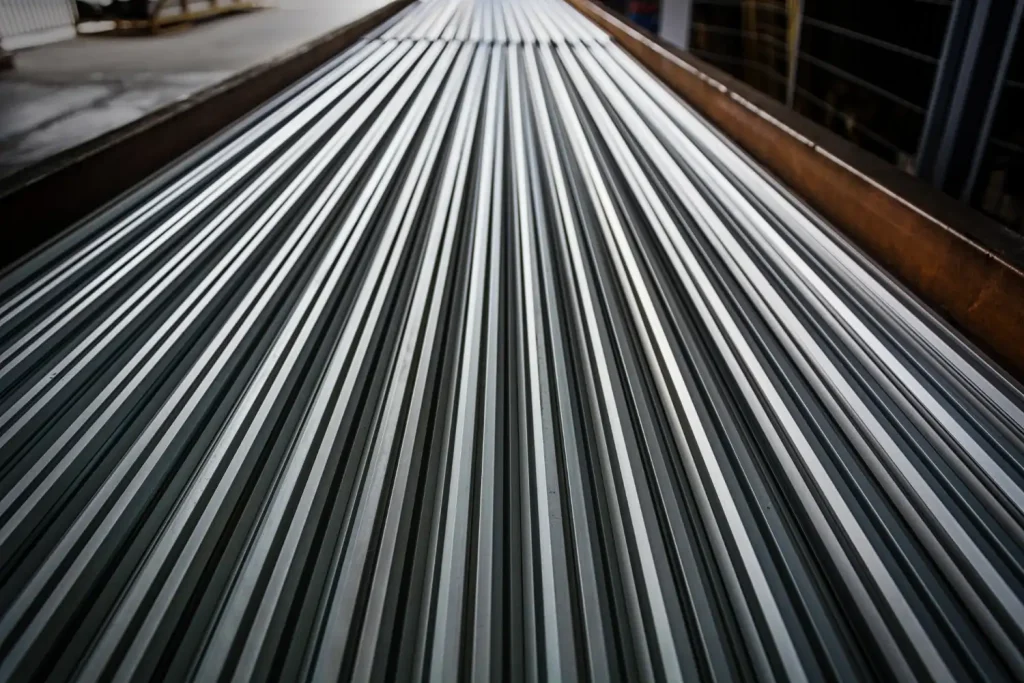
When choosing materials for a solar mounting system, strength is only one part of the equation. The material also needs to handle years of outdoor exposure, repeated loading from wind and snow, and the practical demands of transportation and installation. This is why AL6005-T6 Aluminum has become an increasingly popular choice for modern solar mounting structures.
At first glance, aluminum profiles used in solar systems may look similar. However, the alloy grade and temper condition can make a significant difference in structural performance. For our aluminum mounting components, SR Solar uses AL6005-T6 Aluminum to achieve a better balance between strength, weight, and long-term reliability.
Material Choice Matters More Than It Looks
A solar mounting structure is not a static component.
Every day, it experiences changes in temperature. During extreme weather, it carries additional loads from strong winds or accumulated snow. Over a project lifetime of 25 years or more, these repeated stresses can gradually affect structural performance.
This is why engineers pay close attention not only to the design of rails and brackets, but also to the material used to manufacture them.
Two aluminum profiles may have the same shape and dimensions, but different tempers can result in different mechanical properties. For solar mounting applications, the goal is not simply to choose the strongest material available. It is to select a material that provides the right combination of strength, durability, weight, and cost.
Why AL6005-T6 Aluminum Is Suitable for Solar Structures
AL6005-T6 Aluminum belongs to the 6000 series aluminum alloy family, which is widely used in structural applications. Through solution heat treatment and artificial aging, the T6 temper improves the material’s mechanical properties compared with untreated or lower-strength conditions.
In solar mounting systems, this additional strength brings several practical benefits.
First, it improves resistance to bending and deformation. This is especially important for mounting rails and structural components that experience wind uplift forces or long-term loading.
Second, the higher strength gives engineers more flexibility during system design. Instead of relying only on thicker profiles, a stronger aluminum alloy can help achieve efficient structures while maintaining reliable performance.
Lightweight Design Without Compromising Strength
One of the reasons aluminum is widely used in solar mounting is simple: it is lightweight.
A mounting system needs to be strong, but it also needs to be practical. Heavy structures increase transportation costs and make installation more difficult, especially for rooftop projects where handling space is limited.
AL6005-T6 Aluminum offers a high strength-to-weight ratio, allowing manufacturers to design lightweight components without sacrificing structural stability.
For installers, this means easier handling on-site. For project owners, it means a durable structure that does not add unnecessary load to the building.
Built for Long-Term Outdoor Performance
Solar installations are exposed to harsh environments for decades. Rain, humidity, coastal salt, temperature changes, and UV exposure all test the durability of mounting materials.
Like other high-quality aluminum alloys, AL6005-T6 Aluminum naturally forms a protective oxide layer that helps prevent corrosion. When combined with proper surface treatment, it provides excellent resistance against outdoor conditions.
This is one reason aluminum remains a preferred choice for rooftop and ground-mounted solar applications worldwide.
From Material to Real-World Performance
It is important to understand that a reliable solar mounting system is not created by material alone.
The final performance depends on many factors:
- Structural design
- Profile geometry
- Connection methods
- Material quality
- Manufacturing precision
- Installation conditions
A high-quality material provides the foundation, but it must work together with proper engineering.
At SR Solar, upgrading our aluminum profiles to AL6005-T6 Aluminum is part of our continuous effort to improve product performance. Combined with optimized designs and strict manufacturing control, the material helps us deliver mounting solutions that meet the requirements of different solar projects.
A Stronger Material Choice for Modern Solar Projects
As solar projects continue to grow in scale and face more demanding installation environments, material selection becomes increasingly important.
AL6005-T6 Aluminum provides the strength, corrosion resistance, and lightweight performance required for reliable solar mounting systems. By selecting a higher-performance aluminum alloy, manufacturers can create structures that are easier to install, more durable in operation, and better prepared for long-term service.