Have you ever looked at a massive solar farm and thought, “What a waste of perfectly good soil?” Or maybe you’ve been on the other side, trying to get a permit for a utility-scale project, only to have local authorities shut you down because they want to protect local agriculture. It’s a classic “Food vs. Fuel” showdown. But what if I told you that at SR Solar, we don’t think you have to choose? Welcome to the world of Dual Purpose Solar Mounting, also known as Agrivoltaics. It’s the ultimate win-win for developers and landowners alike.

What Exactly is Dual Purpose Solar Mounting? (And Why Should You Care?)
In the simplest terms, Dual Purpose Solar Mounting is about sharing the sun. Instead of carpeting the ground with panels and killing everything underneath, we raise the modules up. This allows for a “dual harvest”—you’re harvesting electrons from the sky while a farmer is harvesting crops or grazing sheep right underneath them. It transforms a single-asset site into a high-yield hybrid project.
Breaking Down the “Agrivoltaics” Buzzword
You’ve probably heard the term “Agrivoltaics” getting tossed around in industry circles lately. It sounds fancy, but the core idea is simple: optimization. For a B2B developer, this isn’t just about being “green” or “eco-friendly.” It’s a strategic move to secure land that would otherwise be off-limits. When you can tell a local government that your project will actually help the local farm survive by providing shade and extra income, those permit hurdles start to vanish.
The Structural Engineering Behind the Synergy
Standard ground mounts are great for flat, empty deserts. But a farm isn’t an empty desert. It’s a workplace. If a tractor can’t drive under your panels, or if the cows keep bumping their heads, your project is a failure. That’s where the specialized engineering of Dual Purpose Solar Mounting comes into play. We have to balance the physics of wind loads with the practical needs of a working farm.
Elevated Clearance: Making Room for the Big Machines
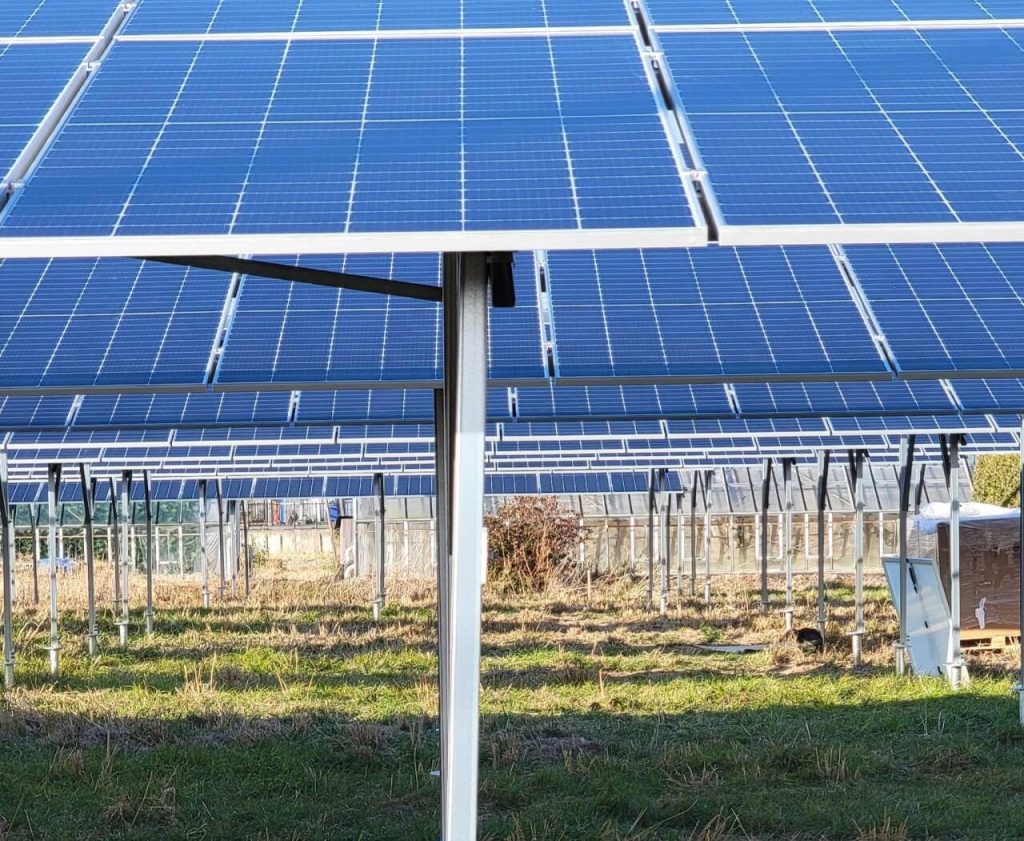
The first thing you’ll notice about an Agrivoltaic system is the height. We’re talking about structures that sit significantly higher than your typical backyard array. At SR Solar, we use high-grade AL6005-T5 aluminum or hot-dip galvanized steel to create these “high-rise” structures. Why? Because a harvester needs clearance. If your mounting system isn’t engineered to withstand the increased wind leverage that comes with height, one big storm could bring the whole thing down. We ensure stability without adding unnecessary bulk.
Variable Pitch and Spacing: Letting the Light Reach the Soil
Plants need light—specifically, Photosynthetically Active Radiation (PAR). If you pack panels too tightly, you create “dead zones” where nothing grows. Our Dual Purpose Solar Mounting systems use customized spacing and variable pitch. We calculate exactly how much light needs to bypass the panels to keep the crops healthy. It’s a delicate dance between maximizing irradiance for the PV modules and ensuring the plants below don’t starve for sun.
Beating the Elements: Durability in Harsh Agri-Environments
Let’s be real: farms are messy. They are humid, they are dusty, and they are full of chemicals. Between the nitrogen-heavy fertilizers and the ammonia coming from livestock, a standard solar rack will start to corrode faster than you can say “crop yield.” If you’re planning a 25-year project, you need materials that won’t flake off in year five.
Fighting Corrosion: Why Standard Racking Fails on a Farm
At SR Solar, we don’t settle for the bare minimum. We often utilize Zinc-Magnesium-Aluminum alloy or ensure our aluminum is anodized to 15μm+. This creates a shield against the corrosive gases and moisture found in agricultural settings. We want your Dual Purpose Solar Mounting system to look as good in two decades as it does on day one. It’s about protecting your CAPEX and ensuring the bankability of the project.
Foundation Adaptability: Protecting the Soil Integrity
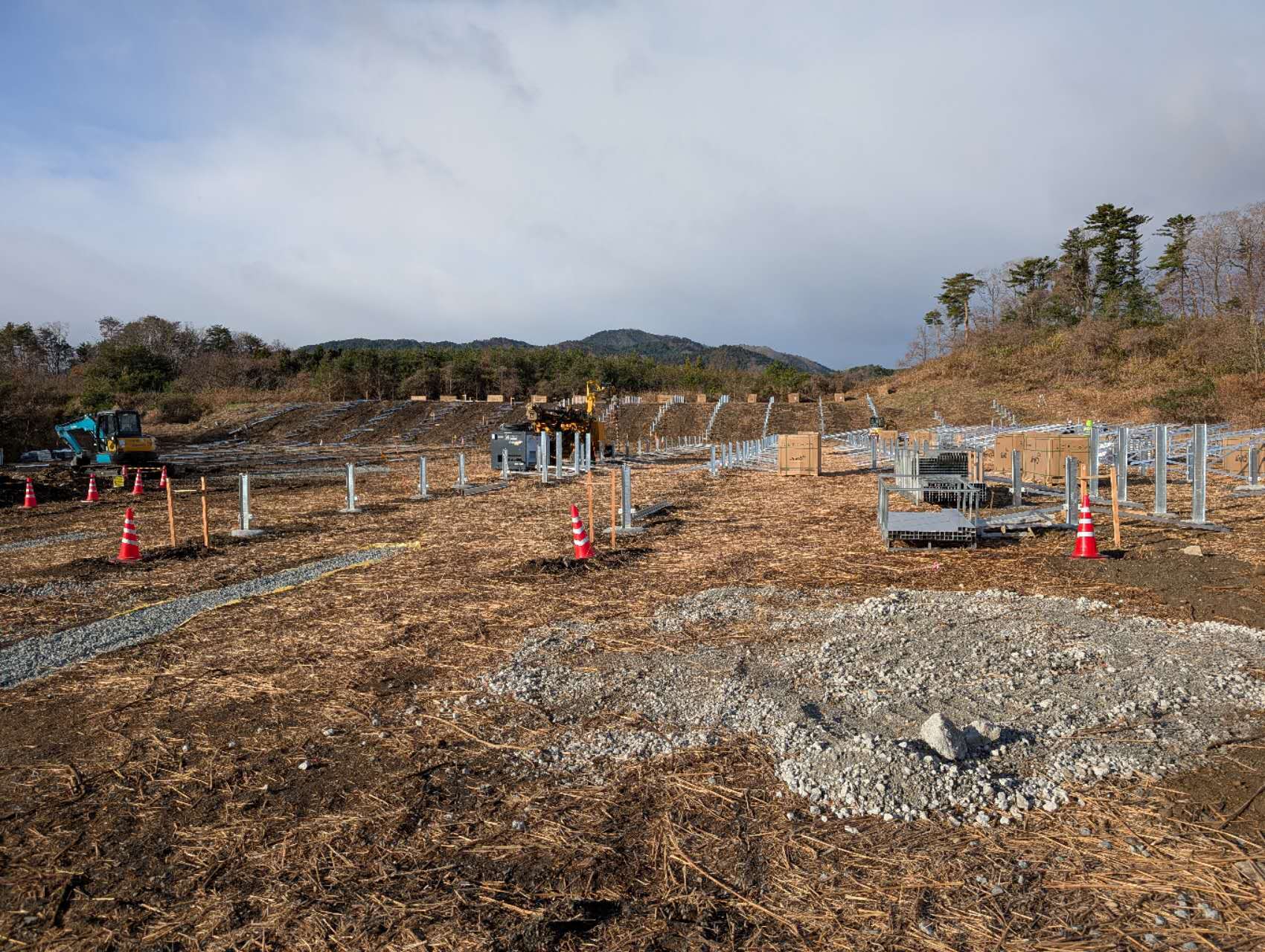
You can’t just go in and pour massive concrete pads all over a farm; you’ll ruin the soil structure. That’s why we focus on foundation adaptability. Whether it’s screw-piles that can be easily removed at the end of the project’s life or specialized pile-driven designs, our goal is to minimize soil disturbance. We want the “Agricultural Output” side of the equation to remain as productive as possible.
The Business Case: Reducing Soft Costs and Boosting Bankability
We know that labor is the biggest “soft cost” in any solar project. Now, imagine trying to install solar panels six meters in the air. It’s slower, more dangerous, and requires more specialized equipment. This is where many Agrivoltaic projects lose their financial edge. But we’ve spent a lot of time figuring out how to make the installation process less of a headache.
Modular Design: Saving Time When You’re Working at Height
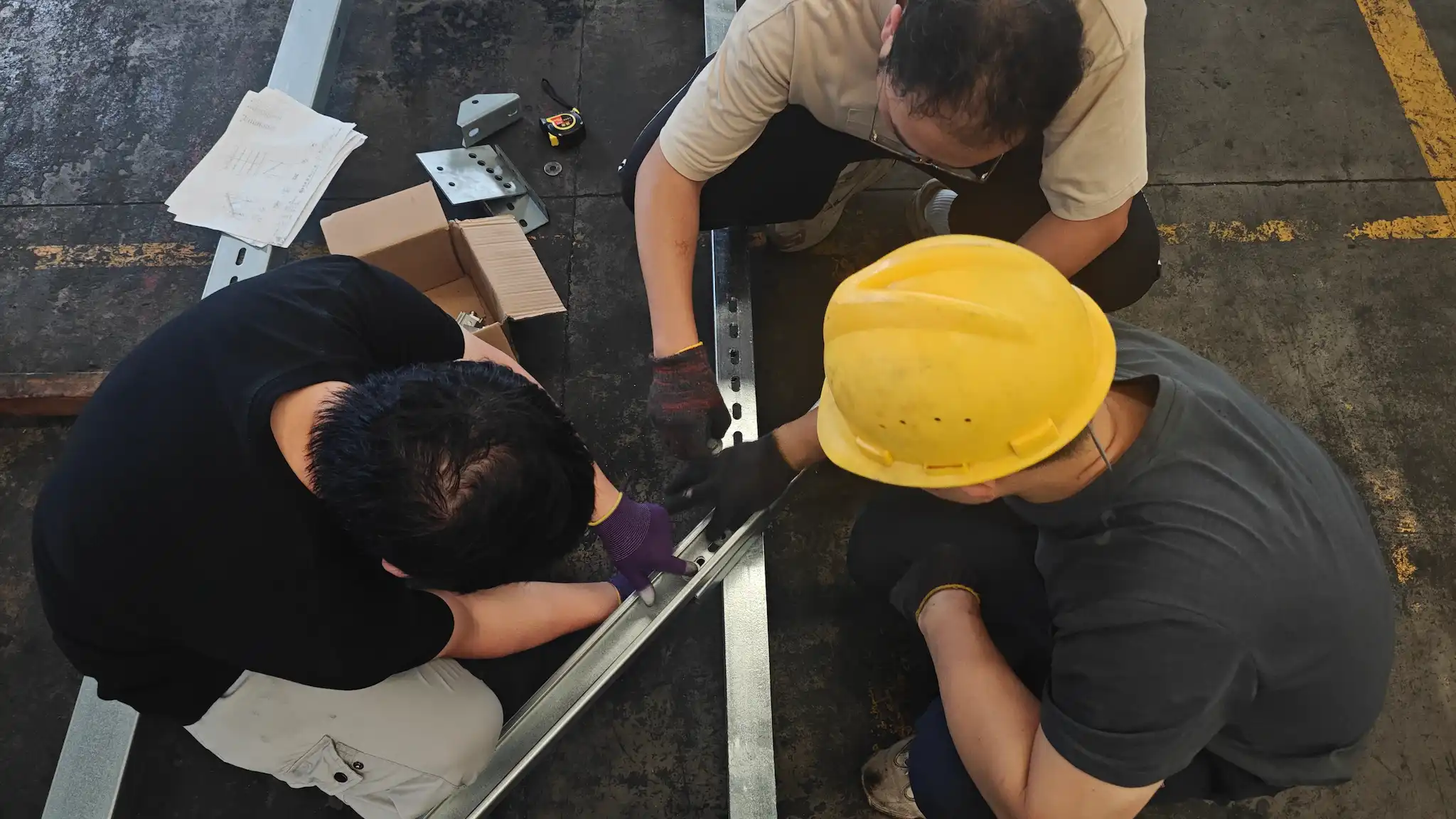
Our solution is simple: do the hard work in the factory so you don’t have to do it on a ladder. SR Solar’s Dual Purpose Solar Mounting kits are 40%+ pre-assembled before they even reach the site. This means fewer man-hours, fewer heavy machines rolling over the farmer’s field, and a much faster path to commissioning. By cutting down on-site labor, we help EPCs keep their budgets in check.
Bifacial Optimization: Squeezing Every Drop of Energy
If you’re going to go through the effort of building an elevated system, you might as well get the most energy possible out of it. Because Dual Purpose Solar Mounting systems are higher off the ground, they are perfect candidates for bifacial modules. The ground underneath—whether it’s light-colored soil, crops, or even snow—reflects light onto the back of the panels. We design our structures to minimize shading on the backside, making sure you get that extra 10-20% energy boost from the “albedo effect.”
Navigating the Rules: Global Standards and Compliance
Nothing kills a B2B deal faster than a lack of certification. Our partners need to know that these tall, spindly-looking structures (which are actually very strong!) can handle a hurricane or a heavy snow load. That’s why our designs strictly adhere to AS/NZS 1170.2 and JIS C 8955 standards. We provide the peace of mind that your dual-purpose project isn’t just a cool experiment—it’s a robust piece of infrastructure.
Why SR Solar is Your Strategic Partner for Agrivoltaic Success
At the end of the day, SR Solar doesn’t just sell “metal.” We provide an engineering solution to a complex land-use problem. We’ve seen how Dual Purpose Solar Mounting can turn a “no” from a landowner into a “yes.” We empower our EPC and developer partners to pitch projects that solve real-world problems. Whether it’s helping a vineyard protect its grapes from extreme heat with panel shade or helping a cattle rancher generate power while his herd grazes, we are here to make it happen.
Conclusion: Two Harvests, One Footprint
The future of energy shouldn’t come at the expense of our food supply. Dual Purpose Solar Mounting proves that we can have both. By combining high-level structural engineering with a deep respect for agricultural needs, SR Solar is helping to bridge the gap between two of the world’s most important industries. It’s efficient, it’s durable, and most importantly, it’s profitable. Ready to turn that farm into a power plant? Let’s get to work.
Frequently Asked Questions
1. Does dual purpose solar mounting work for all types of crops?
Not all, but many! Leafy greens, berries, and even certain types of grapes love the partial shade provided by the panels, as it reduces water evaporation and heat stress. However, crops like corn that need full, intense sun might require much wider panel spacing.
2. Is it much more expensive than standard ground mounting?
The upfront material costs are higher because the structures are taller and require stronger engineering. However, when you factor in the lower land lease costs, easier permitting, and dual revenue streams, the long-term ROI is often much better.
3. How do you prevent the panels from shading the crops too much?
We use specialized software to model the sun’s path throughout the year. By adjusting the pitch and the gap between rows, we ensure the plants receive enough “PAR” (light) to thrive while still capturing enough energy for the grid.
4. Can livestock really graze under these structures?
Absolutely. Sheep are the most common “solar grazers” because they keep the grass trimmed without chewing on the wires. For larger livestock like cattle, we simply design the Dual Purpose Solar Mounting system with extra height and reinforced posts.
5. What is the typical lifespan of an SR Solar Agrivoltaic system?
We design our systems for a 25-year lifespan. By using premium materials like AL6005-T5 aluminum and Zinc-Magnesium-Aluminum coated steel, we ensure the structure can handle the moisture and chemicals of a farm environment for decades.