If you are an EPC or a developer, you know that the “cheapest” quote at the start of a project often becomes the most expensive headache five years down the line. At SR Solar, we’ve seen it happen time and again: steel systems that look sturdy on paper but start bleeding rust in coastal air or require a small army to lug across a massive commercial rooftop. That is why we are such big advocates for aluminum alloy—specifically the high-grade AL6005-T5. By choosing aluminum, you aren’t just buying metal; you are making a strategic move to slash your long-term O&M costs and move through your project pipeline faster than ever. This article is going to break down exactly why our aluminum mounting systems offer that sweet spot of high strength-to-weight ratios and the kind of corrosion resistance that makes a 25-year warranty actually mean something.
Why Material Choice is the Make-or-Break Factor for Solar ROI
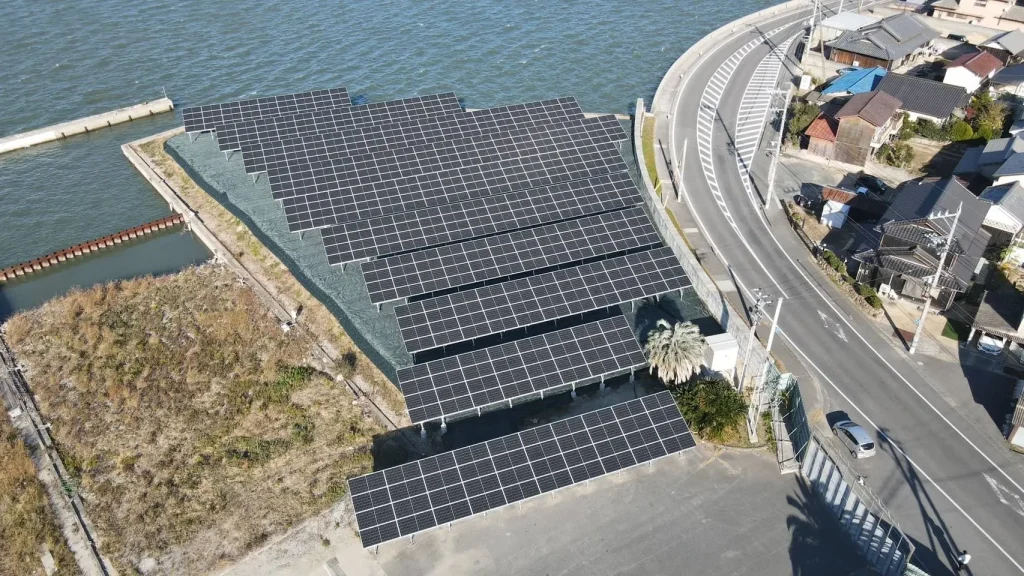
When you’re sitting in a boardroom looking at a multi-megawatt utility-scale project, the mounting system might seem like a secondary detail compared to the panels or inverters. But let’s be real for a second—the mounting is the skeleton of your entire investment. If the skeleton fails, the whole body goes down. We’ve found that the material you choose impacts everything from your initial shipping containers to the amount of Advil your installation crew needs at the end of the day.
At SR Solar, we focus on aluminum because it addresses the “hidden” costs of solar. Have you ever considered how much extra you pay for heavy lifting machinery just because your rails are too heavy for a two-man crew? Or how much a “cheap” steel system costs when you have to send a maintenance team out to treat rust spots three years in? These are the drains on your Internal Rate of Return (IRR) that we want to help you plug.
The Science of AL6005-T5: Strength Without the Dead Weight
There is a common misconception that aluminum is “soft.” While that might be true for a soda can, it is definitely not true for AL6005-T5. This is the “Goldilocks” of alloys—not too brittle, not too soft, but just right for structural engineering. At SR, we use this specific grade because it allows us to create profiles that are incredibly rigid while staying remarkably light.
Understanding the High Strength-to-Weight Ratio
Think of it like this: if you had to carry a 10-foot beam of steel vs. a 10-foot beam of AL6005-T5, you’d pick the aluminum every single time. But here is the kicker—that aluminum beam, when engineered correctly by our team, can handle wind speeds of up to 60m/s. That’s equivalent to a Category 4 hurricane! We aren’t sacrificing safety for portability; we are using better chemistry to get both.
How Heat Treatment Elevates Structural Integrity
The “T5” in AL6005-T5 isn’t just a random label; it refers to the tempering process. We heat-treat our extrusions to ensure they reach their peak hardness. This means when those heavy snow loads—up to 1.6KN/㎡—start piling up in the winter, our rails don’t just buckle. They hold firm, protecting the expensive glass modules they support. Isn’t that the kind of peace of mind you want for your clients?
Defeating Corrosion: Why Aluminum Wins in Coastal and Humid Climates
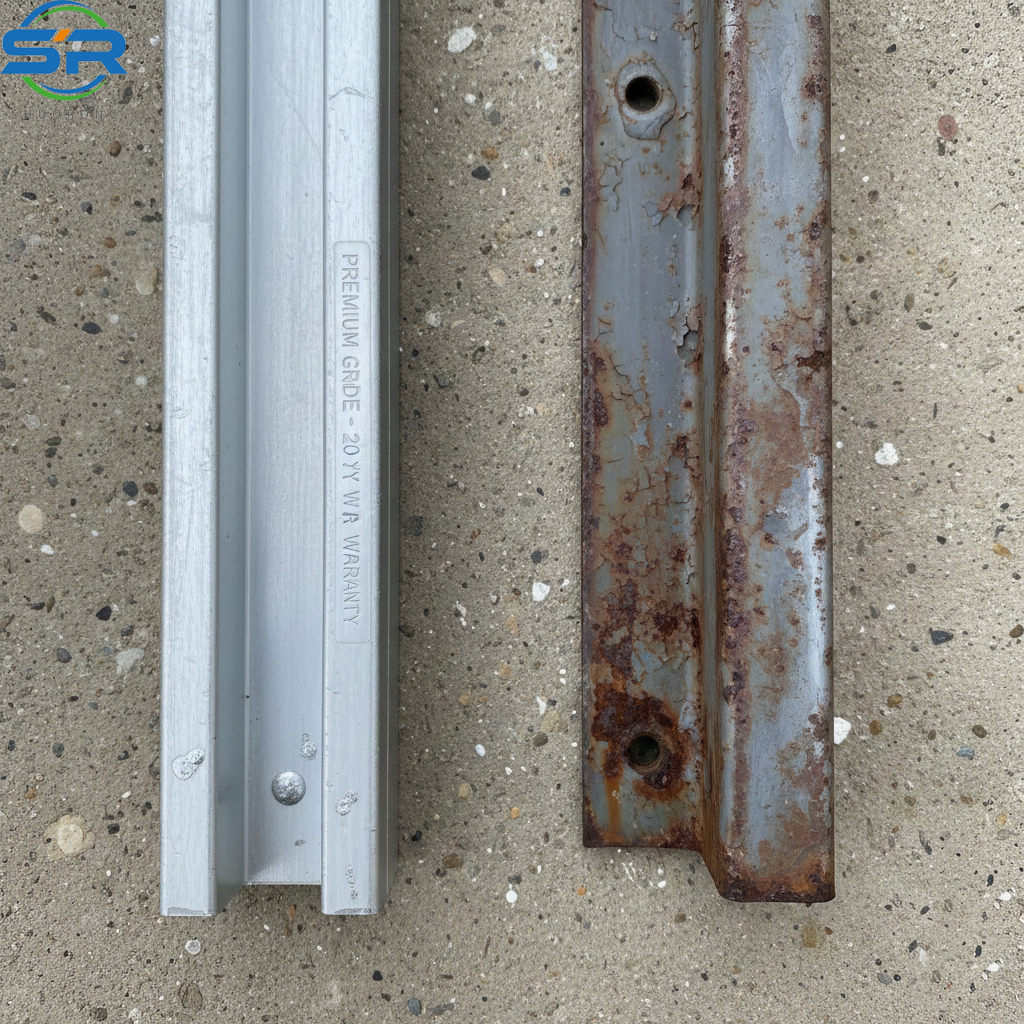
Corrosion is the silent killer of solar projects, especially if you are working anywhere near the ocean. Even the best galvanized steel can have “weak spots” at the cut edges or bolt holes where the protective layer is compromised. Aluminum is a different beast entirely.
The Magic of the Natural Oxide Layer and Anodizing
Aluminum has a built-in defense mechanism. The moment it hits the air, it forms a thin, hard oxide layer that prevents further rusting. But at SR Solar, we don’t stop there. We add a 25μm+ anodized finish to our components. This extra “armor” makes our mounting systems virtually immune to high-salinity environments. If you’ve got a project on a coastal warehouse, using aluminum isn’t just a suggestion; it’s a necessity to avoid a total system failure within a decade.
Slashing Soft Costs: Logistics and Labor Efficiency
In the B2B world, we all know that labor and logistics are the biggest variables in your budget. Aluminum mounting systems are your secret weapon for keeping those variables under control.
Shipping More Megawatts: The Freight Cost Advantage
Aluminum is roughly 1/3 the weight of steel. Do the math on that for a second. That means you can fit significantly more mounting hardware—more megawatts’ worth of equipment—into a single shipping container. When you’re dealing with international freight rates, reducing the number of containers can save you tens of thousands of dollars before the first panel is even unpacked.
Reducing On-site Physical Strain and Machinery Needs
On the job site, weight is everything. If your crew can hand-carry rails up to a commercial rooftop without needing a crane for every single pallet, your installation speed skyrockets. We’ve had partners tell us that their teams stay productive for longer shifts because they aren’t exhausted by midday from manhandling heavy steel components. It’s about working smarter, not harder, right?
The SR Solar Precision: Pre-assembly and Plug-and-Play Design
One of the coolest things about aluminum is its ductility. We can extrude it into complex, precision shapes that would be a nightmare to try and roll-form out of steel. This allows us at SR Solar to build “intelligence” into the hardware itself.
Cutting Installation Time by 40% with Universal Clamps
We hate wasting time with “baggies of bolts” on a windy roof. Our aluminum systems feature a high level of factory pre-assembly. Take our Universal Mid and End Clamps, for example. They come ready to go, designed to snap into the rail and tighten down in seconds. When you combine this with our highly pre-assembled leg sets, we’ve seen installers cut their on-site labor time by as much as 40%. That’s 40% less time paying for a crew to be on a roof and 40% more time to move on to your next project.
Global Compliance and the Financial Life Cycle of Aluminum
If you are an EPC, you know that “bankability” is a huge buzzword. Lenders and investors want to see that the hardware you use meets rigorous international standards. They want to know the project will last long enough to pay off the debt and then some.
Meeting International Standards (AS/NZS 1170.2 & Eurocode)
SR Solar doesn’t play games when it comes to certification. Our systems are fully compliant with AS/NZS 1170.2, JIS C8955, and Eurocode 1. Whether you are building a solar farm in the Australian outback or on a factory in Germany, our aluminum solutions meet the local building codes. This makes the permit approval process smoother and gives the final asset owner the confidence they need to sign off on the deal.
Sustainability and Scrap Value: The End-of-Life Bonus
We are in the green energy business, so sustainability should matter to us, right? But here is a “green” benefit that also puts green in your pocket: scrap value. At the end of a project’s 25 or 30-year lifespan, galvanized steel is often worth very little. Aluminum, however, is infinitely recyclable and retains a high scrap value. When it comes time to decommission or repower a site, that aluminum mounting hardware becomes a liquid asset that improves the project’s overall Internal Rate of Return (IRR).
Final Thoughts on the Aluminum Edge
Look, at the end of the day, we aren’t just selling you rails and clamps. We are providing a structural edge that makes your business more competitive. By switching to SR Solar’s aluminum alloy mounting systems, you are choosing a material that is lighter to ship, faster to install, and tough enough to outlast the panels themselves. It is the logical choice for any serious B2B solar player looking to dominate the market in 2026 and beyond. Why settle for “good enough” when you can have the precision and longevity of AL6005-T5?
Five Burning Questions About Aluminum Solar Mounting (FAQs)
1. Is aluminum really strong enough for high-wind areas compared to steel?
Absolutely. While steel is denser, our AL6005-T5 aluminum is engineered with specific profiles and heat treatments that allow it to handle wind speeds up to 60m/s. It’s all about the engineering of the rail, not just the weight of the metal.
2. Doesn’t aluminum cost more upfront than galvanized steel?
The “sticker price” of raw aluminum is usually higher, but the “total installed cost” is often lower. When you factor in the 30% savings on shipping and the 40% savings on labor, aluminum often comes out as the more economical choice for the total project budget.
3. Will the aluminum rails react with the steel bolts or copper wiring?
We’ve thought of that! We use high-quality stainless steel fasteners (SUS304) and provide proper grounding components to prevent galvanic corrosion. Our systems are designed to be chemically stable for the long haul.
4. How much time does the pre-assembly really save?
On a typical 100kW commercial rooftop, our pre-assembled components can save several days of labor. Because parts like the “Universal Clamps” and “Leg Sets” arrive mostly put together, your crew spends their time mounting panels, not fiddling with nuts and bolts.
5. Can I use these systems in snowy regions?
Yes! Our systems are rated for snow loads up to 1.6KN/㎡. We adjust the span between our roof attachments based on your local weather data to ensure the aluminum structure never reaches its stress limit.