If you’ve spent any time on a commercial roof at 2:00 PM in the middle of July, you know that a solar project is only as good as its weakest link. We often obsess over panel efficiency and inverter clipping ratios, but let’s be real—if the mounting system fails, none of that matters. This Key Selection Guide for L-Feet is dedicated to the component that literally holds the whole dream together. At SR Solar, we’ve seen how the right L-Feet can turn a logistics nightmare into a smooth, high-margin win for EPCs.
Why the L-Feet is the “Unsung Hero” of Your Solar Project
Think of the L-Feet as the “handshake” between your expensive solar array and the building’s structural skeleton. It’s a tiny piece of hardware with a massive job: it has to transfer wind uplift forces, handle snow loads, and keep the roof watertight for at least two and a half decades. When you’re choosing L-Feet for a multi-megawatt project, you aren’t just buying brackets; you’re buying insurance against future maintenance calls.
Have you ever had to go back to a site two years later because of a minor leak? It’s a profit killer. That’s why we focus so much on the engineering behind our SR L-Feet solutions. We want to make sure that once your crew leaves that roof, they never have to go back unless it’s to add more panels.
Material Science: Why AL6005-T5 is the Industry Gold Standard
When you dive into a Key Selection Guide for L-Feet, the first thing people usually look at is the price. But the smart money looks at the metallurgy. Most of our partners ask, “Why not just use standard 6063 aluminum?” It’s a fair question. While 6063 is great for windows and doors, solar mounting requires a different level of “grit.”
The Strength-to-Weight Ratio Advantage
We use AL6005-T5 because it offers the perfect sweet spot for structural mounting. It’s significantly stronger than 6063, which means we can design a slimmer, lighter L-Feet that doesn’t compromise on tensile strength. For a C&I roof, every extra pound of dead load matters. By using high-grade aluminum, SR Solar helps you keep the total system weight down while ensuring the array stays pinned down during a storm.
Anodized Protection: Fighting Corrosion in Harsh Environments
Aluminum is naturally rust-resistant, but “naturally resistant” isn’t enough when you’re 5 miles from the coast. Our L-Feet come with an anodized coating thickness of 10-15μm. This isn’t just for looks; it’s a protective shield against salt spray and industrial pollutants. If you’ve ever seen “white rust” or pitting on cheap brackets, you know exactly what we’re trying to avoid.
Engineering for Zero Leaks: The Waterproofing Masterclass
Waterproofing is where the “Key Selection Guide for L-Feet” becomes a survival guide. Every time you drive a fastener into a roof, you’re creating a potential leak. It’s a calculated risk, and as an EPC, your job is to make that risk as close to zero as possible.
The Role of High-Grade EPDM Gaskets
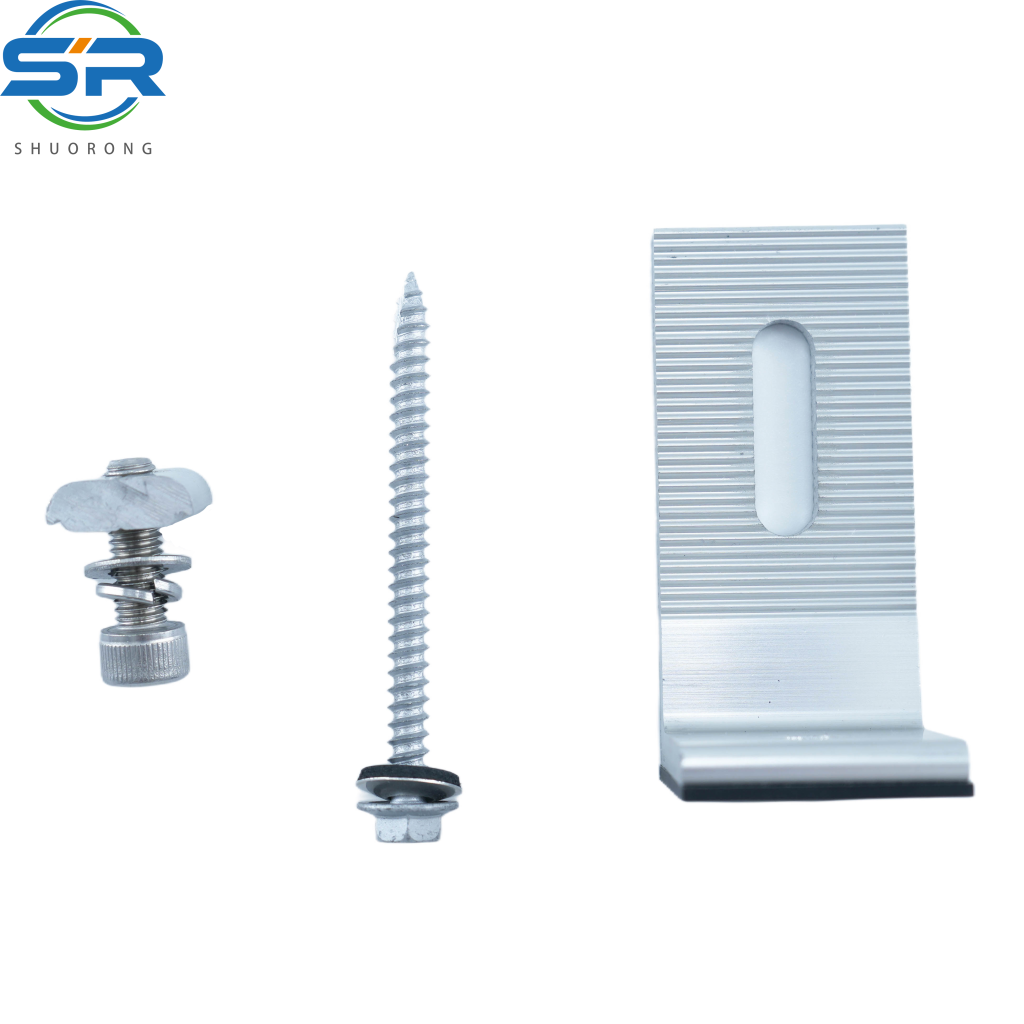
We don’t mess around with cheap rubber. Our L-Feet feature high-density EPDM gaskets. EPDM is the hero here because it stays flexible in freezing winters and doesn’t get brittle under the blistering UV rays of summer. When you torque down that bolt, the EPDM creates a vacuum-tight seal. It’s a “set it and forget it” solution that protects the building’s thermal envelope.
Flashing Integration: When to Use It and Why It Matters
For metal roofs, a good EPDM seal is often enough. But if you’re working on a composite shingle roof, you need to talk about flashing. An L-Feet kit that includes a pre-stamped aluminum flashing plate is a game-changer. It allows the water to shed naturally over the shingles rather than pooling around the penetration point. At SR, we always suggest looking at the roof type first before finalizing your hardware list.
Maximum Versatility: Adapting to Diverse Metal Roof Profiles
No two roofs are ever truly flat or perfectly aligned. You might be dealing with a trapezoidal rib one day and a corrugated sheet the next. A critical part of any Key Selection Guide for L-Feet is adjustability. Our L-Feet feature a long vertical slot, which gives your installers the wiggle room they need to level the rails even if the roof has a few “character flaws.”
Slashing Soft Costs: How L-Feet Design Impacts Installation Speed
Labor is usually the biggest variable in your project budget. If your crew is fumbling with loose washers and separate bolts while wearing gloves on a steep pitch, you’re losing money every minute.
The Power of Pre-Assembled Components
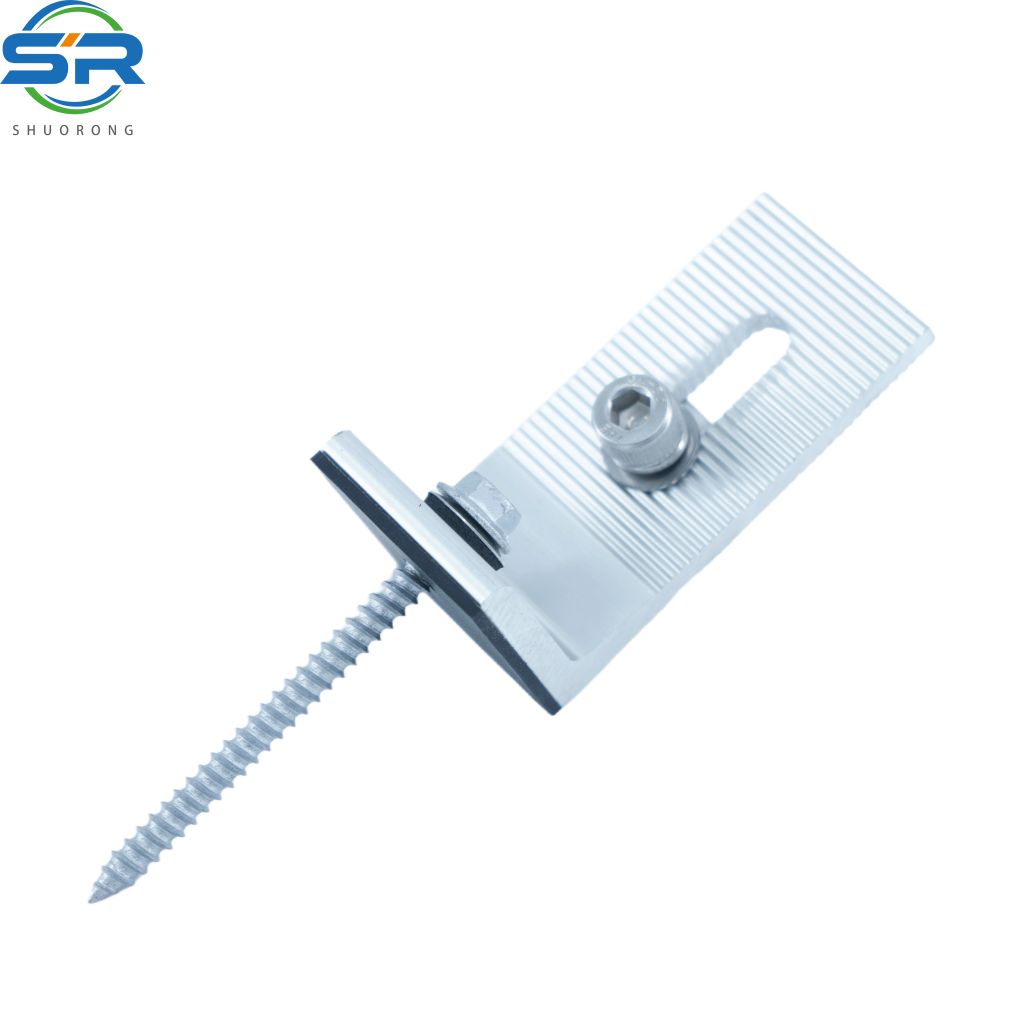
This is where SR Solar really shines. We provide L-Feet that come pre-assembled. The bolt, the washer, and the L-bracket are already one unit. It sounds like a small detail, but when you’re installing 5,000 units on a factory roof, it saves dozens of man-hours. Fewer parts to drop, fewer parts to lose, and a much faster “click-and-go” workflow.
Navigating Global Compliance and Wind Load Standards
If you’re bidding on international tenders, you can’t just say the mounting is “strong.” You need the paperwork to prove it. In our experience, bankability often comes down to certifications.
Understanding AS/NZS 1170.2 and JIS C 8955 Requirements
Our L-Feet are engineered and tested to meet rigorous standards like AS/NZS 1170.2 for Australia and JIS C 8955 for Japan. These aren’t just acronyms; they are benchmarks for wind and snow load resistance. When you use SR Solar hardware, you can hand over a technical data sheet to your project insurer with total confidence. We’ve done the math so you don’t have to.
The B2B Bottom Line: Total Cost of Ownership (TCO)
At the end of the day, procurement is about more than the line-item price of a bracket. The “Key Selection Guide for L-Feet” should really be viewed through the lens of Total Cost of Ownership. A cheaper, non-anodized L-Feet might save you $0.02 per watt today, but if it causes a structural failure or a leak five years from now, that “saving” becomes a massive liability.
By choosing engineered solutions from SR, you’re reducing your technical risk, lowering your labor overhead, and protecting your brand’s reputation. We believe in building things that last, and our 10-year warranty is our way of standing behind that promise.
Summary
Selecting the right L-Feet is a balance of high-grade materials (AL6005-T5), smart waterproofing (EPDM seals), and installation efficiency. For the modern EPC, prioritizing these technical details isn’t just good engineering—it’s smart business that ensures project longevity and high ROI.
Frequently Asked Questions
1. Can I use the same L-Feet for both corrugated and trapezoidal metal roofs?
Generally, yes, provided the L-Feet is paired with the correct fastener (like a hanger bolt or self-tapping screw) and has enough vertical adjustability to clear the rib height.
2. What is the benefit of T5 vs T6 temper for aluminum L-Feet?
T5 temper is cooled from an elevated temperature and artificially aged, providing excellent structural stability and corrosion resistance, which is ideal for the extrusion profiles used in solar mounting.
3. Do I really need anodized aluminum if the site isn’t near the ocean?
Yes. Anodization provides a layer of protection against general atmospheric corrosion and UV degradation, ensuring the metal stays structurally sound for the full 25-year lifespan of the panels.
4. How does pre-assembly actually save money on a B2B project?
It reduces “part count” on-site, which minimizes the risk of missing hardware and significantly speeds up the attachment of rails to the roof, directly lowering your labor-per-watt cost.
5. What wind speeds can SR Solar L-Feet withstand?
Our L-Feet are tested to withstand wind speeds up to 60m/s, depending on the specific installation configuration and local building code compliance (like AS/NZS 1170.2).