Introduction
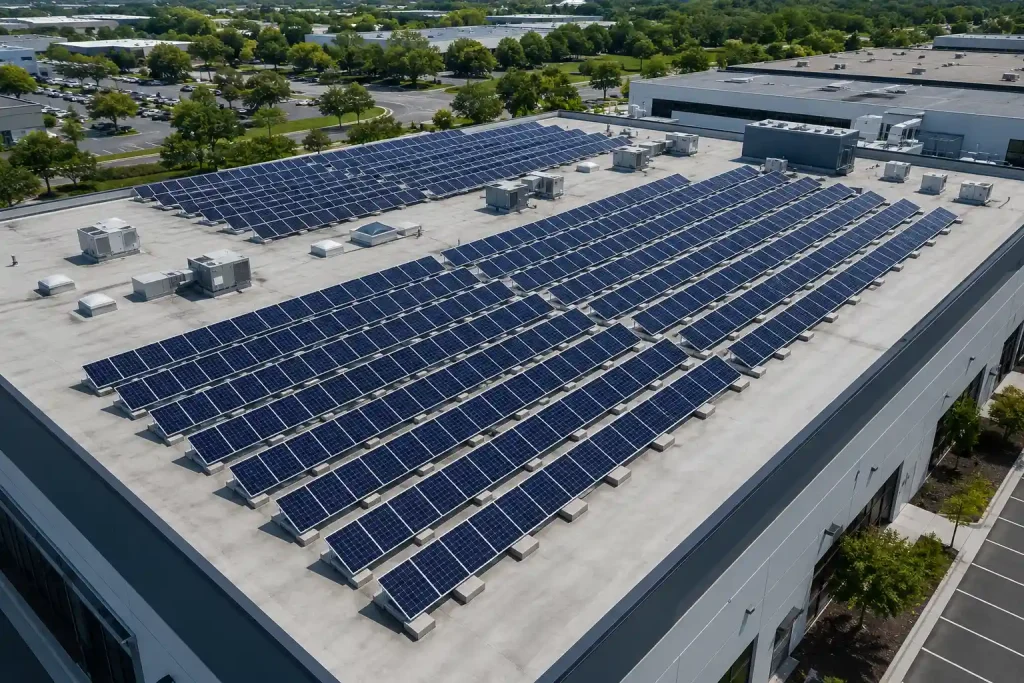
Flat roof ballasted solar racking has become a preferred choice for commercial and industrial rooftop solar projects, especially where the roof membrane cannot be penetrated. Instead of fixing the mounting system directly to the roof structure, concrete ballast is used to keep the entire array securely in place. This approach helps protect the waterproof layer, reduces installation work on site, and makes future maintenance much easier.
Most flat roof ballasted solar racking systems are manufactured from AL6005-T6 aluminum alloy, which combines high strength with excellent corrosion resistance while keeping the overall structure lightweight. The exact design of the system depends on the project location, roof conditions, wind speed, and snow load requirements. At SR Solar, our engineering team can design the mounting structure according to JIS, BS, Eurocode, ASCE, or AS/NZS standards to meet local project requirements.
For EPC contractors and solar developers, choosing the right flat roof ballasted solar racking system is about more than simply supporting solar panels. A practical design should be easy to install, use only the ballast that is actually needed, and perform reliably throughout the project’s service life. The right solution can reduce installation time, lower transportation costs, and help keep the entire rooftop solar system safe under different environmental conditions.
Structural Design of Flat Roof Ballasted Solar Racking
Wind load is one of the most important factors to consider when designing a flat roof ballasted solar racking system. Unlike traditional rooftop mounting systems that are fixed directly to the roof structure, ballasted systems rely on a combination of ballast weight, friction, and aerodynamic design to keep the solar array stable without penetrating the roof membrane.
When wind passes over a flat roof, different areas of the solar array experience different levels of pressure. Roof edges and corners are usually exposed to higher wind forces, while the center area experiences relatively lower loads. Therefore, the ballast layout cannot simply use the same weight for every section of the roof. A reliable design needs to consider the actual wind conditions, roof structure, and project location.
Several factors work together to ensure the stability of a flat roof ballasted solar racking system.
Aerodynamic Design with Wind Deflectors
Wind deflectors are commonly used at the rear side of solar modules to reduce the amount of airflow entering underneath the array. By guiding wind over the panels instead of allowing it to create excessive uplift beneath the modules, wind deflectors help improve system stability and reduce the required ballast weight.
The design of the wind deflector depends on factors such as module arrangement, tilt angle, roof layout, and local wind conditions. Proper aerodynamic design allows the mounting system to achieve reliable performance while avoiding unnecessary additional weight on the roof.
Roof Surface Friction and Ballast Weight
The friction between the mounting base and the roof surface plays an important role in preventing the solar array from sliding during strong wind conditions. Different roof materials, including TPO, PVC, EPDM, and bitumen membranes, have different friction characteristics, which can affect the required ballast calculation.
For this reason, engineers need to evaluate the roof material together with wind load requirements when designing the system. A properly calculated ballast layout helps maintain stability while keeping the additional load on the building within acceptable limits.
Connected Array Structure
Modern flat roof ballasted solar racking systems are designed as an integrated structure rather than independent rows of solar panels. By connecting multiple rows together, wind forces can be distributed across a larger area, improving the overall stability of the array.
This approach also helps reduce the amount of ballast required for individual sections and creates a more efficient mounting solution for large commercial rooftop projects.
Based on practical project experience, different areas of the same rooftop may require different ballast arrangements. Edge and corner zones usually need additional reinforcement due to higher wind exposure, while central areas can often use a lighter configuration. By adjusting the ballast layout according to the actual roof conditions, the system can achieve a better balance between structural safety and roof load management.
SR Solar provides flat roof ballasted solar racking solutions designed with project-specific requirements in mind. Using high-strength AL6005-T6 aluminum alloy and engineering designs based on standards such as JIS, BS, Eurocode, ASCE, or AS/NZS, our systems are developed to meet different environmental conditions and project requirements worldwide.
Material Selection for Flat Roof Ballasted Solar Racking
Material selection plays an important role in the long-term performance of a flat roof ballasted solar racking system. Rooftop mounting structures are exposed to sunlight, rain, humidity, temperature changes, and wind loads throughout their service life. Therefore, the material used for the mounting components needs to provide sufficient strength, corrosion resistance, and durability while keeping the overall system lightweight.
For commercial and industrial rooftop solar projects, AL6005-T6 aluminum alloy is widely used for structural components because it offers a good balance between strength, weight, and corrosion resistance. Compared with many traditional metal materials, aluminum profiles provide excellent durability in outdoor environments while reducing the additional load placed on the building structure.
Advantages of AL6005-T6 Aluminum Alloy
AL6005-T6 is a heat-treated aluminum alloy commonly used in solar mounting structures, including rails, supports, and other load-bearing components. Its high mechanical strength allows the profiles to withstand long-term wind loading, while its lightweight characteristics make transportation and installation more efficient.
Compared with standard aluminum profiles such as AL6063-T5, AL6005-T6 provides higher structural strength, making it more suitable for applications where the mounting system needs to support larger loads or longer spans.
Key advantages include:
| Property | AL6005-T6 Aluminum Alloy | AL6063 Aluminum Alloy |
|---|---|---|
| Strength | Higher structural strength for load-bearing applications | Commonly used for lighter structural applications |
| Corrosion Resistance | Excellent corrosion resistance for outdoor environments | Excellent corrosion resistance |
| Weight | Lightweight compared with steel structures | Lightweight |
| Installation Efficiency | Easy handling and faster installation | Easy handling |
The surface of aluminum profiles naturally forms a protective oxide layer that helps resist corrosion caused by moisture and outdoor exposure. For projects located in coastal or highly corrosive environments, additional surface treatments can also be considered according to project requirements.
Using aluminum instead of heavier steel components helps reduce the overall weight of the mounting system. This is especially important for flat roof applications, where the building structure must support both the solar system and the required ballast weight.
Design Standards for Global Solar Projects
Solar mounting systems are installed in different regions with different climate conditions and building requirements. A reliable flat roof ballasted solar racking system should be designed according to local wind, snow, seismic, and structural requirements.
At SR Solar, our engineering team can customize system designs based on internationally recognized standards, including:
- JIS C 8955 for solar mounting structures in Japan, considering local wind and seismic requirements.
- AS/NZS 1170.2 for Australia and New Zealand projects, focusing on regional wind actions and extreme weather conditions.
- Eurocode EN 1991-1-4 for European markets, covering wind actions and structural design requirements.
- ASCE 7 for the United States market, including wind load evaluation and structural safety considerations.
- BS Standards for projects requiring British structural design references.
The final design of the mounting system depends on project-specific factors such as installation location, roof structure, module layout, wind speed, snow load, and customer requirements. By adjusting profile dimensions, support structures, and ballast layouts, SR Solar provides solutions suitable for different commercial rooftop solar applications worldwide.
Common Installation Challenges of Flat Roof Ballasted Solar Racking
A well-designed flat roof ballasted solar racking system is only one part of a successful rooftop solar project. During actual installation, factors such as roof protection, thermal movement, ballast quality, and cable management can directly affect the long-term performance of the system.
Based on practical experience from commercial rooftop projects, EPC contractors should pay attention to the following common installation issues.
Protecting the Roof Membrane
Flat roof surfaces are usually covered with waterproof membranes such as TPO, PVC, or EPDM. These materials provide excellent waterproofing performance, but they also require proper protection during solar installation.
Placing mounting components or concrete ballast directly on the roof surface may create unnecessary pressure points and friction during daily temperature changes. Over time, repeated movement between the mounting system and the roof membrane can increase the risk of surface wear.
To prevent this issue, protective rubber pads or suitable separation layers should be installed between the mounting structure and the roof surface. This helps distribute the load, reduce friction, and protect the waterproof layer throughout the system’s service life.
Considering Thermal Expansion
Aluminum mounting structures naturally expand and contract as temperatures change throughout the day. For large commercial rooftop solar projects, the system design should consider thermal movement to avoid excessive stress on rails, connections, and module frames.
Expansion solutions, including proper joint design and installation spacing, should be evaluated according to the system size, local climate conditions, and mounting structure design.
A professional engineering approach ensures that the flat roof ballasted solar racking system can maintain structural stability while allowing normal material movement.
Selecting Suitable Ballast Materials
The quality and weight consistency of concrete ballast blocks are important for maintaining system stability. Using unsuitable ballast materials may affect the actual system weight and reduce the reliability of wind resistance calculations.
For commercial projects, ballast blocks should have sufficient strength, stable dimensions, and suitable durability for the local environment. In regions with cold climates or frequent temperature changes, frost-resistant materials should also be considered.
Proper ballast selection helps ensure that the designed wind resistance performance matches the actual installation conditions.
Planning Cable Management During Installation
Cable routing is another important part of rooftop solar installation. Without proper cable management, cables may come into direct contact with the roof surface, remain exposed to standing water, or experience unnecessary mechanical stress.
A well-organized cable management solution helps protect electrical components, simplify maintenance, and improve the overall appearance of the solar installation.
At SR Solar, we consider installation details together with structural design. From roof protection solutions and ballast layouts to cable management and system configuration, our flat roof ballasted solar racking systems are developed to support reliable and efficient commercial rooftop solar projects.
Economic Benefits of Flat Roof Ballasted Solar Racking
For EPC contractors, selecting a solar mounting system is not only about structural performance. Installation efficiency, transportation costs, and on-site labor requirements also have a significant impact on the overall project budget.
A well-designed flat roof ballasted solar racking system helps reduce unnecessary installation work while improving construction efficiency. By optimizing component design and simplifying the installation process, EPC teams can complete rooftop solar projects faster and with fewer installation challenges.
Reducing Installation Time with Pre-Assembled Components
Labor costs are an important consideration for commercial rooftop solar projects. Traditional mounting systems may require a large amount of on-site assembly, which increases installation time and creates more opportunities for errors.
Modern ballasted solar mounting systems improve efficiency through practical design features, such as:
Pre-assembled components:
Factory pre-assembled legs, brackets, and structural parts reduce the amount of assembly required on the roof and allow installation teams to work more efficiently.
Simplified connection methods:
Optimized rail and clamp designs help reduce installation steps and minimize the use of additional tools during module installation.
Standardized components:
Using universal components and optimized system layouts makes transportation, inventory management, and on-site installation easier for EPC contractors.
By reducing unnecessary installation procedures, a properly designed flat roof ballasted solar racking system helps shorten construction schedules and improve overall project efficiency.
Optimizing Ballast and Transportation Costs
Concrete ballast is an essential part of many flat roof solar mounting systems, but its weight also creates additional transportation and handling requirements.
A practical system design allows EPC contractors to source concrete ballast locally whenever possible while transporting lightweight mounting components from the manufacturer. This approach reduces long-distance shipping costs and simplifies logistics management.
Using high-strength AL6005-T6 aluminum alloy components helps keep the mounting structure lightweight without compromising structural performance. Combined with project-specific ballast design, the system can achieve reliable wind resistance while maintaining efficient material usage.
Designed for Practical Project Execution
For commercial rooftop solar projects, the best mounting solution is not only one that meets structural requirements but also one that supports efficient installation and cost control.
SR Solar designs flat roof ballasted solar racking systems with consideration for factory production, transportation, and on-site installation requirements. Through pre-assembled solutions, optimized components, and flexible ballast configurations, our systems help EPC partners complete projects more efficiently in different markets.
Engineering Checklist Before Installing Flat Roof Ballasted Solar Racking
Before starting a commercial rooftop solar project, a detailed engineering review is essential to ensure the flat roof ballasted solar racking system performs safely throughout its service life.
Unlike fixed rooftop systems, ballasted mounting structures rely on the combined performance of ballast weight, friction, and structural design. Therefore, EPC contractors should carefully evaluate the following factors before finalizing the system layout.
Confirm Roof Load Capacity
The first step is verifying whether the existing roof structure can support the additional weight from solar modules, mounting components, and ballast blocks.
The evaluation should be completed together with the building structural engineer based on actual roof conditions. A suitable design ensures the solar system remains within the allowable roof loading limits while maintaining required wind resistance.
Review Wind Load Design Requirements
Wind resistance is one of the most important considerations for ballasted solar systems. The ballast layout and structural configuration should be designed according to project location, building height, surrounding environment, and local wind requirements.
At SR Solar, mounting structures can be designed according to international standards including ASCE, Eurocode, AS/NZS, and JIS to meet different regional requirements.
Check Material Quality and Corrosion Protection
The material quality of the mounting structure directly affects long-term outdoor performance. High-strength AL6005-T6 aluminum alloy is commonly used for solar mounting components because of its excellent strength-to-weight ratio and corrosion resistance.
For projects in coastal areas or harsh environments, suitable surface treatments and material specifications should be selected according to project conditions.
Protect the Roof Membrane
Flat roofs commonly use waterproof membranes such as TPO, PVC, EPDM, or bitumen. Proper protection between the mounting system and roof surface is necessary to avoid unnecessary friction and pressure points.
Using suitable protection pads under contact areas helps distribute loads and protect the roof membrane during installation and long-term operation.
Consider Thermal Movement
Solar mounting structures are exposed to daily temperature changes, which can cause aluminum components to expand and contract.
The system layout should include appropriate expansion considerations based on array size, installation location, and structural design. Proper planning helps reduce stress on rails, connections, and solar modules.
Strengthen Edge and Corner Areas
Wind forces are usually higher near roof edges and corners compared with the center area of the roof. For this reason, ballast distribution should be adjusted according to different roof zones.
Additional ballast or aerodynamic components may be used in these areas to improve stability while maintaining an efficient overall design.
By following a complete engineering review process, EPC contractors can reduce installation risks, protect roof performance, and ensure smoother project approval. A properly designed flat roof ballasted solar racking system provides a reliable solution for commercial rooftop solar projects in different markets.
Technical Summary
Designing a commercial flat roof ballasted solar racking system requires careful consideration of structural safety, material performance, and installation efficiency. By using high-strength AL6005-T6 aluminum profiles, optimized ballast layouts, and aerodynamic design features, modern ballasted mounting systems provide reliable performance while protecting the roof membrane from unnecessary penetration.
For EPC contractors, selecting a system with flexible design options, compliance with local engineering standards, and efficient installation features can help reduce construction challenges and improve the overall project return. With proper engineering support, flat roof solar projects can achieve long-term stability across different climate conditions and building types.
Frequently Asked Questions (FAQs)
Q1: What is the advantage of AL6005-T6 aluminum for flat roof ballasted solar racking?
AL6005-T6 aluminum alloy provides an excellent balance between strength, weight, and corrosion resistance. Compared with heavier steel structures, aluminum components reduce the overall system weight while maintaining sufficient structural strength for rooftop solar applications. Its natural oxide layer also helps protect the material from outdoor environmental exposure.
Q2: How does flat roof ballasted solar racking resist wind uplift without roof penetration?
A ballasted solar mounting system uses a combination of ballast weight, friction between the mounting base and roof surface, aerodynamic components, and interconnected array design to resist wind forces.
By optimizing ballast distribution and airflow control, the system can maintain stability without requiring roof penetration, helping protect the waterproof membrane.
Q3: Can SR Solar ballasted racking be designed according to different regional standards?
Yes. SR Solar provides customized structural designs based on project requirements and local regulations. The system can be engineered according to standards including AS/NZS 1170.2, JIS C 8955, Eurocode, ASCE 7, and BS standards.
The final design considers factors such as wind speed, snow load, roof structure, installation location, and project-specific requirements.
Q4: How can ballasted solar racking protect the roof waterproof membrane?
Proper roof protection is an important part of ballasted system design. Suitable protection pads or separation layers are installed between the mounting structure and roof surface to reduce friction, distribute loads, and protect waterproof membranes such as TPO, PVC, EPDM, and bitumen.
This helps maintain roof integrity during installation and long-term system operation.
Q5: What tilt angles are commonly used for flat roof ballasted solar racking?
Commercial flat roof ballasted solar systems usually use low tilt angles, commonly between 5 and 15 degrees depending on project requirements. Lower tilt angles help reduce wind exposure and can improve system stability while optimizing ballast requirements.
The final tilt angle depends on factors such as energy yield requirements, roof conditions, wind conditions, and system design.
Need Engineering Support for Your Next Flat Roof Solar Project?
Every commercial flat roof project has different requirements, including roof structure, wind conditions, available space, and installation conditions. SR Solar provides customized flat roof ballasted solar racking solutions with engineering support, including structural design, ballast optimization, and project-specific recommendations.
Contact our engineering team to discuss your upcoming rooftop solar project and find a suitable mounting solution.