If you’re knee-deep in a commercial or industrial solar project, you know flat roofs pop up everywhere—warehouses, factories, big-box stores, even some office buildings. A flat roof solar mounting system lets you tilt panels perfectly for max output, unlike sloped roofs that force compromises. But here’s the catch: pick wrong, and you’re dealing with leaks, overloaded structures, or arrays that shift in high winds. At SR Solar, we’ve helped dozens of EPC contractors, integrators, and rooftop platform companies nail these installs. The goal? Deliver reliable power generation without headaches. Let’s break down what really works in today’s market.
Flat roofs demand thoughtful engineering. You can’t just slap on ground-mount hardware. Roof type matters hugely—concrete can handle piers, waterproof membranes need gentle treatment, and some low buildings prefer minimal added weight. We’ve seen projects delayed because someone ignored wind zone requirements or roof load calcs. The right flat roof solar mounting system saves time, protects warranties, and keeps IRR looking good for developers.
Why Flat Roofs Are a Goldmine for Solar – But Come with Real Challenges
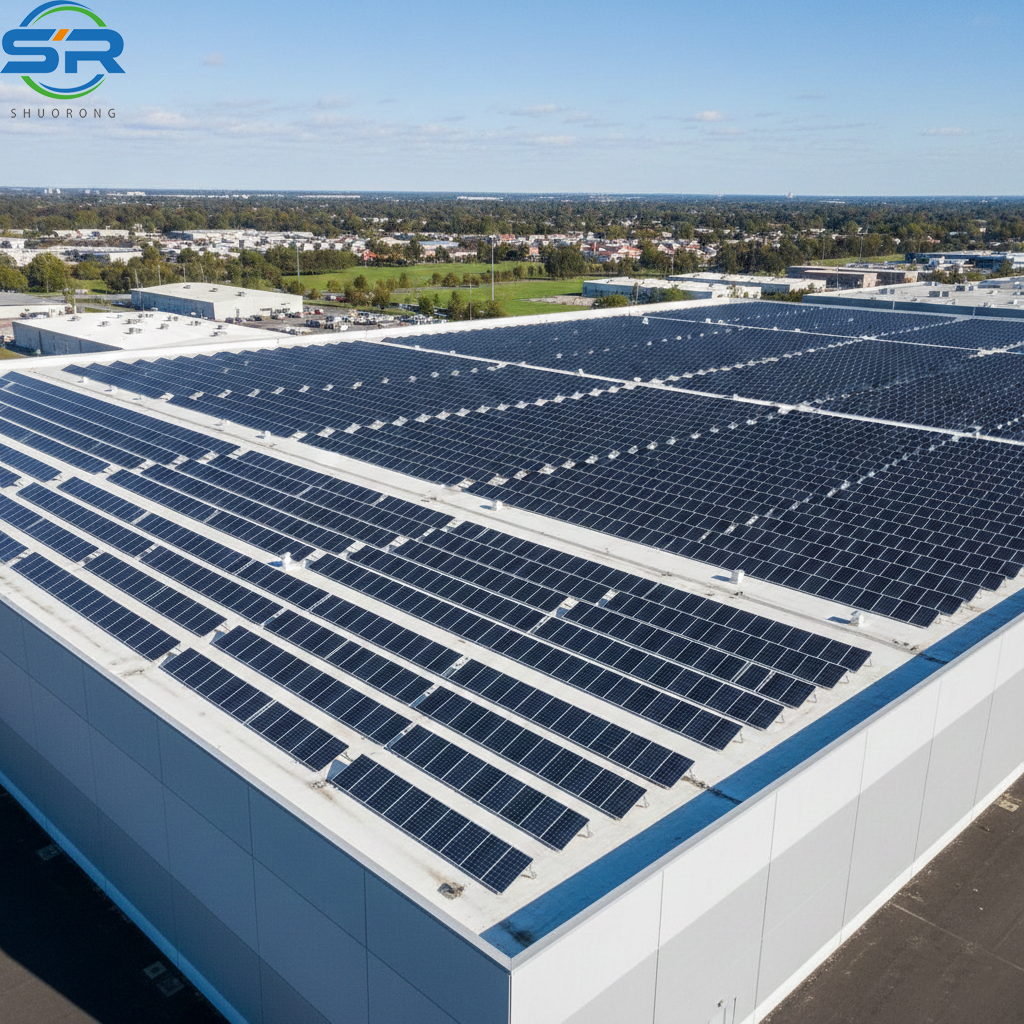
Flat roofs give you freedom. You control tilt angle—often 5-15 degrees for optimal year-round production in many regions—without fighting the building’s pitch. That boosts energy yield 10-20% over flush mounts. For PV EPC general contractors handling massive ground-mounted or distributed projects, flat commercial roofs mean repeatable, scalable installs. System integrators love them for C&I rooftops where quick assembly matters.
Challenges hit hard though. Roof leaks terrify owners—any penetration risks warranty voids. Wind uplift in coastal or high-wind zones can flip cheap setups. Snow loads pile up in northern areas. And don’t forget structural limits; older buildings can’t take heavy ballasts. We’ve talked to integrators who lost bids because their proposed flat roof solar mounting system added too much PSF. Procurement teams at developers hate surprises like that. The fix? Match the system to roof type and site conditions from day one.
The Three Main Categories of Flat Roof Solar Mounting Systems
Over years of projects, we’ve grouped reliable flat roof solar mounting systems into three practical buckets. Each suits different roofs and client needs.
Low-Profile Raised Mounts (Short Piers) for Concrete and Green Roofs
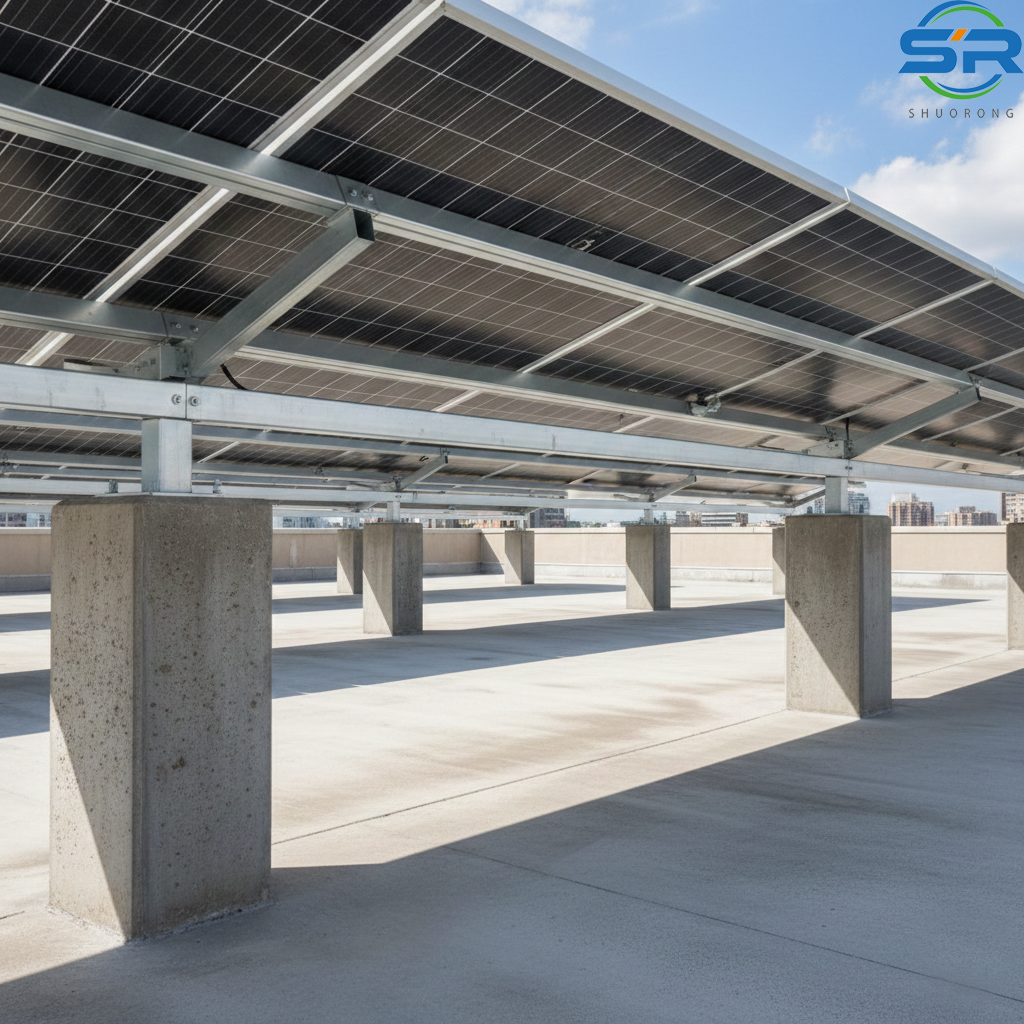
These use short concrete piers or blocks—height usually 0.5-1m—to lift the racking like a mini ground mount. Angle stays low, under 3 degrees often, but you get airflow underneath. Perfect for solid concrete roofs or green/vegetated ones where you want minimal disturbance. Installation feels familiar if you’re used to ground stations. Durability shines; high wind and snow resistance comes naturally with sturdy framing.
We like these for state-owned enterprise-backed EPC jobs. They pass technical reviews easily, offer 25+ year warranties, and handle quick design tweaks. Downside? A bit more material and labor than ultra-low profiles. But for large-scale reliability, they’re tough to beat.
Waterproof Membrane Solutions – Protecting TPO, EPDM, and Similar Surfaces
Most commercial flat roofs use TPO, EPDM, or similar waterproof membranes. You can’t punch holes freely. These systems mimic raised mounts but swap piers for TPO-compatible bases. Often pre-coated with adhesive or use non-penetrating fixings—chemical glue plus mechanical clips that don’t pierce through. Installers prep the roof with an extra TPO layer if needed, then secure without full penetration.
This category solves the leak fear head-on. We’ve deployed them on countless C&I rooftops for platform companies aggregating small projects. Fast install, lightweight, and compatible with various membranes. After-sales is straightforward—minimal roof risk means happy owners. Cost-performance hits sweet spot for mid-size integrators doing fragmented jobs.
Ballasted Systems – Simple Weight-Based Options for Low-Risk Areas
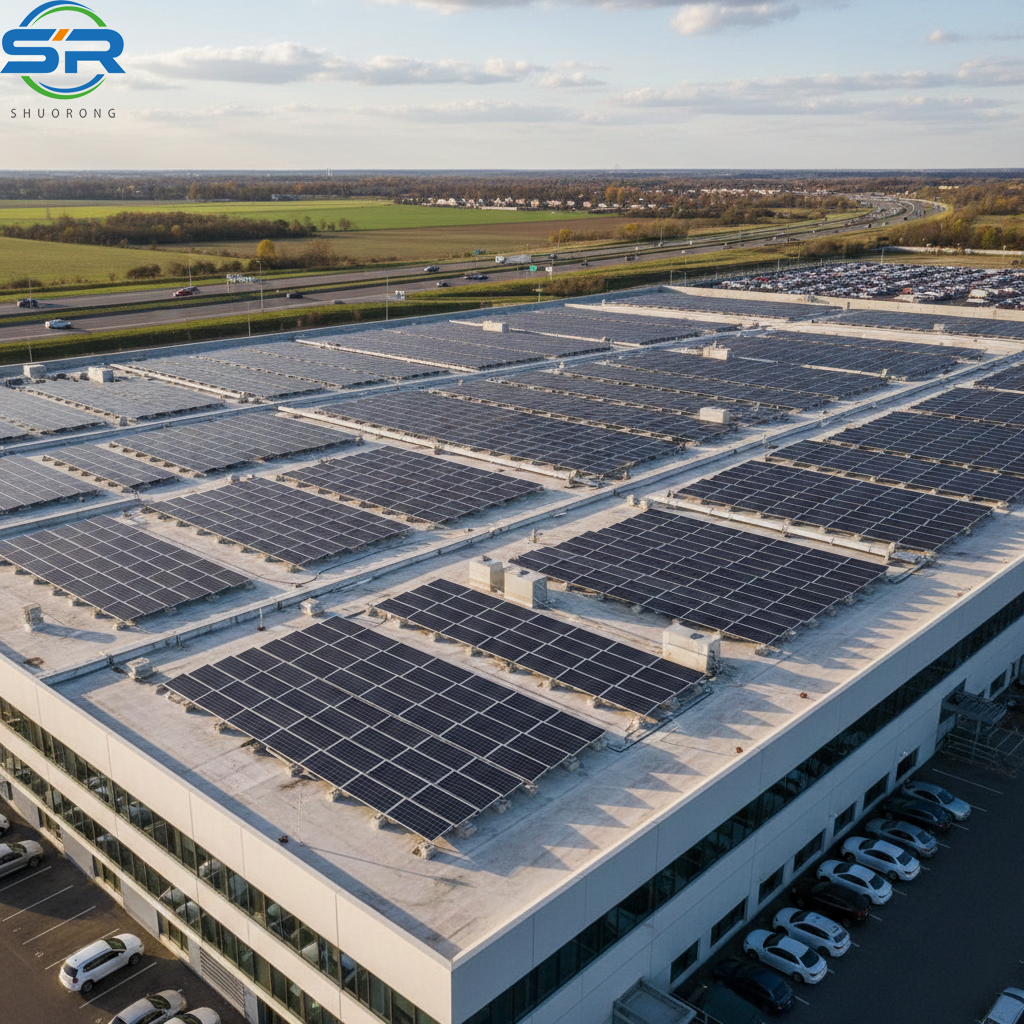
Ballasted flat roof solar mounting systems rely on concrete blocks or trays for hold-down—no penetrations at all. Height stays super low, 0.1-0.3m, keeping profile sleek. Ideal for low-wind, low-height buildings where roof load allows extra weight. Installation? Super quick—just place, stack ballast, mount panels.
We see these less often now, especially in typhoon-prone or coastal spots. Wind can demand massive ballast, spiking load. But for inland, sheltered sites, they’re cost kings. Distributors love them for export—simple, certifiable, flexible MOQs. Not our first pick for high-stakes projects, but handy in the toolbox.
Comparing the Options: Which Flat Roof Solar Mounting System Fits Your Project?
Picking comes down to your pain points. Let’s look at key trade-offs.
Wind and Snow Resistance – Don’t Get Caught Off Guard
High-wind areas demand strong anchoring. Raised pier or membrane-fixed systems win here—structural framing fights uplift better than pure ballast. We’ve seen ballasted arrays need redesigns after wind tunnel tests showed insufficient hold-down. Snow? Heavier ballast helps, but low-tilt designs shed it faster. For EPCs in variable climates, go raised or hybrid.
Roof Load and Structural Limits – The Make-or-Break Factor
Ballasted adds 4-10+ PSF easily—great for beefy concrete, bad for older membranes. Pier/raised distributes better. Membrane solutions stay lightest. Developers sensitive to IRR hate excess load eating into roof life. Always get structural engineer sign-off early.
Installation Speed and Labor Costs – Time Is Money
Ballasted wins speed—minimal prep, no curing time. Membrane and raised need more setup but pay off in reliability. For integrators with many small batches, standardized membrane kits cut labor. EPCs on big projects value systems allowing fast changes mid-bid.
SR Solar’s Take on Real-World Applications
I’ve walked rooftops where a rushed ballast choice led to extra ballast and delayed handover—costly lesson. Another time, a platform company used our membrane-protected system on old TPO roofs; install flew, zero leaks reported two years later. Feels good seeing clients generate steady power without callbacks.
Stories from the Field: A Commercial Rooftop Win with Membrane Protection
Picture this: mid-sized integrator, 200kW C&I project on a factory with aging EPDM. Owner terrified of penetrations. We went with semi-custom TPO-base raised mounts—lightweight aluminum, adhesive + clip fixings. Team assembled in days, tilt optimized for local latitude. Output exceeded projections by 12%. Client now refers us regularly. Moments like that remind why we obsess over compatibility.
When to Go Custom – Offshore, Agri-PV, or Special Scenarios
Niche clients need tweaks—anti-corrosion for offshore-adjacent roofs, elevated for agri-PV grazing. Standard ballast fails here; custom raised with special coatings shines. Small-batch, high-price, but technical support pays dividends.
Key Features to Demand in a Modern Flat Roof Solar Mounting System
Look for TUV/CE certs, 25-year warranties, module/inverter compatibility. Easy adjustability for tilt. Lightweight aluminum. Fast-assembly designs. At SR Solar, we prioritize these because they solve real procurement headaches—on-time delivery, bank-friendly reliability, low O&M.
How SR Solar Helps You Pick and Deploy the Right System
We don’t push one-size-fits-all. Talk roof type, wind zone, project scale—we model options, run load calcs, suggest samples. Framework agreements for repeat clients. One-stop support from design to after-sales. Whether you’re an EPC needing bulk durability or integrator chasing speed, we tailor flat roof solar mounting systems that fit.
Wrapping It Up: Making the Smart Move for Your Next Flat Roof Project
Flat roofs offer huge solar potential, but success hinges on matching the flat roof solar mounting system to your roof and risks. Raised piers excel on concrete for durability, membrane solutions protect waterproof layers without leaks, and ballasted keeps things simple where conditions allow. Prioritize wind resistance, load limits, and install ease—get those right, and your project delivers reliable returns for decades. At SR Solar, we’re here to guide you through it all. Reach out; let’s build something that lasts.
FAQ
What is the best flat roof solar mounting system for high-wind areas? Raised or membrane-fixed systems usually outperform pure ballasted ones in high-wind zones. They use structural framing for better uplift resistance. We always recommend wind tunnel or ASCE calcs to confirm—don’t rely on guesswork.
Can I install a flat roof solar mounting system without penetrating the roof? Yes, absolutely—ballasted and many membrane solutions are fully non-penetrating. They preserve roof warranties and avoid leak risks. For most commercial TPO/EPDM roofs, these are the go-to.
How much tilt should I use in a flat roof solar mounting system? Depends on latitude, but 5-15 degrees is common for balance between output and row spacing. Higher tilts boost winter production but need more space and stronger hold-down. We model it per site for max yield.
Are ballasted flat roof solar mounting systems suitable for coastal regions? Often not ideal. High winds demand excessive ballast, spiking roof load. Raised or mechanically assisted systems handle coastal better. We’ve redirected clients away from pure ballast in typhoon areas.
How long do good flat roof solar mounting systems last? Quality ones from reputable brands carry 25+ year warranties, matching module lifespans. Aluminum resists corrosion; proper design handles environmental loads. Regular O&M keeps them performing strong.