Have you ever stood out in the sun on a hot July afternoon and felt that raw heat hitting your skin? It’s pretty intense, right? That’s pure, unadulterated energy traveling 93 million miles just to reach us. But for the longest time, humans just used that energy to get a tan or grow some corn. Today, we’re doing something much cooler. We’re “catching” those tiny packets of light—photons—and turning them into the electricity that powers your factory, your office, and the laptop I’m typing on right now.
When people ask how solar energy works, they often expect a boring lecture on physics. But honestly? It’s more like a perfectly choreographed dance between light, chemistry, and some really sturdy metal. At SR Solar, we spend our days thinking about this dance. While the “how” starts with the sun hitting a silicon cell, the “how it lasts” depends entirely on how you mount that cell. If the sun is the fuel, the mounting system is the engine block that keeps everything from falling apart when the wind starts blowing at 120 mph.
The Magic of the Photovoltaic Effect: More Than Just Sunlight
So, let’s get into the nitty-gritty. The core of how solar energy works is something called the Photovoltaic (PV) Effect. Imagine a game of billiards. The photons coming from the sun are like the cue ball. When they strike the surface of a solar cell, they “hit” the electrons in the material. If the photon has enough energy, it knocks an electron loose, sending it flying.
Now, if those electrons just flew around randomly, we’d have a mess, not electricity. To make a current, we need those electrons to move in one single direction. Think of it like a one-way street during rush hour. This is where the internal structure of the solar panel comes into play. By layering different materials, we create a “path” that forces the electrons to flow through a circuit. That flow of electrons? That’s exactly what electricity is.
Silicon’s Role: Why This Tiny Atom Runs the Solar World
Why do we use silicon? Well, besides being the second most abundant element on Earth (hello, sand!), it’s a semiconductor. This means it can be “tweaked.” In a standard solar cell, we have two layers: N-type (which has extra electrons) and P-type (which has “holes” where electrons want to go).
When these two meet, they create an electric field. It’s like a built-in battery that never runs out. When the sun knocks an electron loose, this field acts like a cosmic bouncer, telling the electron, “You can only go this way!” This movement creates direct current (DC) electricity. But as any EPC contractor will tell you, DC is just the beginning of the journey. To make it useful for a commercial building, we’ve got more work to do.
Beyond the Panel: The Unsung Heroes of Energy Conversion
If you only look at the panels, you’re missing half the story of how solar energy works. A panel sitting on the ground face-down is just a very expensive piece of glass. To actually generate power, you need a full ecosystem. This is what we call the “Balance of System” (BOS). It’s the infrastructure that supports, protects, and converts that raw energy into something your machines can actually use.
At SR, we always tell our clients that the panel is the “brain,” but the mounting system is the “skeleton.” Without a strong skeleton, the brain can’t do its job. You need the wiring to transport the electrons, the inverters to change their “language,” and the racks to make sure the panels stay pointed at the sun.
Inverters: Converting Chaotic DC to Structured AC Power
Remember how I said the panels produce Direct Current (DC)? Well, the problem is that our entire modern world—from your HVAC system to your coffee machine—runs on Alternating Current (AC). Think of DC like a river flowing in one direction, while AC is like the tide coming in and out.
The inverter is the “translator.” It takes that one-way DC flow and flips it back and forth dozens of times per second to match the grid’s frequency. Without a high-quality inverter, all that energy you captured from the sun would be useless. It’s a vital step in the process, but even the best inverter can’t help if your panels aren’t catching enough sun in the first place.
The Backbone: Why Mounting Systems are the Real “Energy Enablers”
This is where we at SR Solar get really excited. You see, the efficiency of the PV effect is highly dependent on the angle of the light. If the sun hits the panel at a weird angle, the photons “bounce” off or don’t strike with enough force.
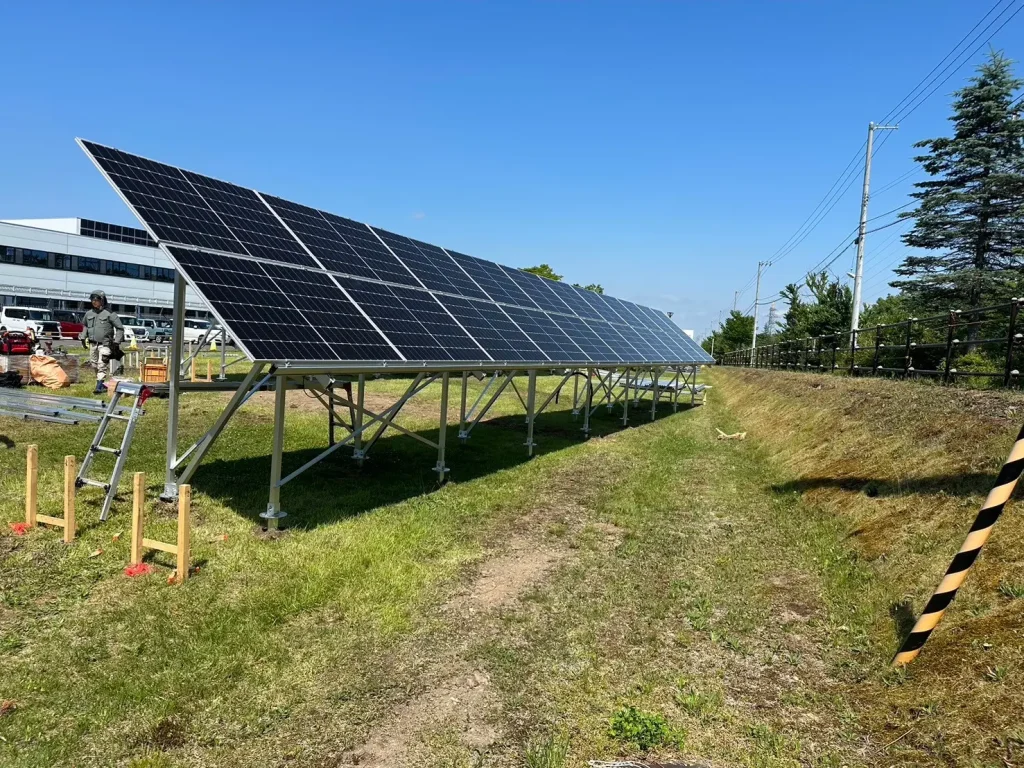
A high-quality mounting system isn’t just a shelf for panels. It’s a precision instrument. It holds the panels at the exact orientation required to maximize “irradiance”—the amount of solar power falling on a surface. If your mounting system is flimsy or poorly designed, your panels might sag, shift, or—heaven forbid—fly away in a storm. When that happens, the “how it works” part of solar becomes a “how it broke” conversation. And nobody wants that.
Optimizing Irradiance: The Geometry of Maximum Energy Yield
Let’s talk about geometry. I know, I know—nobody liked geometry in high school. But in the world of solar, geometry equals money. The sun isn’t a fixed point; it’s a moving target that changes its path every single day of the year. To get the most “bang for your buck,” your panels need to be positioned to catch the sun’s rays as perpendicularly as possible.
This is why we don’t just sell “racks.” At SR Solar, we provide optimized tilt-angle designs. We look at the latitude of your project. If you’re in Northern Europe, your panels need to be tilted much steeper than if you’re in Thailand. If you get this wrong, you’re literally leaving money on the table—or rather, leaving energy in the sky.
Tilt Angles and Azimuth: Why Degrees Matter for Your ROI
We recently worked on a project where the client wanted to just “flat-mount” everything to save on costs. We had to show them the math. By moving to a 15-degree optimized tilt using our fixed-tilt systems, they could increase their annual energy yield by nearly 12%.
Twelve percent! Over 25 years, that’s the difference between a project that just “breaks even” and one that is a massive financial success. We use site-specific meteorological data to ensure our mounting solutions aren’t just holding weight—they’re maximizing the Performance Ratio (PR) of the entire array. It’s about being smart with the science.
The Physics of Load: Staying Grounded When the Wind Howls
Here’s something people often forget when they look at a beautiful, shiny solar farm: it’s basically a giant sail. When you tilt a 2-square-meter panel up at an angle, you’ve created a surface that the wind would love to get under and lift into the air.
Understanding how solar energy works also means understanding how to stop it from working… by which I mean, preventing structural failure. The physics of load are brutal. You have “uplift” (the wind trying to rip the panels up) and “downward pressure” (snow or heavy wind pushing them down). If your mounting system hasn’t been through rigorous wind tunnel testing or doesn’t meet local building codes, you’re building a liability, not an asset.
Managing Uplift and Downward Pressure in Large-Scale Arrays
At SR, we don’t guess. We calculate. Whether we are using our AL6005-T5 aluminum or our Mac steel structures, we analyze the static and dynamic wind loads based on standards like AS/NZS 1170.2 or JIS C 8955.
Why does this matter to a B2B client? Because “bankability” is everything. To get a large-scale project funded, the insurance companies and banks need to know that a tropical storm won’t turn your solar investment into expensive scrap metal. Our engineering team ensures that the foundation—whether it’s ground screws or concrete ballasts—is perfectly matched to the soil and the expected wind speeds of the region.

Material Science: Fighting Corrosion to Protect Your Electrons
You might be thinking, “It’s just metal, right? How hard can it be?” Well, solar farms are usually located in harsh places—hot deserts, salty coastal regions, or snowy plains. The environment is constantly trying to eat your mounting system.
Corrosion is the silent killer of solar ROI. If your mounts rust, two things happen. First, the structure weakens, which is dangerous. Second, you lose “grounding integrity.” Solar systems need to be properly grounded to prevent electrical fires and equipment damage. If the metal is corroded, that safety path is broken. This is a huge part of the technical side of how solar energy works over the long haul.
AL6005-T5 Aluminum vs. Mac Steel: Choosing the Right Shield
We generally lean on two “superheroes” for our materials.
- AL6005-T5 Anodized Aluminum: It’s lightweight, incredibly strong, and has a natural oxide layer that prevents further rusting. It’s perfect for rooftops where weight is a concern.
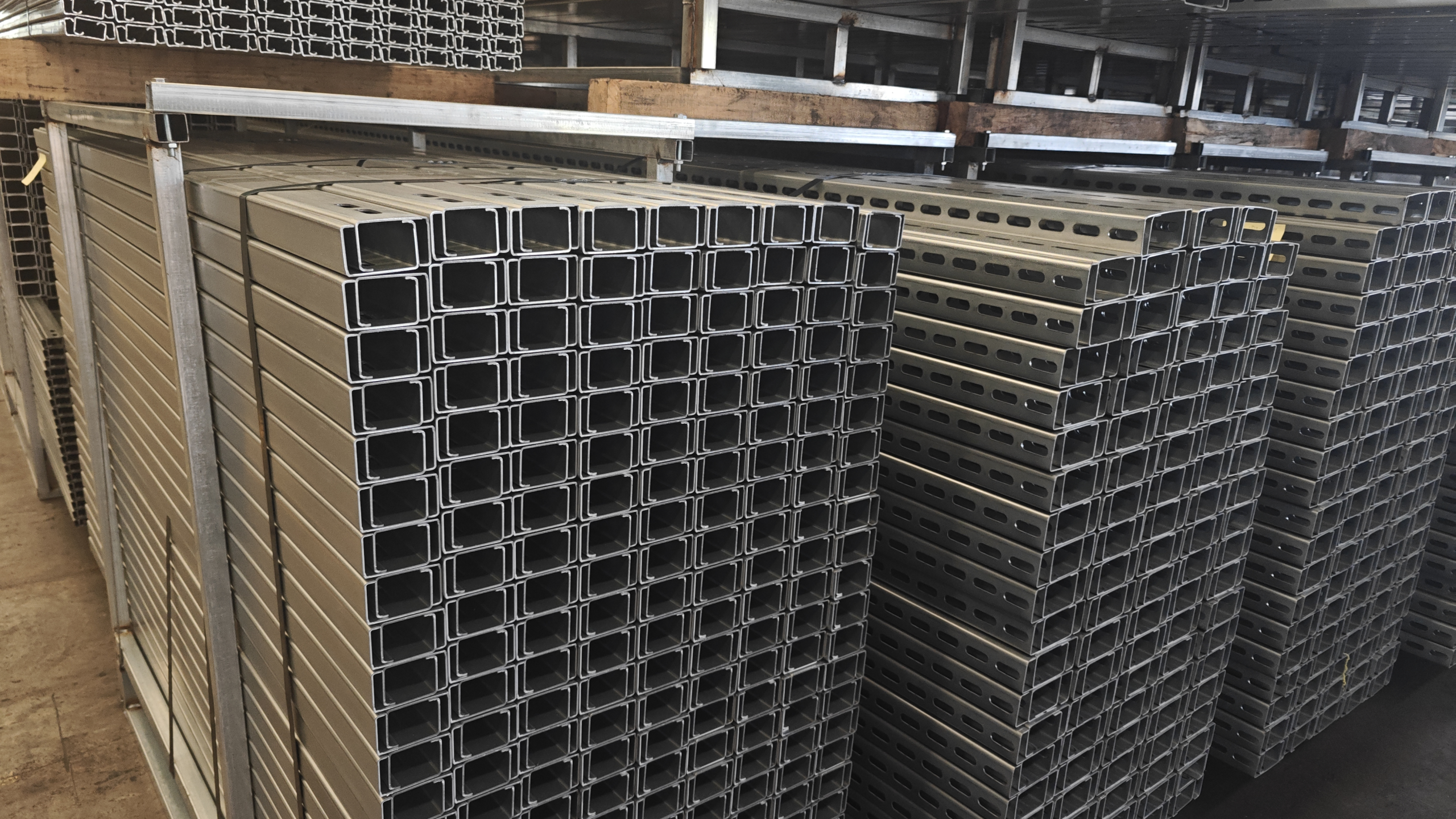
- Mac Steel (Zinc-Magnesium-Aluminum coating): This is our go-to for ground-mounted systems in tough environments. It’s “self-healing.” If it gets a scratch, the zinc and magnesium actually migrate to cover the wound. It’s like the Wolverine of metals.
Using these high-grade materials ensures that the “harnessing” process isn’t interrupted by environmental wear. We want your system to look and perform as well in year 25 as it did on day one.
The Economics of Installation: How Smart Design Slashes Soft Costs
Let’s talk business for a second. If you’re an EPC (Engineering, Procurement, and Construction) company, your biggest headache isn’t usually the price of the panels. It’s the “soft costs”—specifically labor.
If it takes a crew of ten people two weeks to install a mounting system because there are 5,000 different nuts and bolts, your profit margin is toast. Part of how solar energy works efficiently is how quickly it can be deployed. The faster you’re “grid-connected,” the faster the ROI begins.
Pre-assembled Components: The Secret to Winning More Bids
This is where SR Solar’s mechanical design shines. We use “click-in” rail technology and pre-assembled components. When our kits arrive at the site, they aren’t a giant puzzle of loose parts. The main supports are often already folded or partially put together.
By reducing the number of tools and the “man-hours” required on-site, we help our partners slash their labor costs. This makes your bid more competitive. When you can tell a developer, “I can finish this project 20% faster because of the SR mounting system,” you’re going to win more contracts. It’s that simple.
Future-Proofing Your Solar Investment with SR Solar
At the end of the day, understanding how solar energy works is about understanding the flow of energy—from the sun, through the silicon, into the wires, and onto the grid. But that flow only happens if the system is stable, well-positioned, and built to last.
At SR Solar, we see ourselves as your technical partner. We don’t just ship boxes of metal; we provide customized engineering schemes. We make sure your project is “bankable.” Whether you are dealing with a 50kW commercial rooftop or a 50MW utility-scale farm, the principles remain the same: precision, durability, and ease of installation. We empower you to deliver a project that doesn’t just work today, but keeps working for the next three decades.
Conclusion: Turning Theory into Profitable Infrastructure
Solar energy isn’t some futuristic dream anymore; it’s a proven, reliable way to power our world. It all starts with the humble photon and the magic of silicon, but it’s the structural engineering and the strategic “Balance of System” that turn that physics experiment into a profitable business asset. By focusing on the synergy between the sun’s rays and the mounting system’s integrity, we can create a cleaner, more sustainable future that also makes perfect financial sense. If you’re ready to turn your project plans into a high-performing reality, you know where to find us.
Frequently Asked Questions
1. How long do solar panels actually last? Most modern solar panels come with a 25 to 30-year warranty. However, they don’t just “stop” working after that; they just become slightly less efficient. At SR Solar, we design our mounting systems to match or exceed this lifespan, ensuring you don’t have to replace your racks before your panels.
2. Does solar energy work on cloudy days? Yes! While panels are most efficient in direct sunlight, they still capture “diffuse” light on cloudy days. You might see a drop in production to about 10–25% of their usual capacity, but the “how” of the process remains the same—as long as there are photons, there is electricity.
3. Why is the mounting system so important for solar efficiency? If a panel isn’t angled correctly, it reflects more light instead of absorbing it. Furthermore, if the mount is unstable and the panel vibrates in the wind, it can develop “micro-cracks” in the silicon, which permanently reduces its ability to generate power.
4. What is the difference between DC and AC power in a solar system? Solar panels produce Direct Current (DC), which flows in a single direction. Most buildings and the power grid use Alternating Current (AC). The inverter is the device that “flips” the DC into AC so it can be used by your appliances.
5. How does SR Solar help reduce the cost of a solar project? We focus on reducing “soft costs.” By providing pre-assembled components and easy “click-in” systems, we reduce the amount of time and labor needed to install the system. Faster installation means lower labor costs and a quicker start to your energy savings.