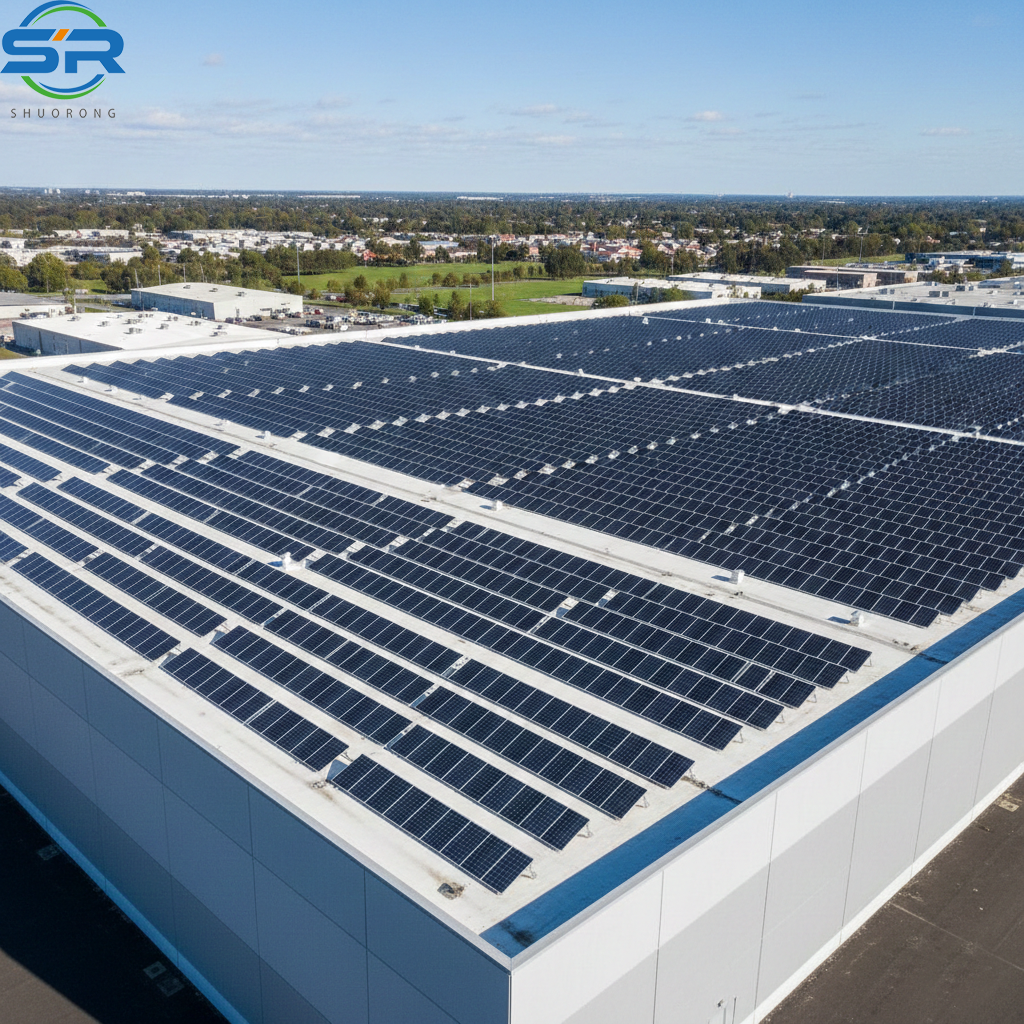
Why do traditional flat roof installations often become a logistical and engineering headache for EPC contractors? Between roof integrity concerns and the relentless pressure to lower the Levelized Cost of Energy (LCOE), the mounting system choice is no longer just “hardware”—it’s a financial lever.
At SR Solar, our Flat Roof Triangular Mounting Systems are engineered to bridge the gap between structural rigidity and site-wide profitability. Here is how we’re redefining the standard for commercial and industrial (C&I) solar.
1. Beyond the Surface: Material Science in Corrosive Environments
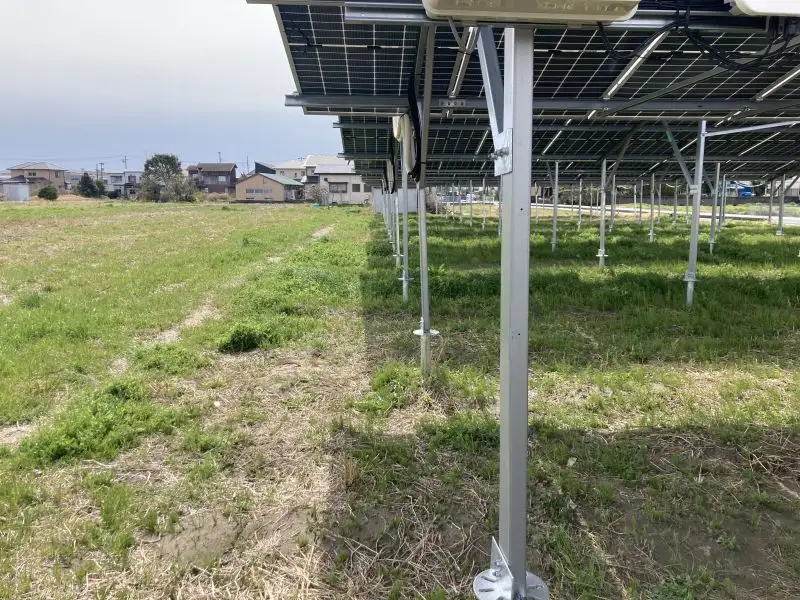
For a 25-year design life, “good enough” materials don’t exist. In our project experience across high-corrosion regions like Southeast Asia and the Middle East, standard galvanized steel often fails prematurely at the cut edges.
- ZAM Steel (Zinc-Aluminum-Magnesium): Our primary choice for heavy-duty triangular frames. Its self-healing properties on cut sections provide up to 3 times the corrosion resistance of traditional galvanizing.
- AL6005-T5 Aluminum: For weight-sensitive rooftops, our anodized aluminum (min. 12μm) provides high strength-to-weight ratios, ensuring the roof’s dead load remains within safe limits.
- SUS304 Fasteners: We never compromise on the “small stuff.” Every bolt is stainless steel to prevent galvanic corrosion between dissimilar metals.
2. The Geometry of Stability: Fixed vs. Adjustable Triangles
A common EPC error is choosing a “one-size-fits-all” tilt angle. But what happens when the project site moves from 15° to 35° latitude?
- Fixed Triangle Systems: Ideal for utility-scale flat roofs where the wind load and tilt are pre-calculated for maximum density. Our designs comply strictly with JIS C 8955 and AS/NZS 1170, utilizing structural simulation to ensure stability under wind speeds up to 60m/s.
- Adjustable Solutions: Need to pivot? Our adjustable triangular legs allow for on-site fine-tuning (e.g., 10-15°, 15-30°, or 30-60°). This flexibility is vital for maximizing irradiance capture throughout the seasons, directly impacting the project’s IRR.
3. Deployment Speed: The “No-Cut” On-Site Strategy
Labor is the most volatile variable in an EPC’s budget. Why spend hours measuring and cutting on a hot roof?
SR Solar systems feature a foldable, pre-assembled design. The triangular frames arrive at the site collapsed. Installers simply:
- Unfold the triangle.
- Secure it to the base (Concrete ballast or TPO/Metal roof attachment).
- Click the rails into place using our proprietary module clamps.
Engineer’s Note: “In a recent 2MW rooftop project, switching to our pre-assembled triangular kit reduced the installation crew’s time by 42 minutes per kilowatt compared to traditional C-channel racking.”
4. Addressing the Leakage Fear: Non-Penetrative Ballasted Systems
For modern TPO or PVC flat roofs, the word “penetration” is a dealbreaker for building owners due to warranty concerns.
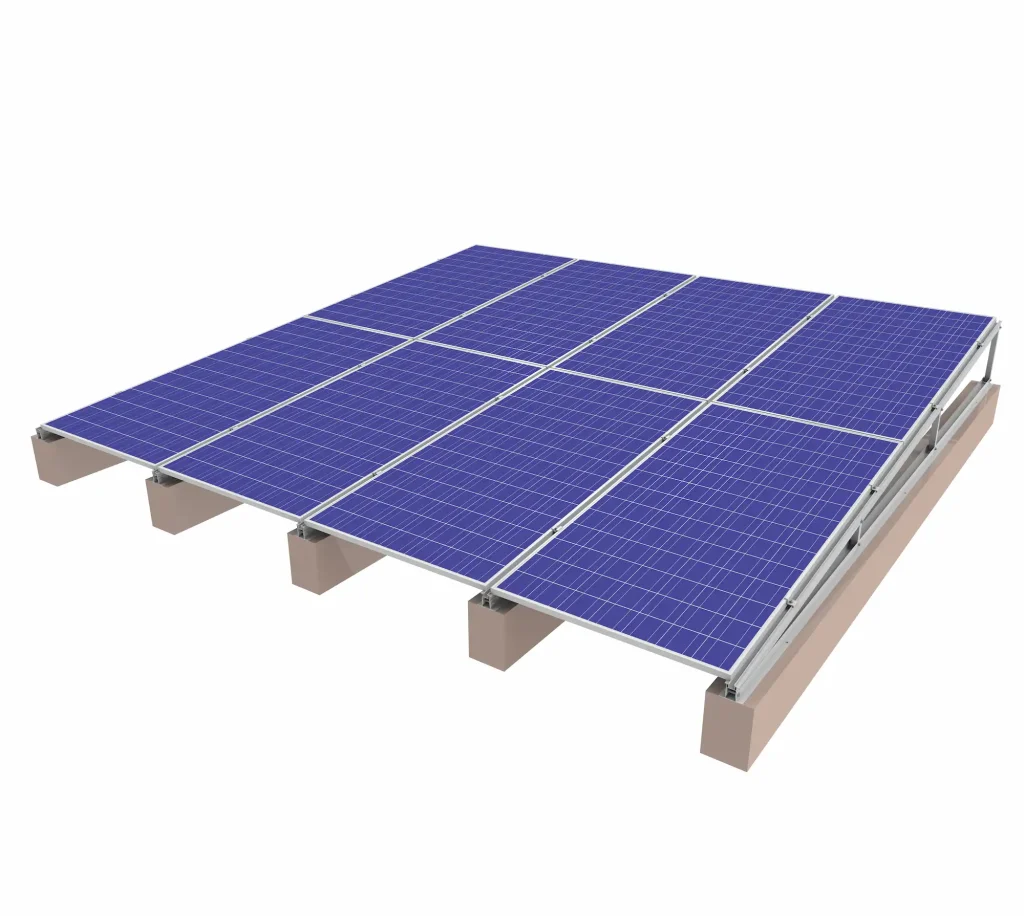
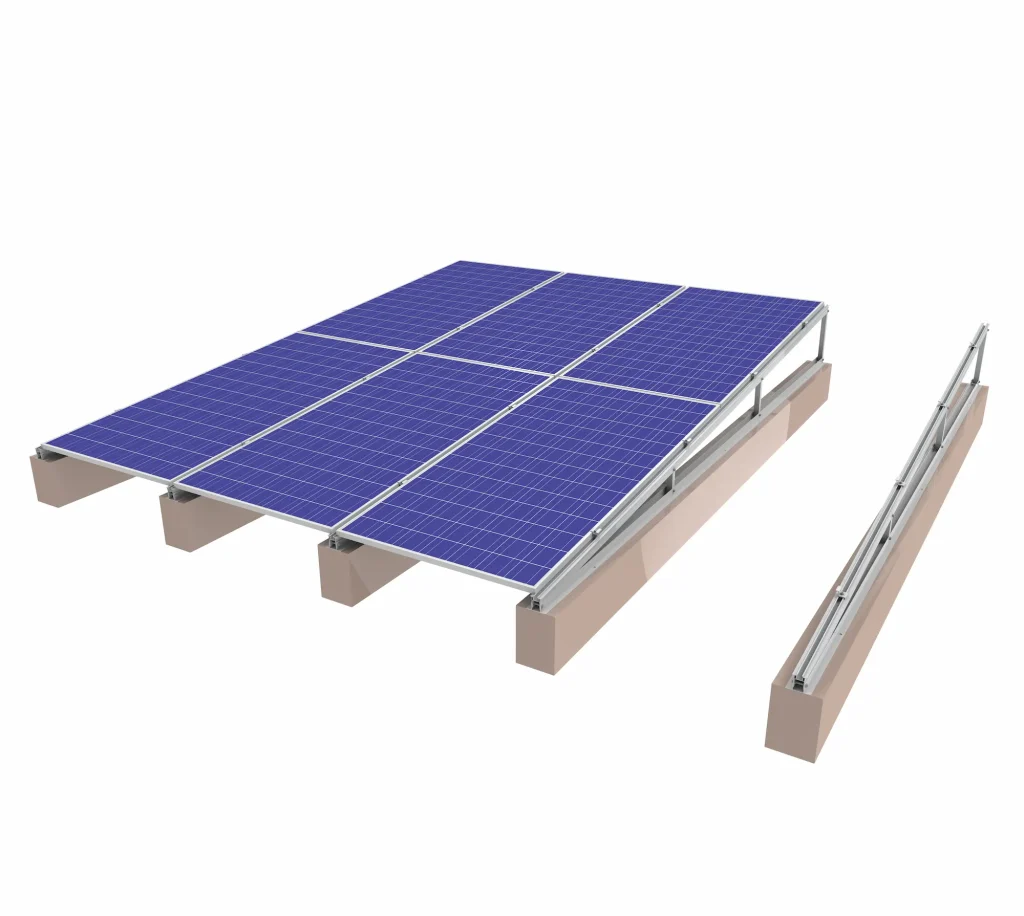
Our Ballasted Triangular System uses aerodynamic wind deflectors and concrete blocks to secure the array via gravity. We calculate the required ballast weight based on local wind data and building height, ensuring the system stays grounded without a single screw entering the roof membrane.
5. Economic Synergy: Connecting Engineering to Business
Engineering excellence must translate to the bottom line. By optimizing the material volume of our ZAM steel and aluminum components, we reduce shipping volume (more KW per container) and lower the overall structural weight, which can prevent the need for expensive roof reinforcements.
Conclusion: Engineering Your Competitive Edge
Flat roof solar shouldn’t be a compromise between stability and speed. SR Solar’s triangular systems provide the structural foundation needed to mitigate long-term risk while delivering the installation speed required for today’s competitive EPC landscape.
Frequently Asked Questions
Q1: Can the triangular system be used on a slightly pitched metal roof? Absolutely. While designed for flat roofs, it integrates seamlessly with our L-feet or standing seam clamps for metal roofs requiring an additional tilt for better performance.
Q2: What is the maximum wind load these systems can handle? Our standard designs are rated for 60m/s, but we provide custom structural calculations for hurricane-prone regions using localized wind-tunnel data.
Q3: Is ZAM steel better than Aluminum for B2B projects? It depends on the budget and roof capacity. ZAM is more cost-effective for large-scale ground-based or heavy-duty flat roofs, while Aluminum is preferred for weight-restricted commercial buildings.
Q4: Do you provide structural calculation reports for permit approval? Yes. For project orders over 100KW, we provide comprehensive calculation sheets aligned with AS/NZS 1170 or relevant local standards.
Q5: How does the system handle thermal expansion? Our rail splice kits are designed with expansion gaps to prevent structural warping in high-temperature environments like the GCC region.
Looking for a structural partner for your next 100KW+ project? [Contact SR Solar’s Engineering Team for a customized Layout and Wind Load Analysis.]
-16-scaled.jpg)