The materials used in ground solar mounting systems directly affect structural performance, corrosion resistance, installation efficiency, and long-term project costs. For utility-scale and commercial ground-mounted solar projects, the main structural materials are typically aluminum alloy, hot-dip galvanized steel (HDG steel), and zinc-aluminum-magnesium-coated steel (ZAM steel). Stainless steel is also used in selected components where corrosion resistance and electrical connection requirements matter.
But which material is the right choice for your project?
The answer depends on more than the material price. Wind loads, structural spans, site conditions, coating specifications, connection design, transportation, and installation methods all influence the final decision. Understanding how these materials perform—and where each one is commonly used—helps EPC contractors specify a mounting system that meets engineering requirements without adding unnecessary costs.
What Materials Are Commonly Used in Ground Solar Mounting Systems?
Ground solar mounting systems consist of multiple components, including posts, beams, rails, clamps, fasteners, and grounding hardware. These components do not all need to use the same material.
The main materials used in ground solar mounting systems include:
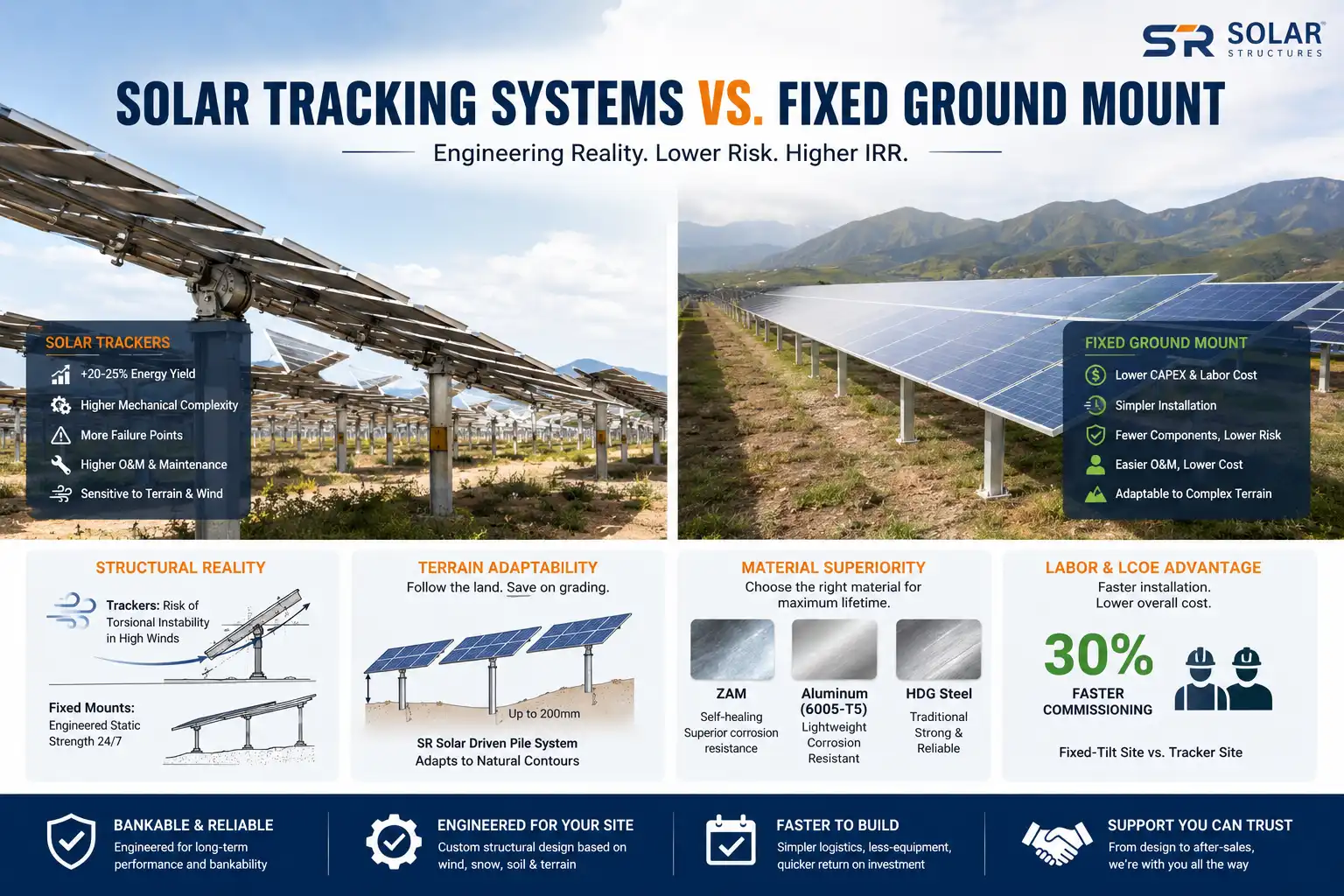
- Aluminum alloy: Lightweight, corrosion-resistant, and widely used for mounting rails, mid clamps, and end clamps. Selected structural members can also be made from aluminum alloy.
- HDG steel: Steel protected by a zinc coating applied through hot-dip galvanizing. It is commonly used for structural members in ground-mounted solar projects.
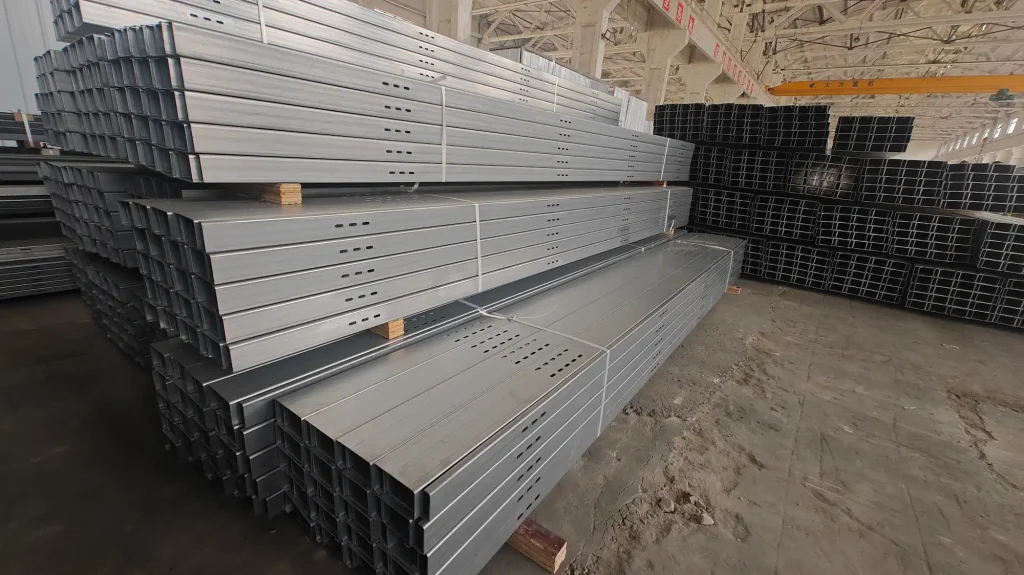
- ZAM steel: Steel with a zinc-aluminum-magnesium coating applied during steel production. It is used in many ground mounting structures and selected rail designs.
- Stainless steel: Used for selected fasteners, conductive components, and other small parts requiring suitable corrosion resistance.
Each material has different mechanical properties, corrosion protection mechanisms, fabrication requirements, and cost implications. The goal is not to select one material for every component, but to match each material to its intended function and operating environment.
1. Aluminum Alloy for Ground Solar Mounting Systems
Aluminum alloy is widely used in solar mounting systems, particularly for rails, clamps, and selected structural components. Its relatively low density makes it attractive when weight, handling, and installation efficiency are important considerations.
Key Properties of Aluminum Alloy
Aluminum alloy offers several practical advantages:
- Lightweight construction: Aluminum is substantially lighter than steel by volume, making individual components easier to handle.
- Natural corrosion resistance: Aluminum forms a naturally occurring oxide film that helps protect the underlying metal.
- Good fabrication flexibility: Aluminum profiles can be extruded into shapes suited to specific mounting and connection requirements.
- Appearance and surface finish: Anodizing can improve surface durability and corrosion resistance when the coating is correctly specified and maintained.
However, lightweight construction does not automatically mean lower overall project costs. Aluminum profiles may require different cross-sections or dimensions to achieve the necessary strength and stiffness. Material prices, fabrication, packaging, and transportation must all be considered.
Where Is Aluminum Used in Ground Mounting Systems?
Aluminum alloy is commonly used for:
- Mounting rails that support and connect solar modules.
- Mid clamps and end clamps that secure modules to the rails.
- Selected structural members where the engineering design supports aluminum construction.
For many systems, aluminum rails and clamps are combined with a steel support structure. This arrangement allows each material to perform a function suited to its properties.
For example, a steel post-and-beam structure may provide the required support for a large array, while aluminum rails and clamps offer convenient module mounting and adjustment.
What Should EPCs Check Before Choosing Aluminum?
Material selection should start with the specified alloy and mechanical properties, not simply the word “aluminum.”
For example, 6005-T6 aluminum alloy is used in some solar mounting applications. The applicable alloy, temper, section geometry, and mechanical properties should be verified against the project requirements.
EPC teams should also check:
- Anodizing specifications and coating thickness, where applicable.
- Rail deflection and structural performance under the design loads.
- Clamp compatibility with the module frame and rail profile.
- Packaging volume and protection against surface damage during transport.
- Whether factory preassembly can reduce installation labor enough to justify additional packaging and handling costs.
In our project experience, installation efficiency depends on the complete delivery method—not just component weight. Preassembled aluminum components may reduce work on site, but larger packages can occupy more container space and require additional protection. The best choice is the one that reduces the total installed cost.
2. HDG Steel for Ground Solar Mounting Systems
Hot-dip galvanized steel is a widely used material for ground-mounted solar structures. It combines the mechanical properties of steel with a protective zinc coating, making it suitable for many outdoor structural applications.
How Does Hot-Dip Galvanized Steel Work?
In the hot-dip galvanizing process, fabricated steel is immersed in molten zinc, creating a metallurgically bonded coating.
The coating protects the steel in two main ways:
- Barrier protection: The zinc layer separates the steel from the surrounding environment.
- Sacrificial protection: Zinc can corrode preferentially to exposed steel in suitable conditions, helping protect small damaged areas.
The resulting corrosion resistance depends on coating thickness, coating quality, environmental exposure, and the condition of the coating after fabrication and installation.
Why Is HDG Steel Used in Ground-Mounted Solar Structures?
HDG steel offers several advantages for ground solar mounting systems:
- It can provide the strength and stiffness required for structural members with appropriate section design.
- It is suitable for many large-scale ground mounting configurations.
- Established steel fabrication and supply chains support a wide range of structural designs.
- Galvanizing specifications can be selected according to the applicable standards and project exposure conditions.
For utility-scale projects, the structural design must account for wind loads, member spans, support spacing, connection forces, and foundation conditions. The steel grade and section geometry matter just as much as the corrosion protection system.
Limitations and Corrosion Considerations
A common EPC error is to specify a galvanized coating without checking what happens during fabrication, transportation, and installation.
Cutting, drilling, welding, and handling may damage or alter the coating. Any exposed or damaged areas should be assessed and repaired where required by the applicable specification.
Projects in coastal, humid, industrial, or otherwise aggressive environments may require more stringent corrosion protection measures. The correct approach is to establish the expected exposure conditions and required design life, then specify the appropriate steel and coating system.
A particular coating thickness should not be treated as a universal guarantee of a fixed outdoor service life. Corrosion rates vary significantly between sites.
3. ZAM Steel for Ground Solar Mounting Systems
ZAM steel is another important material used in ground solar mounting systems, particularly for steel structural members and selected mounting rails.
ZAM refers to steel with a zinc-aluminum-magnesium coating. The coating is applied during the steel manufacturing process, before the material reaches the mounting system manufacturer.
What Makes ZAM Steel Different?
ZAM steel remains steel. Its distinguishing feature is the composition of its protective coating, rather than a change to the underlying steel itself.
The zinc-aluminum-magnesium coating provides corrosion protection through a combination of barrier protection and protective corrosion products that can help protect cut edges and certain locally damaged areas under suitable conditions.
Compared with conventional zinc-coated steel, ZAM-coated steel can offer improved corrosion performance in particular exposure and damage conditions. The actual benefit depends on coating composition, coating mass or thickness, processing, and the surrounding environment.
For mounting system manufacturers, receiving pre-coated steel also means that the coating is already present on the raw material. Subsequent forming and cutting operations must therefore be considered when evaluating the finished component’s corrosion protection.
Why Is ZAM Steel Used in Ground Mounting Systems?
ZAM steel can be suitable for a range of ground-mounted solar applications, including:
- Structural members designed for steel mounting systems.
- Selected steel mounting rails.
- Components where the specified coating and fabrication process meet the project’s corrosion requirements.
Its suitability should be verified against the actual project conditions rather than assumed from the material name alone.
For EPC contractors, the key questions are whether the coating specification is appropriate, whether the forming and cutting processes are controlled, and whether the finished component meets the required structural and corrosion performance.
ZAM Steel vs. HDG Steel: What Is the Difference?
| Comparison | ZAM Steel | HDG Steel |
|---|---|---|
| Protective system | Zinc-aluminum-magnesium coating applied during steel production | Zinc coating formed through hot-dip galvanizing |
| Local damage protection | Can provide enhanced cut-edge protection under suitable conditions | Relies on the zinc coating’s barrier and sacrificial protection |
| Typical applications | Ground mounting members and selected steel rails | Ground mounting members and other galvanized steel components |
| Key specification factors | Coating specification, forming, cutting, and exposure conditions | Zinc coating thickness, coating quality, fabrication, and exposure conditions |
Neither material is automatically the best choice for every project. A meaningful comparison requires the applicable coating specifications, steel grades, fabrication requirements, environmental conditions, and supplier pricing.
The purchase price should also be evaluated alongside processing requirements, installation needs, and expected maintenance. A lower material price alone does not establish a lower total project cost.
4. Stainless Steel in Ground Solar Mounting Systems
Stainless steel plays a different role from the primary structural materials in many ground solar mounting systems. It is commonly selected for specific small components where corrosion resistance, electrical contact, or connection requirements justify its use.
Why Is Stainless Steel Used for Solar Mounting Components?
Stainless steel contains chromium, which helps form a passive surface layer that resists corrosion. Different grades provide different levels of corrosion resistance, strength, and suitability for specific environments.
Its advantages include:
- Good corrosion resistance when the grade is matched to the environment.
- Suitability for selected fasteners and small hardware.
- Availability in grades designed for different exposure conditions.
However, stainless steel generally costs more than many conventional carbon steel options and may require more demanding fabrication processes. It is therefore not automatically the most economical choice for large structural members.
Common Stainless Steel Applications
In ground solar mounting systems, stainless steel may be used for:
- Conductive components: Selected conductive plates or electrical connection components.
- Fasteners: Bolts, nuts, and other hardware where the specified grade is suitable.
- Small hardware: Selected rivets and other connection parts.
The exact material depends on the component design and the system’s electrical and structural requirements.
For example, mid clamps and end clamps are commonly made from aluminum alloy, while certain conductive plates may use stainless steel. Grounding components can also use aluminum or other suitable conductive materials, depending on the system design.
These parts should not be selected in isolation. Their compatibility with adjacent metals, electrical contact requirements, and exposure conditions must be evaluated together.
SUS304 vs. SUS316: Which One Should You Choose?
SUS304 and SUS316 are common stainless steel grades, but they are not interchangeable in every environment.
SUS304 is suitable for many general applications where its corrosion resistance meets the project requirements.
SUS316 contains molybdenum, which generally improves resistance to chloride-induced pitting and crevice corrosion. It is often considered for coastal or chloride-rich environments where the exposure conditions justify the additional cost.
Neither grade is immune to corrosion. Deposits, crevices, surface contamination, and prolonged exposure to aggressive conditions can still cause problems.
When specifying stainless steel fasteners or conductive parts, EPC teams should also consider galvanic corrosion. Contact between stainless steel and aluminum or other metals in the presence of moisture can create corrosion risks under certain conditions. Suitable material selection, isolation, and connection detailing may be necessary.
Materials Used for Different Ground Solar Mounting Components
Understanding the material of each component makes it easier to review a bill of materials, compare supplier quotations, and check system compatibility.
| Mounting component | Common material options | Main considerations |
|---|---|---|
| Posts, beams, and structural members | Aluminum alloy, ZAM steel, or HDG steel, depending on the design | Strength, stiffness, wind loads, spans, and corrosion protection |
| Mounting rails | Aluminum alloy or ZAM steel | Section performance, module compatibility, and connection design |
| Mid clamps and end clamps | Commonly aluminum alloy | Clamping force, module compatibility, and fastener requirements |
| Conductive plates | Often stainless steel in applicable designs | Electrical continuity, contact reliability, and corrosion resistance |
| Grounding components | Aluminum alloy or other suitable conductive materials | Electrical bonding, material compatibility, and corrosion protection |
| Bolts and other fasteners | Specified carbon steel with suitable protection or stainless steel | Connection strength, corrosion exposure, and tightening requirements |
These are typical material options rather than universal rules. The actual bill of materials depends on the mounting system design, module specifications, grounding method, and project requirements.
For EPC contractors, the practical step is to confirm that the materials listed in the quotation match the approved drawings and technical specifications. A component that looks similar may have different mechanical properties, coating specifications, or connection requirements.
How to Choose the Right Materials for a Ground Solar Mounting System
Choosing materials for a ground-mounted solar project requires more than comparing aluminum against steel. The following factors should be evaluated together.
1. Evaluate Wind Loads and Structural Requirements
Start with the project’s structural design conditions.
Wind loads, terrain, mounting height, module layout, support spacing, and structural spans all affect the forces acting on the mounting system. The selected material must provide the required strength and stiffness in the actual member geometry.
Steel may be suitable for many large structural members, while aluminum may be appropriate for rails and other components. However, the final decision should come from engineering calculations and verification—not a general assumption that one material is always stronger or better.
2. Match Corrosion Protection to the Site Environment
Review the site’s exposure to moisture, airborne salts, industrial pollutants, and other corrosive agents. For ground-mounted systems, soil conditions may also matter for foundation and below-ground components.
Specify the steel coating, aluminum surface treatment, or stainless steel grade according to the relevant exposure conditions and project requirements.
For coastal projects, pay particular attention to fasteners, electrical connections, cut edges, and interfaces between dissimilar metals. These details can be just as important as the material used for the main structure.
3. Compare Total Installed Cost, Not Just Material Price
A material quotation is only one part of the project cost.
EPC contractors should consider:
- Material quantity and unit price.
- Fabrication and surface treatment.
- Packaging and transportation volume.
- Installation labor and required tools.
- Inspection, maintenance, and potential repair requirements.
For example, factory-preassembled aluminum components may reduce on-site assembly work, but their larger shipping volume can increase logistics costs. A steel system may be easier to bundle compactly, but its fabrication and installation costs still depend on the specific design.
The correct comparison is the total installed cost of systems that meet the same engineering requirements.
4. Check Applicable Standards and Project Specifications
Material selection must comply with the standards and specifications applicable to the project.
Depending on the market and scope, these may include relevant AS/NZS standards for Australian and New Zealand projects, JIS standards for applicable Japanese projects, and other local structural, material, coating, or electrical requirements.
Do not assume that a material certificate alone verifies the entire mounting system. Material properties, structural calculations, connection design, coating requirements, and inspection records address different aspects of performance.
The EPC should confirm which standards apply to each part of the design and what evidence the supplier must provide.
Common Material Selection Mistakes in Ground Solar Projects
Even when the main material is correctly specified, problems can arise from decisions made at the component or installation level.
Choosing Materials Based on Unit Price Alone
A lower-priced material may require additional processing, more frequent maintenance, or a different structural design. Compare complete systems that meet the same load and corrosion requirements before deciding which quotation offers better value.
Assuming All Corrosion Protection Systems Perform the Same
ZAM coating and hot-dip galvanizing use different coating systems and have different performance characteristics. Their suitability depends on the coating specification, component fabrication, and environmental exposure.
Similarly, aluminum’s natural oxide layer and anodized surface should not be treated as equivalent to a steel coating system. Each needs to be specified and evaluated according to its own requirements.
Ignoring Compatibility Between Different Metals
A mounting system may combine steel, aluminum, and stainless steel. In wet or saline environments, contact between dissimilar metals can create galvanic corrosion risks.
Review interfaces, electrical bonding requirements, fastener selection, and any necessary isolation measures during the design stage. This is particularly important around connections and grounding components.
Overlooking Installation and Maintenance Requirements
Cutting, drilling, fastening, and grounding work can influence the finished system’s performance.
A material specification should therefore be supported by clear fabrication and installation requirements. Where coating damage occurs, the responsible party should assess whether repair is needed and follow the applicable specification.
In our project experience, material selection works best when structural design, corrosion protection, and installation methods are evaluated together—not treated as separate purchasing decisions.
Summary: Selecting Materials for Long-Term Ground Solar Performance
The materials used in ground solar mounting systems serve different purposes, and the best combination depends on the project’s engineering and operating conditions.
- Aluminum alloy is a practical choice for many rails, clamps, and selected structural members where lightweight construction and suitable mechanical performance are required.
- HDG steel provides a zinc-coated steel solution for many ground mounting structures when the coating specification matches the exposure conditions.
- ZAM steel offers a zinc-aluminum-magnesium coating system that can provide enhanced corrosion protection in suitable applications, including protection around certain cut edges and locally damaged areas.
- Stainless steel is useful for selected fasteners, conductive components, and other parts where its specific corrosion resistance is required.
For EPC contractors, the objective is not to find a single material that is best in every situation. It is to select a compatible combination that meets structural loads, corrosion requirements, applicable standards, installation needs, and project cost targets.
SR Solar works with project-specific mounting requirements to support material selection and system design. Sharing your project location, structural requirements, and available site information can help establish a suitable starting point for a technical discussion.
Frequently Asked Questions
1. What materials are used in ground solar mounting systems?
The main materials are aluminum alloy, HDG steel, and ZAM steel. Stainless steel is also used in selected fasteners, conductive components, and small hardware. The final material combination depends on the mounting system design and project requirements.
2. Is ZAM steel better than hot-dip galvanized steel for solar mounting systems?
Neither material is universally better. ZAM steel can offer enhanced cut-edge corrosion protection under suitable conditions, while HDG steel provides a well-established zinc coating system. Compare the coating specifications, fabrication processes, environmental exposure, and total project cost before choosing.
3. Is aluminum or steel better for ground-mounted solar panels?
Aluminum is lightweight and widely used for rails and clamps. Steel is commonly used for structural members where the required section strength, stiffness, and design make it suitable. The best choice depends on structural calculations, corrosion protection, transportation, and installation costs.
4. Where is stainless steel used in solar mounting systems?
Stainless steel is used in selected bolts, fasteners, conductive plates, and other small components. SUS304 and SUS316 are common grades, with SUS316 generally offering better resistance to chloride-induced corrosion. The correct grade depends on the actual environment and component requirements.
5. How do you choose the right mounting material for a solar project near the coast?
Evaluate the site’s salt exposure, wind loads, coating specifications, fastener materials, and connections between dissimilar metals. The selected system should comply with applicable structural and corrosion protection requirements. A site-specific engineering review is more reliable than choosing a material based on its name alone.