Have you ever looked at a massive commercial rooftop and thought, “That’s a whole lot of aluminum just to hold up a few panels?” You’re not alone. In the early days of solar, we treated every roof like a flat ground mount, over-engineering everything with heavy, continuous rails. But as the market matured, especially here at SR Solar, we realized that for tilted roofs, traditional rails are often overkill.
The move toward tilted roofs railless mounting systems isn’t just about being “trendy.” It’s a calculated response to the need for better LCOE (Levelized Cost of Energy). By ditching the long rails, we’re essentially stripping away the “fat” from the system and leaving only the muscle. It’s a leaner, meaner way to build.
Understanding the “Point-Based Support” Logic
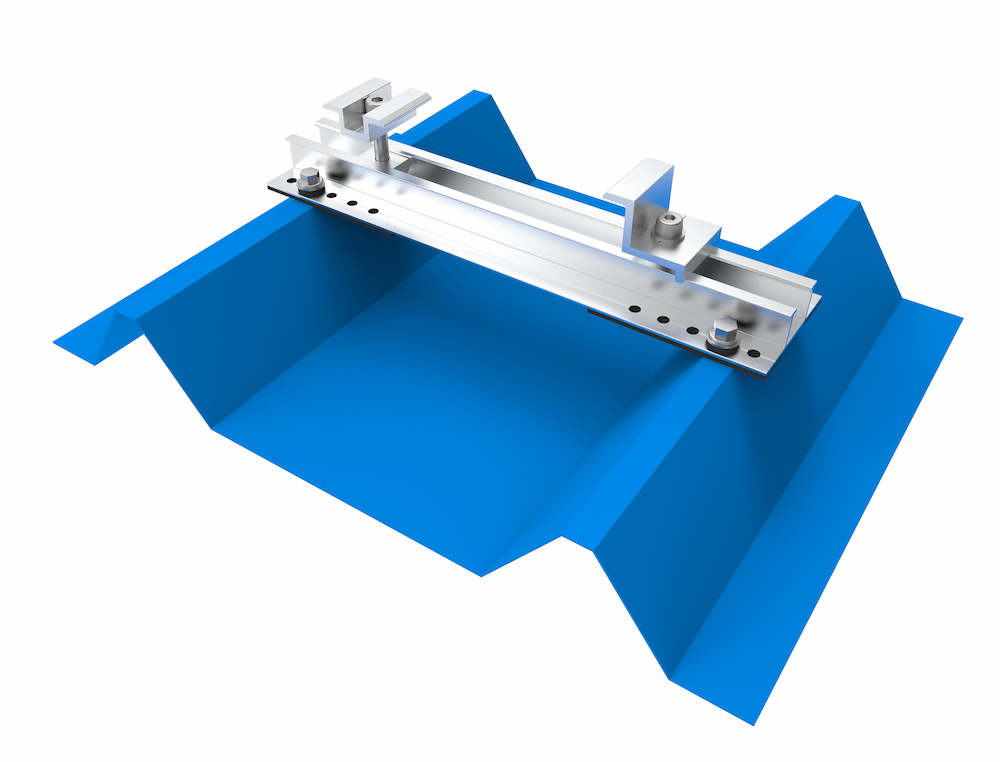
Think of a traditional rail like a bridge—it’s designed to span gaps and provide a continuous surface. But on a metal roof, you already have a structural “bridge” in the form of the roof’s own ribs or crests. Railless systems, or Mini Rails, use a “point-based” logic. We attach small, high-strength segments directly to the roof crowns.
This shifts the support responsibility to the strongest parts of the roof itself. It’s a smarter way to work with the building’s existing architecture rather than fighting against it. Why build a second roof on top of the first one?
Cutting the Fat: Material Optimization and BOM Efficiency
Let’s talk numbers, because I know that’s what keeps you up at night. Aluminum is expensive. It’s heavy. And its price swings like a pendulum. When you use traditional 3-meter or 6-meter rails, a huge chunk of your Bill of Materials (BOM) is literally just metal sitting under the panels.
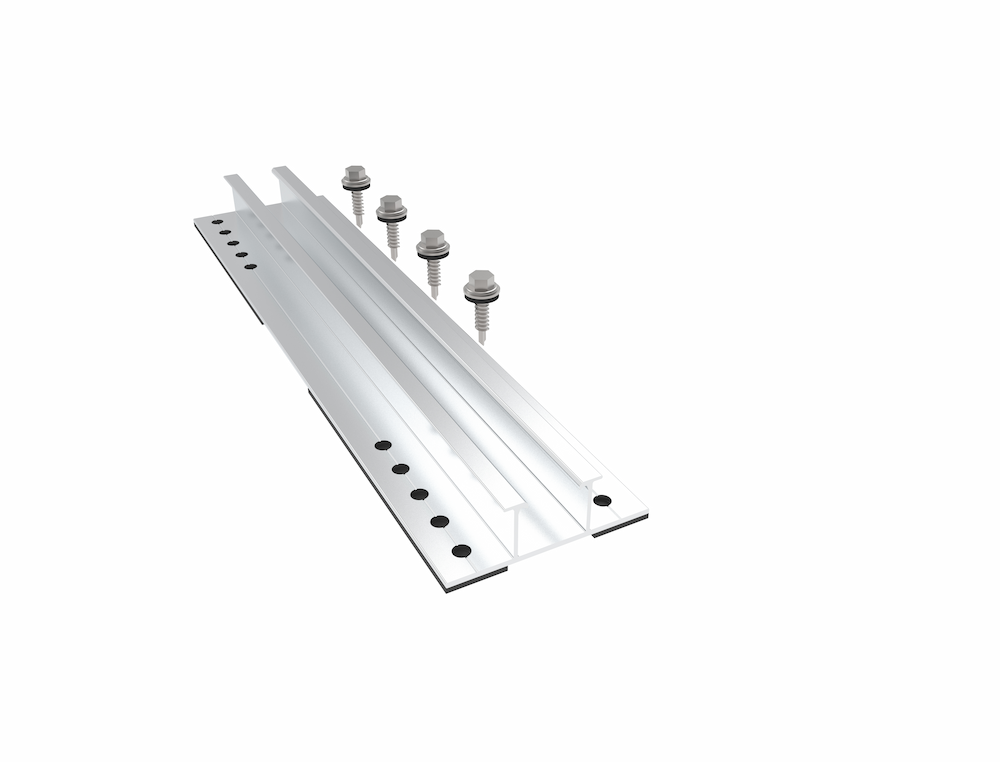
With our tilted roofs railless mounting systems, we’ve seen partners reduce their aluminum consumption by over 70%. That’s not a typo. By using 120mm to 400mm Mini Rails instead of full-length beams, you’re significantly insulating your project from the volatility of the raw metal market. If aluminum prices spike 20% tomorrow, it hurts a lot less when you’re only using a fraction of it.
Hedging Against Aluminum Price Volatility with AL6005-T5
At SR, we don’t compromise on the quality of that smaller amount of metal. We use AL6005-T5 high-strength alloy. It’s anodized to withstand the harshest environments. Even though the rail is shorter, the tensile strength is top-tier. It’s like a middleweight boxer—compact, but packs a serious punch. You get the structural reliability of a heavy system with the cost profile of a lightweight one.
Installation Speed: From Days to Hours
Time is money, especially when you’re paying a crew of installers to bake in the sun on a 10,000-square-meter roof. Traditional rail systems involve a lot of “faff.” You have to align them, cut them, join them, and then level them. It’s a slow process that leaves plenty of room for human error.
Railless systems are a different beast. Because the components are small and modular, the workflow is much more “click-and-go.” We’ve had EPC clients tell us they’ve cut their installation time by nearly 40%. When you aren’t wrestling with a 20-foot piece of aluminum in the wind, things move a lot faster.
No-Pre-drilling Technology and Single-Person Workflow
One of my favorite things about the SR Solar Mini Rail is the no-pre-drilling setup. We use hardened self-drilling screws. This means one guy with an impact driver can move down a row of trapezoidal crests and have the mounts ready in minutes. You don’t need a secondary team following behind to clean up metal shavings or prep holes. It’s a streamlined, single-person workflow that keeps the project moving.
Solving the Waterproofing Puzzle on Tilted Metal Roofs
I’ll be honest—the first thing any PV project developer asks me about railless systems is: “Will it leak?” It’s a fair question. Every time you put a screw through a roof, you’re creating a potential problem. But here’s the thing: we’ve been doing this for a long time, and we’ve perfected the seal.
In fact, a well-designed railless system can be more waterproof than a traditional one because there’s less thermal expansion stress pulling on the fasteners.
The Role of Integrated EPDM Gaskets and Vacuum Sealing
Every SR Solar Mini Rail comes with a pre-attached, high-performance EPDM rubber pad. When that self-tapping screw is driven home, it compresses the EPDM against the metal roof. This creates a vacuum-like seal that’s rated for a 25-year lifespan. We’ve tested these setups under extreme pressure, and they hold tight. Plus, since the mounts are only on the crests, water naturally flows away from the penetration points into the drainage channels. It’s basic physics working in your favor.
Logistical Dreams: Shipping Air vs. Shipping Hardware
Have you ever seen a shipping container full of traditional solar rails? It’s mostly air. You’re paying to ship the empty space between long, skinny poles. Then you have to hire a specialized truck to get those 6-meter rails to the site, and god help you if the site has tight corners or a small elevator.
Tilted roofs railless mounting systems flip the logistics script. Because the parts are small, they fit into standard-sized cartons.
Warehousing and Last-Mile Delivery Advantages
The packaging volume of a Mini Rail system is about 10% of a traditional setup. Think about what that does for your warehouse. You can fit the mounting hardware for a whole megawatt project in a small corner instead of dedicating an entire aisle to it. Last-mile delivery becomes a breeze—you can use a standard van instead of a flatbed truck. It’s cheaper, faster, and much less of a headache for your operations team.
Structural Integrity: Can It Handle the Pressure?
Some folks worry that without a continuous rail, the “strength” of the array is diminished. I get it—it looks “flimsier” because there’s less visible metal. But engineering isn’t about how much metal you can see; it’s about where the loads go.
Our engineering team at SR performs rigorous calculations for every project. We ensure that the wind load—which is the real enemy of solar arrays—is distributed evenly across the roof’s structural members.
Distributing Wind Loads Across Trapezoidal Crests
By attaching to multiple points across the trapezoidal ribs, we actually create a very stable “mesh” of support. Our systems are tested to withstand wind pressures of 3000Pa and more. In many cases, because the system sits lower to the roof (a lower profile), it actually experiences less wind uplift than a high-profile rail system. It’s tucked away, out of the “breeze,” so to speak.
B2B Strategy: How Mini Rails Improve Your Tendering Power
In the B2B world, we’re all competing on margins. If you can shave 5% off your total project cost by optimizing the mounting system, that’s often the difference between winning a tender and coming in second place.
Using tilted roofs railless mounting systems gives you a strategic edge. You can bid lower because your material and labor costs are lower, or you can keep your bid the same and enjoy a much healthier profit margin. Plus, being able to promise a faster completion date because of the simplified installation is a huge selling point for IPPs (Independent Power Producers) who want to start generating revenue as soon as possible.
Conclusion: The Future is Rail-less
At the end of the day, our goal at SR Solar is to make your life easier and your projects more profitable. The transition to tilted roofs railless mounting systems is one of those rare “win-win” scenarios. You save money on materials, you save money on shipping, and your team spends less time on the roof.
It’s a cleaner, more modern approach to solar racking that respects both the budget and the building. If you’re ready to stop shipping air and start shipping smarter, it’s time to take a serious look at the Mini Rail. Your bottom line will thank you.
FAQs
1. Is a railless system compatible with all types of metal roofs?
It’s most effective on trapezoidal, corrugated, and R-panel metal roofs. For standing seam roofs, we usually recommend non-penetrating clamps, but for the majority of industrial tilted roofs, the Mini Rail is the go-to solution.
2. How do you handle thermal expansion without long rails?
Actually, railless systems handle thermal expansion better. Because the rails are short (mini), there’s no long-distance cumulative expansion that puts stress on the fasteners. Each module-mount group acts independently.
3. Can I install the panels in both portrait and landscape?
Absolutely. Depending on the orientation of your roof ribs, we can provide Mini Rails that support both portrait and landscape layouts. It’s very flexible.
4. What about the grounding/bonding of the panels?
Our system includes integrated grounding. The mid-clamps are designed to pierce the anodization of the module frames, creating a continuous electrical path without needing extra copper lugs for every panel.
5. Are these systems rated for high-wind areas?
Yes. At SR Solar, we provide full engineering reports and can customize the rail length and fastener frequency to meet the specific wind and snow load requirements of your project location.