Solar mounting options for different roof types vary significantly because while panels grab the headlines, the mounting system does the heavy lifting. As an engineer at SR Solar, I have reviewed thousands of project designs, and if there is one golden rule in rooftop solar mounting, it is this: one size never fits all.
A mounting system is not just a piece of aluminum connecting a module to a building; it is the structural bridge between energy generation and architectural integrity. Whether you are dealing with a century-old clay tile roof or a modern TPO membrane on a commercial warehouse, the physics change. The thermal expansion coefficients change. The waterproofing requirements change.
This guide explores the engineering nuances behind different roof types for solar and how to select the right solar panel mounting options to ensure safety, efficiency, and long-term ROI.
1. Metal Roofs: Precision and Compatibility in C&I Projects
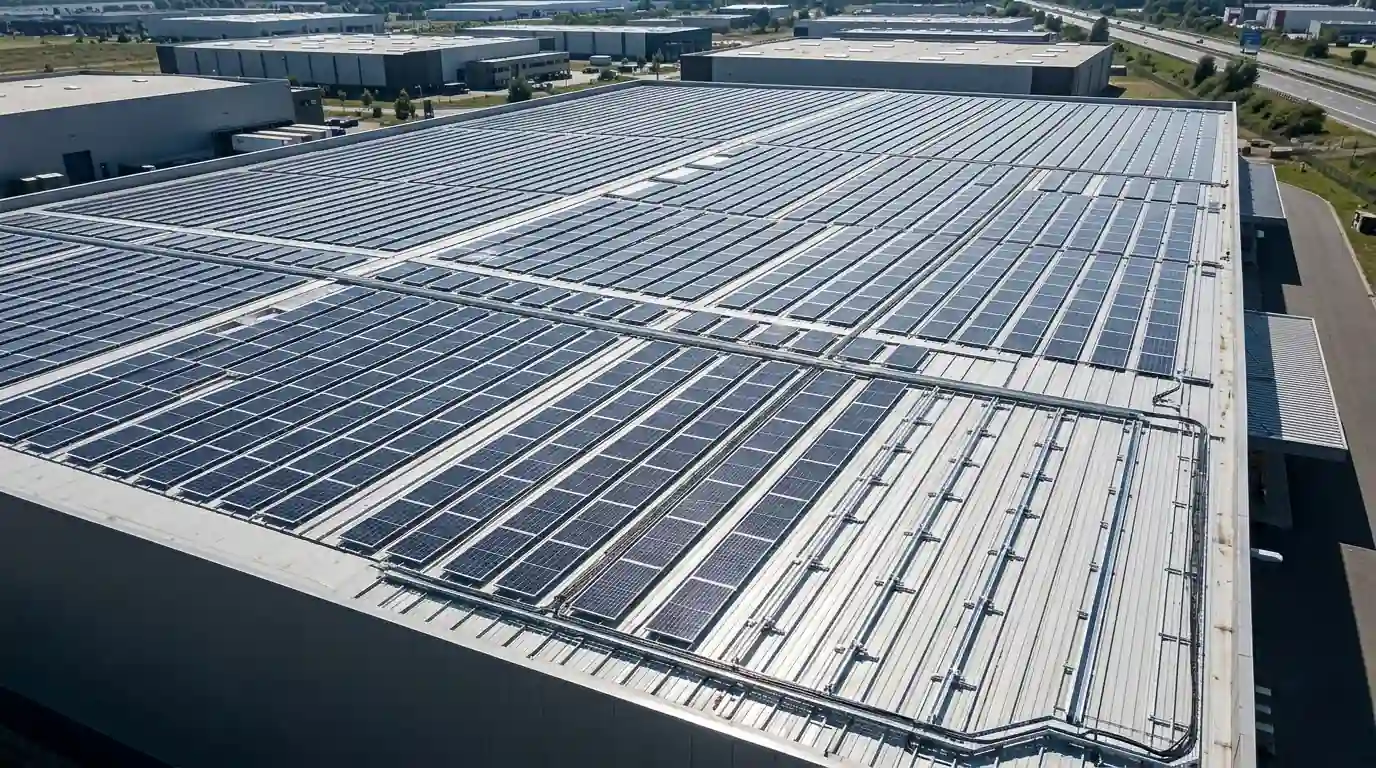
Metal roofs dominate the Commercial and Industrial (C&I) sector. While they appear sturdy, they present unique challenges regarding profile matching and thermal movement.
The Challenge of Profile Variety
Metal roofs come in countless shapes—Trapezoidal, Corrugated, Kliplok, and Standing Seam. A common mistake in EPC projects is attempting to use a “universal” clamp that doesn’t perfectly match the rib profile. This leads to localized stress concentrations, which can cause micro-cracking in the metal sheet over time due to wind-induced vibration.
The Solution: Non-Penetrative Clamps
For profiles like Standing Seam or Kliplok, the priority is maintaining the roof’s warranty. At SR Solar, we utilize clamp-based solutions that grip the seam without piercing the metal sheet.
- Engineering Insight: When we design for Standing Seam, we don’t just look at the grip strength. We look at the sliding friction. Because metal roofs expand and contract significantly with temperature swings, the mounting system must allow for this movement without compromising the seal.
Mounting Configurations
- Base & Rail System: The traditional robust choice for high-wind zones. It provides excellent load distribution across multiple purlins.
- Mini Rail System: A cost-effective alternative that reduces material usage by utilizing short rail sections directly fixed to the crown of trapezoidal roofs. This is a favorite for budget-conscious developers who still demand high structural safety.
2. Tile Roofs: Mastering the Art of Delicate Installation
In residential and high-end commercial markets, tile roofs (Ceramic, Spanish, Slate, or Concrete) are the standard. However, tiles are brittle. The primary engineering concern here is installing a heavy solar array without cracking the waterproofing layer beneath.
The “Hook” Strategy
Direct drilling through a tile is rarely the right answer—it’s a recipe for leaks. Instead, we rely on a sophisticated Hook System. These stainless steel or aluminum hooks slide under the tile, anchoring directly to the roof rafter.
Versatility and Waterproofing
Because tiles vary wildly—from flat slate to curved Spanish waves—the hooks must be adaptable. In SR Solar’s engineering process, we focus on three factors:
- Universal Compatibility: Our hooks feature multiple adjustment points to accommodate different curvatures and batten heights.
- Waterproof Integrity: We emphasize double-flashing details. The design ensures the tile sits flush after installation, preventing “tile kick” (where the tile is lifted, allowing wind-driven rain to enter).
- Pre-assembly: To reduce the time installers spend walking on fragile tiles (which often leads to accidental breakage), our hook systems come highly pre-assembled.
3. Concrete Roofs: Stability on Flat Surfaces
Flat concrete roofs are staples of schools, hospitals, and large industrial complexes. The advantage is accessibility; the disadvantage is the lack of a natural tilt and the high risk associated with roof penetration.
The Ballast System (Non-Penetrative)
Drilling into a flat concrete roof requires expensive resealing and carries a high risk of “pooling water” leaks. The superior engineering solution is the Ballast System.
By using aerodynamic design and strategically placed concrete blocks as counterweights, we secure the array using gravity.
- Real-World Experience: On several utility-scale installations in typhoon-prone regions, we’ve used wind deflectors to reduce the “uplift” force. This allows us to reduce the total ballast weight required, preventing the roof from exceeding its dead-load capacity while remaining secure in 150 mph winds.
Maximizing Yield via Adjustable Tilt
Since the roof is flat, the mounting system must create the angle. SR Solar’s Adjustable Tilt Systems allow installers to set the precise angle required (typically 10° to 30°) to capture maximum solar irradiance based on the site’s latitude.
4. TPO & PVC Roofs: The Specialist for Soft Membranes
Thermoplastic Polyolefin (TPO) roofs are popular for their reflective properties and energy efficiency. However, TPO is a “living” soft membrane; it cannot handle sharp edges or heavy point loads.
100% Waterproofing Focus
The cardinal sin on a TPO roof is a leak. Standard metal mounts can abrade the soft surface over time due to thermal expansion rubbing.
The SR Solar Approach:
- Support Seals: We utilize specific support seals that bond or sit harmlessly against the membrane.
- Load Distribution: Our TPO-specific mounts feature wider base plates to distribute the weight evenly, preventing the mount from sinking into the insulation layer under heavy snow loads.
5. How to Choose the Right Solar Mounting System (Decision Matrix)
When we consult with EPCs, we guide them through this specific decision-making hierarchy. Use this to validate your current project design:
| Factor | Condition | Recommended Mounting Approach |
| Roof Material | Standing Seam Metal | Non-penetrative Clamping |
| Roof Material | Flat Concrete | Ballasted System (Fixed Tilt) |
| Wind Load | High (Coastal/Typhoon) | Full Rail System with high-strength AL6006-T6 |
| Snow Load | Heavy (>1.5kN/m²) | Increased rail thickness & tighter span between mounts |
| Budget | CAPEX Optimized | Mini Rail (Metal) or East-West Ballast (Concrete) |
| Maintenance | High Dust Environment | Adjustable Tilt (to facilitate natural cleaning via rain) |
Engineering Check: LCOE vs. CAPEX
A common mistake is choosing the cheapest mounting rail to save 5% on initial CAPEX. However, if that rail lacks proper anodization or structural rigidity, the maintenance costs (OPEX) over 25 years will skyrocket. At SR Solar, we calculate the Levelized Cost of Energy (LCOE) by ensuring our components last as long as the panels themselves.
6. The SR Solar Advantage: Why Engineering Matters
In coastal environments, we’ve seen standard 6005-T6 aluminum show signs of pitting corrosion after just five years. This is why SR Solar took a different path.
Strength Redefined
We developed a proprietary high-strength aluminum alloy. Through advanced heat treatment, we achieved a strength increase of 32.6% over standard industry alloys. This means your system can withstand stronger typhoons without adding unnecessary dead load to the building.
Speed is Money
Labor costs can kill a project’s ROI. Our “Click-In” technology allows components to snap together rather than requiring tedious nut-and-bolt assembly at dangerous heights. We have seen installation efficiency improve by up to 50% on large-scale C&I projects.
7. Real-World Insights: Avoiding “The Hidden Leak”
In my years on-site, I’ve seen that 90% of rooftop solar failures aren’t electrical—they are structural.
- The Problem: Using low-quality EPDM gaskets that degrade under UV exposure.
- The SR Solar Standard: We use high-grade, UV-stabilized EPDM and silicone-integrated washers. In SR Solar’s engineering process, we simulate 25 years of weathering to ensure that the waterproofing is as permanent as the structure itself.
Summary: Securing Your Investment
Choosing a mounting solution is a balancing act between the physics of the roof and the economics of the project. A metal roof demands thermal flexibility; a tile roof demands a delicate touch; a concrete roof demands aerodynamic ballast.
At SR Solar, we believe that the mounting system is the foundation of your energy investment. If the foundation is weak, the entire project is at risk.
Ready to secure your solar investment? Don’t guess on your mounting specs. Risk prevention starts at the design phase. [Contact SR Solar’s engineering team today] for a customized design proposal that maximizes your roof’s potential and ensures a 25-year peace of mind.
FAQs
1. Can I install solar on a roof that is already 15 years old?
It depends on the structural remaining life. We recommend a professional structural audit. If the roof has less than 10 years of life left, it is often more cost-effective to replace the roof membrane or sheets simultaneously with the solar installation.
2. Does a ballasted system risk sliding off a flat roof during a storm?
No, provided it is engineered correctly. We use friction coefficients and wind tunnel data to determine the exact weight needed. For high-wind zones, we often combine ballast with “hybrid” mechanical attachments for absolute security.
3. Why is AL6006-T6 better than standard aluminum?
AL6006-T6 offers a superior strength-to-weight ratio and better corrosion resistance in saline (coastal) environments. This allows for longer spans between attachments, which reduces the number of roof penetrations needed.
4. How does the Mini Rail system handle thermal expansion?
Because Mini Rails are short, independent segments, they actually handle thermal expansion better than long, continuous rails. They allow the metal roof sheets to move naturally without putting stress on the solar module frames.
5. Will installing solar void my roof warranty?
Not if you use the right mounting system. Our non-penetrative clamps for standing seam roofs and specialized TPO mounts are designed specifically to comply with major roof manufacturers’ warranty requirements.