The Agrivoltaic Shift: Why Brazil is the Next Frontier for Dual-Use Solar
If you’re an EPC or a project developer working in the Brazilian market right now, you know that land is a double-edged sword. We have plenty of it, sure, but the competition between “food vs. fuel” is getting tighter. That’s where Solar Agricultural Mounting Systems step in to save the day. By 2026, the agrivoltaics market is projected to hit nearly $6 billion globally, and Brazil is a massive part of that growth story. Why? Because we aren’t just selling power; we’re protecting the livelihood of the farmer.
Think about it. When you install a high-quality racking system over a soy field in Rio Grande do Sul or a coffee plantation in Minas Gerais, you’re creating a cooler microclimate. You’re reducing soil moisture loss and protecting crops from extreme heat. For an IPP (Independent Power Producer), this isn’t just “green PR”—it’s a high-yield investment with an average national payback period of about 6 years. You get the energy, the farmer gets the crop, and everyone wins.
Understanding the IPP and Developer Value Proposition
From a B2B perspective, the value proposition is simple: land-use efficiency. Traditional ground-mounted systems often render the land beneath them useless for anything other than grazing sheep (if you’re lucky). But with specialized Solar Agricultural Mounting Systems, you maintain up to 70% or even 80% of agricultural productivity. This dual-revenue stream makes the project far more attractive to financiers and local regulators who are increasingly wary of “sterile” solar farms.
Structural Engineering for Brazil’s Brutal Microclimates
Let’s talk shop. Brazil isn’t just one climate; it’s a dozen different ones. From the salt spray of the northeast coast to the high humidity of the Amazon basin and the acidic soils of the Cerrado, your mounting structure has a lot to fight against. If you use sub-par materials, that 25-year warranty isn’t worth the paper it’s printed on. We’ve seen enough “budget” racks turn into rusted skeletons within five years to know that engineering matters.
Defeating Tropical Humidity with Advanced Materials: AL6005-T5 and HDG
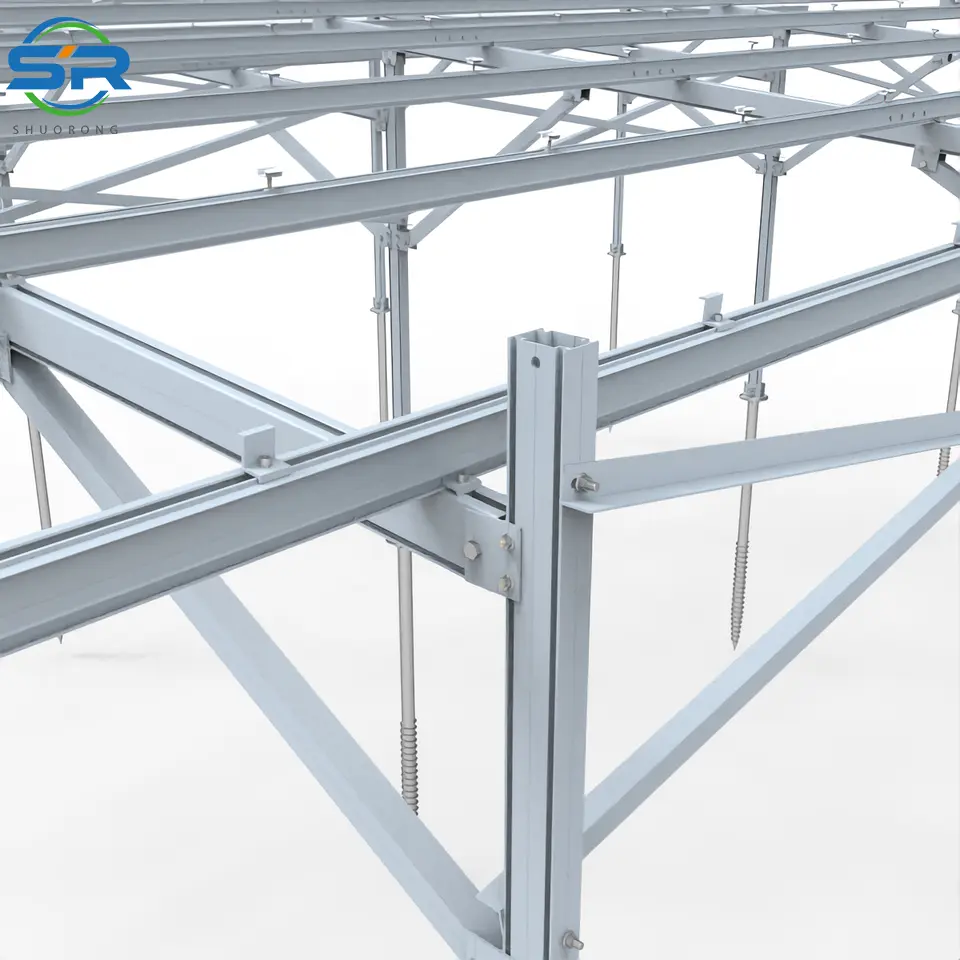
At SR Solar, we lean heavily on AL6005-T5 Aluminum and Hot-Dip Galvanized (HDG) Steel. Why? Because they are the heavy hitters of corrosion resistance. In agricultural settings, the soil is often treated with fertilizers and pesticides that can be incredibly corrosive to metal. Our HDG steel features a zinc coating of at least 80–100 μm, ensuring it can handle the moisture and chemicals inherent in farming. It’s about building a foundation that lasts as long as the PV modules themselves.
Wind Load Integrity: Meeting ABNT NBR Standards in Open Fields
Have you ever been in the middle of a Brazilian “vendaval”? The wind speeds can be terrifying. In open agricultural fields, there are no windbreaks, meaning your solar array is basically a giant sail. We engineer our Solar Agricultural Mounting Systems to exceed local ABNT NBR structural standards. We don’t just guess the load; we calculate the specific vibrations and torque that high-clearance structures face. It’s the difference between a system that stands firm and one that ends up in the next county after a storm.
Designing for Synergy: Balancing Megawatts and Crop Yields
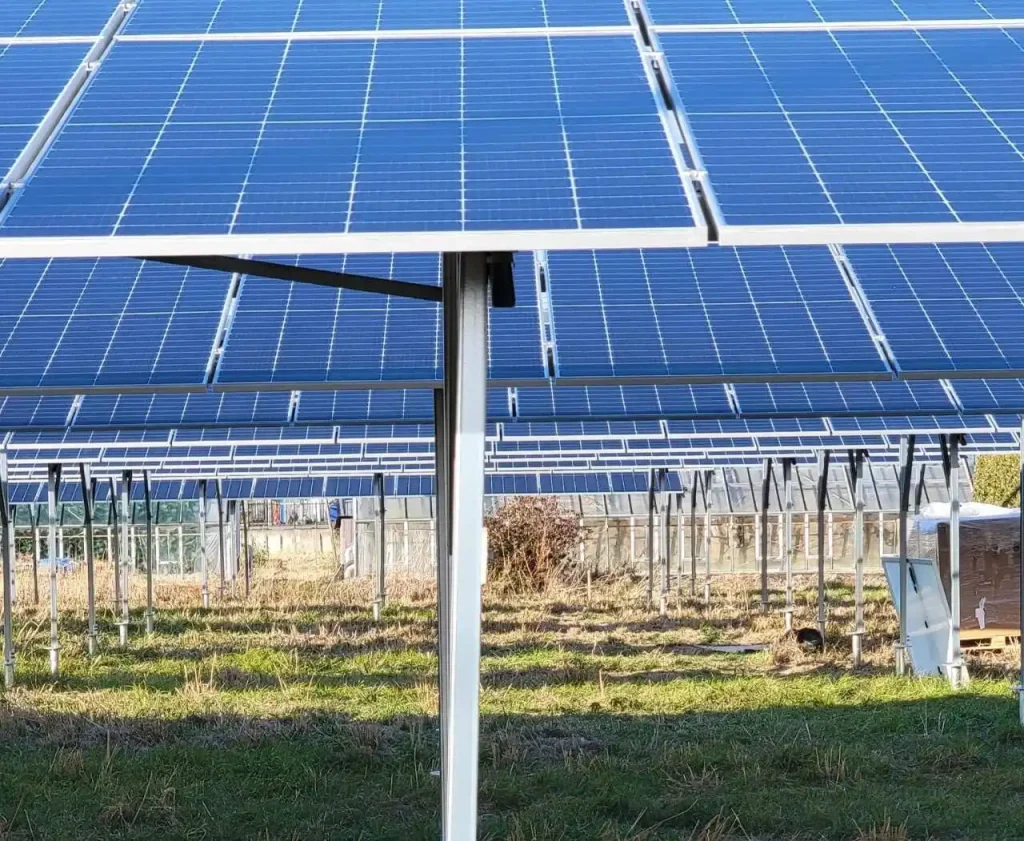
The biggest mistake people make in agrivoltaics is thinking you can just use a standard rack and “make it taller.” That’s a recipe for dead crops and broken tractors. You need a design that respects the biology of the plant and the mechanics of the farm. We are talking about Photosynthetically Active Radiation (PAR)—essentially, the specific light wavelengths plants need to grow. If your panel density is too high, your “solar farm” just becomes a “shade farm.”
High-Clearance Racking: Making Room for Modern Brazilian Machinery
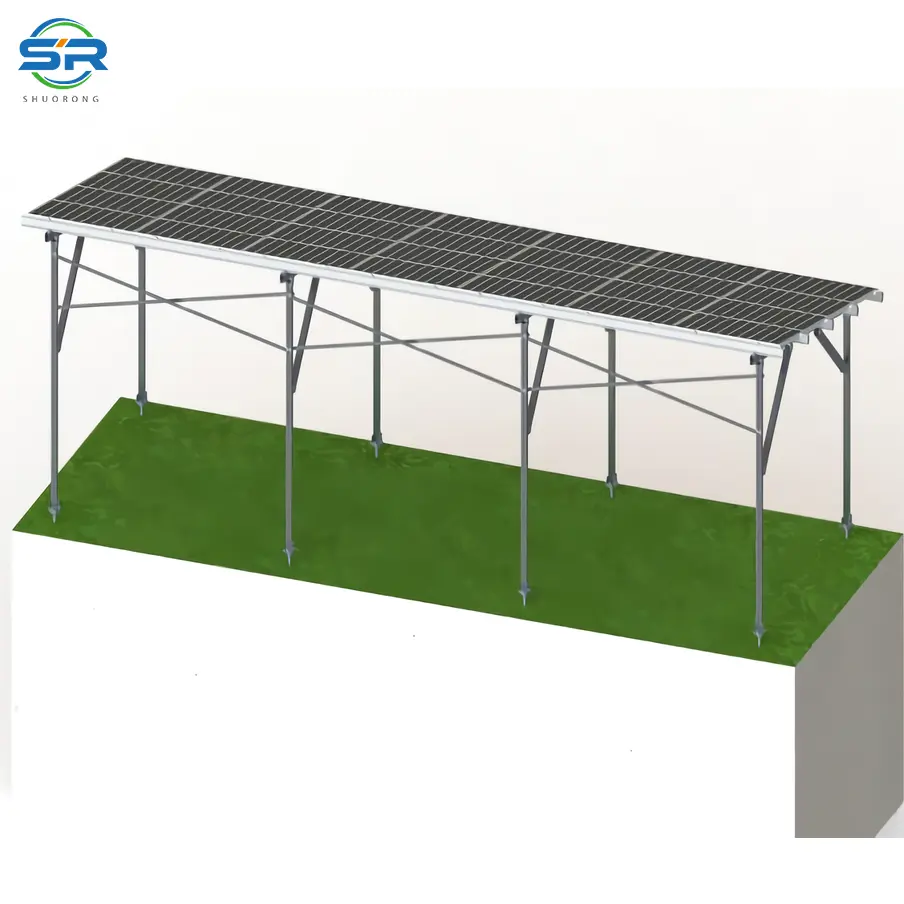
Standard tractors and harvesters used in Brazil aren’t small. If your mounting system doesn’t offer at least 2.5 to 5 meters of clearance, you’re essentially telling the farmer they have to go back to 19th-century hand-harvesting. SR Solar’s designs prioritize wide spans and high vertical clearance. This allows for seamless mechanical movement, ensuring that the solar installation doesn’t become an obstacle to daily operations.
Light Transmittance & PAR: Customizing Pitch for Coffee and Soy
Not all crops are created equal. Leafy greens might love the shade, but soy and coffee have specific light requirements to hit their peak yield. Our adjustable-tilt and optimized-spacing designs allow you to fine-tune the “light recipe” hitting the ground. By using bifacial modules on our Solar Agricultural Mounting Systems, you can even capture reflected light from the ground, boosting energy production without casting a permanent, dark shadow over the crops.
Operational Efficiency: Cutting Soft Costs in Remote Rural Hubs
If you’ve ever tried to manage a construction crew in the remote interior of Mato Grosso, you know that “soft costs” like labor and logistics can eat your margins alive. The longer your guys are on-site, the more money you lose. This is where modular design becomes your best friend. In 2026, the EPCs that win are the ones who can install faster and with fewer errors.
The Power of Pre-Assembly: Reducing On-Site Labor Timelines
We’ve all been there: a box of 5,000 bolts arrives, and half of them go missing in the dirt. At SR, our mounting kits feature highly integrated, pre-assembled parts. Our “Quick Click” technology means your team spends less time drilling and more time clicking. By reducing the number of individual components that need to be handled on-site, we can cut installation times. That’s a massive win for your project timeline and your bottom line.
Logistical Optimization for the Brazilian Interior
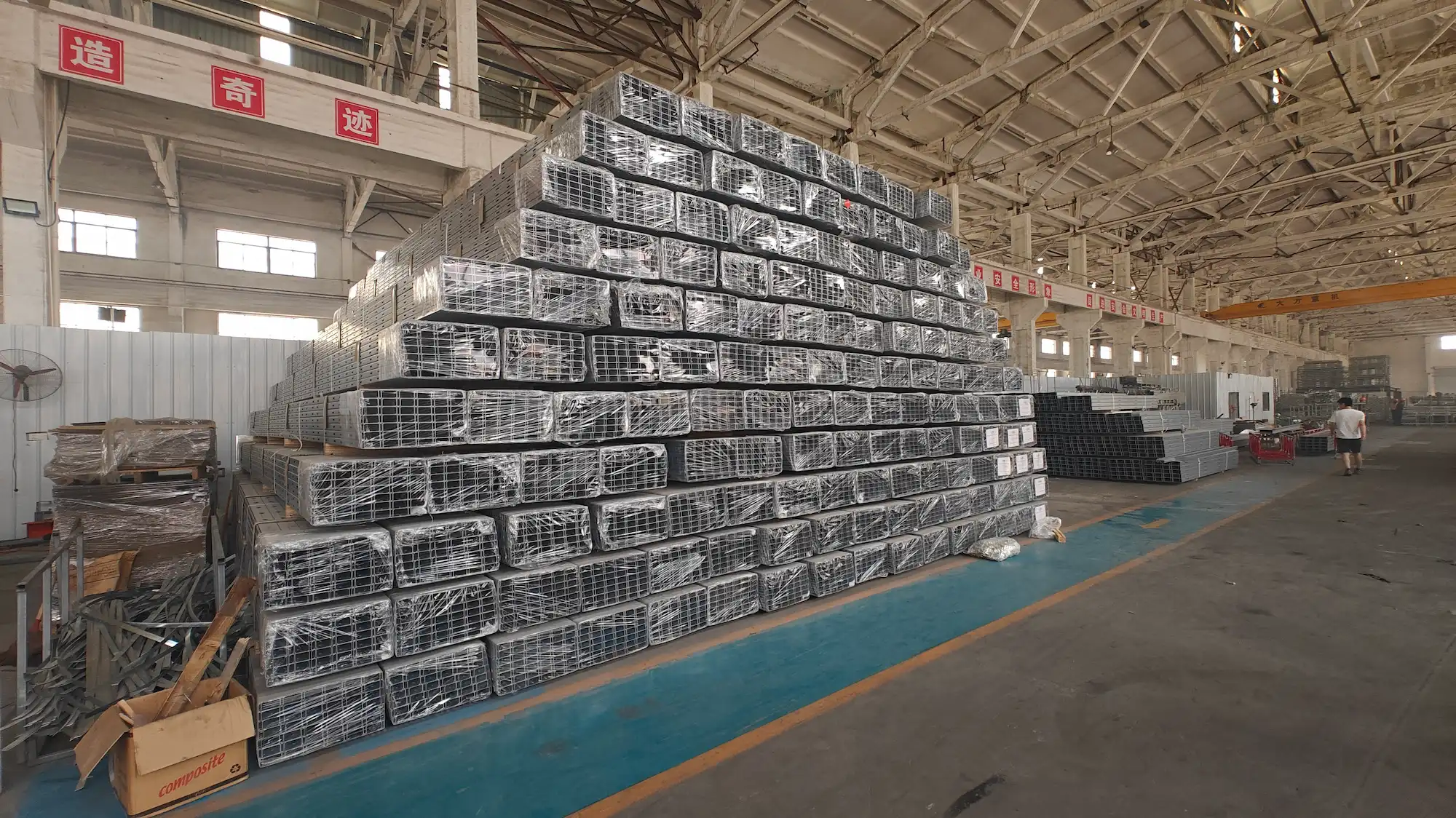
Shipping heavy steel across Brazil is expensive. By utilizing a mix of high-strength aluminum and optimized steel profiles, we reduce the total weight of the shipment without sacrificing structural integrity. This lower weight means lower freight costs and easier handling in areas where heavy lifting equipment might be scarce. When you calculate the Total Cost of Ownership (TCO), these logistical savings often make the difference between a “maybe” and a “yes” for a project.
Regulatory Compliance and Long-Term Bankability
Let’s talk about the “B” word: Bankability. If your mounting system doesn’t have the right certifications, good luck getting project financing or insurance in Brazil. The market is maturing, and lenders are getting stricter. They want to see compliance with international standards like ASCE (USA), JIS (Japan), and EN (Europe), as well as local Brazilian codes.
Navigating Permitting with Certified Mounting Structures
SR Solar doesn’t play games with compliance. Our systems are designed to meet and exceed these global standards. When you present our technical documentation to a bank or a regulatory body, it moves the process along faster. It proves that you aren’t just putting up “some metal,” but a certified, engineered solution designed for a 25-year lifecycle. This peace of mind is what allows developers to scale their operations quickly across the country.
SR Solar: Your Strategic Engineering Partnership
At the end of the day, SR Solar isn’t just a hardware supplier. We see ourselves as your engineering partner. Every plot of land in Brazil is different—the topography, the soil, the crop, the grid connection. A “one size fits all” approach just doesn’t work for Solar Agricultural Mounting Systems.
We provide tailored design schemes that fit your specific site. Whether you’re working on a small 100kW minigeneration project or a massive multi-megawatt IPP development, we provide the technical support to ensure your racking is the strongest part of your system. We’re here to help you navigate the complexity of the Brazilian green energy transition, one row of panels at a time.
Conclusion: Building the Future of Brazilian Agribusiness
The revolution of Solar Agricultural Mounting Systems is about more than just renewable energy; it’s about the resilience of the Brazilian farm. As we move further into 2026, the integration of solar and agriculture will become the standard, not the exception. By choosing the right materials, the right engineering, and the right partner, EPCs and developers can build projects that aren’t just profitable today, but sustainable for decades to come. Let’s build something that grows—both power and food.
FAQ
1. Can SR Solar mounting systems handle heavy harvesting machinery?
Absolutely. Our high-clearance designs are specifically engineered with wide spans and vertical heights ranging from 2.5 to 5 meters, allowing tractors and harvesters to operate underneath without risk of collision.
2. How does SR Solar ensure the mounting system won’t rust in humid tropical climates?
We use a combination of AL6005-T5 Aluminum and Hot-Dip Galvanized Steel with high zinc coating thicknesses (80–100 μm). This provides a robust barrier against the high humidity and acidic soil conditions common in Brazil.
3. Do these systems comply with Brazilian structural standards (ABNT)?
Yes, all our designs are engineered to meet or exceed local ABNT NBR standards, as well as international codes like ASCE and Eurocode, ensuring they are fully bankable and insurable.
4. How much time can we save on installation with SR Solar’s kits?
Due to our high level of pre-assembly and “Quick Click” component design, most EPCs report a reduction in on-site labor time of roughly 25% to 30% compared to traditional mounting systems.
5. Is the mounting system adjustable for different types of crops?
Yes! We offer adjustable-tilt and variable-spacing configurations. This allows you to optimize the light transmittance (PAR) for different crops, whether you’re planting shade-loving greens or sun-hungry soybeans.