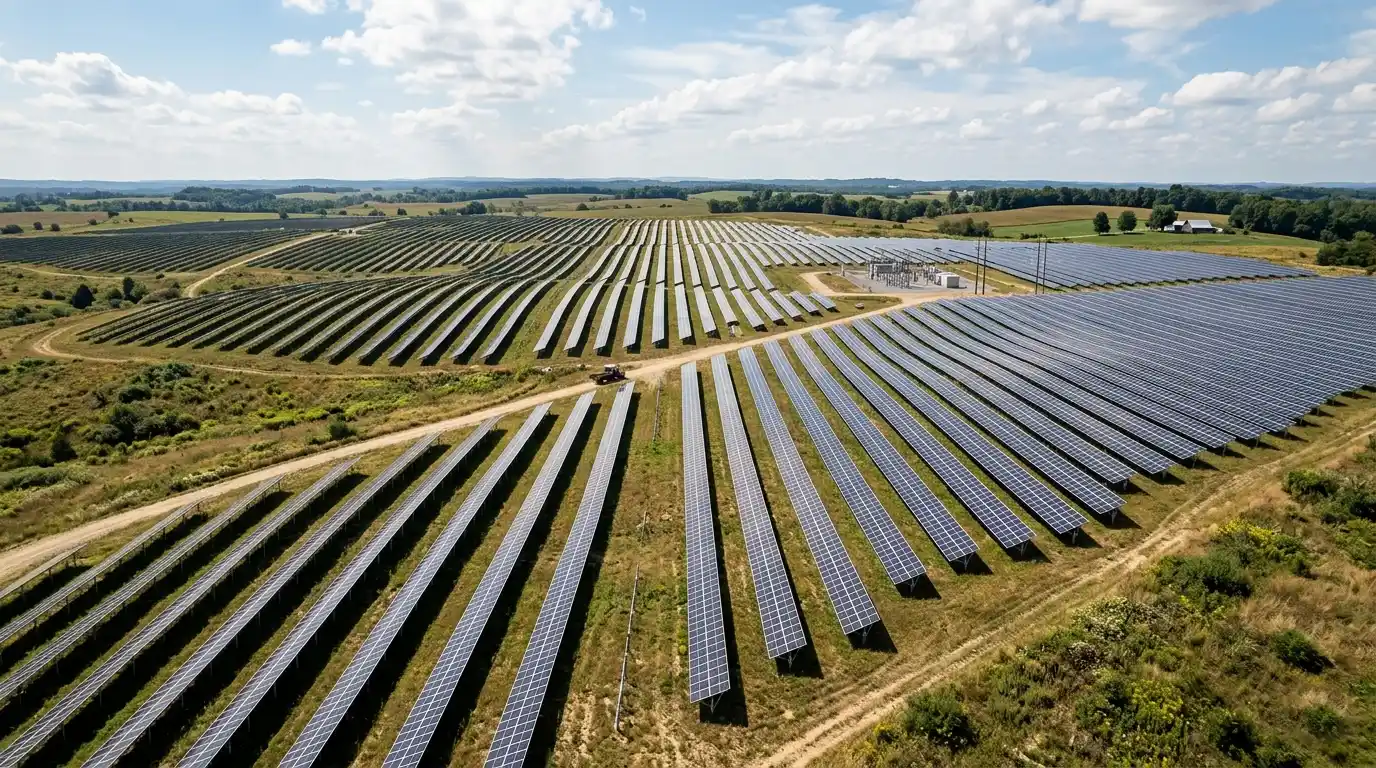
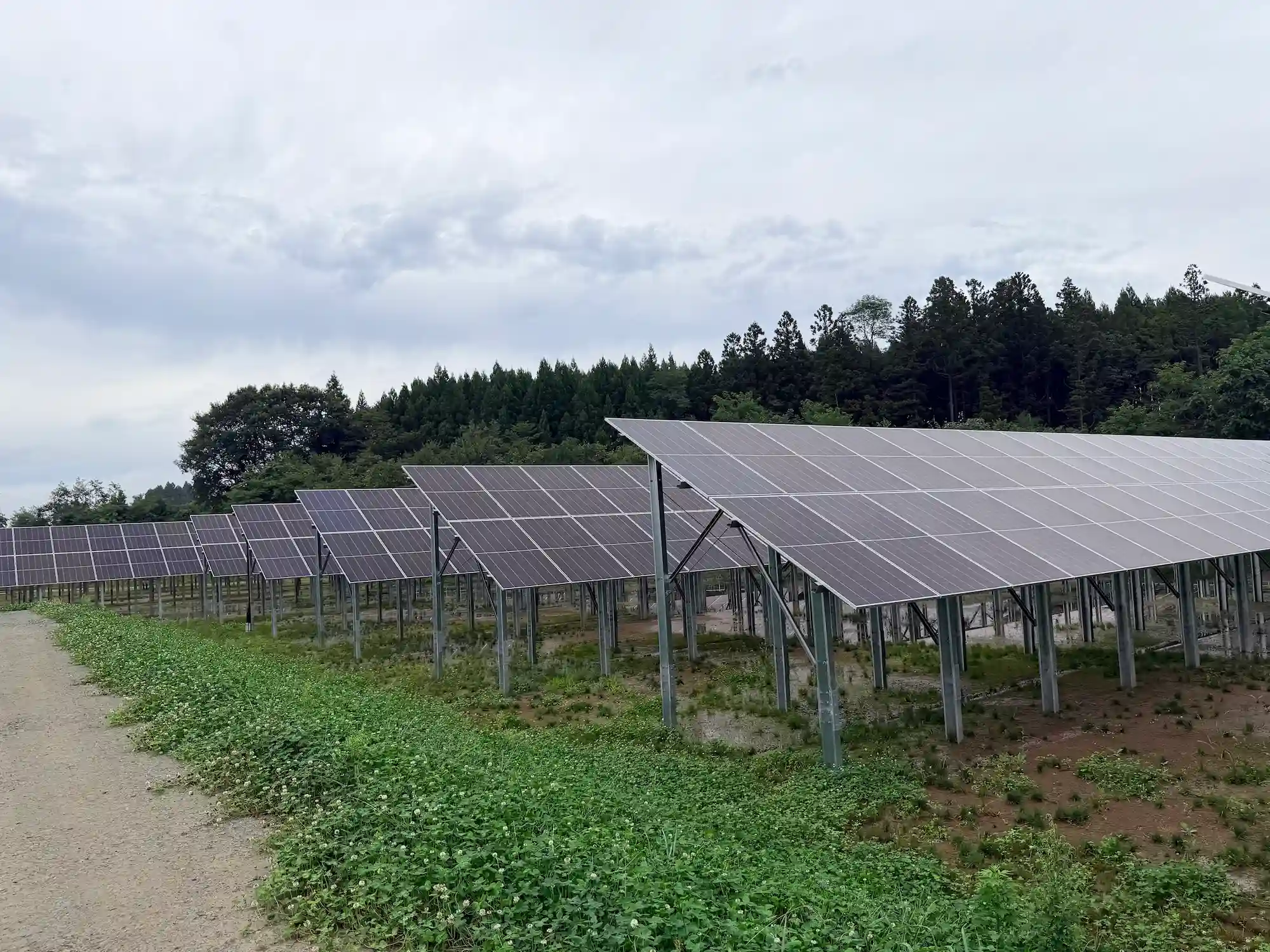
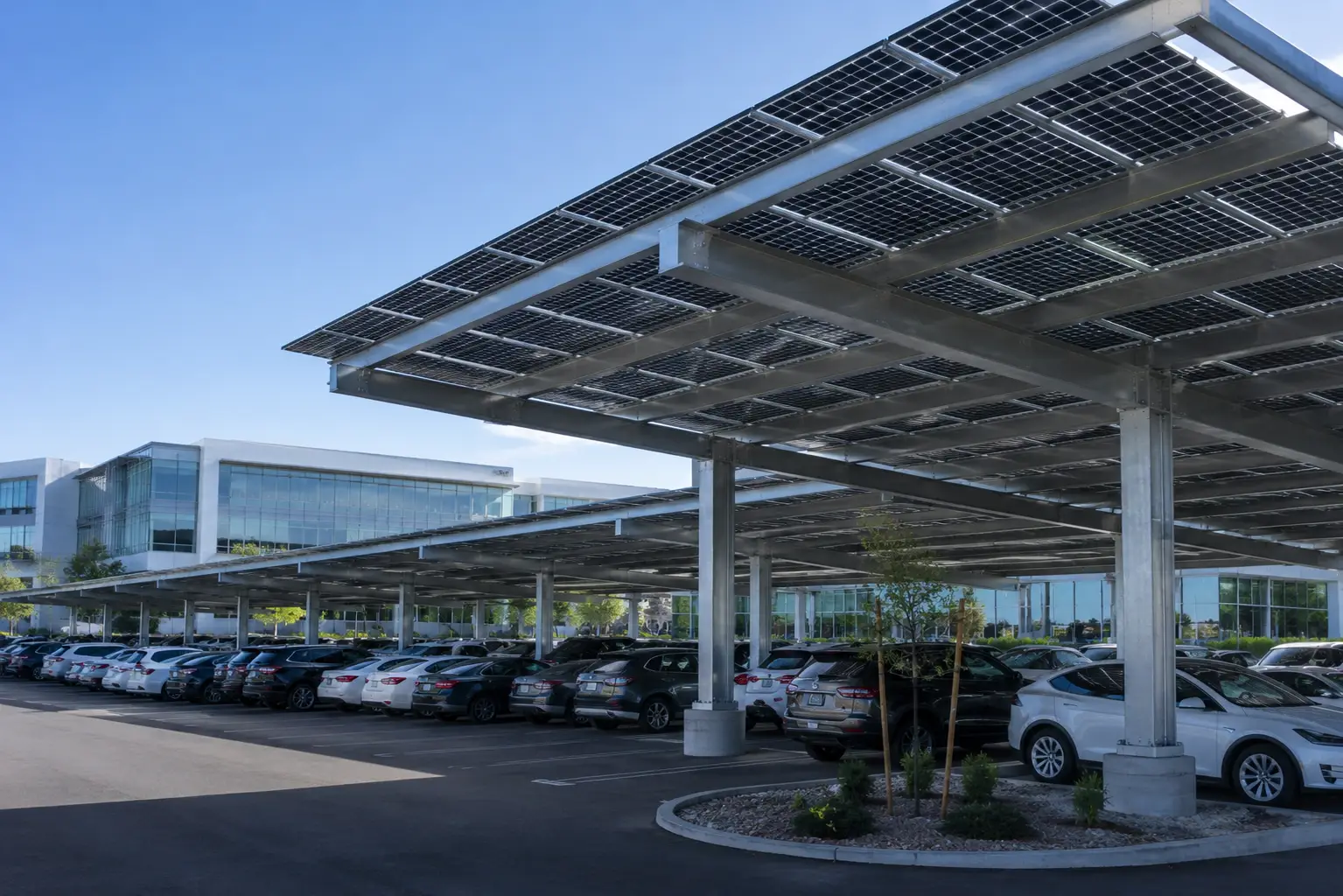
Solar mounting system materials play an important role in the strength, stability, and durability of a solar installation. A complete solar mounting system consists of different materials used in its main structure, foundation, and accessories. Aluminum alloy, structural steel, carbon steel, and stainless steel are commonly used, with specific grades and surface treatments selected according to the component’s function and project requirements.
So, what materials are commonly used in a solar mounting system?
In general, the main structure is manufactured from aluminum alloy or steel, while foundations typically use carbon steel. Accessories can be made from aluminum, stainless steel, or other types of steel, depending on their function and installation requirements.
Let’s take a closer look at the materials used in different parts of a solar mounting system.
1. Materials Used in the Main Solar Mounting Structure
The main structure supports the solar panels and transfers structural loads to the foundation. Aluminum alloy and steel are the two commonly used materials in solar mounting structures.
Aluminum Alloy – AL6005-T6
Aluminum alloy is widely used in solar mounting systems, particularly for roof-mounted and some ground-mounted structures.
At SR Solar, we use AL6005-T6 aluminum alloy for our aluminum mounting structures. This alloy offers a good combination of mechanical strength, lightweight properties, and corrosion resistance.
Its key characteristics include:
- Lightweight: Reduces the overall structural weight and makes transportation and on-site handling easier.
- Corrosion resistance: Aluminum naturally forms a protective oxide layer when exposed to air, helping protect the material from corrosion.
- Good mechanical strength: The T6 temper provides enhanced strength through heat treatment, making it suitable for structural applications.
- Easy fabrication: Aluminum profiles can be extruded into different cross-sectional shapes to meet specific structural requirements.
Aluminum mounting structures are commonly used for rooftop solar systems, carports, and various ground-mounted installations.
Steel – S350GD
Steel is another widely used material for solar mounting structures, especially in ground-mounted solar projects that require larger structural members.
SR Solar uses S350GD steel for its steel mounting structures. It is a structural steel grade commonly used in cold-formed applications, offering a minimum yield strength of 350 MPa.
Its main characteristics include:
- High yield strength: Suitable for structural components designed to withstand wind, snow, and other project-specific loads.
- Good formability: Can be processed into different profiles, including C-shaped and U-shaped sections.
- Structural versatility: Suitable for posts, beams, purlins, and other supporting components.
Steel profiles can be manufactured in different shapes and dimensions according to the structural design and installation requirements.
2. Surface Treatments for Solar Mounting System Materials
Besides the base material, surface treatment is another important consideration for solar mounting structures. Since these systems are installed outdoors and exposed to rain, humidity, UV radiation, and other environmental conditions, appropriate surface protection helps maintain long-term performance.
Different materials require different surface treatments.
Anodizing for Aluminum
Anodizing is a surface treatment commonly applied to aluminum mounting components.
During the anodizing process, an electrochemical reaction creates a thicker and more controlled oxide layer on the aluminum surface.
The main benefits include:
- Improved corrosion resistance.
- Better surface hardness and wear resistance.
- A more consistent surface appearance.
- Additional protection for long-term outdoor applications.
Anodizing is commonly used for aluminum rails, mounting profiles, and other aluminum structural components.
Hot-Dip Galvanizing (HDG) for Steel
Hot-dip galvanizing is a widely used corrosion protection process for steel structures.
The steel components are immersed in molten zinc, forming a metallurgically bonded zinc coating on the surface. This coating provides both barrier protection and sacrificial corrosion protection.
Common applications include steel posts, beams, brackets, and other structural components used in ground-mounted solar systems.
The coating thickness and specifications should be selected according to the applicable project requirements and relevant standards.
ZAM Coating for Steel
ZAM is a zinc-aluminum-magnesium alloy coating applied to steel during the original steel manufacturing process.
Unlike hot-dip galvanizing performed on fabricated steel components, ZAM-coated steel is supplied with its protective coating already applied to the raw material.
ZAM coating provides corrosion resistance and can offer effective protection at cut edges, depending on the coating composition and exposure conditions.
It is commonly used in solar mounting components such as C-shaped steel profiles, purlins, and other formed structural members.
The appropriate coating specification should be determined based on the project environment and structural requirements.
3. Materials Used in Solar Mounting Foundations
The foundation transfers the loads from the mounting structure into the ground. For ground-mounted solar systems, different foundation solutions are available, including driven piles and ground screws.
These foundation components are commonly manufactured from carbon steel.
Q235B and Q355B Carbon Steel
Q235B and Q355B are commonly used Chinese carbon structural steel grades.
They are used in different foundation components depending on the structural design and required mechanical properties.
Typical applications include:
- H-shaped piles: Used as vertical support foundations for ground-mounted solar structures.
- U-shaped piles: Used in certain driven-pile foundation designs.
- C-shaped piles: Commonly used as foundation posts and supporting members.
- Ground screws: Steel screw foundations installed directly into the soil to support solar mounting structures.
Q235B is commonly used for general structural and foundation applications, while Q355B is also used where the design requires higher yield strength.
The final material grade depends on the foundation design, soil conditions, structural loads, and applicable project specifications.
4. Materials Used in Solar Mounting Accessories
A solar mounting system also contains many smaller components that connect, secure, and support the main structure. These accessories may look simple, but each has a specific function.
Depending on the component, aluminum, stainless steel, and carbon steel are commonly used.
Aluminum Accessories
Aluminum is widely used for accessories that connect and secure solar panels to mounting rails.
Common examples include:
- Mid Clamps: Secure adjacent solar panels along the middle of a panel row.
- End Clamps: Fix the outer edges of solar panels to the mounting rails.
- L Feet: Connect rooftop mounting rails to the roof attachment points.
These components are often manufactured from aluminum alloy, such as AL6005-T6, providing structural strength and compatibility with aluminum mounting profiles.
Stainless Steel Accessories
Stainless steel is commonly used for small accessories that require corrosion resistance and reliable connections.
For example:
- Tile Roof Hooks: Connect the mounting rails to the roof structure on tiled rooftops.
- Grounding Clips: Establish electrical bonding between solar panels and mounting components.
- Grounding Lugs: Provide connection points for grounding conductors.
SUS304 stainless steel is commonly used for these accessories because of its corrosion resistance and suitability for many outdoor applications.
In more demanding environments, other stainless steel grades may also be specified according to project requirements.
Steel Accessories
Some solar mounting accessories are manufactured from carbon steel, particularly components that require specific structural shapes or connection functions.
Examples include certain brackets, connectors, support plates, and customized connection components.
Their material grade and surface protection are selected according to their structural role and exposure conditions.
5. Material Selection Depends on Project Requirements
There is no single material configuration suitable for every solar mounting system.
A ground-mounted system in a coastal area may have different material and corrosion protection requirements from a rooftop system installed in a mild inland environment. Similarly, wind loads, snow loads, soil conditions, roof types, and installation methods can all influence material selection.
When designing a solar mounting system, several factors need to be considered:
- Project location: Temperature, humidity, rainfall, coastal exposure, and other environmental conditions.
- Structural requirements: Wind speed, snow load, panel dimensions, and mounting configuration.
- Foundation conditions: Soil bearing capacity, geotechnical conditions, and foundation installation methods.
- Installation requirements: Roof type, structural connections, and on-site assembly conditions.
- Project specifications: Required material grades, coating specifications, and applicable design standards.
At SR Solar, we select materials and surface treatments according to the specific requirements of each project. Our commonly used materials include AL6005-T6 aluminum alloy, S350GD steel, Q235B and Q355B carbon steel, and SUS304 stainless steel.
Rather than applying one fixed material configuration to every project, we work with project-specific structural designs to determine the appropriate combination of materials and components.
Conclusion
A solar mounting system is made up of multiple materials, each serving a different structural or functional purpose. Aluminum alloy and steel are commonly used for the main structure, while carbon steel is widely used for foundations. Aluminum, stainless steel, and steel are also used throughout the accessory components.
Understanding these materials helps project owners, installers, and distributors better understand how a solar mounting system is designed and manufactured.
The right material combination ultimately depends on the project environment, structural design, and installation requirements.
Frequently Asked Questions
1. What is the main material used in solar mounting systems?
Aluminum alloy and steel are the two most commonly used materials for the main structure. The selection depends on the mounting design and project requirements.
2. What aluminum grade is commonly used for solar mounting structures?
AL6005-T6 is a commonly used aluminum alloy grade for solar mounting structures because of its mechanical strength, lightweight properties, and corrosion resistance.
3. What is the difference between HDG and ZAM steel?
HDG is produced by immersing fabricated steel components in molten zinc, while ZAM is a zinc-aluminum-magnesium coating applied during the original steel manufacturing process.
4. What steel grades are used for solar ground screws and driven piles?
Q235B and Q355B carbon steel are commonly used for solar foundation components, including ground screws and driven piles. The final selection depends on structural calculations and project specifications.
5. Are all solar mounting accessories made of aluminum?
No. Solar mounting accessories can be manufactured from aluminum, stainless steel, or carbon steel. The material depends on the component’s function, connection requirements, and operating environment.