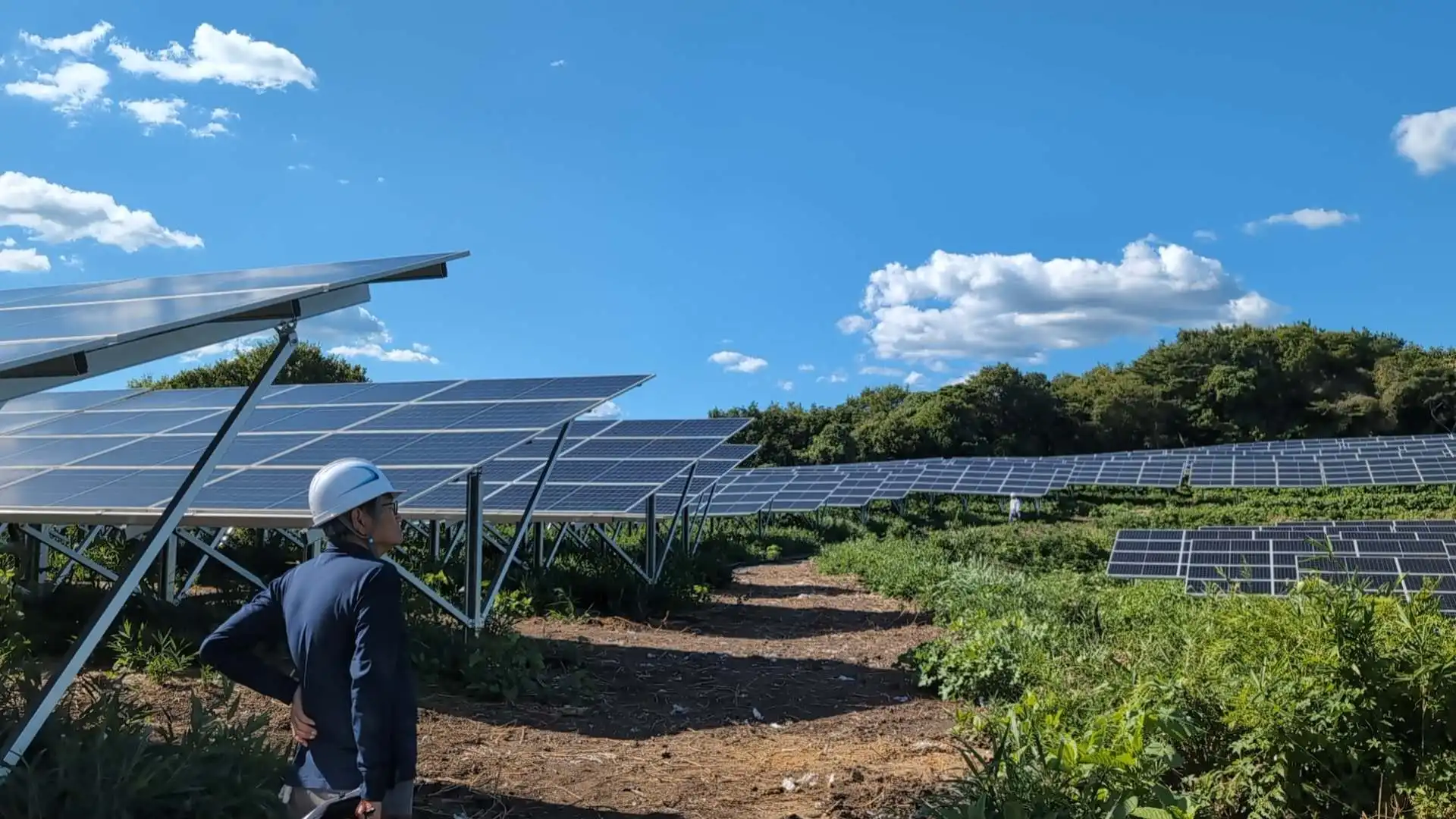
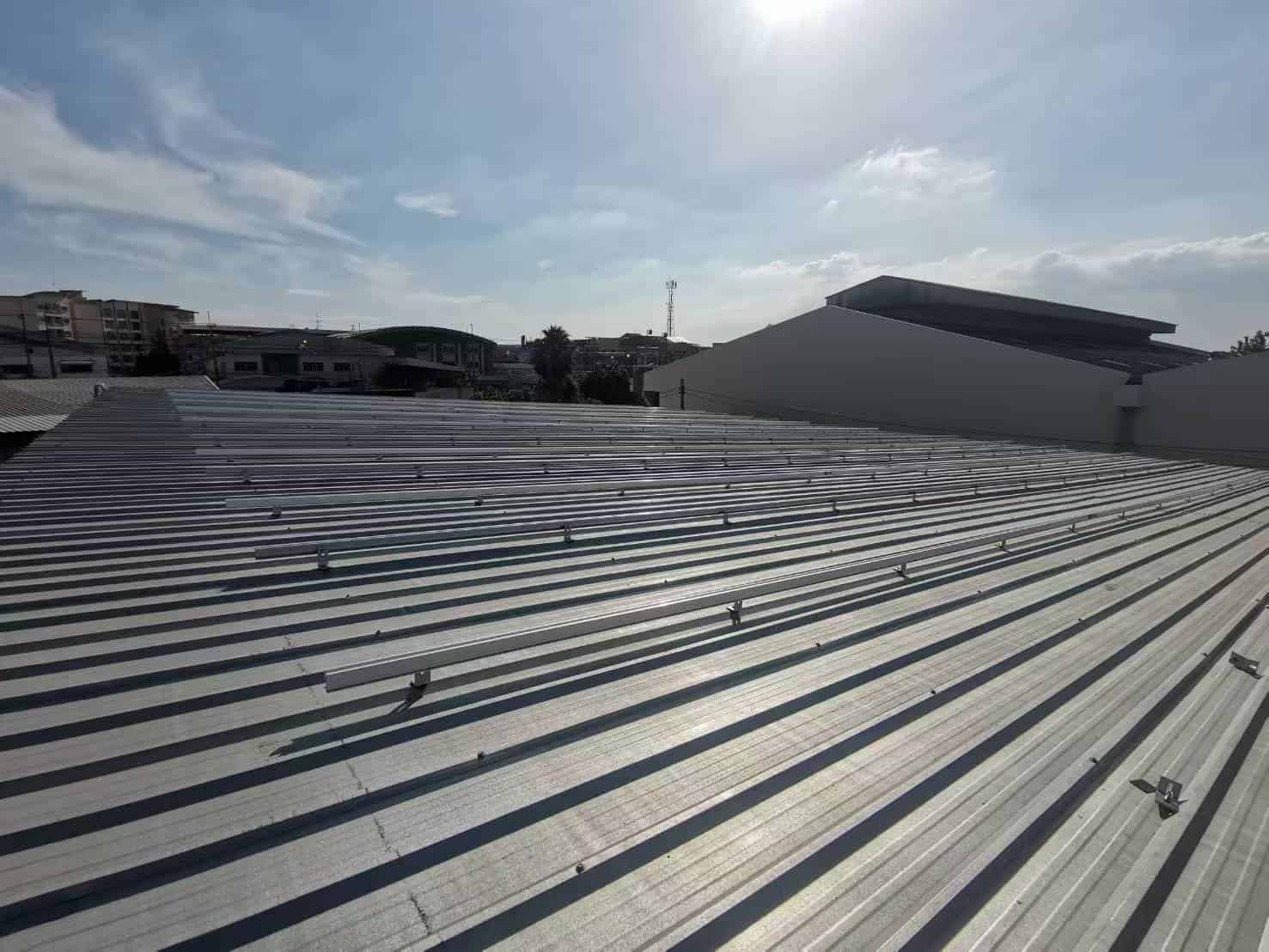
Let’s be honest: when most people think about solar, they’re dreaming of high-efficiency N-type modules or the latest smart inverters. But here at SR Solar, we know a secret that can make or break your commercial project—it’s all about what’s happening under the panels. Choosing the right Solar PV mounting foundation types is the difference between a project that finishes under budget and one that gets stuck in the mud (literally).
If you’re a B2B client, a developer, or an EPC contractor, you know that site conditions are never “perfect.” You’ve got slopes, rocky soil, or that dreaded soft clay that feels like pudding. Understanding your foundation options isn’t just technical trivia; it’s a strategic business decision that affects your labor costs and long-term structural integrity.

Why the Foundation is the “Silent Partner” of Your Solar ROI
Think of your solar foundation as the roots of a tree. If the roots are shallow or mismatched for the soil, the first big storm is going to cause trouble. In the solar world, “trouble” means twisted racking, micro-cracks in your modules, or worse—a complete structural failure. When we talk about Solar PV mounting foundation types, we’re looking at how to anchor your investment against 120 mph winds and heavy snow loads.
Matching Soil Conditions with Foundation Strength
Not all dirt is created equal. Before you even look at a catalog, you need to know what you’re standing on. Is it hard-packed gravel? Is it a “brownfield” with contaminated soil you can’t dig into? Or is it a soft, sandy coastal site?
At SR Solar, we always suggest a geotechnical report first. If the soil has low friction, a standard pile might slip. If it’s too rocky, you might break your equipment trying to force a screw in. Matching the foundation to the soil class is the first step in ensuring your Solar PV mounting foundation types actually do their job for the next 25 years.
Foundation Type 1: The Versatile World of Ground Screws (Piles)
In recent years, ground screws (or helical piles) have become the “darling” of the solar industry. Why? Because they are incredibly fast. We’re talking about a “no-dig” solution that bypasses the mess of heavy excavation. For a large-scale project, speed is money.
Regular vs. Adjustable Ground Screws: When to Use Which?
This is where things get interesting for design engineers. A regular ground screw is your go-to for flat, stable land. If your site is as level as a parking lot, these are cost-effective and straightforward. But let’s be real—how often is a 5MW site perfectly flat?
That’s where adjustable ground screws come into play. These are a lifesaver when the terrain is a bit “bumpy” or has a North-South slope. By using an adjustable head, you can compensate for height differences without having to level the entire field. It saves you a fortune in civil engineering and land grading costs.
Navigating Slopes: The Magic of Adjustable Ground Screws
If your land has a slope, you need to measure the exact degree of inclination before ordering your kit. If the North-South tilt is significant, a standard fixed mount will leave your panels looking like a roller coaster. SR Solar often recommends adjustable piles for anything over a few degrees of variance. It allows the installers to “tune” the height of each post so the racking sits perfectly level, ensuring the solar modules catch the sun at the exact angle your PVsyst report promised.
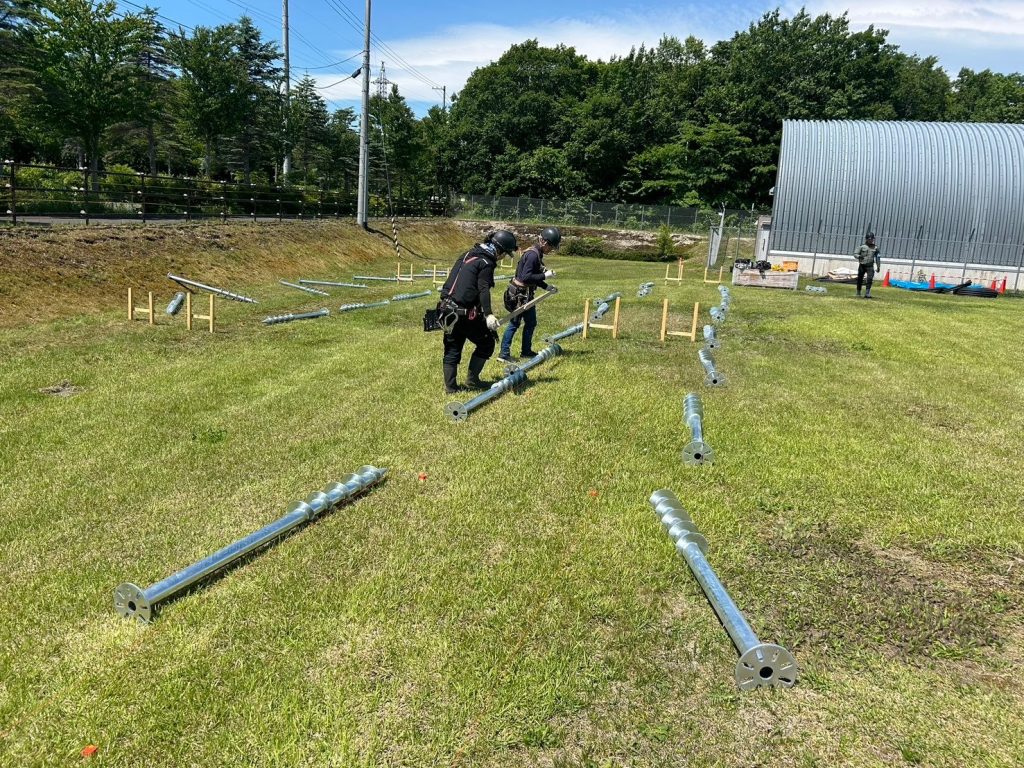
A Breakdown of Ground Screw Variations for Specific Terrains
There isn’t just one type of “screw.” Depending on the pull-out force required and the soil density, we use different “blades” or shapes. It’s like picking the right drill bit for a DIY project at home—the wrong one just won’t grip.
- Two-Blade & Four-Blade Screws: These provide extra surface area. Think of them like “wings” that grab onto the soil, making them perfect for slightly looser ground where a smooth pile would just slide out.
- Double Flange Piles: These offer extra stability at the connection point between the pile and the racking.
- H-Beam & U-Shaped Piles: Common in utility-scale projects where you’re ramming the steel directly into firm soil.
- Several-Shape Piles: A unique profile that offers high lateral resistance.
Foundation Type 2: The Rock-Solid Reliability of Concrete Bases
Despite the speed of screws, concrete is still the “Old Faithful” of Solar PV mounting foundation types. It is the ultimate heavy-duty solution. If you’re building on a landfill where you can’t penetrate the ground, or in an area with extremely soft soil where piles won’t “bite,” concrete is your best friend.
Pre-cast vs. Cast-in-Place: Managing the Installation Workflow
You have two main ways to go about this. You can pour the concrete directly into holes on-site (Cast-in-Place), or you can have blocks delivered (Pre-cast). Pre-cast is great for quality control, but man, those blocks are heavy and expensive to ship! On the other hand, pouring on-site requires a concrete truck and a lot of patience while the stuff cures.
The Anchor Debate: Pre-embedded Bolts vs. Expansion & Chemical Bolts
Here is a pro-tip from the SR Solar team: always try to use pre-embedded bolts (地脚螺栓). You set them into the wet concrete, and once it hardens, your base is rock solid. But we know how it goes—sometimes the crew forgets, or the placement is slightly off.
If you find yourself with a naked concrete block, don’t panic. You can use expansion bolts or chemical bolts. Chemical bolts are particularly impressive; they use a high-strength resin to bond the steel to the concrete. They’re a bit more expensive, but they offer incredible “hold” and are much more forgiving if your drilling isn’t 100% precise.
The Great Debate: Ground Screws vs. Concrete Foundations
So, which one wins? If you ask us at SR Solar, it’s a “horses for courses” situation. However, in the B2B world, we see a massive shift toward ground screws for 80% of projects. Let’s look at why.
Speed and Cost: Why Ground Screws Often Win the Race
When you use ground screws, you don’t wait for “curing.” You drive the screw in, and you can start mounting the racking five minutes later. A skilled crew with a hydraulic pile driver can install up to 200 piles per day. Compare that to concrete, where you have to dig, frame, pour, and then wait 7 to 14 days for the concrete to reach full strength. For a developer paying interest on a construction loan, those two weeks of waiting are expensive.
Environmental Impact and Reusability: The Green Factor
Here is something often overlooked: what happens in 25 years when the project is decommissioned? If you have 5,000 concrete blocks in a field, you have a massive waste problem. But ground screws? You just unscrew them. The land goes back to exactly how it was, and the steel can be recycled or even reused. It’s a much more “circular” approach to renewable energy.
Final Verdict: Which Foundation Should You Choose for Your Site?
Choosing between these Solar PV mounting foundation types comes down to three things: your soil, your slope, and your schedule.
- Choose Ground Screws if: You have firm soil, a tight deadline, and want to keep labor costs low. Use adjustable screws if your land isn’t perfectly flat.
- Choose Concrete if: Your soil is incredibly soft (like mud), you’re working on a capped landfill, or you’re in a region with extreme “heaving” soil that would push piles out of the ground.
At SR Solar, we’ve seen it all—from rocky hillsides to swampy plains. We believe that a foundation is only as good as the engineering behind it. Don’t cut corners on the base, or you’ll find your “green” investment turning into a “red” line on your balance sheet.
Summary
Selecting the right foundation for a ground-mount solar project requires balancing site topography, soil density, and project timelines. While ground screws offer unmatched speed and environmental benefits—especially adjustable types for sloped terrain—concrete remains the gold standard for stability in exceptionally poor soil conditions. By matching the foundation to the specific geotechnical needs of the site, B2B clients can ensure structural longevity and maximize their return on investment.
FAQ
1. Can ground screws be used in rocky soil?
Yes, but you may need a pre-drilling step or heavy-duty “H-Beam” piles. In very dense rock, special “rock bolts” or concrete might actually be more cost-effective than wearing out your pile-driving equipment.
2. How do I know if I need an adjustable ground screw instead of a regular one?
If your site has a North-South slope or significant “undulations” (meaning the ground isn’t a flat plane), adjustable screws allow you to keep the racking level without expensive land leveling.
3. Is concrete always more expensive than ground screws?
Usually, yes, when you factor in labor. While raw concrete might seem cheap, the cost of excavation, rebar, forms, and the long “waiting time” for curing usually makes it the more expensive option overall.
4. What is the lifespan of a galvanized steel ground screw?
High-quality hot-dip galvanized screws (like those we use at SR Solar) are designed to last 25 to 30 years, matching the typical lifespan of the solar modules themselves.
5. Can I install solar foundations in the winter?
Ground screws are great for winter because they can penetrate frozen ground. Concrete, however, is much trickier to pour in freezing temperatures as it requires special additives or blankets to cure properly.