Let’s be honest—if you’re an EPC or a PV developer working in Peru right now, you know the energy landscape is shifting fast. We aren’t just talking about putting blue panels on a flat roof anymore. From the lush agricultural valleys of Ica to the booming commercial districts in Lima, everyone is asking: “How do we make our structures work harder?” This is where the Glass House Photovoltaic System comes in. It’s not just a trend; it’s a sophisticated marriage of architecture and energy that’s perfectly suited for the “Land of the Sun.” At SR Solar, we’ve spent years perfecting the mounting tech that keeps these glass giants standing, and today, I want to walk you through why this is the high-yield opportunity you’ve been waiting for.
Why Glass House Photovoltaic Systems are the Future of Peru’s Infrastructure
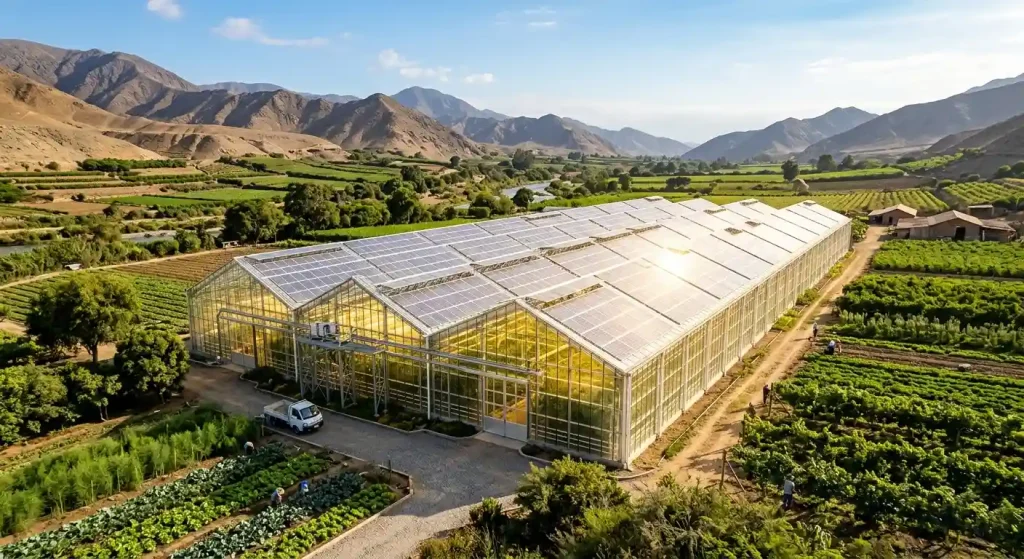
When we talk about a Glass House Photovoltaic System, we’re looking at a solution that solves three problems at once: land scarcity, rising electricity costs, and the need for climate-controlled spaces. Think about it. Peru is a global powerhouse for high-value agricultural exports like blueberries and grapes. These crops need protection, but they also sit under some of the highest solar irradiance levels on the planet. Why build a standard greenhouse when you can build a power plant that grows food?
The beauty of a Glass House Photovoltaic System lies in its dual-purpose DNA. For a commercial developer, it’s a way to turn a glass atrium into a green energy generator without losing that sleek, airy aesthetic. For an Independent Power Producer (IPP), it’s about maximizing the ROI of every square meter. At SR, we see these systems as the ultimate expression of Building Integrated Photovoltaics (BIPV). We’re not just slapping modules on top; we’re integrating the energy generation into the very “skin” of the building.
The Engineering Challenge: Building for Peru’s Extreme Geography
Now, I don’t need to tell you that Peru isn’t exactly a “one-size-fits-all” environment. You’ve got the humid, salty air of the Pacific coast, the thin air and intense UV of the Andes, and the occasional seismic shake that keeps every structural engineer on their toes. A Glass House Photovoltaic System in Peru has to be tough. You can’t just use standard off-the-shelf rails and hope for the best. If you do, you’re looking at a maintenance nightmare within five years.
Taming the Coastal Winds and Salt Spray
If your project is near Lima, Paracas, or Trujillo, your biggest enemy isn’t just the wind—it’s the salt. Salt-spray corrosion can eat through low-grade metal faster than you’d believe. That’s why our Glass House Photovoltaic System mounting frames are treated with a 25+μm anodized coating. We don’t cut corners here. We’ve designed these systems to withstand wind loads of up to 216 km/h. When those coastal gusts come screaming off the ocean, your glass structure stays rooted, and your panels stay secure. It’s about giving your clients that “sleep-well-at-night” kind of structural security.
High-Altitude Resilience in the Andes
Moving up into the highlands, the challenges change. The UV intensity is off the charts, and the temperature fluctuations between day and night can cause significant thermal expansion. A poorly designed Glass House Photovoltaic System will crack glass or pop fasteners under these stresses. SR Solar uses high-strength AL6005-T5 Aluminum and SUS304 stainless steel precisely because they handle these thermal cycles with grace. We’ve done the load calculations for the “Technical File” so you don’t have to. We ensure the structural integrity of the glass house is never compromised by the weight or wind-drag of the PV modules.
The Science of Light: Balancing Energy Yield and Transmittance
Here is where it gets interesting for the B2B sector, especially in Agrivoltaics. One of the most common questions I get is: “Won’t the solar panels kill my plants?” or “Will it be too dark inside the showroom?” The answer is all in the design of the Glass House Photovoltaic System. We aren’t building a blackout curtain; we’re building a light filter.
Optimizing Visible Light Transmittance (VLT) for Agriculture
Different crops have different “sweet spots” for light. Grapes might love the full sun, but certain berries appreciate a bit of shade during the harsh Peruvian midday. Our mounting solutions allow for customized shading rates. By adjusting the spacing and angles of the modules within the Glass House Photovoltaic System, we can dial in the exact Visible Light Transmittance (VLT) your project requires. It’s a bespoke approach. We work with your design team to ensure that the “microclimate” inside the glass house is exactly what the agronomist ordered, while the “macro-output” of the solar array keeps the accountants happy.
Bifacial Gains: Making the Most of Reflected Light
If you’re using bifacial modules—which, let’s be honest, is the smart move in 2026—a Glass House Photovoltaic System is a goldmine. The interior floors of these structures are often light-colored or reflective. This creates a high-albedo environment where the backside of your panels can soak up all that reflected light. At SR Solar, our rail designs are “bifacial-friendly,” meaning we minimize shading on the back of the module. Why leave 10-15% extra energy on the table? We make sure your mounting system helps you harvest every single photon.
The SR Solar Advantage: Structural Integrity Meets Easy Install
As an EPC, you know that the “soft costs” of labor can make or break your margins. If your team is spending hours fumbling with loose nuts and bolts on a hot roof in Piura, you’re losing money. We’ve designed our Glass House Photovoltaic System to be as “plug-and-play” as humanly possible.
AL6005-T5 Aluminum: The Backbone of Our Glass House System
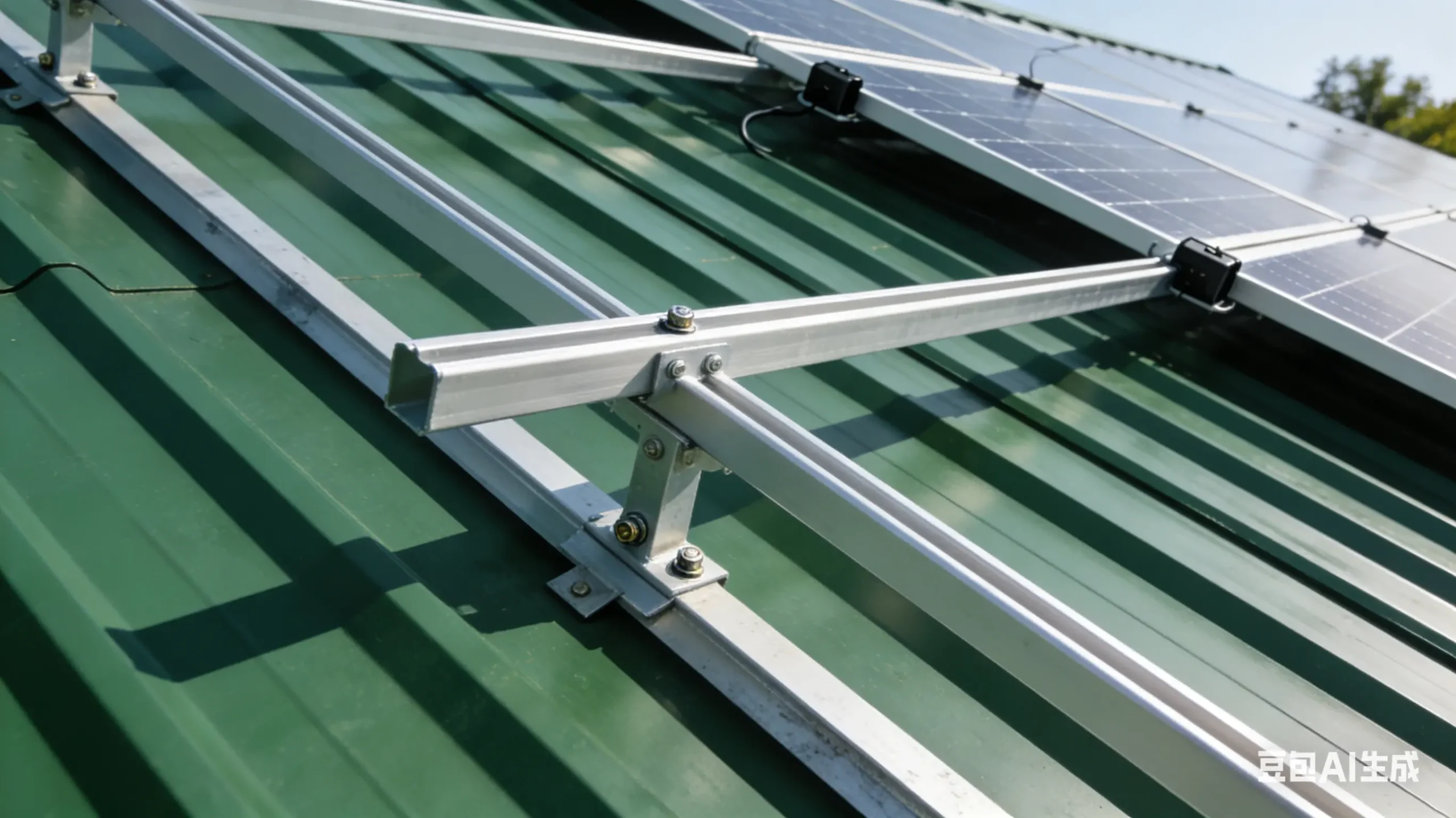
Why do we insist on AL6005-T5? Because it’s the gold standard for strength-to-weight ratio. In a Glass House Photovoltaic System, you want to keep the dead load on the glass-supporting rafters as low as possible without sacrificing stiffness. This alloy allows us to create sleek, low-profile rails that can span longer distances. This means fewer attachment points, fewer penetrations, and a much faster install. Plus, it looks great. Let’s be real—B2B clients care about the “tech-forward” look of their facilities, and our silver-anodized finish delivers exactly that.
Cutting Labor Costs with Pre-Assembled Precision
We’ve all been on those jobs where a box of tiny components goes missing or arrives half-empty. At SR Solar, we pre-assemble as much as we can in the factory. Our clamps and rail connectors arrive at your site in Peru ready to go. Our partners tell us this reduces on-site labor time by about 30% to 40%. In a world where skilled labor is getting harder to find and more expensive, that efficiency is a massive competitive advantage when you’re bidding on large-scale glass house projects.
Navigating Peruvian Regulations and Technical Files
Getting a project approved by SENACE or local municipalities in Peru can be a bureaucratic hurdle. They want to see the math. They want to know that your Glass House Photovoltaic System isn’t going to turn into a sail during a windstorm. This is where SR Solar acts as your back-office engineering team. We provide the full technical documentation—structural calculation reports, material certifications, and wind tunnel test data. When you submit your “Technical File,” you’re submitting a document backed by international standards (ISO/CE/AS/NZS). It smooths the path to permits and gives your investors the confidence they need to sign off on the Capex.
B2B Partnership: How SR Solar Empowers EPCs and Developers
At the end of the day, SR Solar isn’t just a hardware supplier. We’re your structural partner. Whether you’re a PV distributor looking for a reliable stock of Glass House Photovoltaic System components or a system integrator tackling a complex 5MW commercial greenhouse, we’ve got your back.
We offer:
- Customized Layouts: Send us your CAD drawings, and our engineers will design the most efficient mounting layout for your specific terrain.
- Scalability: From small pilot projects to massive industrial glass complexes, our supply chain is built to deliver on time, every time.
- On-Site Support: We don’t just ship and forget. If your team has questions during the first few days of the install, we’re just a call (or a WhatsApp) away.
Conclusion: Building a Greener Peru, One Glass House at a Time
The shift toward a Glass House Photovoltaic System represents a smarter, more integrated way of thinking about energy in Peru. By combining the country’s agricultural heritage with cutting-edge BIPV technology, we are creating structures that are sustainable, profitable, and incredibly resilient. At SR Solar, we are proud to provide the “bones” for these projects. We know that behind every great solar array is a mounting system that was designed with care, engineered with precision, and built to last for decades. Let’s build something amazing together—something that powers the future of Peru.
Frequently Asked Questions (FAQs)
1. Can the SR Solar Glass House Photovoltaic System be retrofitted onto existing greenhouses?
Absolutely! While it’s easiest to integrate during the design phase, our flexible mounting rails can often be adapted to existing steel or aluminum greenhouse frames. We just need to perform a quick structural audit to ensure the existing “skeleton” can handle the additional load.
2. How do you ensure the glass doesn’t crack under the weight of the PV modules?
Precision is everything. Our Glass House Photovoltaic System uses specialized EPDM rubber gaskets and “soft-touch” clamping tech that distributes pressure evenly across the glass surface. We also calculate the thermal expansion coefficients to ensure the metal and glass can move independently without creating stress points.
3. What is the typical lifespan of the mounting hardware in coastal Peru?
We design for a 25-year service life. Thanks to our 25+μm anodized aluminum and stainless steel components, the system is highly resistant to the salt-laden air of regions like Lima or Ica. We back this up with a rigorous warranty to protect your investment.
4. Does the system require a lot of maintenance?
Very little. Because we use high-grade, corrosion-resistant materials, the structural components are mostly “set and forget.” We recommend a simple annual check of the clamp torque and a quick visual inspection, usually done at the same time the panels are cleaned.
5. How does SR Solar help with the ROI of a glass house project?
We help in two ways: by reducing your upfront “soft costs” through fast, pre-assembled installation and by maximizing your energy yield through optimized tilt angles and bifacial-friendly designs. A faster install and a higher yield mean your project hits the “break-even” point much sooner.