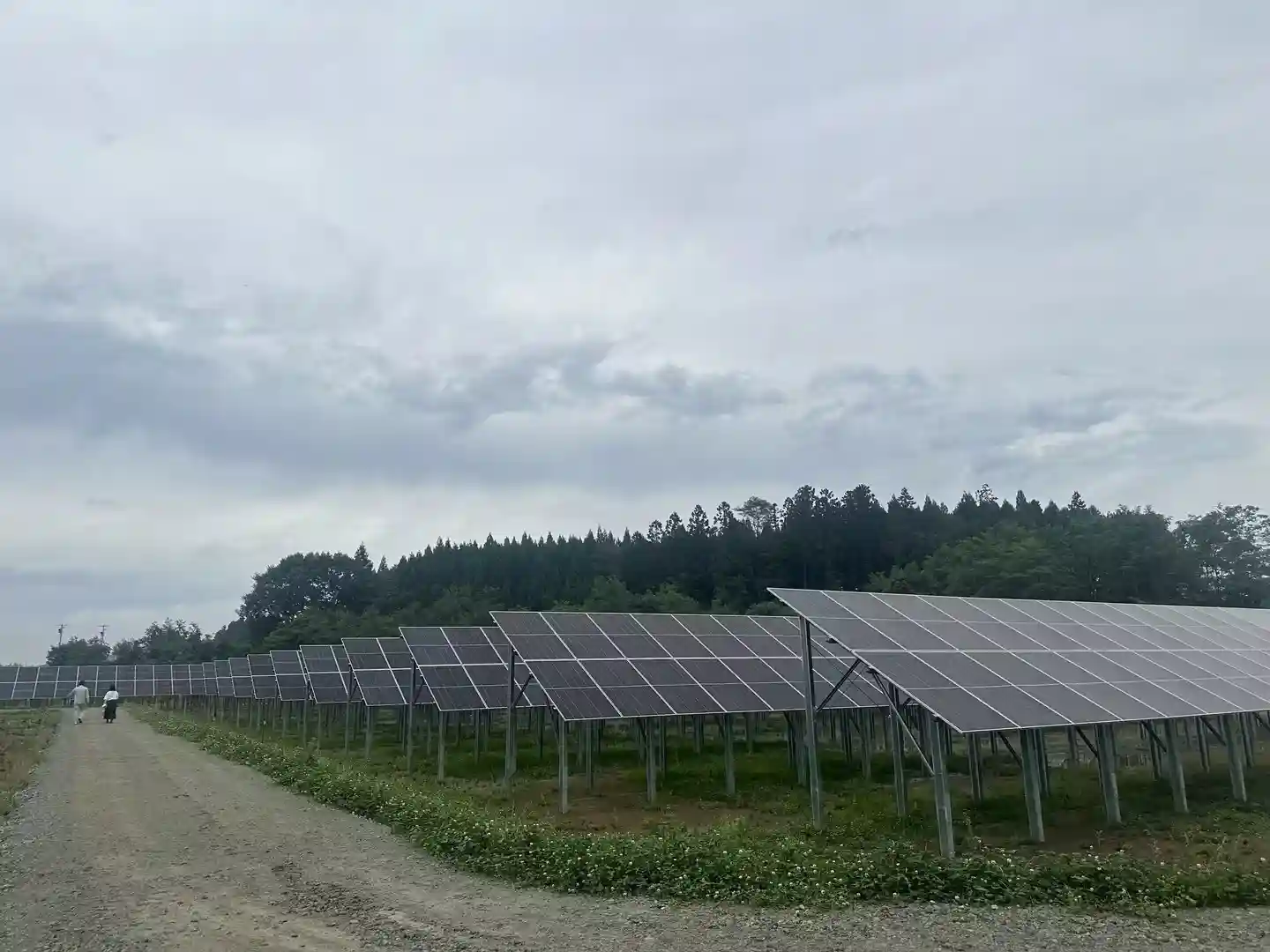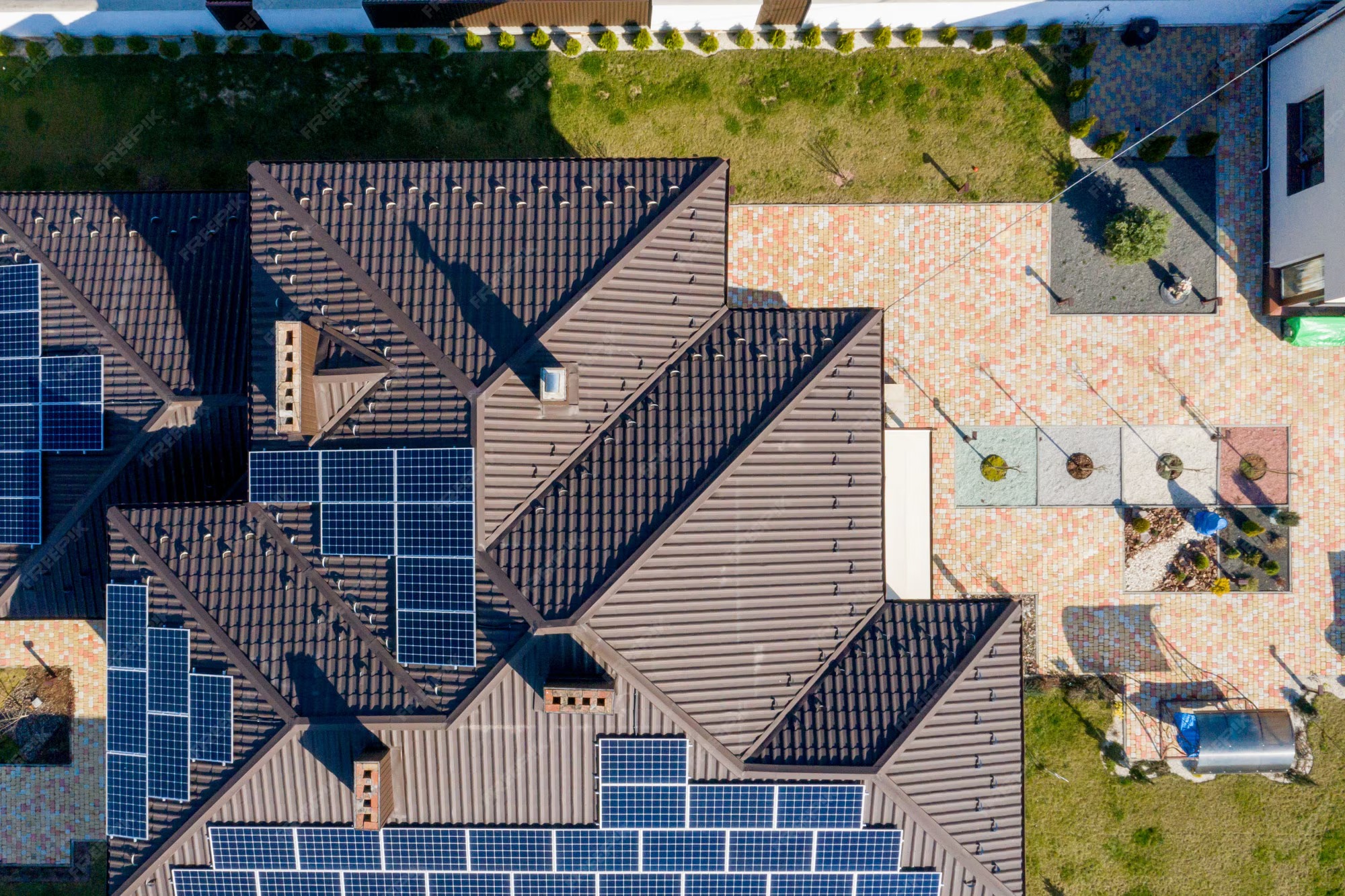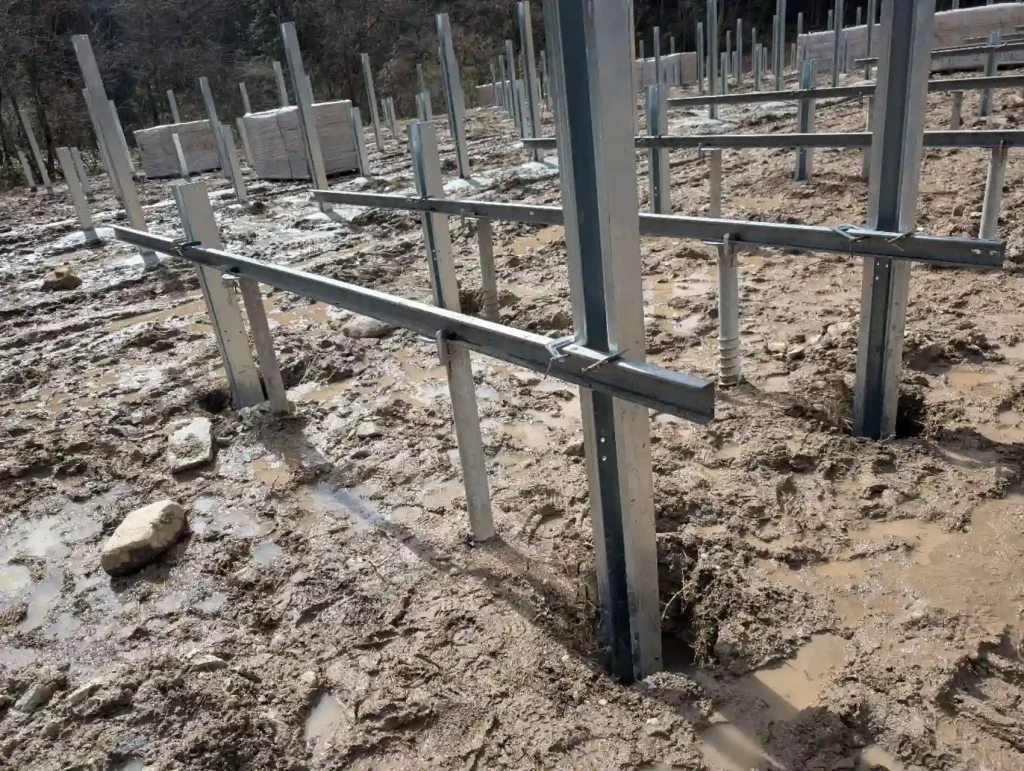
If you’ve ever walked through a utility-scale solar farm, you’ve seen it everywhere—that dull, silver-grey finish on the mounting rails and ground screws. That’s galvanized steel, and quite frankly, it’s the reason those panels stay standing for 25 to 30 years without the structure turning into a pile of rust. When we talk about solar ROI, we often focus on cell efficiency or inverter clipping, but at SR Solar, we know that if the “bones” of the system fail, nothing else matters. Understanding what this material is and why we use it isn’t just for metallurgy nerds; it’s for anyone who wants to ensure their investment doesn’t flake away after the first rainy season.
Defining Galvanized Steel: More Than Just a Zinc Bath
At its simplest, galvanized steel is carbon steel that has been put through a chemical process to shield it from corrosion. Think of it as a permanent, heavy-duty armor. We coat the steel in layers of zinc oxide because zinc is a much more “passive” metal than iron; it doesn’t react with oxygen and moisture nearly as aggressively as the iron in steel does. This results in a finish that isn’t just rust-resistant but is also incredibly hard to scratch.
How the Molecular Bond Changes Everything
A common mistake I see is people thinking that galvanizing is just like painting. It’s not. In the world of galvanized steel, we are looking at a metallurgical bond. When the steel hits the molten zinc, they actually form a series of zinc-iron alloy layers. These layers are harder than the base steel itself. It’s like the difference between putting on a coat and having a new layer of skin—one can be peeled off, while the other is part of you.
The “Secret Sauce”: How Hot-Dipped Galvanization Actually Works
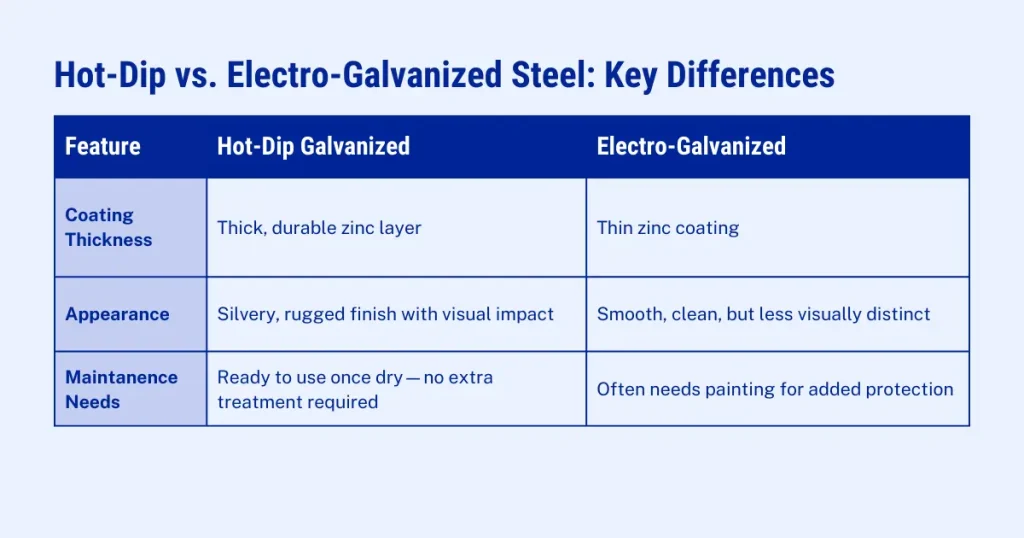
The gold standard for the solar industry—and what we prioritize at SR Solar—is hot-dipped galvanization. This is the process where we submerge fabricated steel parts into a vat of molten zinc at temperatures around 450°C. It’s a messy, intense process, but it ensures that every nook, cranny, and internal surface of a ground screw or mounting rail is completely sealed.
Continuous Sheet vs. Batch Hot-Dipping
You might hear about “continuous sheet galvanizing” in the industry. This is where a flat sheet of steel is pulled through a zinc bath at high speeds. It’s great for products that need to be bent or formed later, like thin brackets, because the coating is flexible. However, for heavy-duty structural components, we often prefer batch dipping after the part is shaped. This ensures the edges where the steel was cut or drilled are also protected, leaving no “weak spots” for rust to take hold.
Electrogalvanizing: Why Thinner Isn’t Always Better
Then there’s electrogalvanizing, which uses electricity to bond a thin layer of zinc to the steel. It looks beautiful—smooth and shiny—but in my experience on-site, it’s usually not enough for outdoor solar projects. The layer is simply too thin to survive 25 years of salt spray or humid soil. When you’re choosing galvanized steel for a PV system, “shiny” often means “temporary,” whereas the rugged, mottled look of hot-dipping means “durable.”
The Anatomy of Protection: The Sacrificial Layer Explained
Here is the coolest part about galvanized steel: it’s literally willing to “die” for the steel. We call this a sacrificial layer. Because zinc is more chemically active than iron, if the surface gets scratched—say, by a technician’s tool or a flying rock—the surrounding zinc will corrode first to protect the exposed steel. It’s like a built-in healing mechanism.
The Patina Effect in Harsh Environments
Over time, the zinc reacts with the atmosphere to form a “patina”—a layer of zinc oxides and carbonates. This isn’t rust; it’s a protective crust. This patina is what gives galvanized steel its long life in high-salinity or industrial areas. Even in areas where the air is thick with salt, the zinc stands its ground, slowing down the oxidation process to a crawl.
Decoding the Specs: Thickness, Mass, and ISO Standards
How do we actually measure the quality of galvanized steel? We don’t just “guess” if there’s enough zinc. We measure it by thickness (microns, μm) or by mass (g/m2). At SR Solar, we follow strict international standards to ensure our products meet the technical demands of global engineering firms.
Breaking Down the SR Solar Coating Thickness Table
Looking at the technical requirements we use, the relationship between the thickness of the steel and the required zinc coating is clear. Take a look at this breakdown:
| Article Thickness (mm) | Local Minimum (μm) | Average Thickness Minimum (μm) | Average Coating Mass Minimum (g/m2) |
| ≤1.5 | 35 | 45 | 320 |
| >1.5 ≤3 | 45 | 55 | 390 |
| >3 ≤6 | 55 | 70 | 550 |
| >6 | 70 | 85 | 600 |
As the steel gets thicker, the zinc layer needs to be beefier. For heavy structural beams over 6mm, we’re looking at an average thickness of 85μm. This isn’t just a random number; it’s the calculated amount of zinc needed to ensure the steel underneath remains untouched by the elements for decades.
Why SR Solar Relies on Galvanized Steel for PV Mounting
Why do we choose this material for our PV mounting systems? Simply put, it’s the most cost-effective way to get high-strength durability. Aluminum is great for rooftops because it’s light, but for ground-mounted systems where you need to fight wind loads and soil pressure, galvanized steel is the undisputed heavyweight champion.
Ground Screws: The Foundation of Heavy-Duty Arrays
Our hot-dipped galvanized ground screws are a prime example. These are driven deep into the earth, where they face moisture, varying pH levels, and abrasive soil. Without a thick, high-quality zinc coating, a ground screw would lose its structural integrity within a decade. By using galvanized steel, we ensure the foundation of your solar array is as solid in year 25 as it was on day one.
Environmental ROI: Maintenance-Free for 70 Years?
One of the most surprising facts about industrial-grade galvanized steel is its lifespan. Under average conditions, a coating that is roughly 100μm thick can last over 70 years without any maintenance. In the solar world, where we generally plan for a 25-year lifecycle, this gives us a massive “safety buffer.” Furthermore, galvanized steel is a sustainable choice—it is 100% recyclable. When a project is finally decommissioned, that steel can be melted down and used again, which is a big win for the circular economy.
Common Questions When Choosing Solar Steel Structures
Are you wondering if galvanized steel is right for your specific site? You aren’t alone. One question we often get is: “Will it rust if I cut it on-site?” The answer is yes, if you don’t treat the cut edge. Even with the sacrificial properties of zinc, we always recommend applying a zinc-rich cold galvanizing spray to any field cuts or drills. This “seals the wound” and maintains the integrity of the system. Another concern is cost—while galvanized steel is more expensive than raw steel, the lack of maintenance costs over 20 years makes it significantly cheaper in the long run.
Final Thoughts: Building for the Next Quarter Century
At the end of the day, galvanized steel is the insurance policy your solar project deserves. It’s a material that works silently, sacrificing itself to keep your structure safe from the relentless march of rust and corrosion. Whether it’s in our ground screws or our mounting frames, SR Solar prioritizes this technical excellence because we know that a solar farm is only as good as the foundation it stands on. When you choose the right galvanization specs, you aren’t just buying metal; you’re buying peace of mind.
FAQs
1. Is galvanized steel the same as stainless steel?
No. Galvanized steel is regular carbon steel coated with a layer of protective zinc. Stainless steel is an alloy that contains chromium throughout its entire chemical makeup. While stainless is even more corrosion-resistant, galvanized steel is much more cost-effective for large-scale structural applications like solar farms.
2. How long does galvanized steel last in coastal environments?
In high-salinity areas, the zinc will corrode faster than in a dry, inland desert. However, even in coastal environments, high-quality hot-dipped galvanized steel can last 20-30 years, though we may recommend a thicker micron coating (like 85μm or more) to account for the salt air.
3. Does the “spangle” or pattern on the steel affect its quality?
The “spangle”—those flower-like crystals you see on the surface—is mostly aesthetic. It’s a result of how the zinc cooled. While it indicates the steel is indeed galvanized, the real quality is measured by the thickness of the coating, not the beauty of the pattern.
4. Can I paint over galvanized steel?
Yes, this is called a “Duplex System.” Painting over galvanized steel provides an extra layer of protection and can extend the lifespan by 1.5 to 2.5 times the sum of the life of both layers. It’s common in highly corrosive industrial zones.
5. Why is the zinc coating measured in grams per square meter (g/m2)?
Because steel parts come in all shapes and sizes, measuring the total weight of the zinc applied over a specific surface area (g/m2) is often more accurate than measuring thickness at a single point. It ensures the entire “article” has received the minimum required protection.