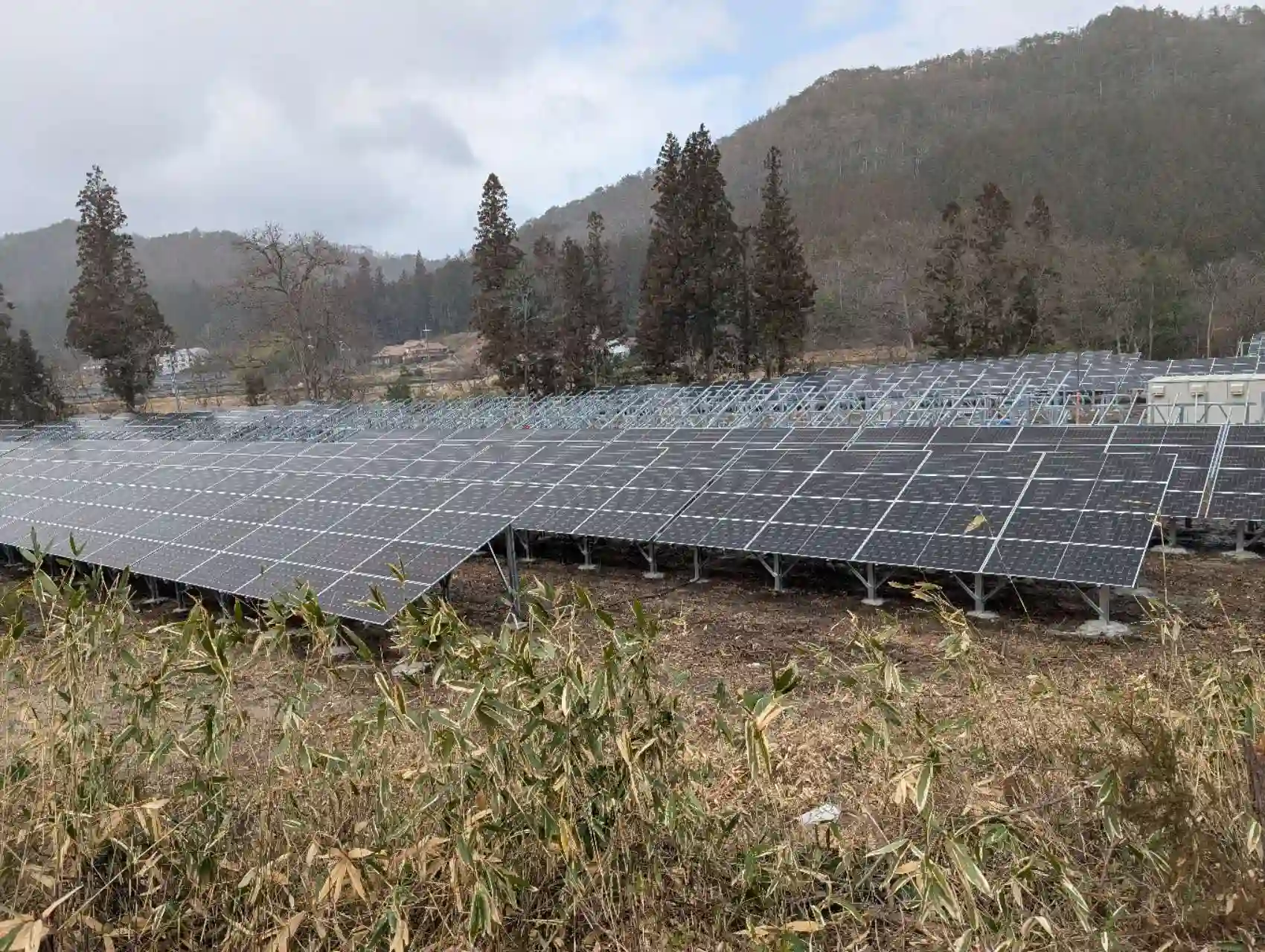
Let’s be honest for a second. When most people look at a massive solar farm, they see the sea of blue or black panels soaking up the sun. They see the high-tech inverters and the buzzing transformers. But you and I? We know better. As EPCs and project developers, we know that the most expensive “cheap” mistake you can make is underestimating the metal skeleton holding it all together. A solar mounting system isn’t just a rack; it is the fundamental insurance policy for the entire asset. If that foundation fails, it doesn’t matter how high-efficiency your modules are—they’re just expensive kites in a windstorm.
At SR Solar, we’ve spent years watching how the right mounting hardware can turn a “maybe” project into a “bankable” success. Think of it like building a house. You wouldn’t put a designer kitchen on a swamp, right? So why would anyone put Tier-1 modules on a flimsy, uncertified mounting structure? High-quality solar mounting systems are the secret sauce to hitting that 25-year design life without the nightmare of constant O&M (Operation and Maintenance) callouts.
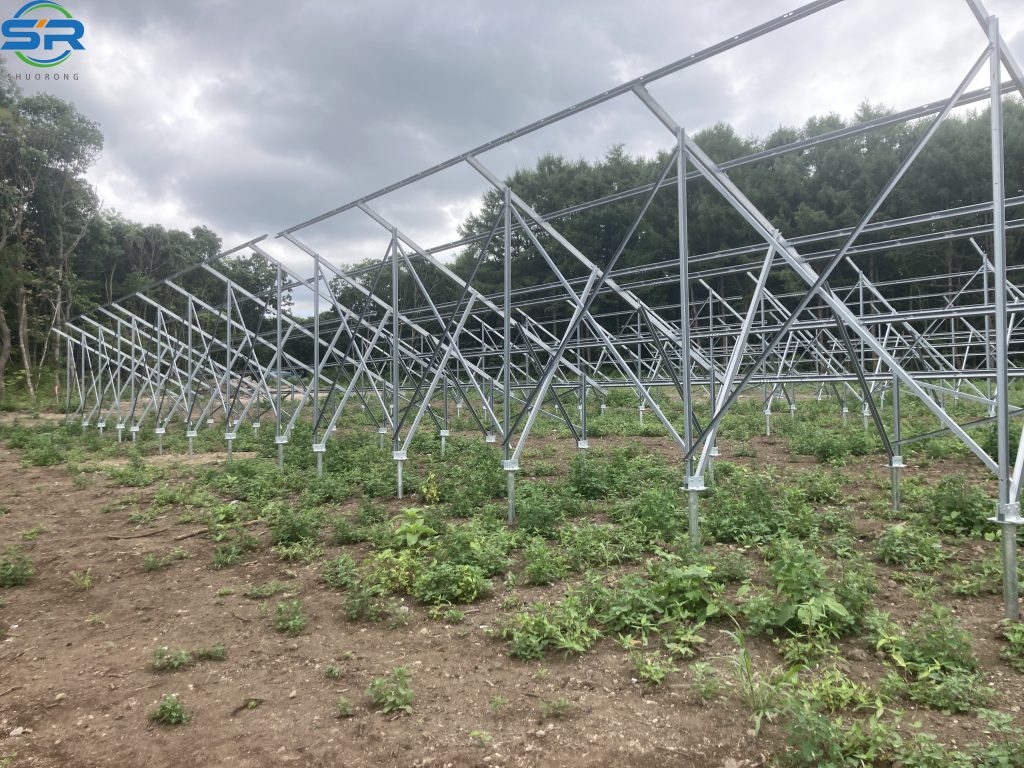
Beyond the Panels: Why the Foundation is Your Real Asset
In the B2B world, we aren’t just selling energy; we are selling a long-term financial instrument. Investors want to see a predictable ROI, and the biggest threat to that predictability is structural failure. I’ve seen projects where the mounting systems were treated as an afterthought to save 2% on the CAPEX. Fast forward three years, and those same developers are spending double what they saved on repairing galvanic corrosion and replacing bent rails.
Why go solar if you aren’t going to do it right from the ground up? A high-quality solar mounting system provides the structural resilience needed to mitigate geotechnical risks. Whether it’s shifting soil or extreme mechanical fatigue from constant wind vibrations, the mounting system is doing the heavy lifting 24/7. It’s the silent guardian of the project’s bankability.
Structural Integrity: Winning the War Against Extreme Weather
Nature is pretty unforgiving, isn’t it? One minute it’s sunny, and the next, you’re dealing with a 150 mph typhoon or three feet of heavy, wet snow. For our partners in coastal areas or high-altitude regions, structural integrity isn’t a “nice-to-have”—it’s survival. We design our systems to handle these extreme loading scenarios by focusing on the physics that others might ignore.
Material Science: Choosing Between AL6005-T5 and Z-A-M Steel
The choice of material is your first line of defense. At SR Solar, we lean heavily on AL6005-T5 Aluminum for its incredible strength-to-weight ratio and natural resistance to the elements. It’s easy to handle on-site but tough as nails once it’s bolted down. For those massive ground-mount projects where cost-per-watt is everything, we often look at ZAM Steel. This isn’t your grandfather’s galvanized steel; it’s a specialized alloy that actually “heals” itself at the cut edges, preventing rust from creeping in and ruining your structure.
Engineering for the “Big One”: Meeting Wind and Snow Load Standards
If you’re building in a typhoon-prone zone like the Philippines or a hurricane-heavy coast in the US, your high-quality solar mounting systems need to be engineered for the worst-case scenario. We don’t just guess; we use computational fluid dynamics and wind-tunnel data to ensure our rails and clamps won’t give an inch when the wind starts howling.
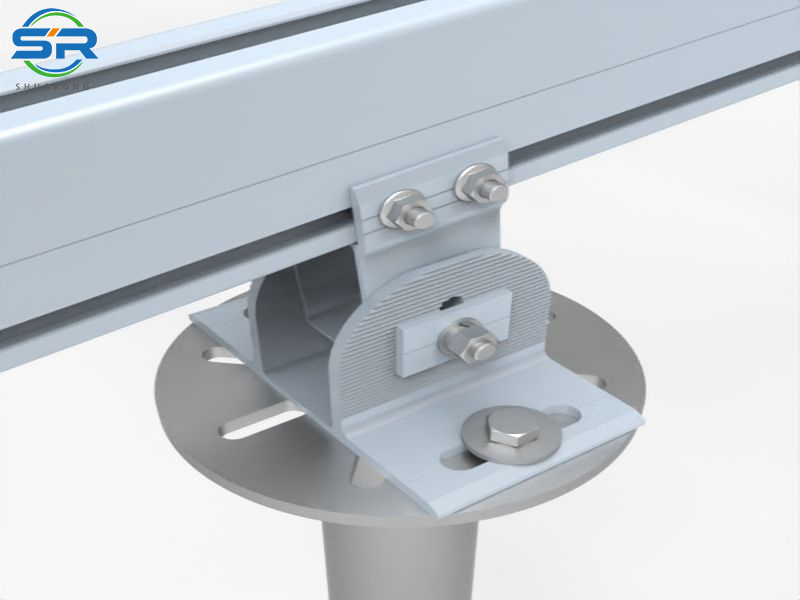
The Hidden Cost Killer: How Design Impacts Your Labor Budget
If you’re running a large-scale project, you know that labor is the most volatile variable in your budget. If a crew is fumbling with a thousand tiny nuts and bolts in the mud, your “soft costs” are going to skyrocket. We’ve all been on those sites where the mounting system feels like a complicated LEGO set with missing instructions. It’s frustrating, and more importantly, it’s expensive.
Click-In Tech and Pre-Assembly: Speeding Up the MW Timeline
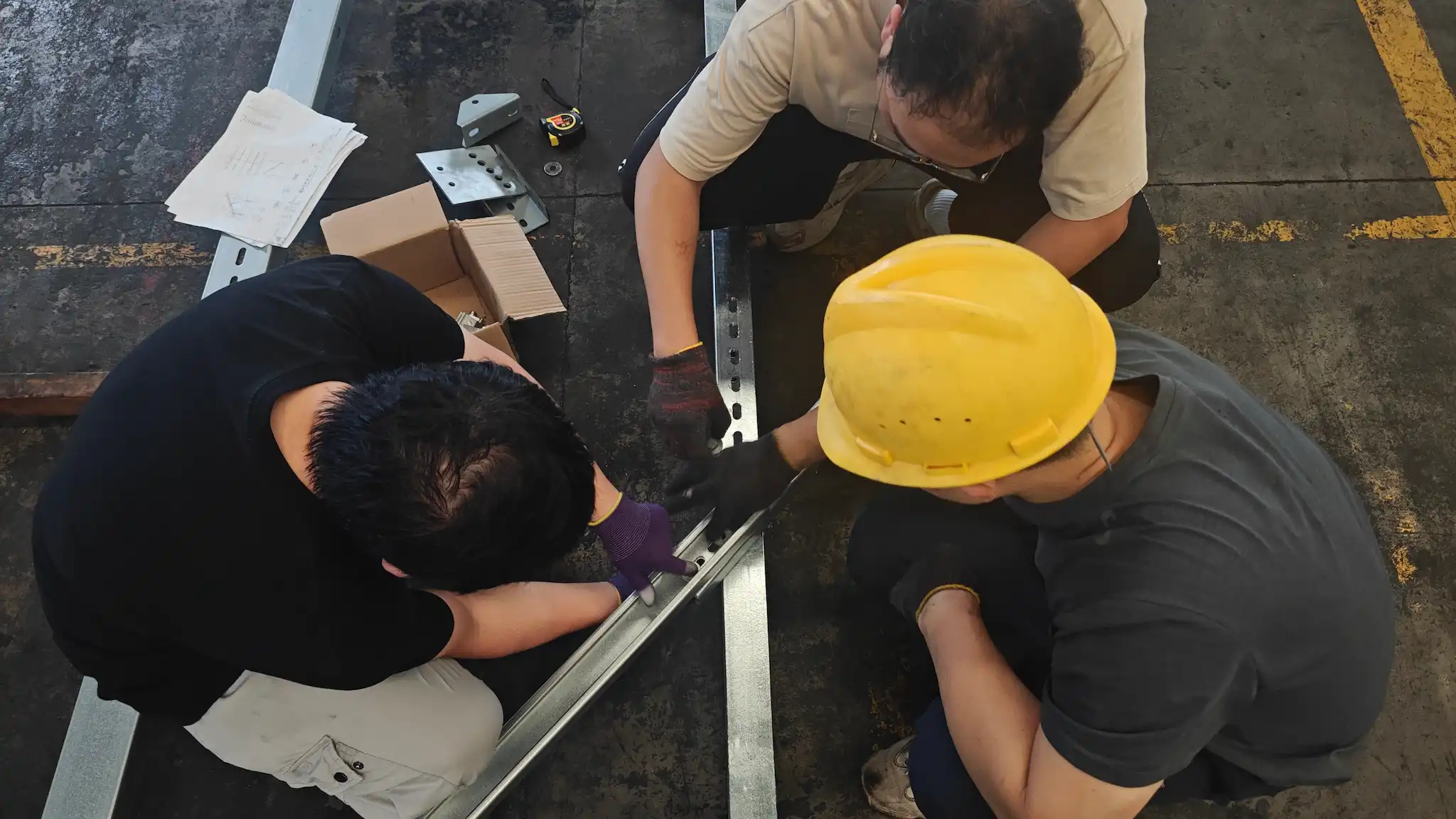
This is where SR Solar really shines. We’ve engineered our mounting solutions to be as “plug-and-play” as possible. By utilizing high-level pre-assembly, we drastically reduce the man-hours required per megawatt. It speeds up the timeline, keeps the EPC on schedule, and—most importantly—keeps the project owner happy.
Terrain Adaptability: Ground Screws vs. Piles for Tough Soils
Not every site is a perfectly flat, paved parking lot. In fact, most aren’t. We deal with rocky hillsides, soft clay, and everything in between. Our ground-mount systems are designed with high tolerance levels. Whether you’re using ground screws for rocky terrain or pile-driven posts for softer earth, our mounting systems can be adjusted on the fly. This means less money spent on civil works and land leveling, which can be a massive drain on project resources.
Navigating the Maze of Global Engineering Compliance
For our international distributors, the regulatory landscape is a minefield. You can’t just ship any metal rack into Australia, Japan, or Europe and expect it to pass inspection. Each region has its own “language” of safety and compliance. If your mounting system doesn’t speak that language, your project is dead in the water before the first panel is even installed.
Bankability and Standards: From AS/NZS 1170 to Eurocode
When we talk about “bankability,” we’re talking about whether an insurance company or a bank will actually back your project. At SR, we ensure our designs align with the world’s most rigorous codes. Whether it’s JIS C 8955 in Japan, AS/NZS 1170 in Australia and New Zealand,ASCE in American, or the EN Eurocode standards, we’ve got the documentation to prove our systems are safe. Why go solar with a supplier who can’t provide the paperwork to back up their claims?
The Power of PE Stamping in Streamlining Your Permits
Permitting can be a slog. To help our EPC partners move faster, we provide verified structural calculation reports and PE (Professional Engineer) stamping where required. This acts as a “fast-pass” through the local building department. When the local inspector sees a stamped, verified report from a reputable engineering firm, the approval process moves from weeks to days.
Customization: Why “One-Size-Fits-All” is a B2B Trap
I’ll let you in on a secret: some suppliers love “standardized” kits because they are easy to stock. But we know that every project is unique. A 50MW farm in the desert needs a different approach than a 100kW rooftop on a factory. When you settle for “standard,” you usually end up overpaying for material you don’t need or, worse, compromising on the structural integrity of the site.
SR Solar’s professional engineering team provides a complete customized process, covering everything from solution design to product manufacturing, all the way to delivery of goods to the port.
Tailored Schemes for Unique Site Topographies
At SR Solar, we act as an extension of your own engineering department. Need to adjust the tilt angle to squeeze an extra 2% of yield out of a tight space? We can do that. Need specific rail lengths to match a new oversized module dimension? We’ve got you. Our high-quality solar mounting systems are optimized for the specific coordinates of your site, taking into account local wind data and terrain. This level of customization is what separates the pros from the amateurs.
Conclusion: Building a 25-Year Legacy with SR Solar
At the end of the day, a solar project is a promise. It’s a promise to provide clean energy and a steady return for decades. To keep that promise, you need a partner who takes the “boring” stuff—the rails, the bolts, the foundations—as seriously as you take the high-tech panels. By choosing high-quality solar mounting systems from SR Solar, you’re not just buying hardware; you’re buying peace of mind, lower OPEX, and a faster path to commissioning. Let’s build something that lasts, shall we?
Frequently Asked Questions (FAQ)
1. Why should I choose aluminum over galvanized steel for a coastal project?
Aluminum, specifically our AL6005-T5, naturally forms a protective oxide layer that resists salt-mist corrosion. While galvanized steel is strong, it can eventually rust if the coating is scratched during installation. In coastal environments, aluminum is almost always the superior choice for longevity.
2. How much time can “pre-assembled” components actually save?
On a typical 1MW project, using SR Solar’s pre-assembled clamps and click-in rails can reduce installation labor by up to 30%. When you multiply that by the hourly rate of a specialized crew, the savings are significant—often more than the cost difference of the hardware itself.
3. Do your mounting systems come with a warranty?
Absolutely. We offer a 10-year warranty on our mounting systems, with a 25-year design life. This aligns with the lifespan of the solar modules, ensuring the whole system ages together without needing major structural overhauls.
4. Can you provide structural reports for specific local building codes?
Yes! We regularly provide calculation reports tailored to various international standards like AS/NZS 1170, JIS C 8955, and Eurocode. If your project requires a specific PE stamp, we can work with you to ensure all engineering documentation meets local requirements.
5. How do you handle “oversized” modules that are becoming common now?
Our R&D team stays ahead of the curve. Our mounting systems are designed to be compatible with the latest large-format, high-power modules (e.g., 600W+). We can customize rail spans and clamp sizes to ensure these larger panels are supported securely against wind-induced vibration.