In the solar world, we spend a lot of time talking about panel wattage and inverter efficiency. But honestly? The mounting structure is the “silent partner” that either makes or breaks the project. At SR Solar, we’ve seen that if the mounting design is flawed, nothing else matters. You can have the best modules on the market, but if they aren’t secured properly, they’re just expensive sails waiting for the next big storm to pick them up.
Designing for a rooftop is a different beast than a ground mount. You’re dealing with a structure that was likely never designed to hold solar in the first place. You have to balance the weight of the system, the wind forces trying to rip it off, and the absolute necessity of keeping the building watertight. It’s a game of millimeters and math.
The Reality of Roof Loads: It’s Not Just About the Panels
When you start a design, you can’t just look at the dead weight of the panels. Most people think, “The roof is strong enough for a few panels,” but they forget about the dynamic loads. We design based on standards like ASCE 7 because they tell us what the “worst day” looks like for that specific building.
We usually aim for a safety factor of at least 1.5. Why? Because hardware ages, wind gusts are unpredictable, and sometimes the installers might miss a rafter by an inch. That extra margin is what keeps the system on the roof when the weather gets ugly.
Calculating for the Worst Day: Wind, Snow, and ASCE 7 Standards
Wind is the biggest enemy. It creates an upward suction—uplift—that is much stronger than most people realize. The corners and edges of a roof are “high-pressure zones” where turbulence is at its peak. If your design treats the whole roof the same, you’re asking for trouble. You need more attachment points at the edges to fight that extra lift. Then you have snow. In the north, a heavy blizzard can add tons of static weight. If your rails aren’t stiff enough, they’ll flex, and you’ll end up with micro-cracks in your solar cells.
Pitched Roofs: How to Avoid the Most Common Failures
Most residential and commercial sloped roofs use a flush-mount setup. It’s popular because it follows the roofline and stays out of the wind. But even here, you can’t just slap the panels down. You need a gap—at least 5 to 10cm—between the roof and the glass. Without that airflow, the panels cook themselves, and your energy yield drops.
The Waterproofing Battle: Why Flashing is Non-Negotiable
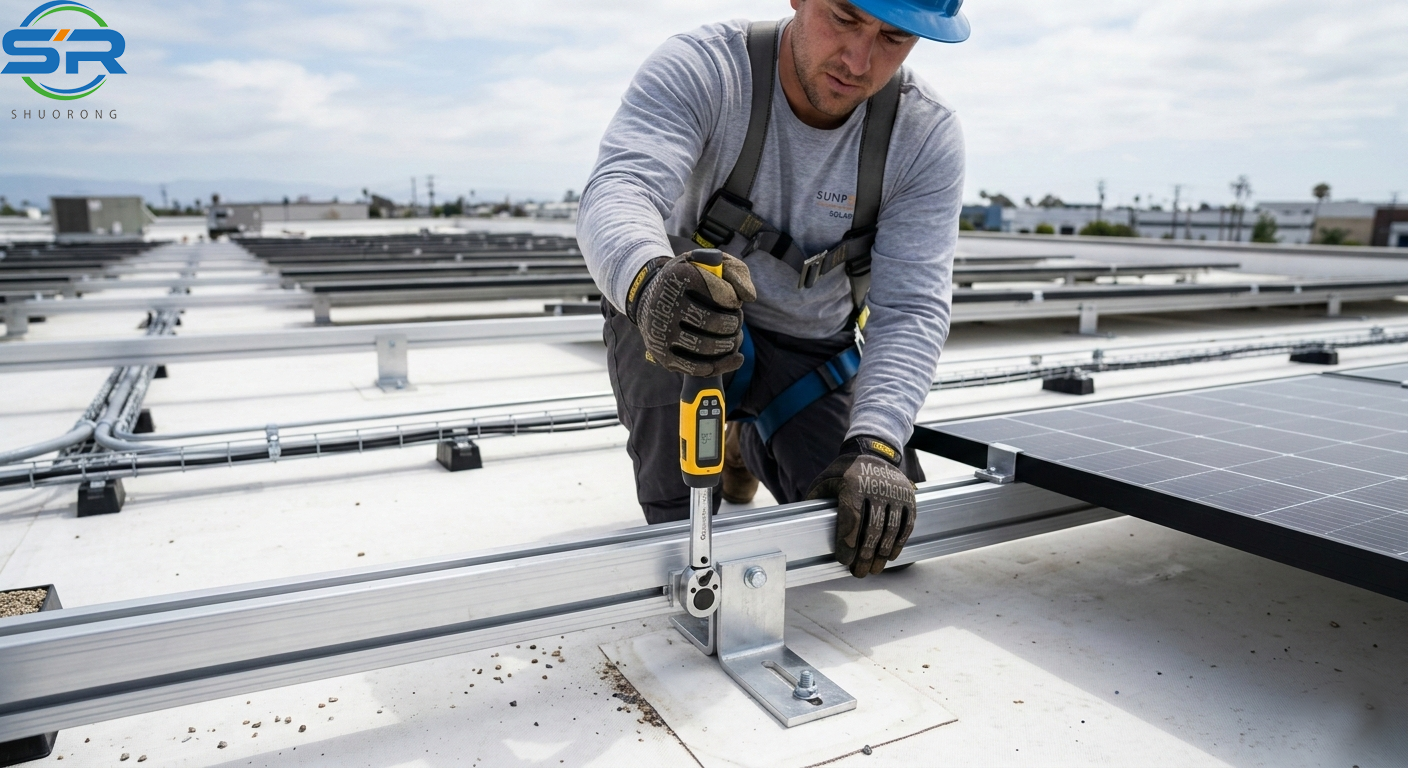
Ask any building owner what they hate most, and they’ll say “a leak.” At SR Solar, we tell our clients: Don’t trust sealant alone. Sealant eventually dries out, cracks, and fails. For a pitched roof, you need proper flashing. You want a metal plate that slides under the shingles and directs water away from the bolt hole. It’s old-school roofing logic, and it’s the only thing that works for 25 years.
Flat Roofs: The Ballast vs. Penetration Debate
Flat roofs give you more freedom with tilt and orientation, but they bring a big question: Ballast or Penetrated? ### Managing Ballast Weight Without Sagging the Roof
Ballasted systems are great because they don’t involve drilling holes. But they are heavy. If you’re not careful, you can exceed the roof’s structural limits, especially on older buildings. One trick we use at SR Solar is adding wind deflectors to the back of the rows. By breaking the wind’s lift, we can actually use less concrete weight to hold the system down. It’s a smarter way to stay within the roof’s “weight budget.”
When to Stop Guessing and Start Anchoring
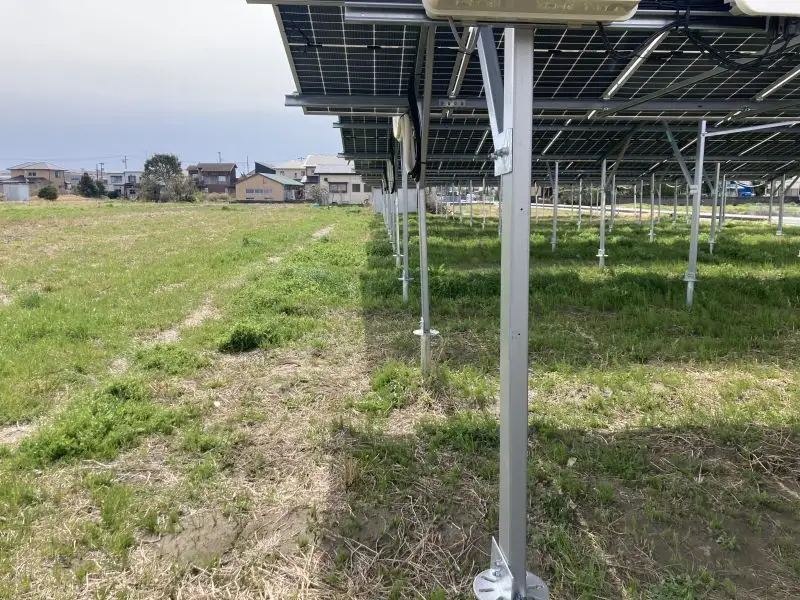
Sometimes, the wind is just too high or the roof is too weak to handle heavy concrete blocks. If you’re in a hurricane zone, you usually have to go with mechanical anchors. This means bolting directly into the building’s structural steel or concrete deck. It’s more work to waterproof, but you can sleep better knowing the array isn’t going anywhere.
The Nuts and Bolts: Hardware and Material Choice
The small stuff matters. We use Anodized Aluminum (6005-T5) for our rails because it’s the best balance of weight and strength. But even the best rails can fail if the hardware is wrong.
Clamping Metal Roofs Without Creating Leaks
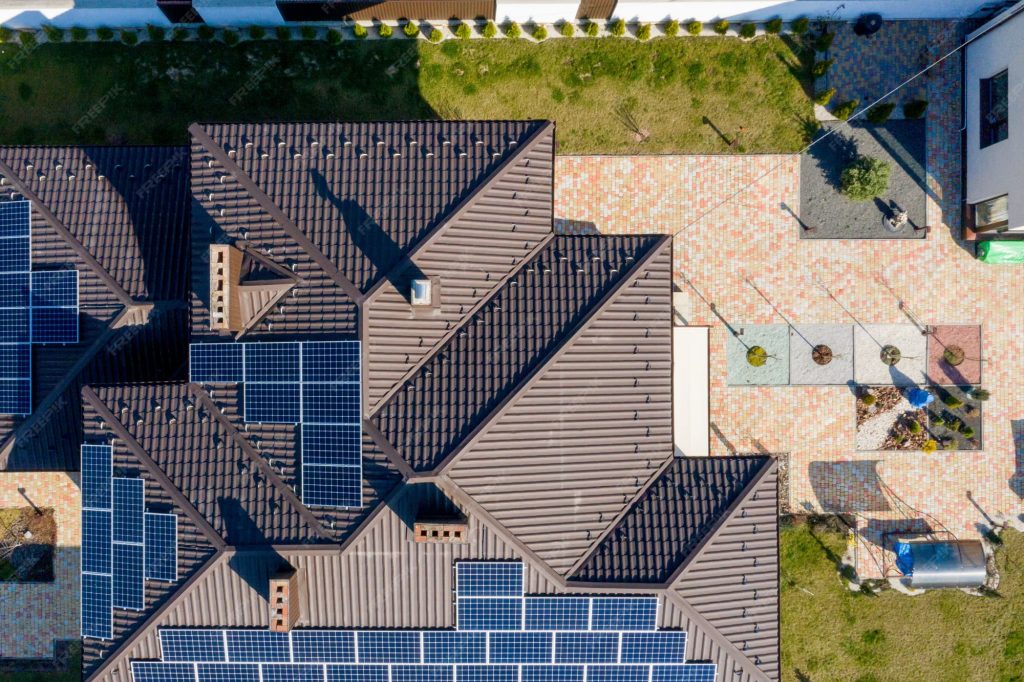
If you have a standing seam metal roof, you’re in luck. You can use clamps that grip the seam without ever piercing the metal. It’s the cleanest install possible. The only trick is making sure the clamp matches the seam profile perfectly. If it’s loose, it’ll vibrate; if it’s too tight, it can damage the roof’s coating.
Dealing with Galvanic Corrosion: Mixing Metals Safely
This is a silent killer. When you put a stainless steel bolt into an aluminum rail in a wet environment, you’ve basically made a battery. Over time, the aluminum will corrode right around the bolt. We use EPDM gaskets and specialized coatings to keep these metals from touching directly. It’s a small detail that prevents a major structural failure ten years down the line.
Environmental Stress: Coastal Salt and Heavy Snow
If your project is near the ocean, you’re in a C5 corrosion zone. The salt mist will eat through standard hardware in no time. For these sites, we upgrade everything—thicker anodization on the aluminum and 316-grade stainless steel for the fasteners. It costs more upfront, but it beats replacing the whole racking system in five years because it rusted out.
Final Thoughts: Building for a 25-Year Lifespan
At the end of the day, rooftop solar mounting structure design is about managing risk. You’re building something that has to sit in the sun, rain, and wind for two and a half decades. Don’t cheap out on the structural assessment, and don’t ignore the local codes. If you get the foundation right, the rest of the project will take care of itself.
FAQ
1. Can roof handle the extra weight?
Only a structural engineer can tell you for sure. Most modern roofs have some “reserve capacity,” but once you add ballasts or heavy snow, you can hit the limit quickly. Always get a roof audit first.
2. Why do panels on flat roofs usually have a low tilt?
While a 30° tilt might catch more sun, it turns the panel into a giant sail. Most flat-roof designs stay between 5° and 15° to keep the wind lift manageable and the ballast weight low.
3. Is it okay to use generic hardware from a hardware store?
Absolutely not. Solar mounting hardware is specifically rated for pull-out strength and corrosion resistance. Using “off-the-shelf” bolts is a recipe for a structural failure and will void your warranty.
4. How do you handle roof expansion and contraction?
Roofs move as they heat up and cool down. We use expansion joints in the rails—basically breaks in the metal—so the mounting system can “flex” with the building without snapping bolts or warping panels.
5. What happens if I miss a rafter during installation?
You have a “shiner”—a screw that’s doing nothing but providing a path for water to enter the building. You have to back it out, seal the hole properly with roofing-grade sealant, and find the structural wood. Never leave a missed attachment unsealed.