Selecting the right solar racking options for roofs is about much more than simply choosing a mounting structure. For EPC contractors, it affects installation efficiency, long term reliability, maintenance requirements, and ultimately the overall success of a solar project.
Although clients often pay more attention to solar panels or inverters, the mounting system is what keeps the entire array securely attached to the roof for decades. A well designed racking system must withstand wind, snow, temperature changes, and continuous exposure to the elements while maintaining reliable waterproof performance throughout its service life.
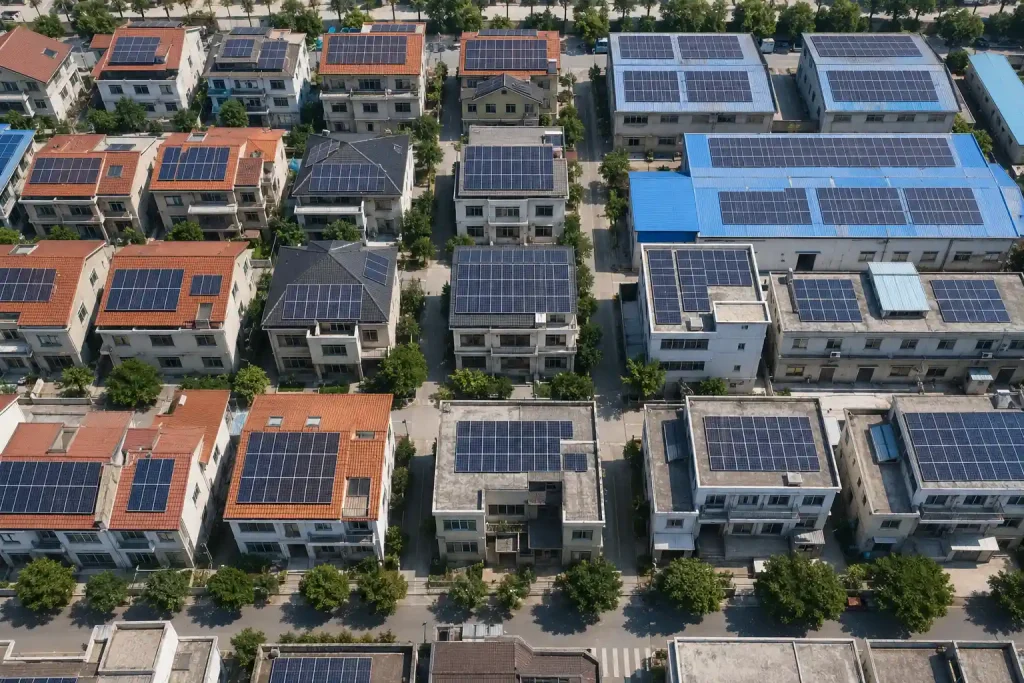
One of the biggest challenges is that every roof is different. A solution that performs perfectly on a standing seam metal roof may be completely unsuitable for a concrete roof, an asphalt shingle roof, or a tile roof. Understanding the different solar racking options for roofs allows EPC teams to choose the right system for each project, reduce installation risks, improve construction efficiency, and avoid costly waterproofing issues in the future.
Solar Racking Options for Roofs on Pitched Roofs
Pitched roofs are among the most common installation environments for commercial and residential solar projects. However, not all pitched roofs are built the same. Different roofing materials have different structural characteristics and waterproofing methods, so selecting the right solar racking options for roofs starts with understanding the roof itself rather than the mounting hardware.
In most projects, pitched roofs can be divided into three main categories: metal roofs, asphalt shingle roofs, and tile roofs. Each requires a different installation approach to ensure structural safety while preserving the roof’s waterproof performance.
Standing Seam Metal Roofs
Standing seam metal roofs are widely considered one of the easiest roof types for solar installation. Instead of drilling through the roofing sheet, specially designed clamps grip directly onto the raised seams, creating a completely non-penetrating mounting solution.
Because the roof surface remains untouched, the original waterproof structure is preserved. This significantly reduces the risk of future leaks and often helps building owners maintain the manufacturer’s roof warranty. Installation is also faster since installers simply position the clamp, tighten the specified fasteners, and attach the rails or railless mounting components.
For many EPC contractors, this is one of the most reliable solar mounting system options for roofs where standing seam profiles are available.
Trapezoidal Metal Roofs
Unlike standing seam roofs, trapezoidal metal roofs usually cannot accommodate clamp-based systems because their profile does not provide a suitable locking surface. In these cases, L-feet are commonly used to connect the mounting rails directly to the roof structure.
Since the roof must be penetrated, waterproofing becomes the most important consideration. Each L-foot is installed together with a high-quality EPDM sealing washer, which compresses around the fastener to create a weather-resistant seal.
One of the most common installation mistakes is applying excessive torque during fastening. Over-tightening can permanently deform the EPDM washer, creating small gaps that may allow water to enter over time. Following the recommended tightening torque is therefore just as important as selecting quality mounting hardware.
Asphalt Shingle Roofs
Asphalt shingle roofs also rely on L-feet, but unlike metal roofs, waterproofing cannot depend on the sealing washer alone. A flashing plate is an essential part of the system.
During installation, the flashing is inserted beneath the upper layer of shingles before the L-foot is fixed to the roof structure. This allows rainwater to flow naturally over the flashing instead of reaching the penetration point below, maintaining the roof’s original drainage path.
To ensure sufficient structural strength, the lag bolt should always be anchored into the wooden roof rafter rather than the roof sheathing alone. Proper positioning not only improves pull-out resistance but also helps the system comply with local structural requirements.
Tile Roofs
Tile roofs require a completely different installation method. Although the tiles provide the visible roof surface, they are not designed to carry structural loads. Instead, the load should be transferred directly into the roof rafters beneath the tiles.
The standard solution is to temporarily remove the required tiles, fasten stainless steel roof hooks to the rafters, and then reinstall the tiles around the hook. The hook passes through the gap beneath the tile without placing pressure on the tile itself, minimizing the risk of cracking.
Tile roofs also have a unique waterproofing principle. Most rainwater is guided away by the overlapping shape of the tiles, while any small amount of moisture that reaches beneath the tiles is safely directed away by the waterproof underlayment below. As a result, the roof hook system is designed to work with this natural drainage path instead of interfering with it.
Although the installation methods differ considerably, all of these solar racking options for roofs are designed with the same objective: transferring structural loads safely while maintaining the roof’s long-term waterproof performance. Choosing the correct solution always begins with the roof type rather than the mounting hardware itself.
Solar Racking Options for Roofs on Flat Roofs
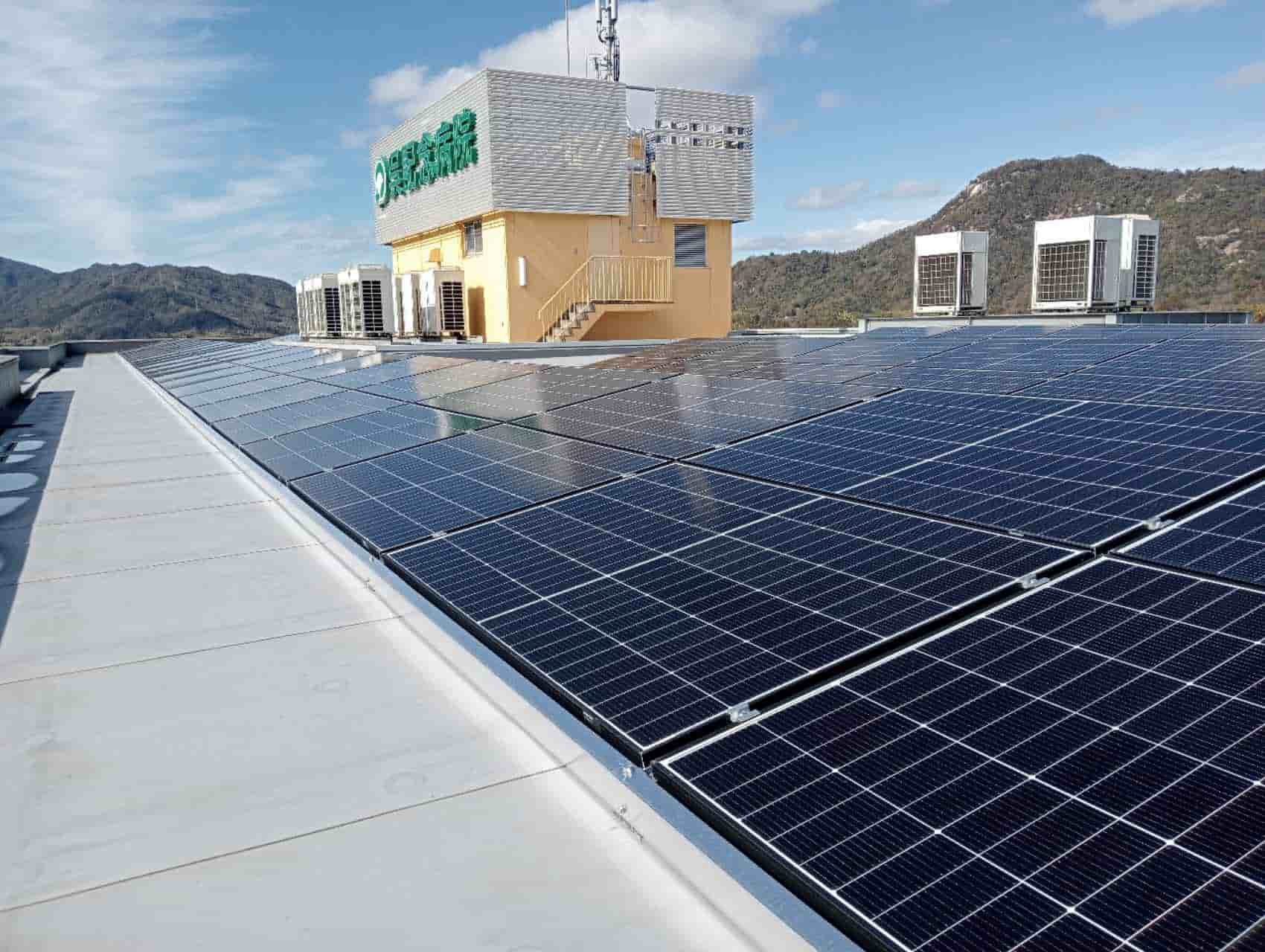
Unlike pitched roofs, flat roofs are not selected based on the roofing material alone. Instead, the foundation method becomes the key factor when choosing solar racking options for roofs. Before selecting a mounting system, EPC contractors should first determine whether the roof is a concrete slab or a waterproof membrane roof such as TPO or PVC, as each requires a completely different installation strategy.
Concrete Flat Roofs
Concrete roofs offer excellent structural strength and can support several different mounting solutions. The best choice depends on factors such as wind load, roof load capacity, waterproofing requirements, and installation costs.
Ballasted Mounting Systems
Ballasted systems are one of the most common solutions for flat concrete roofs. Instead of fixing the mounting structure directly to the roof, concrete ballast blocks provide the weight needed to keep the array in place.
The biggest advantage is that no roof penetration is required, helping preserve the existing waterproof layer while simplifying installation. However, this approach also has limitations. Because the system depends on its own weight for stability, wind resistance is generally lower than mechanically anchored systems. The ballast also adds significant dead load to the building, making a structural assessment essential before installation.
Another important consideration is roof slope. Although classified as flat roofs, many buildings still have a slight drainage slope. If the slope is excessive, ballast blocks may gradually shift over time, so additional restraint measures around the roof perimeter are often recommended.
Concrete Pedestal Foundations
For projects located in regions with strong winds or heavy snowfall, concrete pedestal foundations provide a more stable alternative.
In this solution, the mounting system is installed on concrete pedestals that are either cast in place or securely fixed to the roof slab. Raising the structure above the roof surface also improves drainage, reduces debris accumulation, and creates additional working space beneath the modules.
The trade-off is higher cost and more complicated logistics. Large concrete pedestals are heavy, making transportation, lifting, and rooftop installation more time-consuming than other solar mounting system options for roofs.
Direct Mechanical Anchoring
When maximum structural strength is required and roof loading must be minimized, direct mechanical anchoring is often the preferred solution.
Expansion bolts are installed directly into the concrete slab, creating an extremely secure connection with minimal additional weight. Compared with ballast systems, this approach typically offers the highest resistance to wind uplift while also reducing transportation and installation complexity.
The main challenge is waterproofing. Because the roof surface is penetrated, every anchor point must be sealed correctly using approved waterproofing materials and installation procedures. Proper detailing is essential to maintain the long-term waterproof performance of the roof.
TPO and PVC Membrane Roofs
Although TPO and PVC roofs are also classified as flat roofs, they require a different installation method because the waterproof membrane itself becomes the most critical part of the roofing system.
Rather than using conventional ballast or exposed mechanical fasteners, dedicated mounting bases designed for membrane roofs are typically used. After the structural attachment is completed, a matching TPO or PVC membrane cover is heat welded to the existing roof membrane, creating a continuous waterproof layer around the mounting point.
Unlike traditional mechanical sealing methods, heat welding allows the new membrane to fuse with the original roofing material, helping maintain the roof’s waterproof integrity while reducing the risk of future leakage.
For membrane roofs, installation quality is just as important as the mounting hardware itself. Following the roofing manufacturer’s approved welding procedures is essential to ensure long-term system reliability.
Materials That Improve Long-Term Roof Mount Performance
No matter which roof type you choose, the durability of a mounting system depends just as much on the materials as on the structural design. High-quality materials help solar racking options for roofs withstand years of wind, rain, humidity, temperature changes, and outdoor exposure while reducing maintenance throughout the system’s service life.
ZAM Steel
ZAM steel has become an increasingly popular material for modern solar mounting systems thanks to its outstanding corrosion resistance. By adding aluminum and magnesium to the zinc coating, the material forms a dense protective layer that performs particularly well in humid, coastal, and industrial environments.
One of its biggest advantages is its self-protecting behavior after processing. When cut edges or punched holes are exposed during manufacturing or installation, the protective coating gradually forms a stable barrier over the exposed steel. This helps slow corrosion around processed areas without requiring additional anti-rust treatment in many applications.
For large commercial projects where long-term durability is a priority, ZAM steel has become one of the preferred material choices.
AL6005-T6 Aluminum
AL6005-T6 aluminum is widely used for rails, clamps, and many structural mounting components because it combines high strength with low weight.
Compared with heavier steel components, aluminum reduces the overall weight placed on the roof while making transportation and installation easier. This is particularly valuable for rooftop projects where structural loading and installation efficiency are important considerations.
In addition to its mechanical properties, AL6005-T6 also offers excellent natural corrosion resistance, making it suitable for long-term outdoor exposure with minimal maintenance.
Stainless Steel Fasteners
Although they are small components, fasteners play a critical role in the reliability of any solar mounting system.
High-quality stainless steel fasteners, typically SUS304 or SUS316 depending on the environment, provide excellent corrosion resistance while maintaining secure structural connections over many years of service.
They also help reduce the risk of galvanic corrosion when used with aluminum mounting components. Selecting the appropriate fastener material is a relatively small investment, but it can have a significant impact on the long-term durability and safety of the entire installation.
Choosing a Reliable Solar Racking Manufacturer
Selecting the right solar racking options for roofs is only part of the decision. The reliability of the manufacturer is equally important, especially for large commercial and utility-scale projects where structural safety and long-term performance are critical.
Compliance with Local Design Standards
Different countries have different structural design requirements, so a mounting system should always be designed according to the standards used in the project location.
For example, projects in Australia commonly follow AS NZS 1170, while Japan uses JIS C 8955 and North America generally follows IBC and ASCE 7. A qualified manufacturer should be able to provide engineering calculations and supporting documentation that comply with the relevant local codes rather than offering a one-size-fits-all solution.
For EPC contractors working across multiple markets, this is often an important factor when evaluating different solar racking options for roofs.
Wind Tunnel Validation
Engineering calculations are essential, but they are only part of the design process. Many high-quality mounting systems are also validated through independent wind tunnel testing.
Wind tunnel testing allows engineers to understand how wind flows around the solar array under different conditions. The results can be used to optimize the mounting structure, improve aerodynamic performance, and reduce unnecessary structural loads.
For example, well-designed wind deflectors can significantly reduce wind uplift on ballasted systems. In many projects, this allows the required ballast weight to be lowered while still meeting local structural requirements, reducing both transportation costs and the load placed on the roof.
Installation Efficiency and Inventory Management
When evaluating different solar racking options for roofs, EPC contractors should look beyond the initial hardware price. The mounting system is only one part of the total project cost. Installation time, labor requirements, site safety, and logistics efficiency can have an equally important impact on the final project budget.
A slightly higher-quality racking system with pre-assembled components, fewer individual parts, and simplified installation procedures can significantly reduce rooftop working hours. This is especially valuable for commercial projects where labor costs are high and construction schedules are tight.
A well-designed mounting system helps installers work faster while reducing the risk of missing components, installation errors, and unnecessary delays on site. For EPC contractors, the goal is not simply to purchase the lowest-cost hardware, but to achieve the best balance between product cost, installation efficiency, and long-term reliability.
Simplifying Inventory Management
Large-scale EPC projects often involve multiple roof types and different mounting configurations. Managing too many specialized components can increase warehouse complexity and create unnecessary challenges during transportation and installation.
A flexible mounting design that uses shared rails, standardized clamps, and compatible accessories can simplify procurement and inventory management. This allows EPC teams to reduce the number of spare parts they need to stock while improving efficiency across multiple project sites.
For companies managing commercial and industrial solar portfolios, choosing a supplier with a well-optimized product system can significantly improve project execution.
Why Manufacturer Experience Matters
Selecting the right solar racking type is important, but choosing the right manufacturing partner is equally critical. A reliable supplier should provide not only mounting hardware but also engineering support, quality control, and solutions adapted to different project conditions.
SR Solar supports EPC contractors by combining structural engineering experience with large-scale manufacturing capabilities.
Engineering Support
Every rooftop project has different requirements, including roof structures, wind conditions, snow loads, and local building standards. SR Solar’s engineering team provides project-specific solutions based on these factors, including structural calculations, system optimization, and customized design support.
Quality Control and Material Management
The durability of a mounting system starts with material selection and manufacturing processes. From raw material inspection to production quality control, SR Solar follows strict procedures to ensure consistent product performance and long-term reliability in outdoor environments.
Designed for Faster Installation
Installation efficiency is an important consideration for EPC contractors. SR Solar mounting solutions are designed with practical field installation in mind, including optimized component designs and factory-prepared assemblies that help reduce installation time and minimize errors during rooftop construction.
Whether the project involves a large commercial flat roof, a metal roof installation, or a complex tile roof application, SR Solar provides scalable mounting solutions supported by engineering expertise and manufacturing capability.
Conclusion
Choosing the right solar racking options for roofs requires more than selecting a mounting structure. EPC contractors need to consider roof type, structural requirements, material durability, installation efficiency, and long-term maintenance needs.
Different roofs require different solutions. Standing seam metal roofs may benefit from non-penetrating clamps, asphalt roofs require properly designed flashing systems, tile roofs rely on engineered roof hooks, and flat roofs require mounting methods that match the building structure and waterproofing system.
By combining the right mounting design with reliable materials and professional engineering support, EPC contractors can deliver safer, more durable, and more cost-effective solar projects.
Frequently Asked Questions
How do zero-penetration clamps protect standing seam metal roofs?
Zero-penetration clamps attach directly to the standing seams of metal roofs without drilling through the roofing sheet. Because the roof surface remains intact, the original waterproof structure is preserved, helping reduce leakage risks and maintain the existing roof system.
Why is flashing important for asphalt shingle roof solar installations?
Flashing helps restore the waterproof function of asphalt shingle roofs after mounting hardware is installed. It is placed beneath the upper shingle layer to guide rainwater away from the penetration point and protect the underlying roof structure from long-term moisture exposure.
How do EPC contractors decide between ballasted and mechanically anchored flat roof systems?
The choice depends on several factors, including roof load capacity, local wind conditions, and waterproofing requirements. Ballasted systems avoid roof penetration but add additional weight, while mechanically anchored systems provide stronger structural connections but require careful waterproofing treatment.
Why is ZAM steel commonly used in solar mounting systems?
ZAM steel uses a zinc, aluminum, and magnesium coating that provides excellent corrosion resistance. The coating can also protect exposed edges after cutting or processing by forming a stable protective layer, making it suitable for long-term outdoor applications.
How can pre-assembled mounting components reduce project costs?
Pre-assembled components simplify rooftop installation, reduce assembly time, and lower the possibility of missing parts or installation mistakes. For EPC contractors, these improvements can reduce labor costs and help accelerate project completion.
Need Support for Your Rooftop Solar Project?
Choosing the right mounting solution depends on many factors, including roof structure, environmental conditions, and project requirements.
SR Solar provides engineering support, mounting system recommendations, and customized solutions for commercial rooftop solar projects. Contact our team to discuss your project requirements and find the most suitable mounting approach.