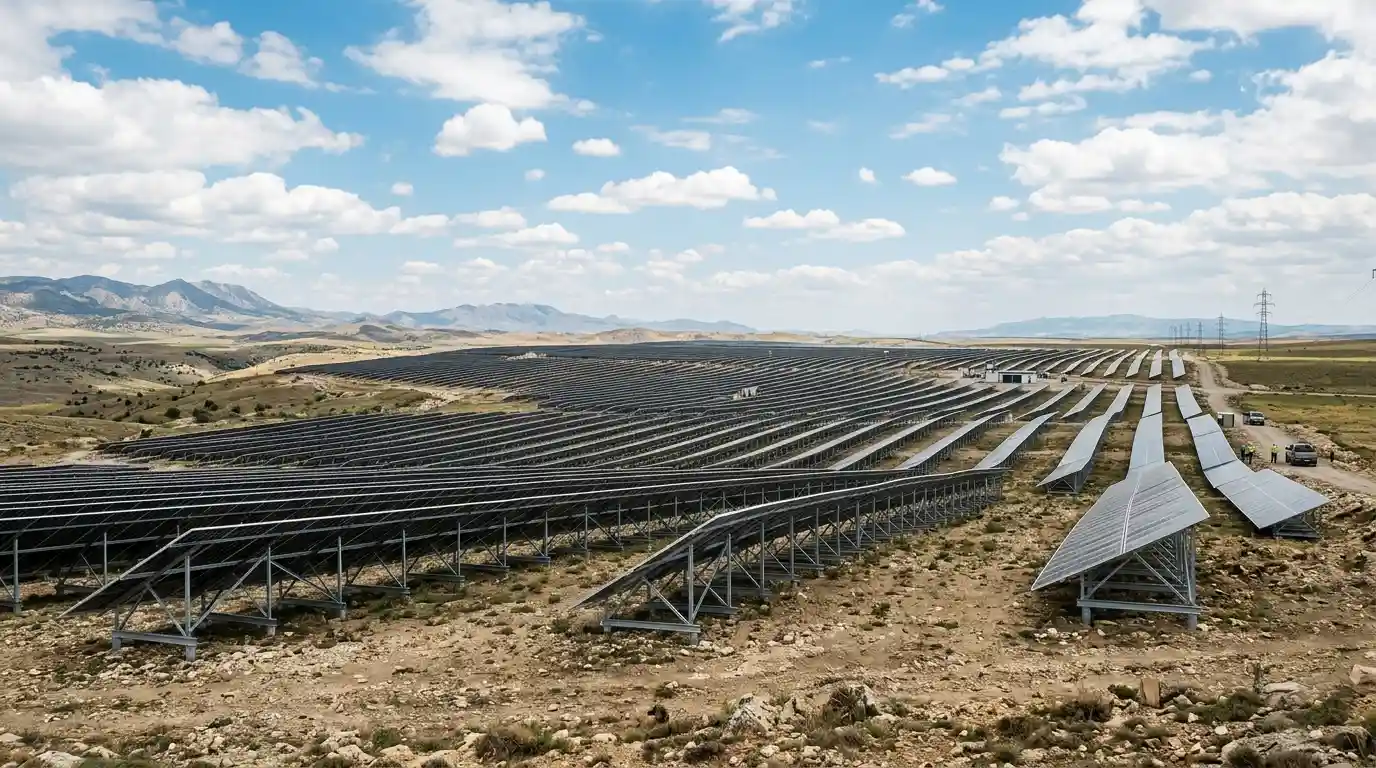
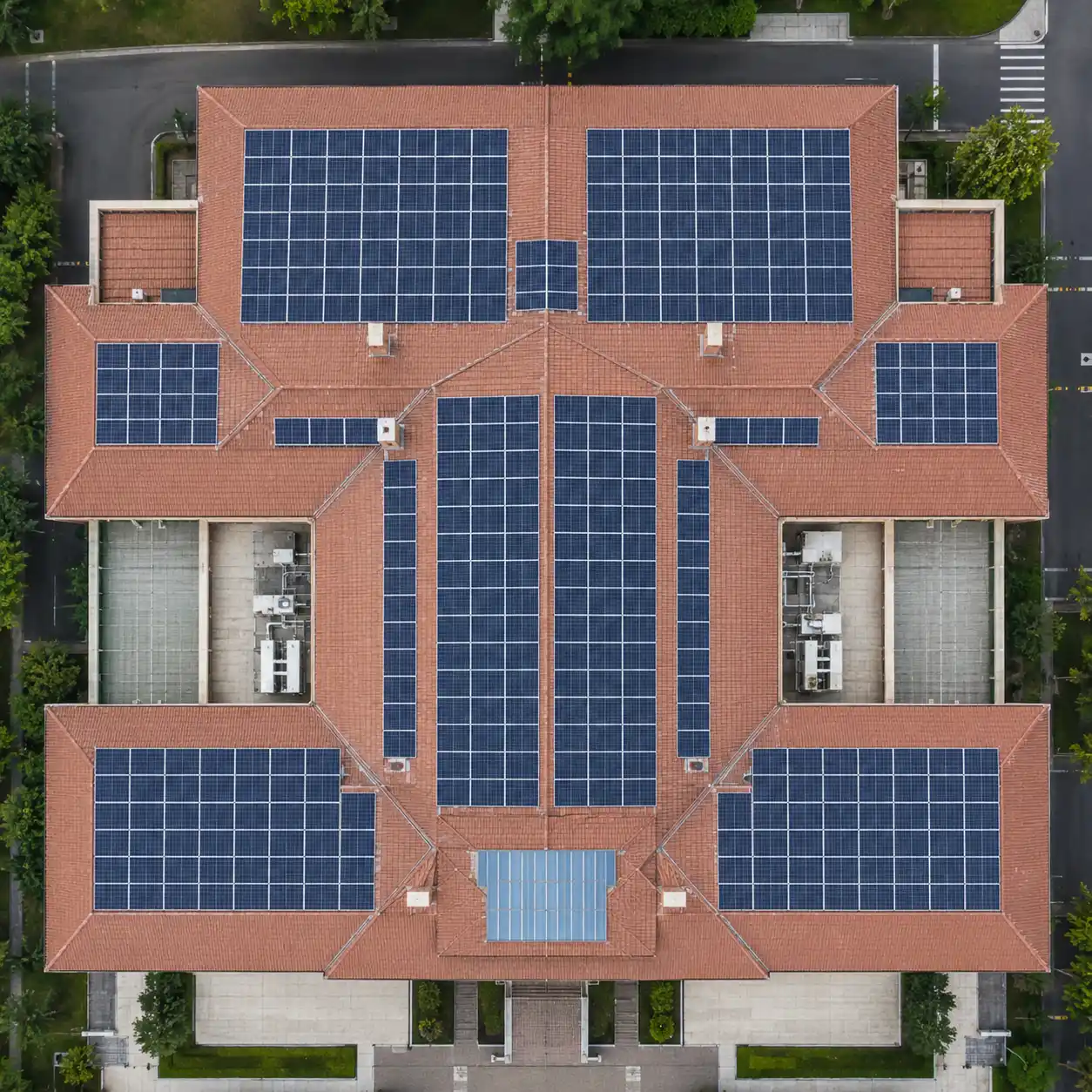
Let’s be honest for a second—if you’re an EPC contractor or a PPA provider, the mounting system is probably the most underrated part of your entire BOM. Everyone wants to talk about the latest high-efficiency N-type modules or the smartest string inverters, but those high-tech components are only as good as the skeleton holding them up. If the racking fails, or if it takes twice as long to install as you budgeted, your “high-yield” project suddenly becomes a liability. We’ve seen it happen too many times: a “cheap” mounting choice leads to a leaky roof three years into a 25-year PPA, and suddenly, those narrow margins vanish into maintenance costs. Finding the perfect solar solution for your roof isn’t just about finding the lowest price per watt; it’s about finding a system that balances structural absolute-certainty with the kind of installation speed that makes your site leads happy.
At SR Solar, we live and breathe the technical nuances of rooftop solar because we know what’s at stake for you. When you’re pitching a project to a facility owner, you aren’t just selling green energy; you’re asking for permission to put a massive, heavy, wind-catching sail on top of their most valuable asset. That requires trust. It requires a mounting system that feels less like an “add-on” and more like a natural extension of the building’s architecture. Whether you’re dealing with a massive warehouse in a hurricane zone or a flat-roofed manufacturing plant with strict weight limits, the right engineering makes all the difference in turning a “maybe” into a signed contract.
The High Stakes of Commercial Roofing: Why “Good Enough” Isn’t Enough
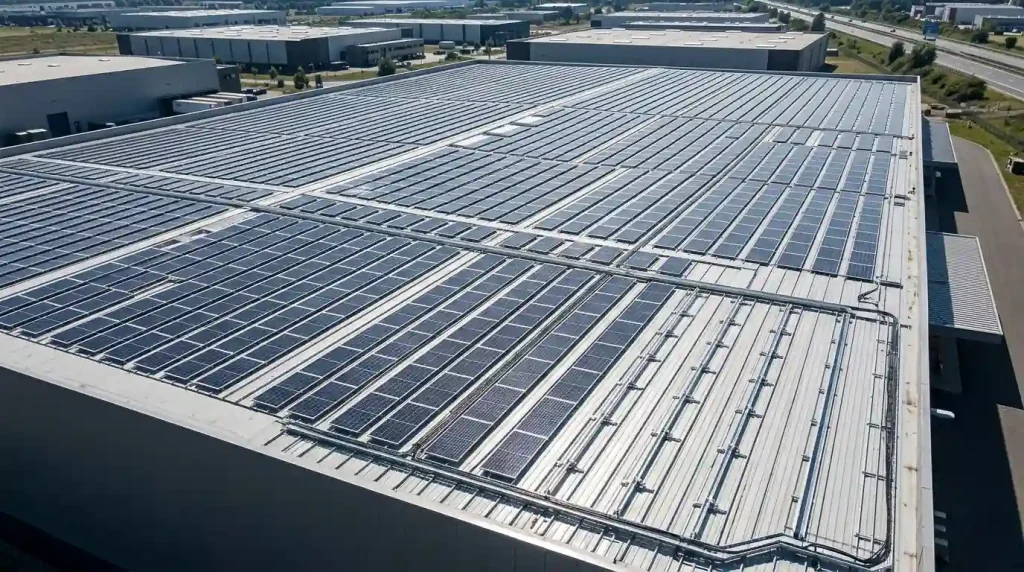
Commercial and Industrial (C&I) roofs are complicated beasts. You aren’t just dealing with a standard pitch; you’re navigating HVAC units, skylights, varying parapet heights, and aging substrates that might not have the structural “meat” you’d like. For a PPA provider, the risk is long-term. You need that system to sit there for two and a half decades without causing a single drop of water to enter the building. For an EPC, the risk is immediate. If the mounting system is a “fiddly” nightmare of nuts and bolts, your labor costs will skyrocket, and your schedule will slip.
The perfect solar solution for your roof needs to address both of these pressures simultaneously. It’s about mitigating the technical risks during the design phase so that when the crews show up on-site, there are zero surprises. We’ve found that the best projects start with a deep understanding of the host building’s “personality.” Is it a trapezoidal metal sheet that needs a specific clamp? Or is it a concrete deck where you can’t penetrate the membrane? Getting this right at the start is the difference between a profitable project and a decade-long headache.
Engineering for the Long Haul: Structural Integrity That Satisfies Insurers
Insurance companies and project financiers have become incredibly savvy over the last few years. They aren’t just checking boxes anymore; they want to see the math. They want to know that if a 100-year storm rolls through, your arrays aren’t going to end up in the parking lot—or worse, taking the roof deck with them. That’s why at SR Solar, we treat structural integrity as a non-negotiable baseline. We aren’t just making “racks”; we’re providing a bankable structural solution.
Material Science: Why We Obsess Over AL6005-T5 and ZAM Steel
If you’ve ever walked a coastal site five years after installation and seen white rust or pitting on the racking, you know why material choice matters. We use AL6005-T5 aluminum for our rails and components because of its incredible strength-to-weight ratio and natural resistance to the elements. But for the heavy-duty stuff, we’ve pivoted toward ZAM steel—a Zinc-Magnesium-Aluminum coating that is a total game-changer for anti-corrosion. It’s self-healing on cut edges, which is a massive relief when you’re dealing with the nicks and scratches that inevitably happen during a fast-paced install. This isn’t just about looking good; it’s about ensuring the perfect solar solution for your roof stays perfect for the full 25-year lifespan of your PPA.
Meeting Global Standards: From JIS to AS/NZS 1170 Compliance
We don’t expect you to take our word for it. In the B2B world, certifications are the currency of trust. Our systems are strictly validated against the world’s toughest standards, including Japan’s JIS, Euro’s EN, American’s ASCE and Australia’s AS/NZS 1170. Why does this matter for a project in a different region? Because it proves that our engineering logic holds up under the most extreme wind and snow load scenarios on the planet. When you present an SR Solar submittal package to a building department or an investor, you’re handing over a document backed by global rigorous testing. It streamlines the permitting process and gives everyone involved the “sleep-well-at-night” factor.
Slashing “Soft Costs”: How the Right Mounting Hardware Speeds Up Your ROI
If you look at the cost breakdown of a modern solar project, the “hard” cost of the panels is lower than ever. The real “monsters” are the soft costs—permitting, engineering, and especially labor. In the current market, finding skilled labor is hard; keeping them productive is even harder. If your crew is spending hours fumbling with loose washers and complex assemblies on a hot roof, you’re losing money every minute.
The perfect solar solution for your roof should be a productivity tool. We’ve designed our SR Solar systems to be as “plug-and-play” as industrial hardware can possibly be. By moving the complexity from the roof to our factory, we allow your teams to focus on what they do best: moving fast and staying safe.
The “Click-In” Revolution: Reducing On-Site Man-Hours
One of the things our EPC partners love most is our “click-in” rail technology. Think of it like the difference between building a piece of furniture with 500 loose screws versus one that snaps together with precision. Our components come highly pre-assembled. When your installer reaches for a mid-clamp, it’s already built. It clicks into the rail exactly where it needs to be, stays there, and tightens down with a single tool. This might sound like a small detail, but when you multiply those saved seconds by 5,000 modules, you’re looking at days shaved off the construction schedule. That means earlier interconnection and a faster path to revenue for the PPA stakeholder.
Versatility Across the Skyline: Solving Complex Rooftop Topographies
Rarely do we see a perfectly flat, clear roof. Usually, it’s a patchwork of different materials and obstacles. A one-size-fits-all approach is a recipe for disaster in the C&I space. You need a mounting partner that has a “toolbelt” full of solutions. At SR Solar, we’ve developed a range of specialized attachments that handle the weird and wonderful variety of commercial roofing without compromising the building’s integrity.
Metal Roofs: Trapezoidal, Standing Seam, and Corrugated Solutions
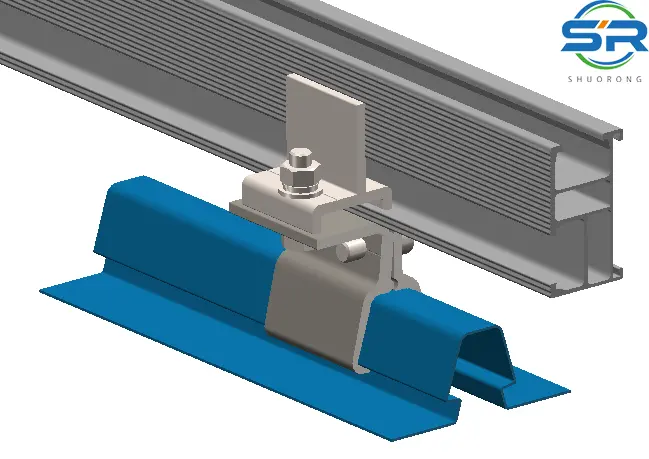
Metal roofs are fantastic for solar, but they require a delicate touch. For trapezoidal sheets, we use specialized mini-rails and clamps that distribute the load across the ribs rather than putting stress on the thin metal skin. If you’re lucky enough to have a standing seam roof, our non-penetrative clamps grip the seams with incredible strength—zero holes in the roof means zero chance of leaks. We even have solutions for corrugated “wavy” metal that ensure a level plane for your modules even if the roof deck is a bit wonky. It’s all about providing the perfect solar solution for your roof type, specifically tailored to the mechanical limits of that surface.
Flat Concrete Roofs: The Art of the Non-Penetrative Ballast System
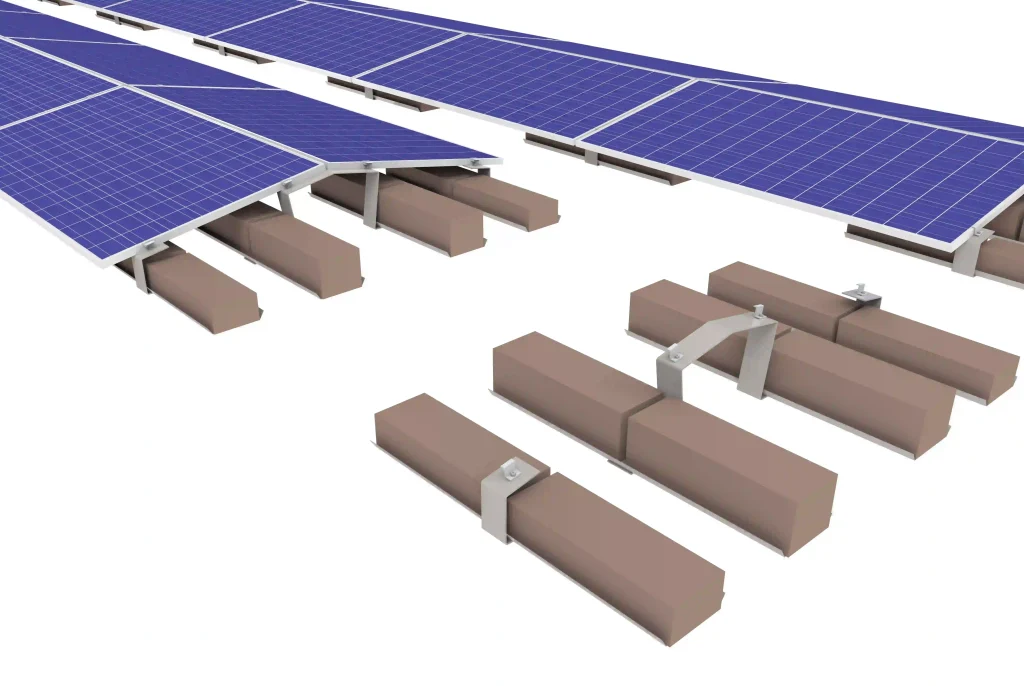
For many shopping centers or office blocks, the roof is a flat concrete deck covered in a sensitive TPO or PVC membrane. Punching a thousand holes through that membrane to find a structural attachment is often a non-starter for the building owner. Our ballasted systems are the answer. By using high-quality wind deflectors and carefully calculated concrete blocks, we keep the array in place using gravity and aerodynamics. The key here is weight distribution. We don’t just dump a pile of bricks on the roof; we use a grid system that spreads the load evenly, staying well within the building’s PSF (pounds per square foot) limits.
The PPA Secret Sauce: Weight Distribution and Asset Preservation
If you’re a PPA provider, you’re essentially a long-term tenant on someone’s roof. You need to be a “good neighbor.” The biggest fear for a facility manager is that the solar array will cause the roof to bow, pond water, or fail prematurely. This is where SR Solar’s engineering really shines. We don’t just look at how the rack holds the panel; we look at how the rack talks to the building.
By optimizing the span between support points and using lower-profile designs to reduce wind uplift, we minimize the mechanical stress on the host structure. This preservation of the underlying asset is the “secret sauce” that helps PPA providers win renewals and maintain a high reputation. When the building owner sees that the perfect solar solution for your roof actually protects their roof from UV degradation and doesn’t add undue stress, the solar project becomes a win-win rather than a risky gamble.
More Than Hardware: Technical Support from Feasibility to Commissioning
We’ve all been there: you’re in the middle of a bid, the deadline is 24 hours away, and you realize you don’t have the static analysis for the new module dimensions. This is where a lot of racking companies disappear. At SR Solar, we view ourselves as an extension of your engineering team. We know that in the B2B world, hardware is only half the battle—the other half is the data that proves the hardware works.
Static Analysis and Layout Optimization: Winning the Bid
During the bidding phase, we provide comprehensive design assistance. This isn’t just a generic “it should work” statement. We provide detailed layout drawings and site-specific static reports that take into account the local wind speed, snow loads, and the specific specs of your chosen modules. Having this level of detail in your proposal makes you look incredibly professional to potential clients and investors. It shows that you’ve done the homework and that your perfect solar solution for your roof is backed by hard science.
Future-Proofing Your Portfolio with SR Solar
The solar industry moves fast. Modules are getting larger, frames are getting thinner, and building codes are getting stricter. Working with SR Solar means you aren’t stuck with “legacy” designs that can’t handle the new 600W+ high-format modules. We are constantly iterating. Our R&D team is always looking at how we can make the rails stiffer, the clamps more versatile, and the overall system more “future-proof.”
When you standardize your portfolio on SR Solar, you’re gaining a partner that scales with you. Whether you’re doing a 50kW rooftop or a 10MW industrial rollout, the logic remains the same. Consistency in hardware means your installation crews get faster with every project, your procurement team knows exactly what to expect, and your O&M (Operations & Maintenance) teams have a simplified inventory of spare parts.
Conclusion: Making the Mounting System Your Strategic Advantage
At the end of the day, the perfect solar solution for your roof is the one that you can install and then forget about. It’s the system that sails through inspections, survives the storm, and delivers the energy yields promised in the PPA. By choosing SR Solar, you’re not just buying aluminum and steel; you’re buying a reduction in risk and an increase in efficiency. You’re choosing a partner that understands the high-stakes world of EPCs and PPA providers and is committed to making your projects as bankable and “boring” (in a good way!) as possible. Let’s build something that lasts.
Frequently Asked Questions
1. How does SR Solar help reduce the “soft costs” associated with labor?
Our systems are designed with high levels of pre-assembly. Features like our “click-in” rail technology and universal clamps mean installers spend less time fumbling with small parts and more time securing panels. This significantly reduces on-site man-hours, which is often the most volatile cost in a C&I project.
2. Can your mounting systems handle high wind-load areas like coastal regions?
Absolutely. We use high-strength materials like AL6005-T5 aluminum and ZAM steel, and our designs are validated against the toughest global standards (JIS and AS/NZS 1170). We provide site-specific static analysis to ensure your array remains secure even in extreme weather conditions.
3. What if my project has a non-standard roof type?
Versatility is our specialty. We have a wide range of specialized attachments for everything from standing seam and trapezoidal metal roofs to ballasted solutions for flat concrete decks. Our engineering team can work with you to find a tailored solution that protects the building’s integrity.
4. Does SR Solar provide technical support during the bidding process?
Yes, we provide comprehensive design assistance. This includes optimized layout drawings and detailed structural reports that you can include in your bid packages. This level of technical transparency helps build trust with investors and building owners.
5. How does the ZAM steel coating compare to traditional galvanization?
ZAM steel (Zinc-Magnesium-Aluminum) offers superior corrosion resistance compared to standard galvanized steel. It is particularly effective in harsh environments because it has “self-healing” properties on cut edges, ensuring the structure remains rust-free for the duration of a 25-year PPA.