Deserts offer some of the best solar real estate on the planet – crazy high irradiance that can pump out 30-50% more energy than your average spot. But that gift comes wrapped in serious punishment for solar ground mount racking. We’re talking scorching days over 45°C flipping to freezing nights, sandstorms sandblasting everything in sight, winds that hit like trucks, and dust that never quits. Standard racking just isn’t cut out for it; we’ve seen projects struggle with warped frames, constant fixes, and output drops that kill returns fast. Learn more about the specific desert challenges and best practices. At SR Solar, we’ve spent years tweaking our solar ground mounting racking to handle exactly these extremes, so your project stays rock-solid and keeps generating strong. It’s not about fancy extras – it’s about getting the basics brutally right so EPCs hit deadlines, developers lock in solid IRR, and everyone sleeps better.

The Harsh Truth About Desert Conditions and Standard Ground Mount Racking
Deserts don’t mess around. The combo of intense UV, thermal swings, abrasive sand, and sudden high winds turns what should be a dream setup into a nightmare if your solar ground mount racking isn’t ready. For large-scale ground-mounted stations that PV EPC general contractors handle, these conditions threaten on-time delivery and those coveted 25-year warranties. Developers watching IRR see every extra cleaning or repair as cash burning away. Even smaller integrators feel it when compatibility slips on rough terrain.
Extreme Heat, Thermal Cycling, and How It Wrecks Ordinary Racking
Heat doesn’t just hurt panels – it hammers the racking too. Aluminum expands and contracts wildly with those 50°C+ daily swings, loosening bolts and stressing joints over thousands of cycles yearly. We’ve watched standard setups warp just enough to misalign panels, quietly shaving off output year after year. Night drops add fatigue that cracks weak welds or fatigues cheap materials fast. Solar ground mount racking for desert needs materials with controlled expansion and joints that stay tight no matter how brutal the cycle gets.
Sandstorms, Abrasion, and the Constant Dust Battle
Picture sand flying at 100 km/h like tiny bullets – it scratches coatings, wears down rails and clamps, and gums up any moving parts. Dust piles up quick, sometimes costing 0.4-0.8% yield daily if ignored, and dew makes it stick worse. For ground mount systems, this means abrasive grooves on surfaces and pivots that seize. We’ve heard too many stories from Middle East or Sahara-edge sites where arrays lost 15-30% between cleanings. The right desert solar ground mounting fights back with abrasion-resistant surfaces and designs that shed instead of trap.
High Winds in Open Deserts – A Real Test of Structural Grit
Open desert flats let winds rip unchecked – gusts over 140 km/h aren’t rare during storms. Ordinary racking flexes, fatigues, or fails outright, with panels tearing loose or foundations shifting in loose sand. EPCs need wind-load certifications that pass tough bids, while developers want bank-friendly stability. Weak designs lead to expensive emergencies. Solid solar ground mount racking in desert environments uses aero shapes, deep anchors, and strong alloys to stand firm.
Real-World Failures We’ve Seen (and Why They Hurt Projects)
Nothing drives the point home like seeing things go wrong. Early desert projects grabbed off-the-shelf racking built for milder spots, and it showed. Bolts corroded from salty dust, trackers jammed, fixed-tilt angles collected dust like magnets. One setup we know bled 20% yearly from unchecked soiling and wear. Corrosion stripped galvanizing in under five years. These patterns repeat when people overlook desert-specific needs.
Corrosion Sneaking In and Eating Away at Materials
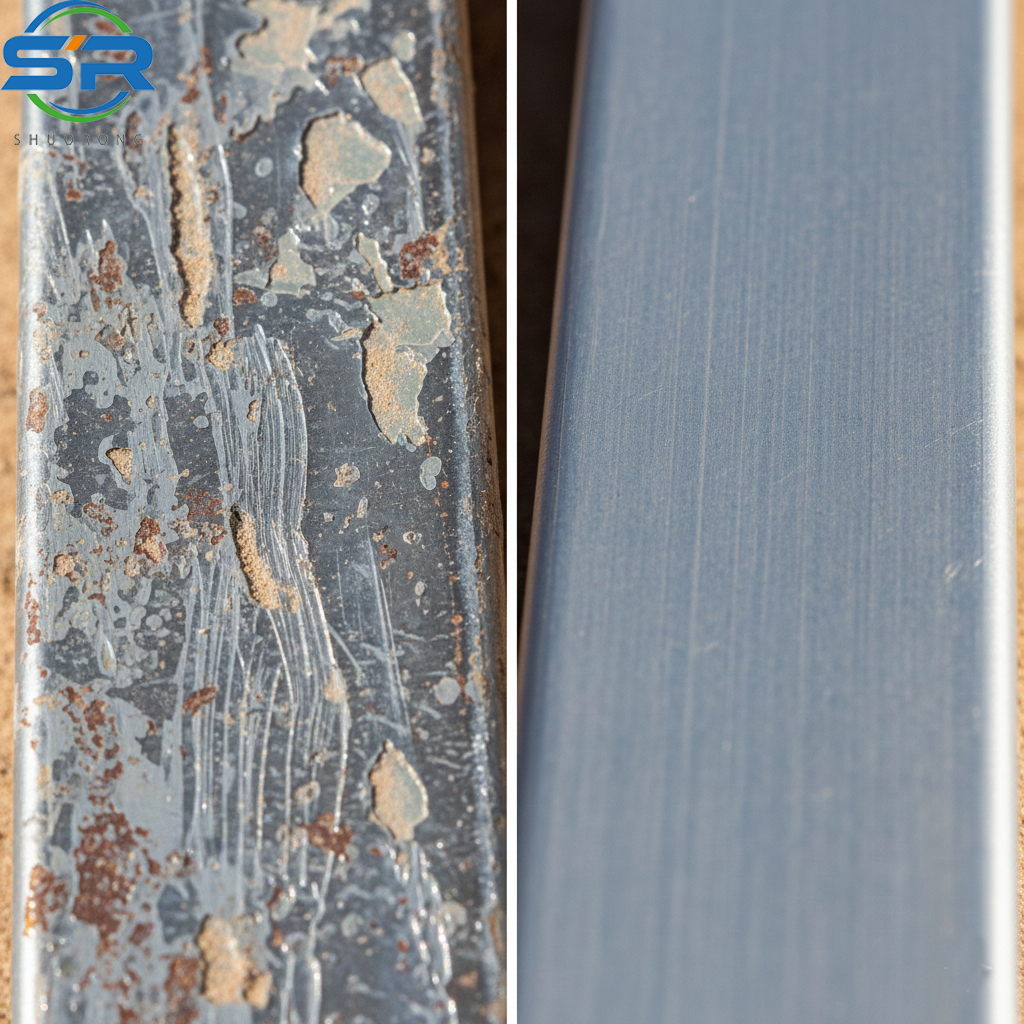
Arid air isn’t clean – dust carries salts that spark galvanic corrosion where metals meet. UV blasts degrade coatings quick. We’ve disassembled racking after 8-10 years in deserts and found pitting that weakened critical parts. Basic galvanizing fails fast here; better treatments or stainless hold strong. Skipping this shortens warranties and spikes O&M.
Soiling Woes That Hit Both Panels and the Mounting Structure
Soiling isn’t panel-only – low-tilt or flat racking traps more dust, needing extra cleaning. Bad clamps catch sand, ramping up wear. In trackers, grit stresses drives. We’ve seen suboptimal angles cause 13% monthly hits without action. Good solar ground mount racking for desert optimizes tilt for self-cleaning while balancing wind.
How SR Solar’s Solar Ground Mount Racking Tackles These Pain Points Head-On
This is where it gets good. SR Solar didn’t just tweak existing designs – we built our solar ground mounting racking with desert realities front and center. It directly hits the pain points head contractors, developers, and integrators face every day.
Smart Material Choices That Laugh at Heat and Sand
We go heavy on high-grade anodized aluminum for rails and beams – low thermal expansion, killer abrasion resistance, and UV-proof. Critical steel gets thick hot-dip galvanizing plus extra coatings that shrug off salty dust. No cheap shortcuts. These choices mean our desert solar ground mount racking holds up 25+ years with minimal surface wear, not structural loss. EPCs love the compatibility with major modules and inverters, passing reviews easy.
Design Features Built for Dust Shedding and Wind Stability
Our fixed-tilt setups hit that 25-35° sweet spot – steep enough for gravity to slide dust off during winds or dew, yet optimal for yield in high-irradiance zones. Smooth, aerodynamic profiles slash uplift and sand buildup. No hidden pockets for dust to hide. For sandy soils, we push ground screws or deep piles that grip without shifting. These make SR Solar’s solar ground mount racking for desert environments naturally low-maintenance while standing tall in gusts.
Foundation and Installation Tricks That Keep Everything Locked In
Deserts mean logistics hell sometimes – water scarce, access rough. We design for dry methods like robotic brushes or air blasts. Elevated structures cut heat soak and dust pile-up. Crews get easier reach for inspections. For EPCs juggling big projects, this translates to faster installs, fewer changes, and on-time handovers.
The Long-Term Wins: Better ROI, Lower O&M, Happier Stakeholders
Specialized solar ground mount racking for desert isn’t a nice-to-have – it’s what flips the economics. Sure, upfront might edge higher than basic stuff, but lower cleaning needs, near-zero repairs from sand or wind, and steadier output push IRR up noticeably. We’ve crunched numbers on real projects where it paid back in 4-6 years through avoided losses alone. Developers get bankable numbers, contractors fewer surprises, distributors reliable supply chains. Everyone wins when the system just works, decade after decade.

Why SR Solar Stands Out for Desert Ground Mount Projects
Look, we’ve been in the trenches with these conditions. Our solar ground mounting racking gets deep adaptation to extreme arid sites – strong system compatibility, 25-year+ warranties, wind/snow (or sand) resistance that checks boxes for state-owned EPCs or IRR-focused owners. We support quick tweaks, flexible MOQs for distributors, and one-stop vibes for bundling with major components. It’s practical engineering born from real feedback, not theory.
Wrapping It Up: Don’t Let Desert Extremes Derail Your Solar Dreams
Deserts promise massive solar potential, but only if your ground mount racking can take the heat – literally and figuratively. SR Solar’s solutions cut through the pain of thermal stress, abrasion, dust, and winds, delivering reliable performance, slashed O&M, and stronger returns. Whether you’re an EPC pushing big ground stations, a developer guarding IRR, or an integrator on distributed setups, the right racking changes everything. Reach out – let’s talk how we can make your desert project a success story.
FAQ
FAQ 1: How much does dust really impact solar ground mount racking performance in deserts? Dust hits hard – daily losses of 0.5-1% add up fast, with monthly hits reaching 15-30% without action. Beyond blocking light, it grinds on rails, clamps, and connections over time. SR Solar’s designs use optimized tilts and smooth profiles to promote natural shedding, paired with easy dry-clean access, keeping output steady and maintenance low for long-term desert reliability.
FAQ 2: What’s the ideal tilt angle for solar ground mount racking in desert to fight dust? We usually land in the 25-35° range – steep enough for wind and dew to help dust slide off naturally, but balanced to capture peak annual yield in high-irradiance zones. Flatter setups trap more; steeper ones sacrifice too much generation. Around 30° often nails it for most desert solar ground mounting projects.
FAQ 3: Which materials hold up best for solar ground mounting racking in desert heat, sand, and corrosion? Anodized aluminum dominates for most parts – it handles UV, abrasion, and thermal swings like a champ. Steel gets heavy galvanizing with protective topcoats for corrosion resistance against salty dust. Basic stuff fails in 6-10 years; our treated options push 25+ years with just light patina, keeping structural integrity solid.
FAQ 4: How does SR Solar ensure solar ground mount racking survives extreme desert winds? We treat site-specific wind studies as non-negotiable, then layer in aerodynamic profiles to cut uplift, deep screw piles or driven foundations that grip sandy soil tight, and smart spacing. Our systems handle gusts well over 140-160 km/h without issues, giving EPCs and developers confidence in bids and financing.
FAQ 5: Is specialized solar ground mount racking for desert worth the extra upfront cost? Absolutely, especially for serious projects. The premium buys massive savings in cleaning, repairs, and lost output – often paying back in 4-7 years while boosting long-term generation and IRR. Cheap racking usually ends up costing way more in fixes and downtime. With SR Solar, you’re investing in peace of mind that delivers.