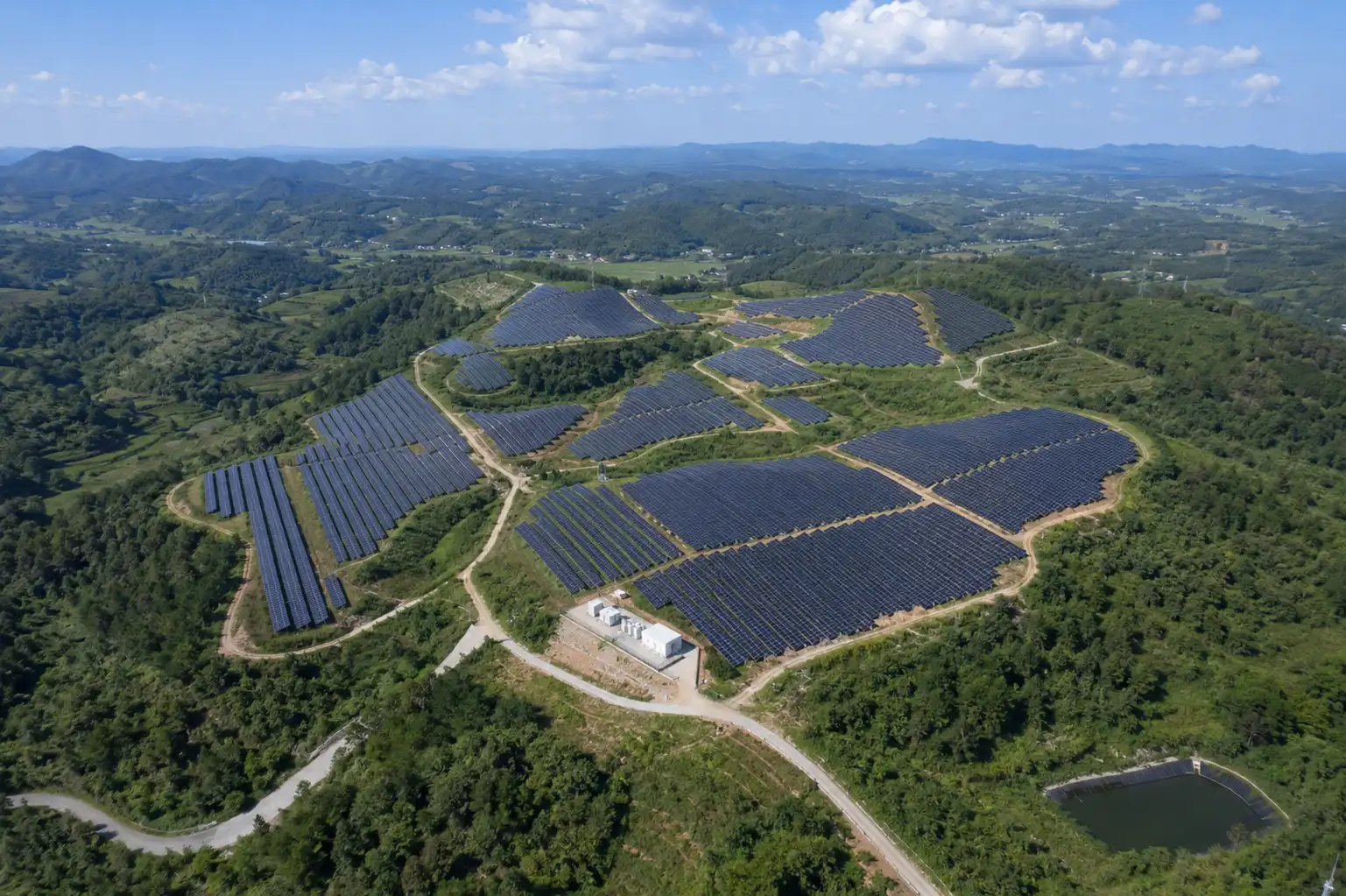
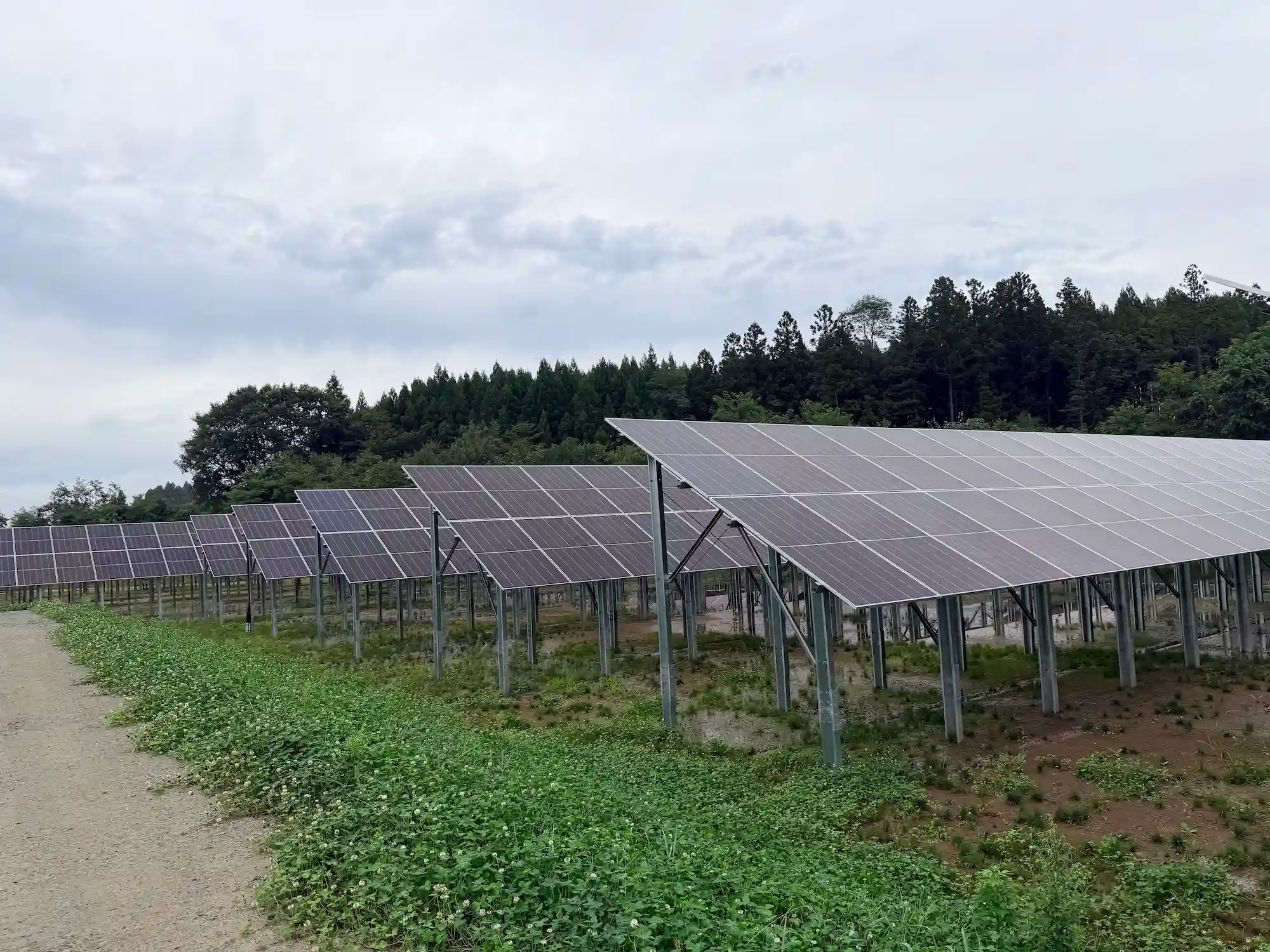
Let’s be honest for a second. When most people think about a solar power plant, they picture the sleek, blue-black sheen of the silicon panels or the high-tech hum of a string inverter. The mounting system? That’s often treated like the “cardboard box” the gift comes in—important, sure, but not exactly the star of the show. At SR Solar, we’ve spent years proving that mindset is a one-way ticket to a maintenance nightmare. To truly innovate solar mounting systems, we have to stop looking at them as passive metal bars and start seeing them as the skeletal system of a multi-million dollar investment.
Think about it. If the “bones” of your project can’t handle a freak winter storm or a salty coastal breeze, those high-efficiency panels are just expensive glass waiting to break. We’ve seen the industry change at breakneck speed. What worked five years ago—standard rails and basic clamps—just doesn’t cut it anymore. We’re in an era where “soft costs” like labor and permitting can swallow your margins whole. That’s why at SR, we don’t just manufacture; we engineer for a future that’s increasingly unpredictable.
The Silent Hero of the Solar Array: Why Innovation Matters Now
Why should an EPC or a developer care about innovating their mounting strategy? It’s simple: Project Certainty. In the B2B world, we aren’t just selling products; we’re selling the promise that a project will still be generating revenue in 2051. When you innovate solar mounting systems, you’re effectively neutralizing the rising “soft costs” that plague our industry. We’ve noticed that while module prices have plummeted, the cost of getting those modules onto a roof has remained stubbornly high.
Innovation is the only lever we have left to pull. It’s about making the hardware smarter so the human element can be faster. We’ve moved past the “one size fits all” era. Whether you’re dealing with a residential rooftop in London or a massive utility-scale farm in the Australian Outback, the structural foundation dictates your long-term IRR. If you’re still using “legacy” mounting, you’re essentially leaving money on the table through slower install times and higher insurance premiums.
Engineering for Resilience: Surviving the “New Normal” of Extreme Weather
We’ve all seen the headlines. “Once-in-a-century” storms are now happening every five years. If you’re building solar in high-wind coastal zones or regions where the snow piles up higher than your fence, a “standard” solution is a liability. At SR Solar, our focus on resilience starts at the molecular level. We don’t guess; we simulate.
How do we ensure a rack doesn’t buckle? We use advanced Finite Element Analysis (FEA). This allows us to stress-test our designs in a virtual wind tunnel before a single piece of aluminum is ever extruded. By optimizing the strength-to-weight ratio, we’ve developed structures that can withstand wind speeds of up to 60m/s. That’s Category 4 hurricane territory. We want our partners to sleep soundly knowing their assets aren’t going to take flight during the next big storm.
The Battle Against Corrosion: AL6005-T5 and the Magic of Mac Steel
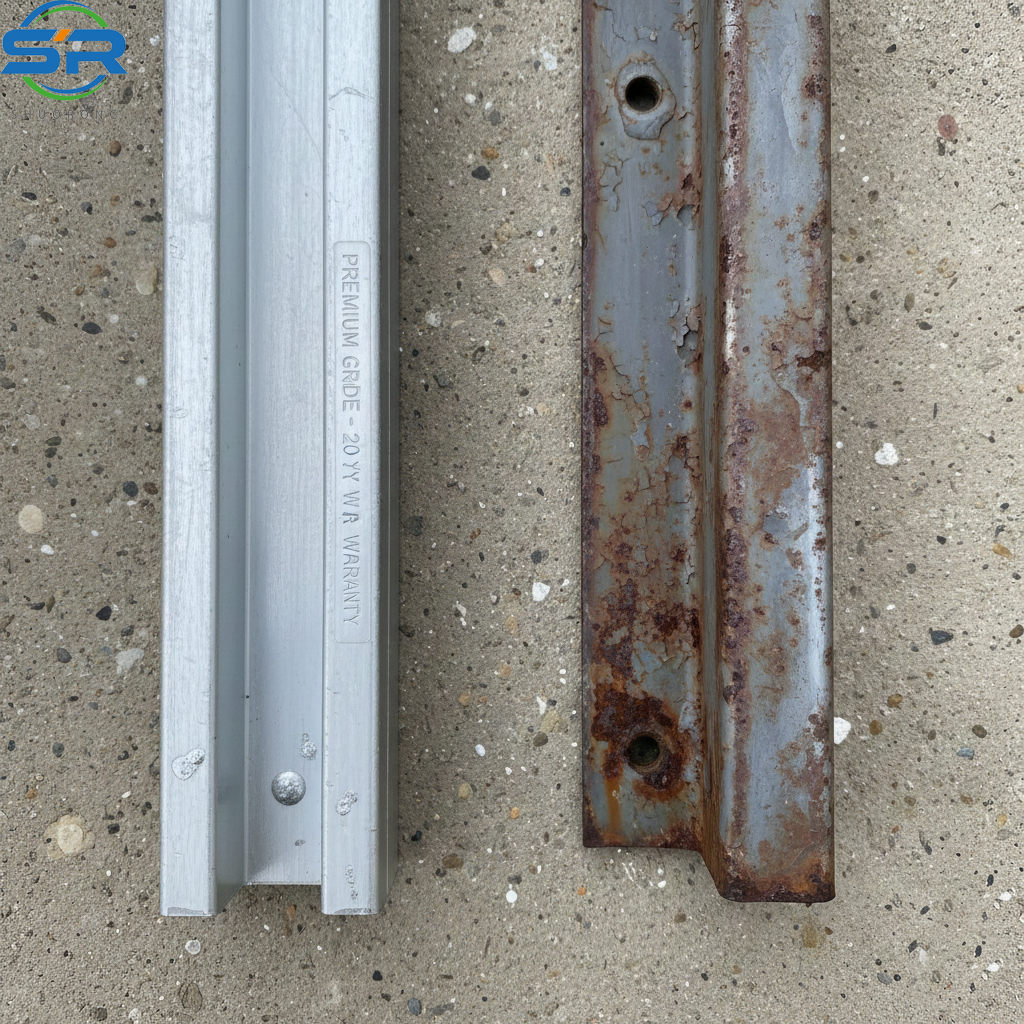
Corrosion is the silent killer of solar ROI, especially in C4 and C5 high-salinity environments. If you’re within five miles of the ocean, the air is basically trying to eat your mounting system. To innovate solar mounting systems here, we utilize high-micron anodization on our AL6005-T5 Aluminum. It creates a shield that laughs at salt spray.
But for ground-mounts, we’ve embraced Mac Steel (Zinc-Aluminum-Magnesium coated). This stuff is like magic. It has “self-healing” properties—if the surface gets scratched during installation, the coating actually migrates to protect the exposed steel. It’s a game-changer for long-term structural reliability. Who wants to send a maintenance crew out to paint rust spots every three years? Not us, and definitely not your clients.
The “Labor-Agnostic” Revolution: Slashing LCOE on the Roof
Let’s talk about the elephant in the room: the skilled labor shortage. It’s getting harder and more expensive to find experienced installers. This is where SR Solar really shines. We’ve adopted a “labor-agnostic” design philosophy. If a system is too complex to install, it’s not a good design—period. Our goal is to shift the complexity from the windy, hot rooftop to our controlled factory floor.
Hyper-Pre-Assembly: Why We Do the Hard Work in the Factory
We’re big believers in Hyper-Pre-Assembly. Why should your crew be fumbling with tiny washers and nuts while balanced on a ladder? We ship our components “Plug-and-Play.” When our kits arrive at the site, the main structural elements are already clicked together. This isn’t just a convenience; it’s a massive financial win. By reducing the number of “touches” required per panel, we’ve seen installation times drop by up to 40%. That’s 40% less time paying for labor and 40% more time to move on to the next project.
The One-Tool Philosophy: Can You Install an Array with Just a Hex Key?
Have you ever seen an installer frantically searching through a tool belt for a specific socket size while the sun is beating down? It’s frustrating. That’s why we’ve pushed for the “One-Tool” Philosophy. Most of our racking components are designed to be secured with a single standard Hex key. It’s simple, it’s elegant, and it eliminates the “where’s that 13mm wrench?” downtime. Plus, our innovative “foldable” and “stackable” designs mean we can fit more product into a single shipping container, lowering your “Landed Costs” before the project even starts.
Size Matters: Adapting to the Era of Massive 600W+ Modules
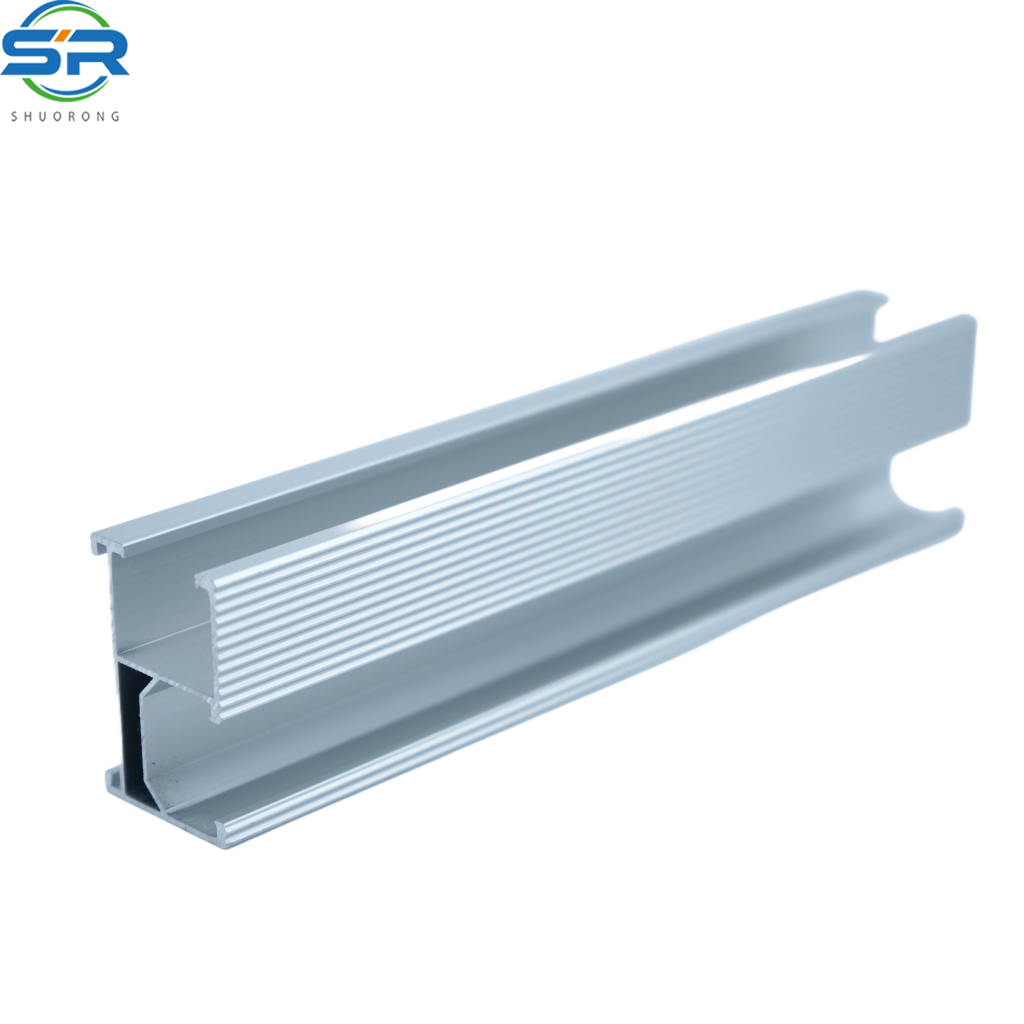
The solar industry has a “growing” problem—literally. Panels are getting huge. The shift toward 600W+ high-power modules has been great for energy density, but it’s been a nightmare for traditional racking. These larger modules act like giant sails, catching wind and creating massive torque and static loads that can twist standard rails like a pretzel.
At SR, we didn’t wait for the market to break our stuff. We updated our rail profiles and universal mid/end-clamps specifically to handle these larger frame heights and increased surface areas. When you innovate solar mounting systems for these giants, you have to think about the “pinch points.” Our clamps provide a larger contact area to distribute pressure, ensuring that the glass doesn’t crack under the stress of thermal expansion or wind vibration.
Versatility Across Landscapes: From Trapezoidal Roofs to Rocky Tundra
One day you’re installing on a standing seam metal roof for a warehouse; the next, you’re trying to anchor a ground-mount into rocky, uneven soil. Flexibility is a core part of the SR Solar DNA. We’ve developed roof-agnostic solutions that preserve warranties. For example, our trapezoidal metal roof attachments are designed to be non-penetrative where possible, or to use EPDM seals that last as long as the building.
For ground-mounts, we offer a choice: Ground Screws vs. Concrete Bases. Not every site can handle a concrete truck, and not every site allows for deep excavation. Our systems adapt to the terrain, not the other way around. This means you spend less time on expensive site leveling and more time actually generating power.
Global Compliance: Navigating the Maze of International Standards
Innovation doesn’t mean anything if you can’t get your project permitted. In the B2B world, Bankability is king. Investors need to know that the structure meets the most stringent international building codes. At SR Solar, we don’t just “follow” standards; we treat them as our baseline.
We ensure full alignment with AS/NZS 1170.2 for our friends in Australia, JIS C 8955 for the Japanese market, and MCS for the UK. But we go a step further. We provide comprehensive structural calculation reports tailored to your specific project coordinates. When an EPC is in the “Permitting Phase,” having a ready-to-go engineering pack from SR Solar can shave weeks off the approval process. We’re not just providing metal; we’re providing the documentation that gets the loan approved.
The SR Solar Promise: More Than Just Racking, It’s Project Certainty
At the end of the day, SR Solar is here to make you look good. We know that when you’re bidding on a complex project, you need a partner who understands the engineering nuances. We don’t just ship boxes; we provide a foundation. Our team is constantly looking for ways to innovate solar mounting systems because we know that the “brighter future” we’re all working toward depends on things staying exactly where we put them.
By integrating customized engineering support with our high-durability hardware, we empower our partners to bid more competitively. You can walk into a meeting with a developer and say, “We’re using SR Solar—it’s hurricane-rated, labor-efficient, and fully certified.” That’s a powerful pitch.
Conclusion: Building a Foundation That Lasts Decades
The journey to a sustainable planet is a long-distance run, not a sprint. To get there, we need infrastructure that can go the distance. Innovating your solar mounting systems isn’t just a technical upgrade; it’s a strategic move to future-proof your business against rising costs and a changing climate. Whether it’s through our “One-Tool” simplicity or our high-micron anti-corrosion mastery, SR Solar is committed to providing the structural integrity your projects deserve. Let’s build something that lasts.
Frequently Asked Questions
1. How much time can I really save with pre-assembled components?
On average, our partners report a reduction in on-site assembly time of about 30% to 40%. Because the most complex “fiddly” parts are handled in our factory, your team can focus on alignment and securing the modules, which drastically speeds up the overall timeline.
2. Can SR Solar mounting handle the newer, larger 670W+ panels?
Absolutely. We’ve specifically redesigned our rail profiles and universal clamps to accommodate the increased torque and static loads associated with large-format modules. Our systems are tested to ensure there is no micro-cracking of the cells even under high wind pressure.
3. What makes Mac Steel better than standard galvanized steel for ground mounts?
Mac Steel (Zinc-Aluminum-Magnesium) offers significantly higher corrosion resistance and, crucially, a self-healing property. If the surface is scratched, the coating reacts to protect the exposed area, which is vital for maintaining structural integrity over a 25-year lifespan in harsh soils.
4. Do you provide engineering support for specific project permits?
Yes! We provide tailored structural calculation reports that align with local building codes (like AS/NZS 1170 or JIS C 8955). This helps EPCs and developers navigate the permitting process much faster and provides the “bankability” required by investors.
5. Is the “One-Tool” philosophy really practical for large-scale installs?
It’s actually more practical at scale. When you have dozens of workers on a site, minimizing the variety of tools needed reduces errors, lowers the risk of lost equipment, and simplifies the training process for new crew members.