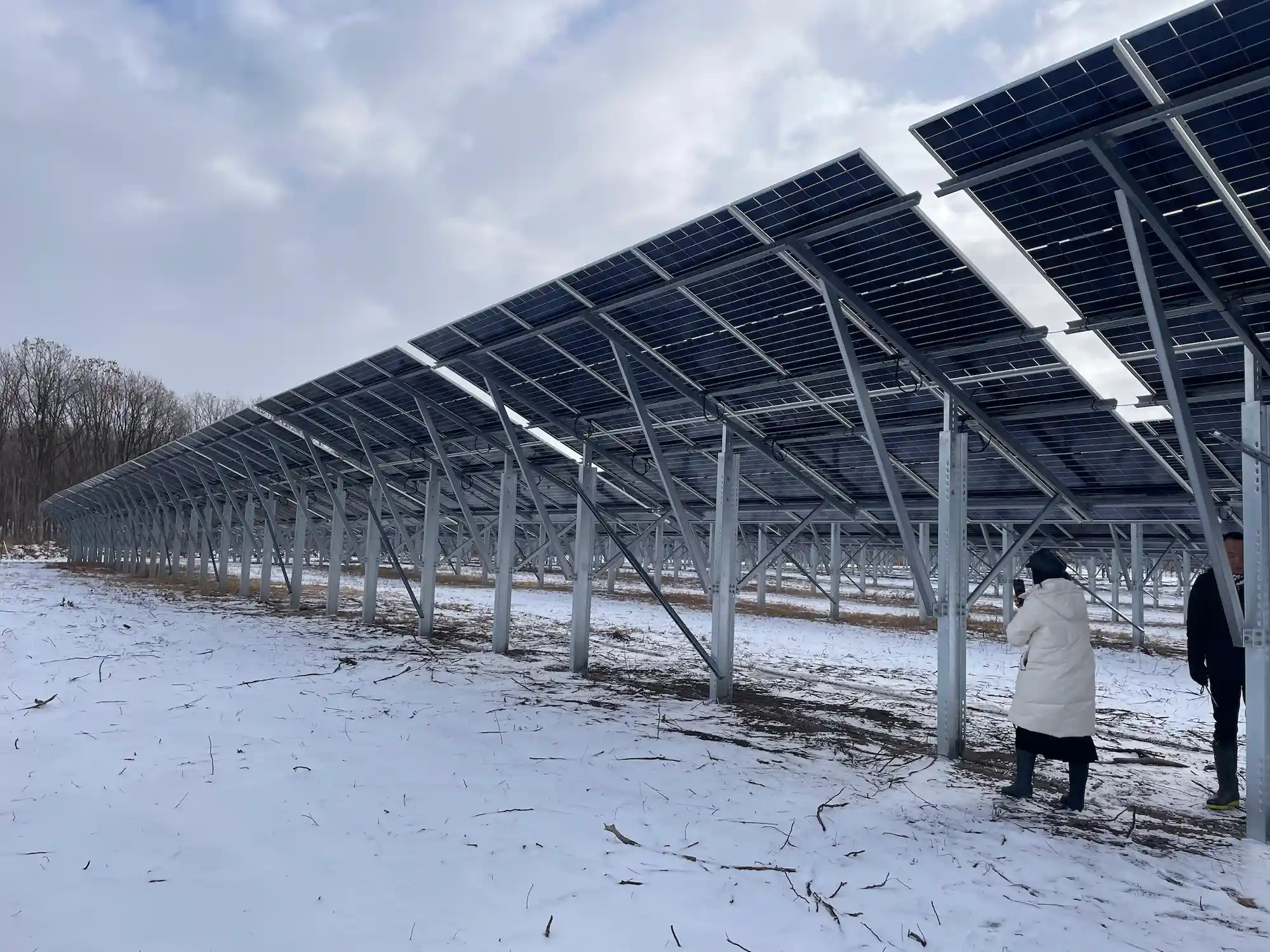
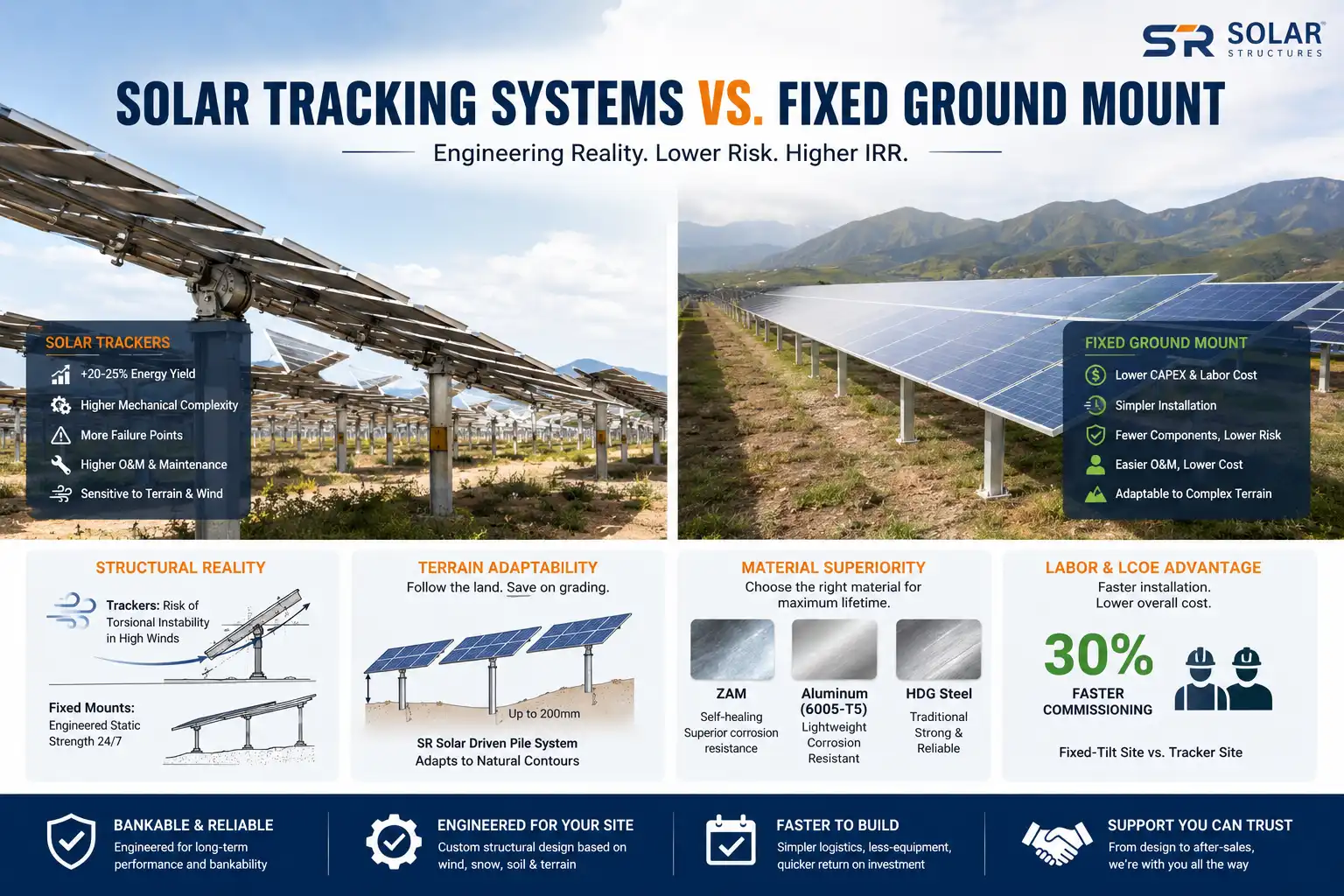
When planning a solar project, solar PV panel mounting systems are more than a structure for holding PV modules in place. The mounting system transfers loads from the modules into the foundation and ultimately into the roof or ground. Its design affects structural safety, installation efficiency, corrosion resistance, maintenance, and the overall cost of the project.
So, how do you choose the right system?
There is no universal answer. A ground-mounted utility project, a commercial rooftop, a solar carport, and an Agri-PV project can have completely different structural requirements. Even two ground-mounted projects using the same solar panels may need different materials or foundations because their soil, wind conditions, and installation requirements are different.
For EPCs, the better approach is to start with the project conditions and then select the mounting structure, material, and foundation accordingly.
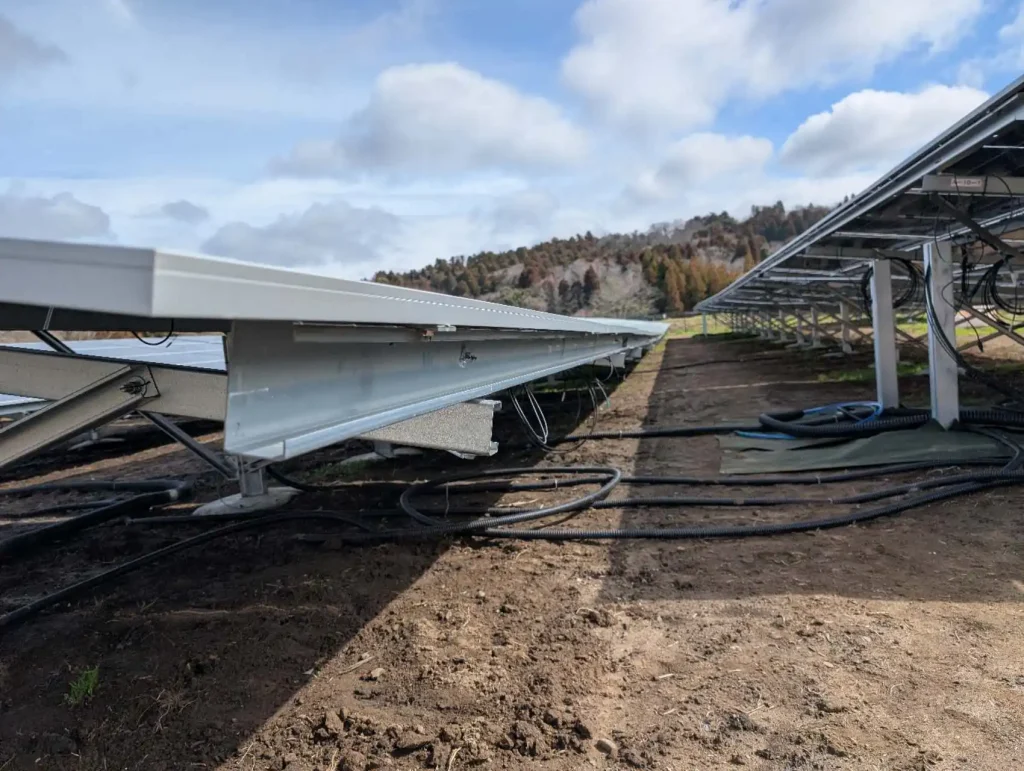
What Are Solar PV Panel Mounting Systems?
A solar PV mounting system is the structural framework used to support and secure photovoltaic modules.
A complete system can include components such as:
- Mounting posts or supports
- Rails and beams
- Module clamps
- Brackets and connectors
- Fasteners
- Foundation components
But looking at individual components can miss the bigger picture.
A mounting system has to work as a complete structural system. Wind loads acting on the modules are transferred through the rails and structural members and then into the foundation. The foundation must provide sufficient resistance against uplift, lateral forces, and other loads according to the project design requirements.
This is why simply choosing a mounting rail based on module size is not enough.
The right solar PV panel mounting systems need to match the site, structural loads, foundation conditions, and installation method.
Types of Solar PV Panel Mounting Systems
Different PV projects require different mounting approaches. The most common categories include ground-mounted, rooftop, carport, and Agri-PV systems.
| Mounting Type | Typical Application | Key Considerations |
|---|---|---|
| Ground Mount | Utility-scale and commercial solar farms | Soil, wind load, foundation, corrosion |
| Rooftop Mount | Residential and commercial buildings | Roof structure, waterproofing, attachment method |
| Solar Carport | Parking areas | Clearance, wind load, drainage, vehicle access |
| Agri-PV | Agricultural land | Structure height, crop requirements, access |
Ground-Mounted Solar PV Panel Mounting Systems
Ground-mounted systems are widely used for commercial and utility-scale solar projects.
Unlike rooftop installations, ground-mounted systems allow the EPC to select and engineer the foundation according to the actual ground conditions. This provides flexibility, but it also means that soil and geotechnical conditions become important parts of the design process.
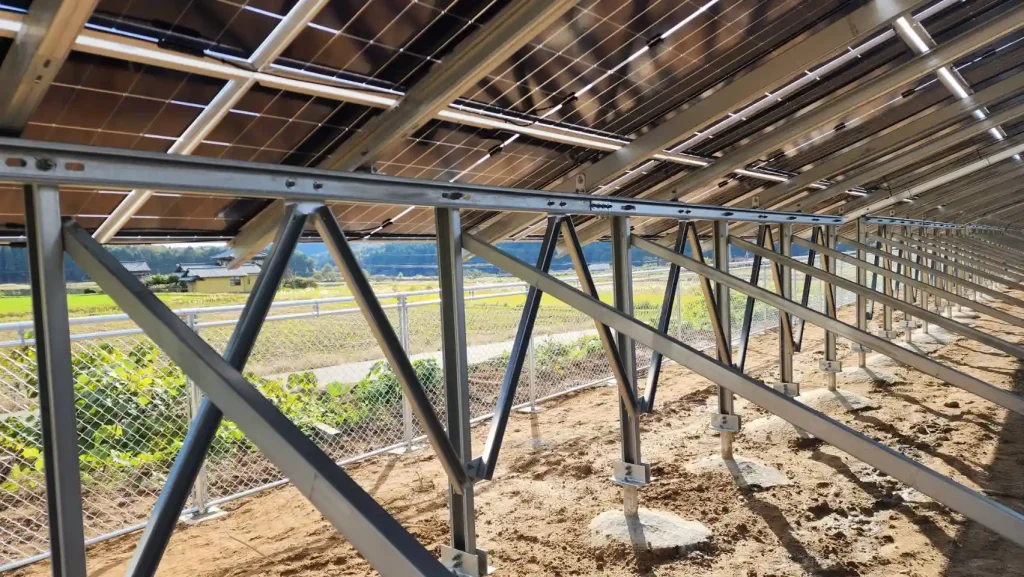
Depending on the project, a ground-mounted system may use:
- Ground screw foundations
- Driven pile foundations
- Concrete foundations
- Concrete reinforcement combined with ground screws or driven piles
Rooftop Solar PV Mounting Systems
Rooftop mounting system have a different set of engineering constraints.
The mounting structure must work with the existing roof rather than simply being installed into the ground. Roof type, structural capacity, attachment method, waterproofing, and available installation space all need to be considered.
Metal roofs, tile roofs, and other roof structures may require different mounting components.
For an EPC, the key question is not simply whether a bracket fits the roof. It is whether the complete attachment system can safely transfer the design loads without creating unnecessary risks to the roof structure or waterproofing system.
Solar Carport Mounting Systems
Solar carports combine PV generation with parking infrastructure.
The structure needs to provide adequate clearance for vehicles while supporting the PV array and managing environmental loads. Drainage, column positioning, access, and the overall structural layout can also affect the design.
Because the structure is elevated and exposed, wind loading can be particularly important.
Agri-PV Mounting Systems
Agri-PV projects require the solar structure to coexist with agricultural activities.
The mounting design may need to consider:
- Structure height
- Crop requirements
- Equipment access
- Shading
- Maintenance
- Agricultural operations
The objective is not simply to maximize the number of modules. The mounting system has to work with the actual agricultural use of the site.
Materials Used in Solar PV Panel Mounting Systems
Material selection affects structural performance, weight, corrosion resistance, installation, and project cost.
For many PV mounting applications, three material options are particularly relevant:
Aluminum
Aluminum is widely used in solar mounting structures because of its relatively low weight and good corrosion resistance.
Its lower weight can also make handling and installation easier, particularly for rooftop applications and projects where manual handling is important.
However, material selection should not be based on weight alone. Structural requirements, profile design, span, loads, and connection details all need to be considered.
HDG Steel
HDG, or hot-dip galvanized steel, is commonly used where higher structural strength and robust steel construction are required.
It can be suitable for many ground-mounted PV applications, especially where the structural design calls for steel members with significant load-bearing capacity.
The actual corrosion protection requirements should still be evaluated according to the project environment. Coastal areas, humid regions, industrial environments, and other corrosive conditions may require additional consideration.
ZAM Steel
ZAM Steel is another steel-based option used in PV mounting structures.
The important point is how the material is produced.
ZAM steel uses a steel substrate with a ZAM corrosion-resistant coating. The coating is applied by the steel mill during the production of the raw material, so the ZAM material arrives at the mounting manufacturer already coated.
The steel can then be processed into the required profiles and components.
For EPCs, the practical question is not “Which material is the best?”
A better question is:
Which material provides the right combination of structural performance, corrosion resistance, installation efficiency, and project cost for this site?
How to Choose the Right Foundation for Solar PV Panel Mounting Systems
For ground-mounted projects, foundation selection is one of the most important engineering decisions.
A common EPC error is to select a foundation based only on what has worked on a previous project.
Why can that be a problem?
Because soil conditions can vary significantly from one site to another. A foundation that performs well on one project does not automatically have the same capacity on another site.
SR Solar uses three main foundation approaches for ground-mounted PV systems.
Ground Screw Foundation
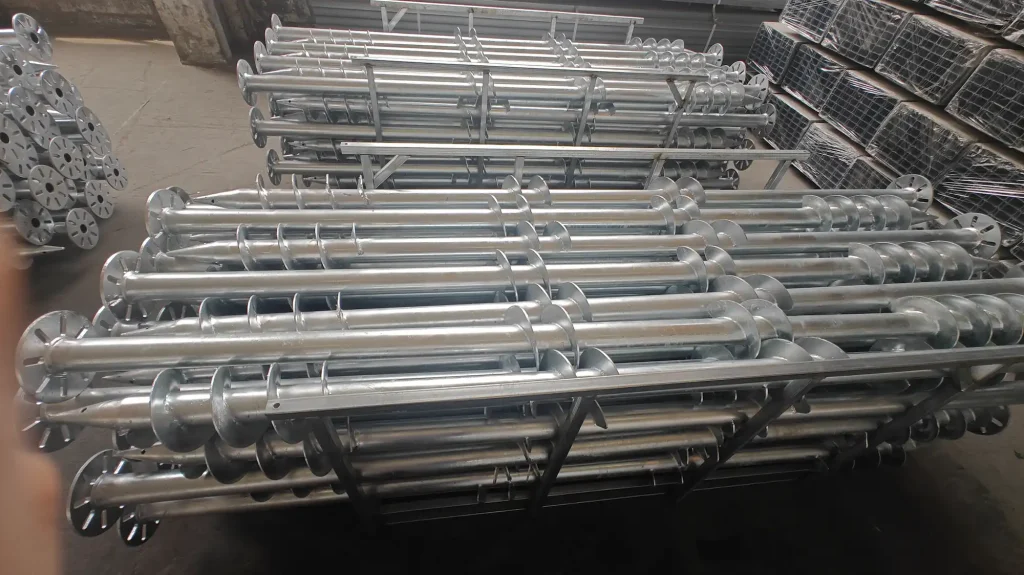
Ground screws, also called helical piles in some applications, are installed directly into the ground and provide a foundation for the mounting structure.
Different ground screw configurations can be used depending on project requirements.
For example, SR Solar can provide:
- Standard ground screws
- Two-blade ground screws
- Four-blade ground screws
- More complex blade configurations where required
The blade configuration, dimensions, installation depth, and overall design can be adjusted according to the required foundation performance and site conditions.
The advantage of this approach is that it can avoid large-scale excavation and concrete work in suitable soil conditions, potentially improving installation efficiency.
But ground screws are not automatically suitable for every site.
Soil type, bearing capacity, pull-out resistance, groundwater conditions, and project loads need to be considered before finalizing the design.
Driven Pile Foundation
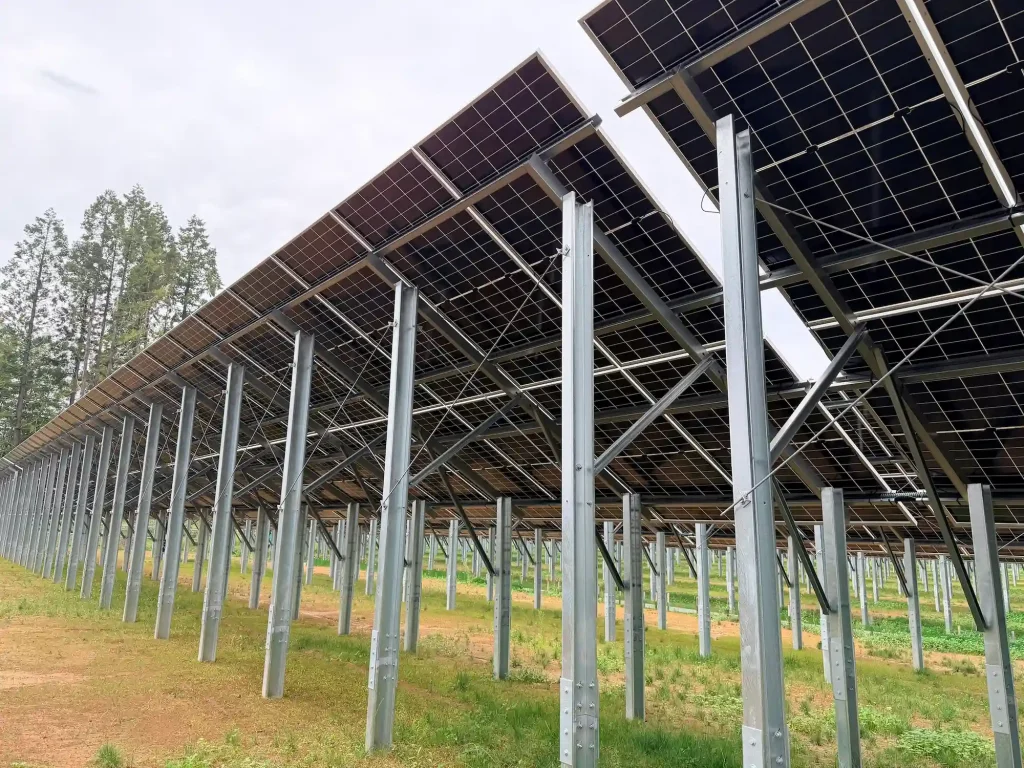
Driven pile foundations are another common solution for ground-mounted solar projects.
The piles are driven into the ground to the required depth and connected to the PV mounting structure.
For large projects, driven piles can offer efficient installation when the site conditions are suitable.
However, installation depth and foundation capacity cannot be determined by project size alone. Soil conditions and design loads remain important.
The engineering team needs to evaluate whether the selected pile configuration can provide sufficient resistance against the expected structural loads.
Concrete Foundation
Concrete foundations are also used for ground-mounted solar projects.
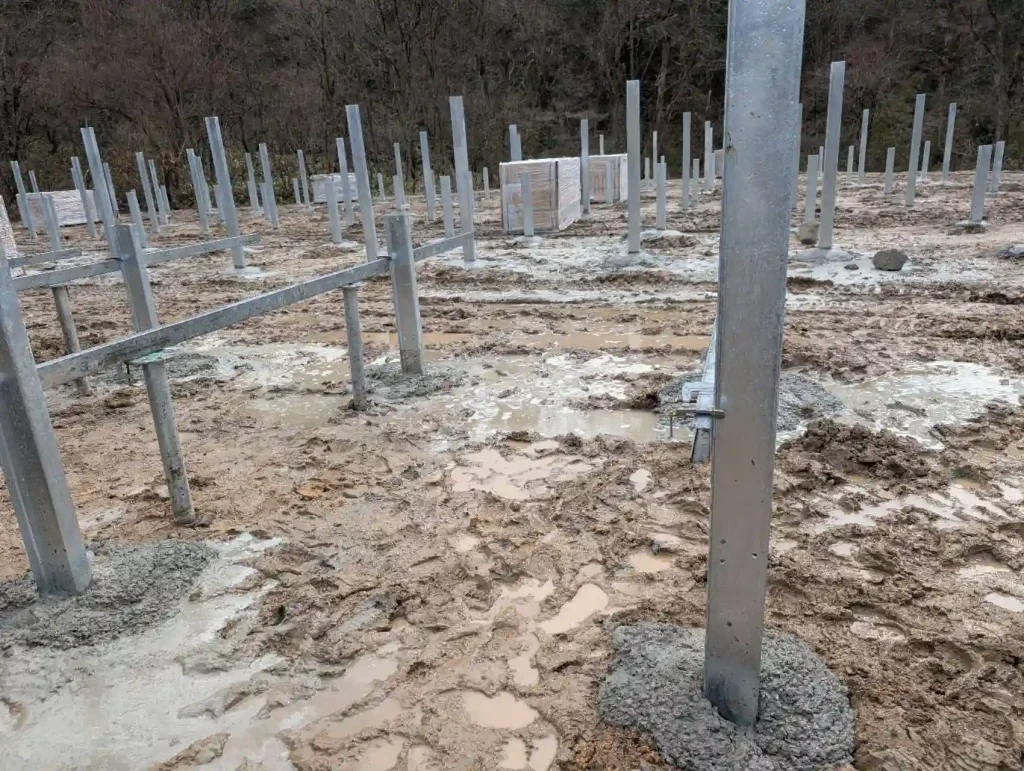
In some projects, the mounting structure is supported directly by a concrete foundation. This is the more familiar meaning of a concrete foundation.
But there is another situation that EPCs should consider.
Concrete Reinforcement for Ground Screws or Driven Piles
Sometimes a ground screw or driven pile by itself does not provide sufficient foundation capacity for the project requirements.
In this situation, concrete can be added to reinforce the foundation.
The sequence may look like this:
Ground Screw or Driven Pile → Foundation Capacity Evaluation → Concrete Reinforcement → Increased Foundation Support
This does not mean that ground screws or driven piles are inherently unsuitable. It means that the final foundation design has to satisfy the actual project requirements.
What Factors Affect Solar PV Mounting System Design?
The mounting structure and foundation should be considered together.
Several factors can affect the final design.
Wind Load
Wind is one of the major loads considered in PV mounting design.
The actual design depends on factors such as:
- Project location
- Wind speed
- Terrain
- Structure height
- Module tilt
- Array configuration
- Building or site conditions
A mounting structure that works in a low-wind inland location may require a different design in a high-wind or coastal environment.
Soil Conditions
For ground-mounted systems, soil conditions directly affect foundation selection.
This is particularly important for ground screws and driven piles because their performance depends on how the foundation interacts with the surrounding soil.
A geotechnical investigation report can provide valuable information for the engineering design.
Corrosion Environment
The project environment also matters.
Coastal and high-salinity areas can place greater demands on corrosion resistance. Humid environments and industrial areas may also require careful material selection.
This is where the choice between aluminum, HDG steel, and ZAM steel should be considered together with the actual site conditions.
Installation Requirements
Engineering performance is only part of the equation.
For EPCs, installation labor can have a significant impact on the total project cost.
A mounting system that uses more components, requires more on-site adjustment, or takes longer to install can increase labor costs even if its material price appears attractive.
The better comparison is the complete installation cost rather than the price of a single component.
How Should EPCs Choose Solar PV Panel Mounting Systems?
The selection process should start with the project rather than with a product catalog.
A practical workflow is:
- Define the project conditions — location, capacity, module specifications, and layout.
- Evaluate structural loads — including wind and other applicable design requirements.
- Review soil or roof conditions — especially for ground-mounted foundations.
- Select the appropriate material — aluminum, HDG steel, or ZAM steel.
- Select the foundation — ground screw, driven pile, concrete, or reinforced foundation.
- Check installation efficiency — consider labor, equipment, and site conditions.
- Finalize the complete mounting system design — structure and foundation should be evaluated as one system.
The important point is that foundation selection should not be separated from structural design.
A strong PV mounting system is a coordinated system from the module connection all the way down to the foundation.
What If You Are Not Sure Which Foundation to Use?
This is a common situation, especially during the early stage of a solar project.
You do not necessarily need to decide the foundation yourself before contacting a mounting manufacturer.
If you have a geotechnical investigation report, you can provide it to SR Solar together with the available project information.
The SR Solar engineering team can use the project data to evaluate the site conditions and develop the mounting system according to the project requirements.
Useful information can include:
- Geotechnical investigation report
- Project location
- System capacity
- PV module specifications
- Array layout
- Wind load requirements
- Roof information for rooftop projects
- Other available site data
The engineering process can then follow a practical path:
Project Information → Engineering Evaluation → Foundation Selection → Structural Design → Complete PV Mounting System
This approach is particularly useful when the site conditions are unusual or when the EPC is comparing several foundation options.
Why Complete System Design Matters
A solar mounting system should not be evaluated by looking at one component in isolation.
For example, a stronger steel profile does not automatically solve a foundation problem. Likewise, a low-cost foundation does not necessarily reduce the total project cost if it requires more installation work or does not meet the required structural performance.
The complete system needs to work together:
Module → Clamp → Rail → Structural Member → Foundation → Ground
When these components are designed as one system, the EPC can make better decisions about structural reliability, installation efficiency, material selection, and project cost.
This is also why project-specific engineering matters.
In our project experience, the same mounting concept can require different structural details or foundation configurations when the project location, soil conditions, or design loads change.
Summary: Choosing the Right Solar PV Panel Mounting Systems
The right solar PV panel mounting systems are not determined by one factor.
The project type, material, wind conditions, soil, corrosion environment, foundation, and installation method all influence the final design.
For ground-mounted projects, SR Solar provides three main foundation approaches:
- Ground Screw Foundation, including different blade configurations
- Driven Pile Foundation
- Concrete Foundation, including concrete reinforcement where additional foundation support is required
For materials, the main options include:
- Aluminum
- HDG Steel
- ZAM Steel
The best solution is therefore not simply the cheapest structure or the strongest material. It is the system that matches the actual project requirements.
If you already have a project location, module specifications, layout, or geotechnical investigation report, you can provide the available information to SR Solar. Our engineering team can evaluate the requirements and design a complete solar mounting solution around the project conditions.
Get a Customized Solar Mounting Solution
FAQs About Solar PV Panel Mounting Systems
1. What are solar PV panel mounting systems?
Solar PV panel mounting systems are structural systems used to support and secure photovoltaic modules. They include structural members, rails, clamps, connectors, fasteners, and foundations or roof attachments depending on the project.
2. What materials are commonly used for solar PV mounting systems?
Common options include aluminum, HDG steel, and ZAM steel. The appropriate choice depends on structural requirements, corrosion environment, installation conditions, project scale, and cost.
3. What is the difference between a ground screw and a driven pile foundation?
A ground screw is installed into the soil using a helical screw configuration, while a driven pile is driven into the ground to the required depth. The appropriate option depends on soil conditions, structural loads, foundation capacity, and installation requirements.
4. Does a ground-mounted solar system always need a concrete foundation?
No. Ground-mounted PV systems can use ground screws or driven piles when site and structural conditions are suitable. Concrete foundations can also be used, and concrete reinforcement may be added when a ground screw or driven pile requires additional foundation support.
5. How can I determine which solar mounting foundation is right for my project?
Start with the project information and, where available, a geotechnical investigation report. You can provide this information to SR Solar so the engineering team can evaluate the site conditions and design the mounting system and foundation according to the project requirements.