1. Decision-Making Logic Table: Why Design Matters to Your Bottom Line
Before we dive into the bolts and beams, let’s look at how design choices directly translate into your project’s financial performance.
| Design Phase | EPC Priority | Engineering Pivot Point | Economic Impact |
| Site Analysis | Risk Mitigation | Soil Friction vs. Corrosivity | Avoids $100k+ in foundation rework |
| Material Selection | Durability/Lead Time | ZAM vs. HDG vs. Aluminum | Balances CAPEX vs. 25-year Maintenance |
| Structural Geometry | Installation Speed | Pre-assembled parts vs. Field Bolting | Reduces Man-hours per MW by 15-20% |
| Foundation Type | Equipment Efficiency | Ramming vs. Concrete vs. Helical | Determines site mobilization & speed |
2. Beyond the Surface: The Technical Depth of Ground Mount Solar Design
When you’re staring at a 50MW utility-scale site plan, the Ground Mount Solar Design isn’t just a line item—it’s your structural insurance policy.
2.1 The Math of Wind Loads: Why “Standard” Isn’t Enough
Why should an EPC care? If your design doesn’t account for the “Gust Effect Factor”, you aren’t building a power plant; you’re building a giant sail. We’ve seen competitors’ racks twist because they didn’t account for vortex shedding—the rhythmic vibration caused by wind that can loosen every mid-clamp on your site over a decade.
2.2 Material Science: ZAM vs. HDG vs. Aluminum
Which material wins the race? It depends on your soil pH and distance from the coast.
- ZAM (Zinc-Aluminum-Magnesium): The current industry gold standard. Why? Its self-healing properties on cut edges are a lifesaver when your team needs to make field adjustments.
- Hot-Dip Galvanized (HDG) Steel: Reliable for high-salinity environments, but watch the coating thickness. A common EPC error is specifying 65μm when the local soil chemistry requires 85μm+ for a 25-year lifespan.
- Anodized Aluminum (6005-T5): Best for projects where manual labor is the only option. It’s light, but requires precise thermal expansion gaps in long rows.
3. The “Real-World” Layer: Field Lessons from the Trenches
In our project experience, the best design on paper often fails the “dirt test.”
3.1 The “Refusal” Nightmare
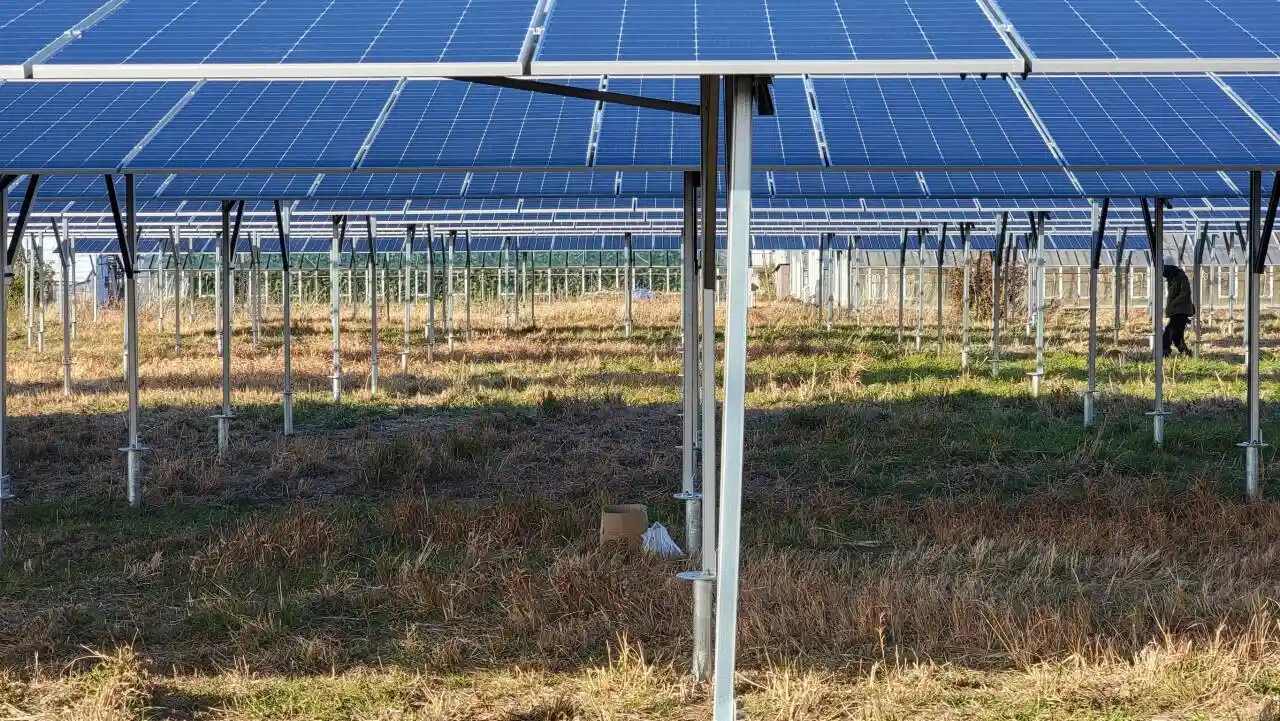
Have you ever had a ramming machine hit “refusal” at 1.2 meters on a 2.5-meter pile specification? This is where a robust Ground Mount Solar Design proves its worth. A well-engineered system must have a “Plan B” foundation (like a concrete ballast or rock bolt) already pre-approved in the drawings to avoid weeks of downtime.
3.2 The Labor Killer: Tolerance Stack-up
If your mounting rails don’t allow for at least +/- 50mm of adjustment in all three axes, your labor costs will skyrocket. Why? Because piles are never driven perfectly straight. At SR Solar, we utilize slotted hole engineering and telescoping post designs. Even if the pile is slightly off-vertical, the array remains laser-straight, saving your installers from “fighting the steel.”
4. Economic Impact: Engineering for a Lower LCOE
For an EPC, the “Steel Cost” is only about 40% of the total racking expense. The real money is in the 60% hidden in shipping, staging, and torqueing thousands of bolts.
4.1 SKU Reduction and Logistics
How many different bolt sizes are on your site? If your Ground Mount Solar Design uses 5 different bolt lengths, your crew will waste 10% of their day just looking for the right socket. We design for SKU Minimalism—using the same hardware across the entire structure whenever possible.
4.2 Packaging that Lowers Freight
If we can fit 20% more racking into a 40HQ container through “foldable” design, we just cut your inland freight costs by $0.005/watt. That adds up fast on a multi-megawatt site.
5. The SR Solar Standard: Structural Confidence
We don’t just sell components; we provide structural assurance. Every SR Solar Ground Mount Solar Design undergoes rigorous Finite Element Analysis (FEA) and is cross-checked against international standards like AS/NZS 1170.2 and JIS C 8955. We ensure that the bridge between your financial model and the physical asset is unbreakable.
6. Summary: Your Foundation for Success
Ground mount solar design is the unsung hero of project ROI. By prioritizing site-specific soil data, material chemistry (like ZAM), and installation tolerances, you aren’t just building a rack—you’re securing a 25-year revenue stream.
FAQs
Q1: Which foundation is best for rocky soil?
Usually, a pre-drilled hole with concrete grout or a heavy ballast system is required if pile driving hits refusal.
Q2: How does terrain slope affect ground mount solar design?
Most standard systems handle up to 10 degrees. For steeper slopes, we recommend a “Portrait” orientation with independent rows to avoid expensive earth leveling.
Q3: Is ZAM really worth the premium over HDG?
In humid or high-ammonia (agricultural) environments, yes. Its resistance to “red rust” creep is significantly superior to standard galvanization.
Q4: What is the typical wind speed rating?
Most utility designs start at 150km/h, but for typhoon-prone zones, we can reinforce the Ground Mount Solar Design to withstand up to 250km/h.
Q5: Can these designs support Bifacial modules?
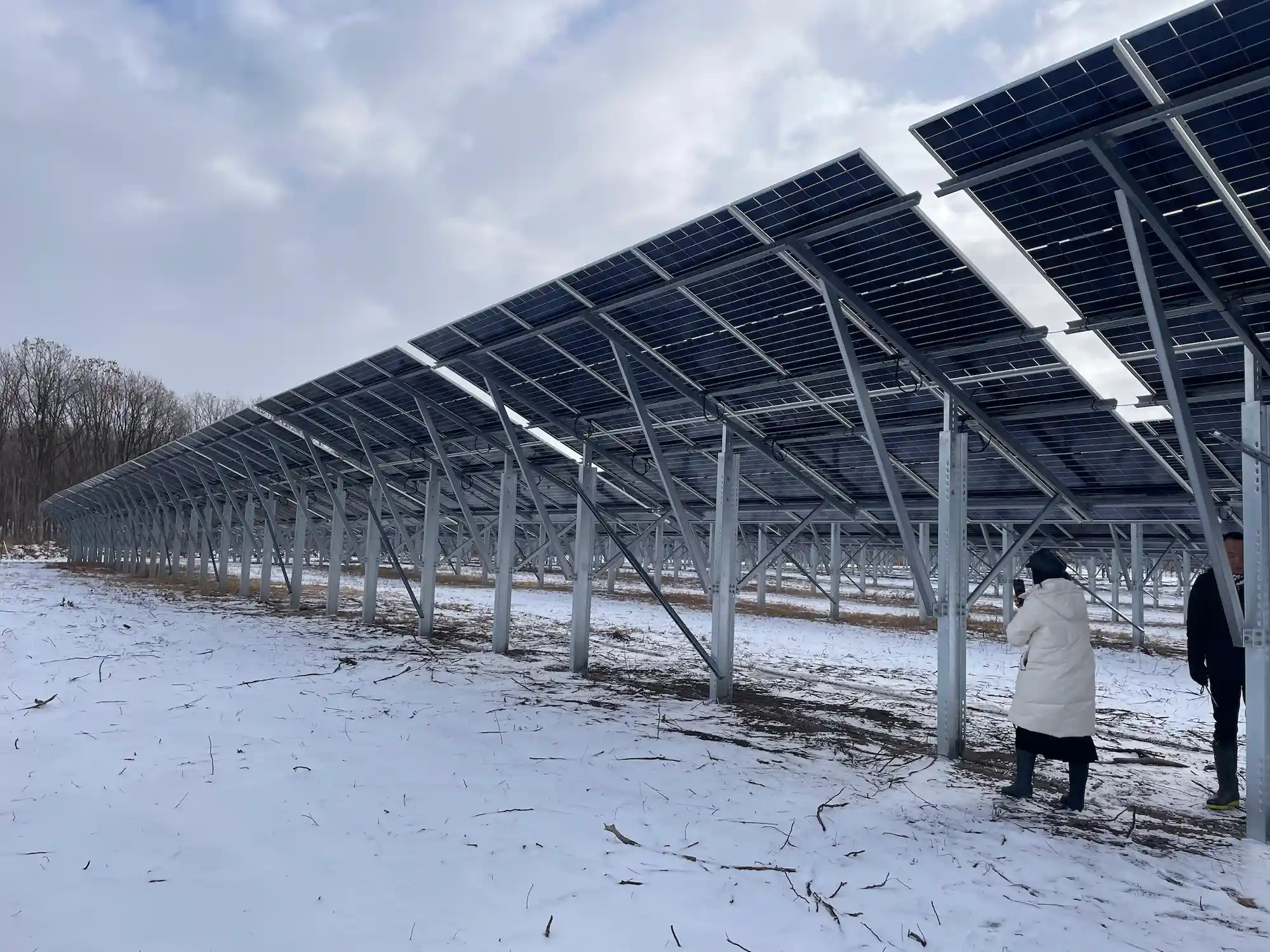
Absolutely. A high-quality design will minimize backside shading by using specialized rail profiles, boosting your bifacial gain by an extra 5-10%.
Need a structural review for your next tender?
Contact the SR Solar Engineering Team today for a complimentary Ground Mount Solar Design optimization and site assessment.