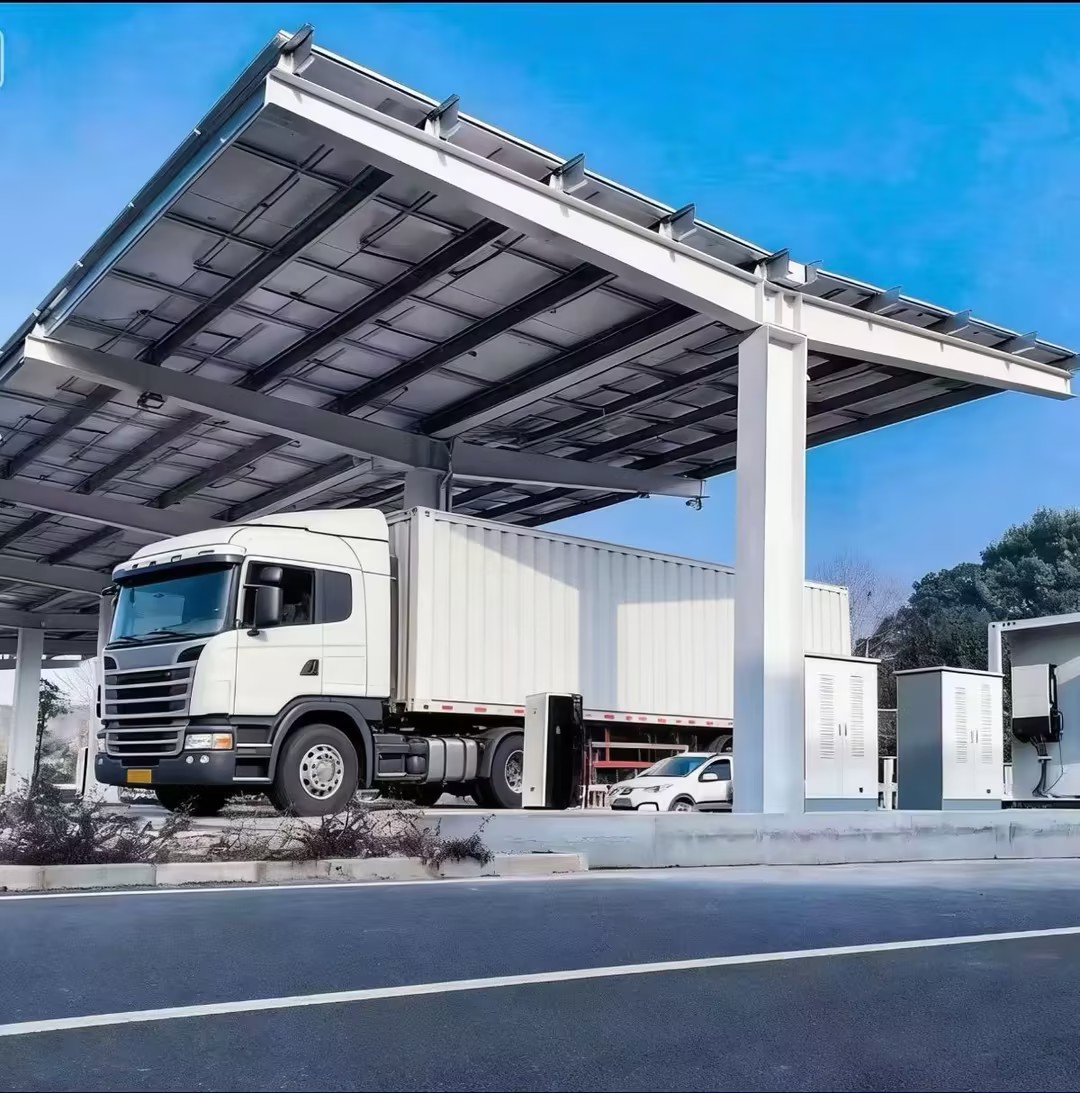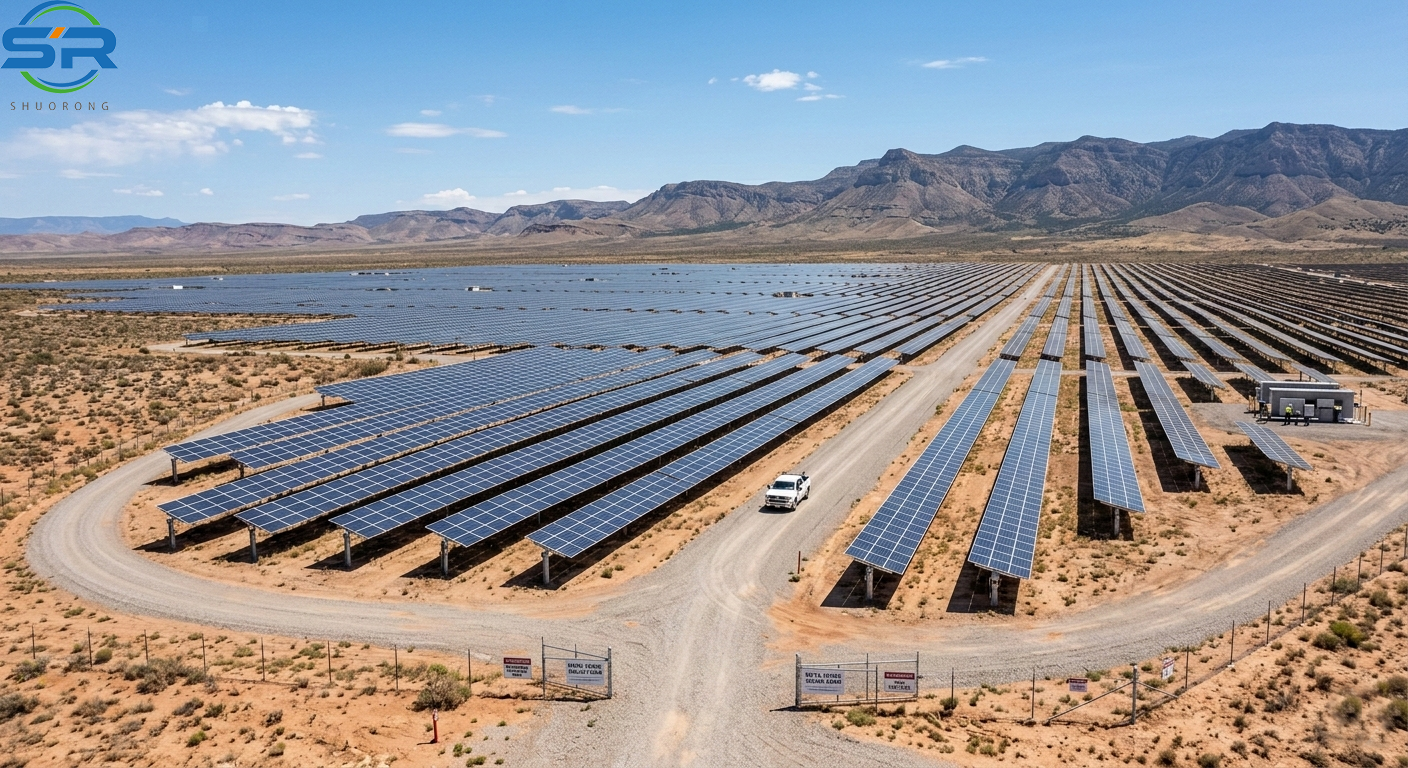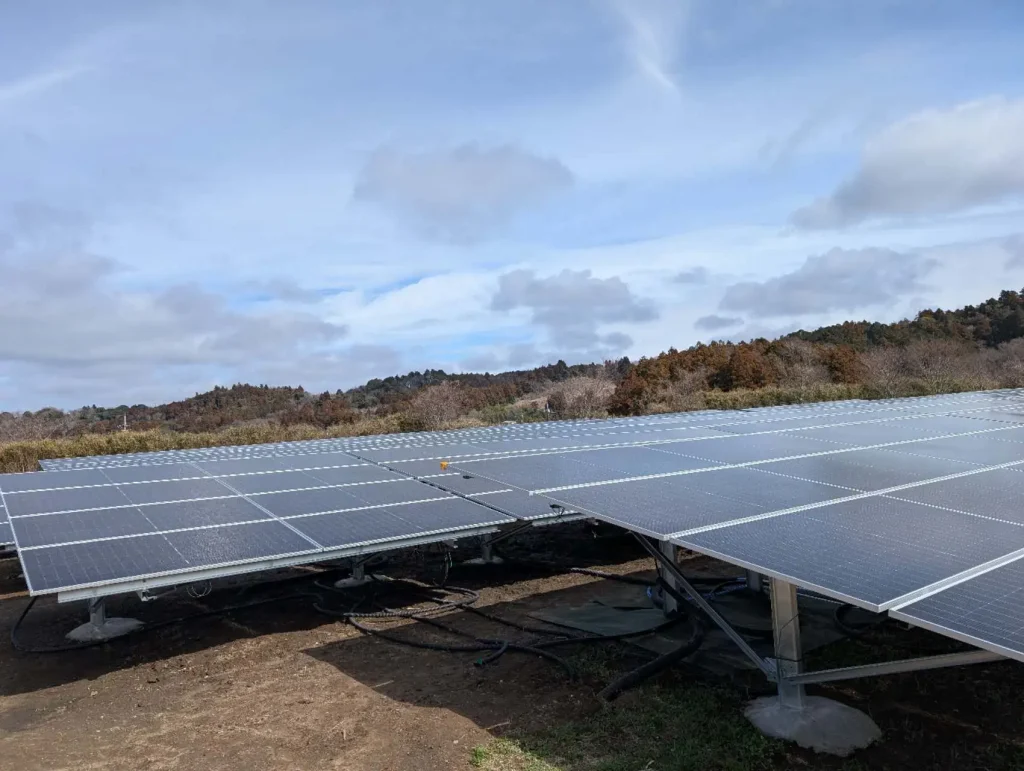
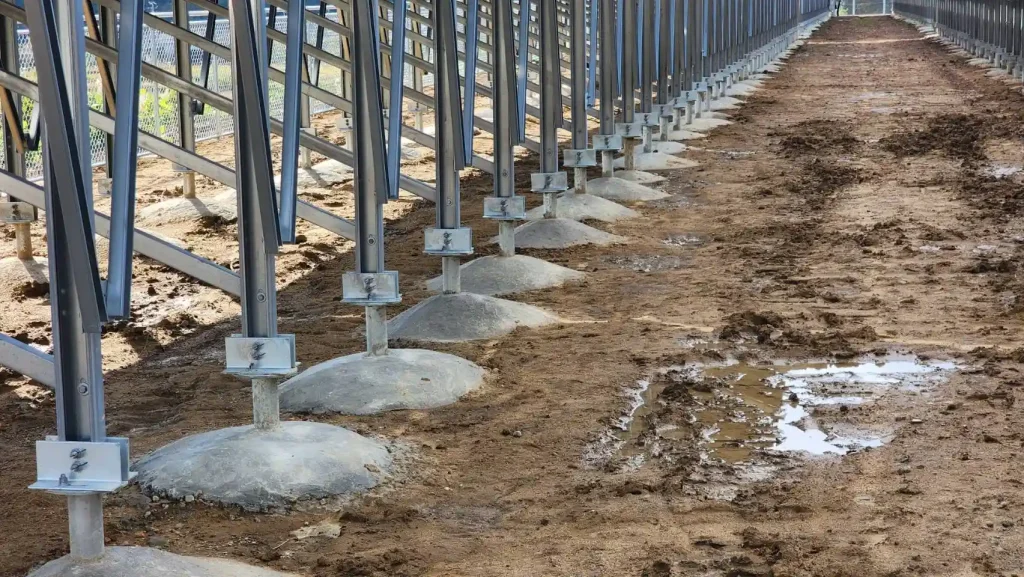
A solar mounting foundation sometimes needs additional concrete reinforcement when the standard foundation cannot provide sufficient resistance for the project’s design loads and actual ground conditions.
But does that mean every driven pile or ground screw needs concrete?
No.
Concrete reinforcement is not a default requirement for solar mounting systems. It is an engineering solution used when factors such as wind load, snow load, soil conditions, pull-out resistance, lateral resistance, or settlement make the standard foundation insufficient.
For EPCs, the real question is not simply “Should we add concrete?”
The better question is:
“Can the selected foundation safely transfer the project’s design loads into the ground?”
That is where foundation engineering becomes important.
Why Does a Solar Foundation Need to Resist So Much Force?
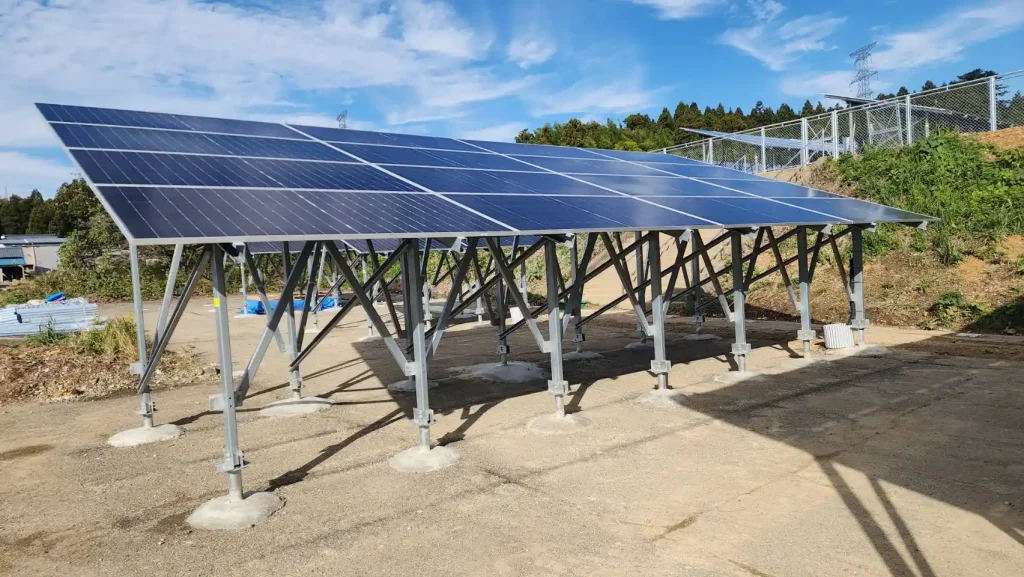
A solar mounting system may look relatively simple after installation. PV modules sit on rails, rails connect to the mounting structure, and the structure is supported by piles or ground screws.
But structurally, the system is continuously transferring loads.
The basic load path is:
Solar panels → Mounting structure → Foundation → Soil
Every component in this chain needs to work together.
Depending on the project location and structural configuration, the solar mounting foundation may need to resist:
- Wind uplift
- Horizontal wind loads
- Overturning forces
- Snow loads
- Vertical loads
- Local seismic forces
The foundation is therefore not just an installation component. It is part of the structural system.
A pile with sufficient steel strength may still be unsuitable if the surrounding soil cannot provide enough resistance.
Likewise, a ground screw with an appropriate specification may still require adjustment if the actual soil conditions are significantly different from the assumptions used during preliminary design.
The Foundation Has to Transfer Loads Into the Ground
Consider a strong wind event.
Wind acts on the PV modules first. That force is transferred into the rails and mounting structure, then into the pile or ground screw.
Eventually, the ground has to resist that force.
If the soil cannot provide enough resistance, the problem is no longer just about the mounting structure.
It becomes a foundation problem.
How Wind Load Affects Solar Pile Foundations
For many ground-mounted PV projects, wind is one of the most important factors affecting foundation design.
The actual wind load depends on factors such as:
- Project location
- Basic wind speed
- Terrain category
- Structure height
- Module tilt angle
- Array configuration
- Building or terrain exposure
- Local design standards
This is why the same solar mounting foundation design should not simply be copied from one project to another.
Wind Uplift
One of the major concerns is wind uplift.
When strong wind flows across and underneath a PV array, it can generate an upward force that attempts to lift the modules and mounting structure.
That force eventually reaches the foundation.
The foundation therefore needs sufficient pull-out resistance.
For driven piles, engineers may evaluate the pile’s interaction with the surrounding soil.
For ground screws, the screw geometry, embedment depth, soil properties, and installation conditions all affect the available resistance.
If the calculated pull-out resistance is insufficient, several engineering solutions may be considered.
These could include:
- Increasing embedment depth
- Changing the pile specification
- Adjusting the ground screw configuration
- Increasing foundation dimensions
- Adding concrete reinforcement
- Selecting another foundation type
The important point is this:
Higher wind loads do not automatically mean concrete is required. The foundation must be checked against the actual design loads.
Horizontal Loads and Overturning
Wind does not only pull the array upward.
It can also create horizontal forces and an overturning moment.
The foundation therefore needs to provide adequate resistance against:
- Pull-out
- Lateral movement
- Overturning
A foundation may have adequate vertical capacity but still have insufficient lateral resistance.
That is why checking only one load condition is not enough.
How Snow Load Affects Solar Foundations
Wind is not the only environmental load that matters.
In regions with significant snowfall, the weight of accumulated snow can create substantial vertical loads on the PV structure.
The simplified load path is:
Snow → Solar panels → Mounting structure → Foundation → Soil
Heavy snow can increase:
- Vertical structural loads
- Foundation reactions
- Soil bearing requirements
- Potential settlement concerns
If the soil is weak, excessive vertical loading may contribute to settlement.
But again, there is an important distinction:
Snow conditions alone do not determine whether concrete reinforcement is necessary.
The engineering team needs to evaluate the required foundation capacity against the actual site conditions.
A foundation that performs well in a low-snow region may need a different configuration in a high-snow environment.
Why Soil Conditions Matter for a Solar Mounting Foundation
If there is one area EPCs should pay close attention to, it is the soil.
A solar mounting foundation does not work independently of the ground around it.
The foundation depends on the soil to provide resistance.
Strong and Dense Soil
Dense and stable soil may provide relatively good:
- Bearing capacity
- Pull-out resistance
- Lateral resistance
- Foundation stability
In these conditions, a standard driven pile or ground screw may provide sufficient performance without additional concrete.
But that conclusion should come from engineering assessment rather than assumption.
Soft or Loose Soil
Weak or loose soil can create a different situation.
Potential concerns include:
- Insufficient pull-out resistance
- Excessive lateral movement
- Settlement
- Reduced foundation stability
For example, a ground screw that performs well in dense soil may not provide the same resistance in loose or disturbed soil.
The same principle applies to driven piles.
The same pile or ground screw may perform differently in different soil conditions.
Other Site Conditions to Consider
The engineering assessment may also need to consider:
- Backfilled soil
- Sandy soil
- Clay
- High groundwater
- Coastal environments
- Uneven terrain
- Variable soil layers
This is why a geotechnical investigation report can be extremely valuable during solar mounting foundation design.
Instead of designing around assumptions, engineers can use actual soil information to determine a more appropriate foundation configuration.
When Is Concrete Reinforcement Used for Solar Foundations?
The basic engineering logic is straightforward:
Required foundation capacity > Standard foundation capacity
When the standard foundation cannot provide the required resistance, additional reinforcement may be considered.
Typical situations include:
- High wind loads
- Heavy snow loads
- Weak or loose soil
- Insufficient pull-out resistance
- Insufficient lateral resistance
- Settlement concerns
- Project-specific engineering requirements
However, this does not mean that concrete is automatically the best solution.
The engineering team should first understand why the foundation capacity is insufficient.
Is the problem pull-out resistance?
Is it lateral resistance?
Is it soil bearing capacity?
Is the embedment depth insufficient?
Or is the selected foundation simply not suitable for the site?
The answer determines the appropriate solution.
Does Every Driven Pile or Ground Screw Need Concrete?
No.
Driven piles and ground screws do not automatically require concrete reinforcement.
Whether reinforcement is needed depends on several project-specific factors:
- Site-specific design loads
- Soil conditions
- Foundation type
- Embedment depth
- Structural configuration
- Local engineering requirements
Concrete should therefore be treated as an engineering solution rather than a standard installation step.
Concrete should be used as an engineering solution when required, rather than as a default replacement for proper foundation design.
This distinction matters for EPC projects because unnecessary concrete can increase:
- Material costs
- Transportation requirements
- Installation labor
- Construction time
- Site logistics
If a driven pile or ground screw already provides sufficient structural performance, adding concrete may simply increase project cost without providing meaningful engineering value.
On the other hand, if the standard foundation cannot satisfy the design requirements, avoiding reinforcement just to reduce upfront cost can create a much larger risk later.
The goal is not the strongest-looking foundation. The goal is the right foundation for the site.
How Engineers Determine the Right Foundation Solution
A reliable solar mounting foundation should be selected through a structured engineering process.
1. Review Project Requirements
The engineering team first needs basic project information, including:
- Project location
- System capacity
- Module dimensions and weight
- Mounting configuration
- Structure height
- Module tilt
- Foundation type preference
2. Evaluate Environmental Loads
The project loads should then be established based on applicable standards and local conditions.
Typical considerations include:
- Wind
- Snow
- Seismic loads where applicable
For international projects, the applicable design standards may include regional requirements such as AS/NZS, JIS, ASCE, Eurocode, or other local standards.
3. Review Geotechnical Information
Soil information is critical.
Useful data may include:
- Soil type
- Soil bearing capacity
- Soil density
- Groundwater conditions
- Soil investigation results
- Pull-out or installation test results where available
A geotechnical investigation report can significantly improve the accuracy of foundation selection.
4. Check Foundation Capacity
Engineers can then evaluate the foundation against the required loads.
The assessment may include:
- Pull-out resistance
- Lateral resistance
- Vertical capacity
- Overturning stability
- Settlement
5. Select the Foundation Solution
Only after these factors are considered should the foundation type be finalized.
Possible solutions include:
- Driven pile foundation
- Ground screw foundation
- Concrete foundation
- Reinforced pile foundation
- Hybrid foundation solutions
At SR Solar, our engineering team recommends the foundation solution based on project requirements and available geotechnical information rather than applying one foundation configuration to every site.
Concrete Reinforcement Is Only One Possible Solution
This is an important point for EPCs.
When a foundation does not meet the required capacity, concrete is only one possible engineering solution.
Depending on the failure mode and site conditions, engineers may consider:
Increasing Pile Embedment Depth
A deeper pile may provide additional interaction with the surrounding soil.
Changing Pile Dimensions
A different pile section or specification may provide better structural performance or soil interaction.
Changing Ground Screw Specifications
Ground screw diameter, geometry, length, and installation depth can be adjusted according to site requirements.
Increasing Foundation Size
For concrete-based foundations, increasing the foundation dimensions can improve stability and load resistance where appropriate.
Using Concrete Reinforcement
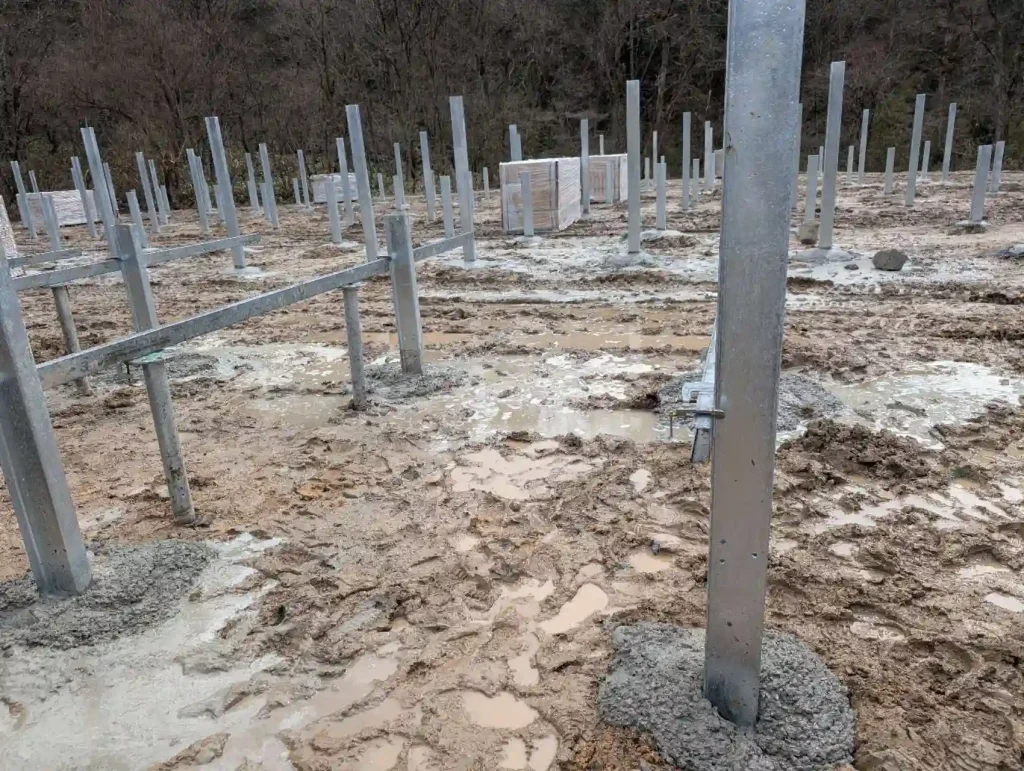
Where additional resistance is required and the site conditions make it practical, concrete can be used together with the primary foundation system.
Combining Different Foundation Solutions
Some projects may require different foundation configurations across different areas of the same site.
This is particularly relevant where soil conditions vary significantly across a large solar farm.
A common EPC error is to assume that one foundation solution should be used across the entire project simply because the mounting structure is the same.
The structure may be standardized. The ground is not.
Choose the Foundation Based on the Site, Not Just the Mounting System
There is no universal solar mounting foundation solution for every project.
A reliable foundation needs to consider the interaction between:
Wind + Snow + Soil + Structure + Local Requirements
That is also why foundation selection should happen early in the project rather than after the mounting system has already been finalized.
In our project experience, the most practical approach is to start with the project requirements and available site data, then determine whether a driven pile, ground screw, concrete foundation, or reinforced solution provides the right balance of structural performance and installation efficiency.
For EPCs, this can also have a direct effect on project economics.
A suitable foundation can help reduce:
- Installation labor
- Concrete consumption
- Equipment requirements
- Construction time
- Foundation-related rework
The engineering objective is not simply to increase foundation strength.
It is to achieve sufficient structural performance with a practical installation method and controlled project cost.
Summary: When Does a Solar Mounting Foundation Need Concrete?
Concrete reinforcement may be required when the standard foundation cannot provide sufficient resistance under the project’s actual design loads and ground conditions.
Wind, snow, soil properties, pull-out resistance, lateral resistance, vertical capacity, and overturning all need to be considered.
Most importantly, not every driven pile or ground screw requires concrete reinforcement.
The right question is not:
“Should we use concrete?”
It is:
“What foundation solution provides sufficient capacity for this specific site?”
At SR Solar, our engineering approach is based on project requirements, structural calculations, applicable standards, and available geotechnical information.
Need help selecting a suitable foundation for your solar project?
Share your project location, system capacity, mounting type, wind and snow conditions, and geotechnical investigation report with our engineering team.
Get a Customized Solar Racking Solution & Wholesale Pricing
FAQs
1. Do solar ground screws need concrete?
Not necessarily. Ground screws can often be installed without concrete when their calculated capacity is sufficient for the project’s loads and soil conditions. Concrete reinforcement may be considered when additional resistance is required.
2. Why are concrete reinforcements added to solar piles?
Concrete reinforcement may be used when the standard pile foundation does not provide sufficient resistance against pull-out, lateral movement, overturning, vertical loads, or other project-specific requirements.
3. Does high wind always require concrete for solar foundations?
No. High wind loads increase the required foundation capacity, but concrete is only one possible solution. Engineers may also adjust pile dimensions, embedment depth, foundation type, or ground screw specifications.
4. How does soil affect solar foundation design?
Soil conditions directly affect bearing capacity, pull-out resistance, lateral resistance, and settlement. A foundation that works well in dense soil may perform differently in loose, soft, or backfilled soil.
5. What information does an EPC need to provide for solar foundation design?
Useful information includes project location, system capacity, mounting configuration, module specifications, wind and snow conditions, applicable local standards, and a geotechnical investigation report when available.